Prologue Lyrics — Ballad Lines
Prologue Lyrics
My name's Betty Carson. Ballad singin's in my blood. I come from a long line of singers, whose songs have been running down my family for generations
(Sung)
Strong are the roots and the branch of the tree
Fierce is the flower that blooms
Hidden away is the one silver key
Leadin' to unopened rooms
O, women of earth, wind and flame
Born under changin' skies
O, common in blood and in name
With stories and songs in their eyes
(Spoken)
My ancestors came outta Scotland, through Ireland, carryin home in their hearts. They crossed that wild Atlantic, stepped off their boats and made their way here, into the Appalachian Mountains
[ANCESTORS]
Dark is the ink on the pages of white
Dark as the sky at the time
Deep is the grave where the ancestors lie
Deep as the well in your mind
O, women of water and air
Born under changin' skies
O, in song and in story they share
[BETTY]
The future and past in their eyes
(Spoken)
The songs, tunes and stories the Scots-Irish brought with 'em have been kept alive here in these hills, passed down through the years, one person to the next
[ANCESTORS]
Down the line the blood runs red
[BETTY]
Fear the thorn, the bird and the berry
[ANCESTORS]
Down the line the blood runs red
Oh!
[BETTY]
Down the line the blood runs hot
[ANCESTORS]
Fuel the fire, a heart is a vessel
[BETTY]
Down the line the blood runs hot
[ANCESTORS]
Oh!
O, to weather the storms every day
When you know they'll return again...
O, to go when your God says to stay...
O, women of earth, wind and flame
Born under changin' skies
O, common in blood and in name
[BETTY]
With stories and songs in their eyes
Strong are the roots and the branch of the tree
Fierce is the flower that blooms
Hidden away is the one silver key
Leadin' to unopened rooms
Song Overview
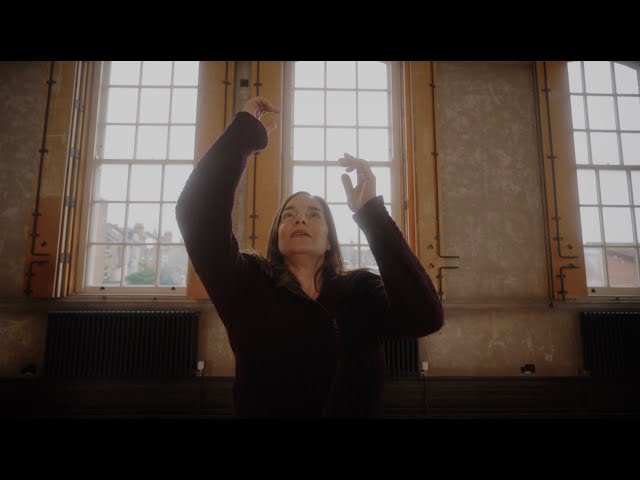
Written as the opening statement of a new stage work, Finn Anderson's "Prologue" lyrics from Ballad Lines introduce a folk musical about ancestry, womanhood, and the songs that travel through a family line. The sound is rooted in Scottish, Irish, and Appalachian colors - fiddle, guitar, percussion, and ensemble voices - with Rebecca Trehearn carrying Betty's lead like a storyteller stepping into firelight. Craft-wise, the piece leans on ballad imagery, repeated invocations, and a chorus built to feel older than the scene around it. That is a big reason it lands so fast: the song does not warm up gently, it opens the door and pulls the whole show in behind it.
Review and Highlights
"Prologue" has a hard job. It needs to explain the rules of Ballad Lines, sketch the family tree, place Betty at the center, and set the show's rough weather in motion. It manages that without sounding like homework. The spoken opening gives the number a porch-front intimacy, then the melody widens into something older and communal. According to BroadwayWorld, producers Aria Entertainment and KT Producing released an in-rehearsal music video of the song ahead of the London run, which tells you they knew this was the number to lead with. That makes sense. It is the gateway track.
The best part is the tension between plain speech and ritual language. Betty says where she comes from in a direct, almost casual voice. Then the company answers with lines full of roots, branches, flowers, keys, rooms, blood, fire. That switch is where the show starts to breathe. You can hear Finn Anderson writing for theatre, yes, though he is also writing inside folk tradition, where a repeated image can carry whole generations on its back.
Key Takeaways:
- The number works as a family invocation, not just an opener.
- Its folk texture is broad - Scots-Irish lineage, Appalachian memory, and contemporary musical-theatre pacing.
- Rebecca Trehearn's Betty frames the story with authority, then hands it to the ensemble like a torch.
- The chorus lines are built for recall. A listener can leave with the roots, flower, and silver key images still ringing.
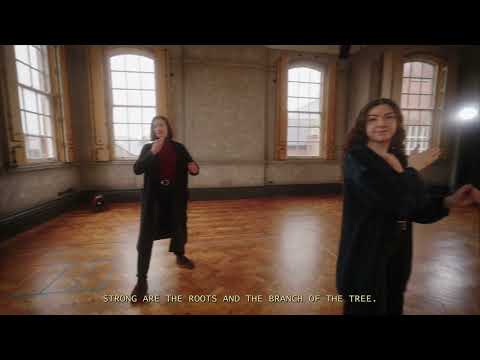
Ballad Lines (2026) - opening number - diegetic and framing. In performance, the song functions as the stage prologue that introduces Betty Carson, the ancestor chorus, and the family migration route from Scotland through Ireland to Appalachia. In the released rehearsal video, the material appears as a promotional performance clip rather than a film or TV placement. The usable visual section runs across most of the short video, roughly from the opening spoken line through the full ensemble refrain. It matters because it establishes the show's whole argument: songs are inheritance, and inheritance is never tidy.
Creation History
Ballad Lines was co-created by composer-songwriter Finn Anderson and director Tania Azevedo, with the project first developed under the title A Mother's Song. Anderson told 1883 Magazine that his early research focused on how Scottish folk music moved through Ireland into Appalachia, while Azevedo was drawn to stories about women, motherhood, and choice. In the same interview, Azevedo said that after seeing Once on This Island in New York, Anderson wrote the prologue the next morning - a lovely origin story, and one that tracks with the song's sense of ritual and community. The studio-cast version arrived first as part of a teaser EP on July 18, 2025, then on the full Ballad Lines (Studio Cast Recording) album on September 12, 2025. The rehearsal video released in January 2026 was filmed by Macaulay Nicholson, with rehearsal footage directed by Ylan Assefy-Waterdrinker.
Lyricist Analysis
This number lives in the borderland between traditional ballad meter and speech-rhythm theatre writing. The sung sections often lean toward common-meter thinking - the kind of pulse you hear in old hymn tunes and border ballads - but Anderson does not trap himself inside a strict textbook foot. He loosens the line whenever Betty shifts into spoken memory, and that looseness matters. The song needs to sound inherited, then suddenly personal.
Rhyme is used with restraint. "Tree" and "key" sit cleanly together, as do "blooms" and "rooms." Those are perfect rhymes, simple and memorable, which suit an opening number built to lodge in the ear. Elsewhere, the song cares more about sonic kinship than tidy end-rhyme. "Blood," "branch," "bloom," "born," and "ballad" do a lot of the lifting through consonant texture and vowel echo. That gives the lyric honesty. Too much decorative rhyme here would have made the piece feel polished in the wrong way, like a brand-new song pretending to be old.
Phonetically, there is a lot going on. The plosives in "branch," "blooms," "blood," and "past" give the chorus a percussive bite. The sibilants in "stories and songs in their eyes" soften the line and let it glide. You can almost hear the shift from earth to smoke. The repeated long vowels in "O, women of earth, wind and flame" open the mouth and widen the emotional field. Smart writing. Stage-savvy too.
Prosodically, the strongest move is the contrast between Betty's conversational lead-in and the downbeat certainty of the ensemble phrases. The natural stress of "strong are the roots" lands cleanly, and the repeated invocations feel built for communal downbeats. Breath economy is part of the drama as well. Betty's speech spills naturally, then the refrain arrives in larger, held shapes. That creates the sense that one woman is speaking, but generations are singing through her.
Structurally, the song does what a prologue should do - it opens a loop rather than resolves one. There is no neat emotional release at the end. Instead, it sets a pattern of bloodline, buried knowledge, and unfinished rooms. For a musical about inheritance, that is exactly right. The door stays open.
Song Meaning and Annotations
Plot
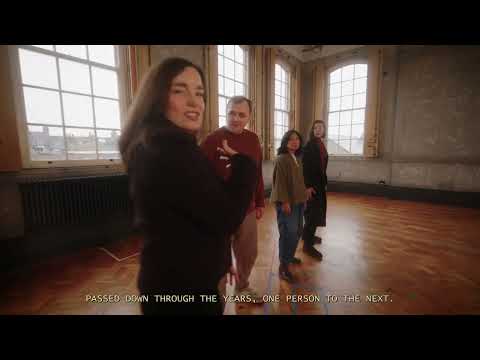
Betty Carson introduces herself as the inheritor of a singing tradition passed down through generations. She places her family on a migration route from Scotland through Ireland into Appalachia, then folds that history into a choral invocation sung by the Ancestors. The number does not tell one completed story. It opens a bloodline. By the end, the past is not behind Betty - it is standing beside her and singing back.
Song Meaning
The meaning of "Prologue" sits in its title. This is an opening, but it is also a claim about where stories come from. The song argues that family history survives through voice long after facts go dim. In Ballad Lines, that means inherited song becomes a record of migration, grief, female endurance, and unfinished choices. Betty is not singing nostalgia. She is naming a burden and a gift at the same time.
The mood is reverent, charged, and slightly haunted. The images are rooted in old ballad language - roots, branches, graves, wells, storms - though the dramatic function is modern. According to the official show material, the musical follows three women across three centuries. "Prologue" is the mechanism that binds them before the audience has even met them all properly.
Annotations
Strong are the roots and the branch of the tree. Fierce is the flower that blooms.
This is family-tree imagery, yes, though it is not decorative. Roots suggest lineage, the branch suggests extension, and the flower brings in present life - fragile, brief, alive. A folk lyric would often stop at roots. Adding the bloom lets the song speak to descendants who are still making choices now.
Hidden away is the one silver key, leadin' to unopened rooms.
The silver key is one of the song's sharpest images. It turns ancestry into architecture. The family story is not a straight line; it is a house full of locked spaces. Some rooms hold memory. Some hold silence. In stage terms, this line quietly promises revelation later in the show.
O, women of earth, wind and flame, born under changin' skies.
The line broadens a single family into something almost mythic. Earth, wind, and flame turn ordinary ancestors into elemental presences. There is also a historical current running underneath it. These women live under changing skies because the world around them keeps shifting - migration, religion, hunger, shame, love, survival. The phrase has the sweep of an old ballad refrain but the thematic reach of contemporary musical theatre.
Dark is the ink on the pages of white, deep is the grave where the ancestors lie.
Now the song gets darker. Ink points to written record. Grave points to what written record cannot recover. That pairing matters in a show shaped by oral tradition. Documents exist, sure, but the fuller truth lives in songs, stories, and what gets carried voice to voice.
Down the line the blood runs red. Down the line the blood runs hot.
These are the driving lines. Rhythmically they hit harder than the earlier verses, almost like the song stamps its foot. "Red" suggests continuity, mortality, kinship. "Hot" adds urgency - desire, temper, pregnancy, conflict, life force. This is where the number stops sounding purely archival and starts sounding alive, restless, human.
Lyrical themes and message
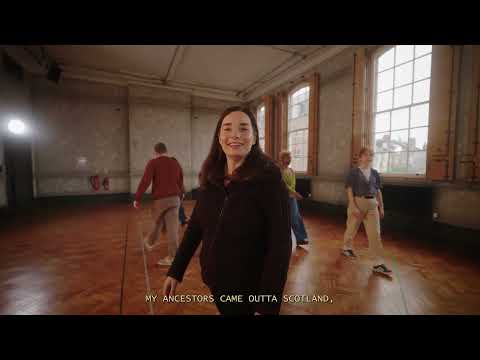
The central theme is inheritance. Not inheritance as property or family pride, but inheritance as something messier - a collection of songs, warnings, losses, and instincts passed between women. There is also a theme of historical movement. Scotland, Ireland, Appalachia, New York - these places matter because the music traveled with the people. According to the Guardian's review of the stage production, Ballad Lines is rooted in the cultural journey of Scots-Irish music into central Appalachia. "Prologue" does that world-building in miniature.
Emotional arc
The piece begins intimate and personal, then grows ceremonial, then edges toward threat. You hear belonging first. Then history. Then pressure. By the time the lyric reaches storms, graves, and divine commands, the family inheritance no longer feels warm and cozy. It feels costly. That arc is one reason the song sticks.
Production and instrumentation
The arrangement serves the lyric well. The show's materials describe a folk palette, and the production teams around the stage and album versions reinforce that: guitar, fiddle, percussion, ensemble voices, and a pulse that can feel old-world or theatrical depending on the phrase. I like that it never turns into museum folk. It still moves like a modern stage number.
Idioms, symbols, and historical touchpoints
The song's symbols are old enough to feel communal. Trees, wells, storms, rooms, blood, flame - those are classic carriers of meaning because they stay legible even when the setting changes. Historically, the lyric taps into the Scots-Irish route into Appalachia that shaped so much early American folk music. As stated in the official show pages and echoed by interviews with the creators, the whole musical is built around that migration line. "Prologue" turns that research into myth without losing its boots-on-the-ground grit.
Technical Information (Quick Facts)
- Song: Prologue
- Artist: Finn Anderson and Ballad Lines
- Featured: Rebecca Trehearn and Ballad Lines Studio Cast
- Composer: Finn Anderson
- Producer: Finn Anderson and KT Producing
- Release Date: July 18, 2025 for the teaser EP release; September 12, 2025 on Ballad Lines (Studio Cast Recording)
- Genre: Folk musical, soundtrack, contemporary folk theatre
- Instruments: Voice, ensemble vocals, fiddle, acoustic guitar, electric guitar, bass, drums, percussion
- Label: Finn Anderson and KT Producing
- Mood: Ancestral, searching, solemn, urgent
- Length: 3:02
- Track #: 1
- Language: English with Scots-inflected diction in the wider score
- Album: Ballad Lines (Studio Cast Recording)
- Music style: Scots-Irish and Appalachian folk blended with musical-theatre writing
- Poetic meter: Mixed common-meter ballad pulse with speech-rhythm passages
Frequently Asked Questions
- What is "Prologue" in Ballad Lines supposed to do?
- It opens the musical's whole family mythology. The song introduces Betty Carson, links the family line to Scotland, Ireland, and Appalachia, and sets up song itself as the vessel that carries memory across centuries.
- Who sings the studio-cast version?
- The released recording is credited to Finn Anderson and Ballad Lines, featuring Rebecca Trehearn and Ballad Lines Studio Cast. Trehearn plays Betty in the studio-cast release.
- Was "Prologue" released before the full album?
- Yes. It was part of a four-track teaser EP released on July 18, 2025. The full Ballad Lines (Studio Cast Recording) album followed on September 12, 2025.
- Is this an original song or an adaptation of a traditional ballad?
- It is an original Finn Anderson number written for the musical, though it is steeped in the language and cadence of traditional ballad writing.
- Why does the lyric keep returning to roots, blood, and rooms?
- Those images map the show's concerns. Roots and blood point to lineage. Rooms suggest hidden family history. The song keeps telling us that inheritance is both lived and locked away.
- How does the number connect to the wider show?
- Ballad Lines follows three women across three centuries. "Prologue" is the thread that ties them together before their individual stories fully unfold.
- Did the song get a video release?
- Yes. Producers released an in-rehearsal music video in January 2026 ahead of the London premiere at Southwark Playhouse Elephant.
- Where did the idea for the song come from?
- In an interview with 1883 Magazine, Tania Azevedo said that after she and Finn Anderson saw Once on This Island in New York and were moved by its sense of ritual and community, Anderson wrote the prologue the next morning.
- Is there public chart or certification data for the track?
- I could not verify any public chart entry, certification, or year-end ranking for this recording in the sources checked through March 13, 2026. That is not unusual for a new theatrical cast track with an independent release path.
- What makes the lyric feel old even though the song is new?
- The answer is in the craft. Anderson uses refrain-based writing, elemental imagery, communal address, and a ballad-like meter, then threads those through modern theatre structure.
Additional Info
- The project existed earlier under the title A Mother's Song, and several elements were expanded or rewritten before the London production.
- According to 1883 Magazine, only four or five songs from the earliest version survived into the much larger later score.
- BroadwayWorld reported that the cast members on the 2026 London stage production included several artists associated with earlier development or album work, though the stage cast and studio-cast lineup are not identical.
- The official site and creator pages pitch the show squarely at listeners who like folk-rooted musical storytelling, which explains why "Prologue" has been used as the lead introduction for the score.
- The rehearsal video matters almost as much as the studio track. In a folk musical, seeing the company breathe together changes the feel of the song.
Key Contributors
| Entity | Type | Relationship |
|---|---|---|
| Finn Anderson | Person | Composed and wrote "Prologue"; co-created Ballad Lines. |
| Tania Azevedo | Person | Co-created and directed Ballad Lines. |
| Rebecca Trehearn | Person | Performs Betty on the studio-cast recording of "Prologue". |
| Ballad Lines Studio Cast | Organization | Provides ensemble vocals on the recording. |
| KT Producing | Organization | Production company associated with the release and stage presentation. |
| Aria Entertainment | Organization | Stage producer tied to the London production and video rollout. |
| Southwark Playhouse Elephant | Venue | Hosted the London production in 2026. |
| Scotland, Ireland, Appalachia | Places | Form the migration route embedded in the song and the show. |
Sources
Data verified via the official Ballad Lines lyrics and studio-cast pages, Finn Anderson's official site, Apple Music and Spotify release listings, BroadwayWorld's January 2026 report on the rehearsal video, Southwark Playhouse production material, the Guardian's January 2026 review, and the March 2026 1883 Magazine interview with Finn Anderson and Tania Azevedo.
Ballad Lines Lyrics: Song List
- Prologue
- Secondhand Shame
- The Four Marys
- Unexpected Visitor
- Handsome Molly
- Back In The Box
- Words Are Not Enough
- The Water Deep (Part 1)
- The Water Deep (Part 2)
- Queen Among the Heather
- Change of Plan
- Early Early in the Spring
- Red Red River
- I Wish My Baby Was Born
- Out Of The Dark
- Sarah's Song
- Epilogue