Lucky Stiff Lyrics – All Songs from the Musical
Lucky Stiff Lyrics: Song List
- Act 1
- Something Funny's Going On
- Mr. Witherspoon's Friday Night
- Rita's Confession
- Good to Be Alive
- Lucky
- Dogs Versus You
- The Phone Call
- A Day Around Town
- Monte Carlo!
- Speaking French
- Times Like This
- Fancy Meeting You Here
- Act I Finale: Good To Be Alive
- Act 2
- Something Funny's Going On (Reprise)
- Him, Them, It, Her
- Nice
- Welcome Back, Mr. Witherspoon
- A Woman in My Bathroom
-
Nice (Reprise)
- Act II Finale: Good To Be Alive
- Shoes
About the "Lucky Stiff" Stage Show
This spectacle is a musical comedy. This performance was the first experience of cooperation of tandem made of L. Ahrens (libretto) & S. Flaherty (music). The play was staged on Broadway in 1988. Since that year, fifteen performances have been shown. The director of the theatrical was T. Walsh. Following actors were involved: S. Stout, J. White, S. Zagnit & M. Testa.In the spectacular of 1989 (Maryland), E. Pappas starred (he was awarded as the best actor), H. Hayes (she was awarded for the best female part). In 1994, it made its debut performance at the Royal Theatre in London. Film version of the theatrical that took place in 2015, and according to the vast majority of reviews, it was not successful.
Release date: 1988
"Lucky Stiff" – The Musical Guide & Song Meanings
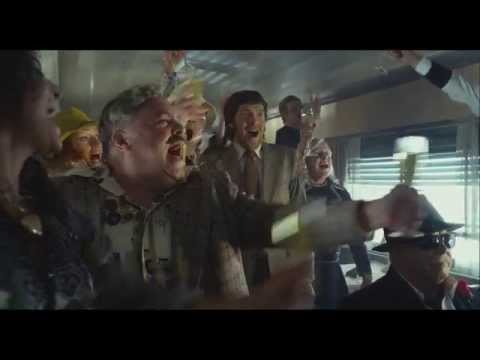
Review: why the lyrics are the steering wheel
Lucky Stiff is a farce that moves at the speed of a bad idea. The plot is already ridiculous, by design: a timid English shoe salesman must wheel his embalmed uncle through Monte Carlo and pretend the corpse is alive, or lose a fortune to a dog charity. In a show like that, music can’t merely decorate. Lyrics must clarify who’s lying, who’s chasing, and what the audience is allowed to believe for the next two minutes.
Lynn Ahrens writes the kind of “clean” comedy lyric that looks simple until you try to land it in front of an audience. The jokes sit inside precise storytelling. Characters announce their neuroses in compact musical monologues (“Mr. Witherspoon’s Friday Night,” “Rita’s Confession,” “The Phone Call”), which lets the book sprint without losing logic. Even the love material is skeptical. “Times Like This” is basically a romantic song that would rather be petting a dog.
The score’s sound is bright, quick, and deliberately unglamorous. Stephen Flaherty’s music pushes the show forward like a brisk walk you can’t slow down, because slowing down would invite questions. The lyrics cooperate by keeping sentences short, rhymes clear, and motives obvious. That’s the craft: farce depends on the audience understanding the mess a beat before the characters do.
How it was made: the Ahrens-Flaherty origin story
Lucky Stiff matters historically because it is the first full musical collaboration of Lynn Ahrens and Stephen Flaherty. It was developed and premiered at Playwrights Horizons in 1988, in the institution’s era of aggressively nurturing new musical writers. One widely circulated account traces the spark to an ASCAP songwriter showcase, where Ira Weitzman (then leading musical theatre development at Playwrights Horizons) heard their work and invited them in. The show went on to win the Richard Rodgers Award that year, a strong early signal that the team’s comedic precision was not a fluke.
The source is a Michael Butterworth novel with an already-far-fetched title, “The Man Who Broke the Bank at Monte Carlo.” Ahrens keeps that pulpy, tabloid snap in the lyric language. You can feel her choosing words that read quickly and sing quickly, because the piece is built on constant pursuit and misrecognition.
The score’s afterlife is also a clue to how the piece functions. There is a 1994 studio cast recording that documents an earlier incarnation, and a 2004 York Theatre Company concert recording that is explicitly promoted as closer to the version most producers license and perform today. In other words: this is a small show that kept being tuned for playability.
Key tracks & scenes: 8 lyrical pivots
"Something Funny’s Going On" (Company)
- The Scene:
- Prologue as quasi-Greek chorus. A tidy line of characters forecasts chaos. One figure in sunglasses and silk pajamas gets murdered before you’re fully seated, and the staging often treats it like a “don’t worry, we’ll explain later” handshake.
- Lyrical Meaning:
- This number teaches you how to watch the show. The lyric frames the story as knowingly artificial, which buys the production permission to go faster and sillier without apology.
"Mr. Witherspoon’s Friday Night" (Harry)
- The Scene:
- Backroom of a shoe shop in East Grimstead. Fluorescent lighting, inventory lists, the sound of a life measured in boxes. Harry sings while working, because he has no other outlet.
- Lyrical Meaning:
- Ahrens writes boredom as rhythm. The lyric is a character diagnosis: self-denial polished into routine. That’s why the inheritance hook can yank him so violently out of place.
"Rita’s Confession" (Rita, Vinnie)
- The Scene:
- A confession that arrives like a hurricane. Rita is the ex who refuses to be written out of the will, and the staging typically puts a gun in the room as punctuation.
- Lyrical Meaning:
- This is comic menace in lyric form. The “confession” isn’t remorse; it’s a sales pitch for why she deserves the diamonds, the money, and control of the narrative.
"Dogs Versus You" (Annabel, Harry)
- The Scene:
- Annabel arrives as the watchdog for the Universal Dog Home of Brooklyn. Harry has a corpse to babysit; Annabel has a mission. The staging often plays their proximity as reluctant partnership under bright, public light.
- Lyrical Meaning:
- The lyric makes the show’s moral argument with a grin: dogs are better than people, and Annabel is not kidding. It also turns “charity” into pressure, not comfort.
"Monte Carlo!" (Company)
- The Scene:
- Travel montage as stage machinery. Banners, luggage, a wheeled corpse in a resort setting that looks expensive until you notice how cheaply a farce can fake luxury.
- Lyrical Meaning:
- Exposition made celebratory. The lyric sells the fantasy of reinvention, which is exactly what Harry believes is happening to him, until the plot starts collecting interest.
"Speaking French" (Company)
- The Scene:
- Tourist panic. A public setting where everyone is performing sophistication, and nobody has the language skills to back it up. The lighting is often crisp and bright, like a postcard that keeps smearing.
- Lyrical Meaning:
- Comedy comes from social aspiration. The lyric skewers the idea that a costume and a phrasebook equal class, a theme that keeps returning as Harry tries to “pass” Uncle Anthony as alive.
"Times Like This" (Annabel)
- The Scene:
- A rare pause. Annabel, the dog-home emissary, admits she’d rather be with a loyal animal than navigating human greed. Staging often softens here: a quieter pool of light, less traffic onstage.
- Lyrical Meaning:
- This is the show’s most human lyric, which is why it works. Annabel’s values are not ironic. They are steady, and that steadiness becomes the counterweight to the farce.
"Him, Them, It, Her" (Harry, Annabel, Rita, Vinnie, Company)
- The Scene:
- Act II chaos sequence. Everyone searches for everyone else, a heart-shaped box of diamonds, and a missing corpse that keeps being mistaken for something else. Staging is typically a blur of doors, wheelchairs, and near-collisions.
- Lyrical Meaning:
- Farce as grammar lesson. The lyric turns pronouns into plot. When the language collapses into “him/them/it/her,” you’re hearing the story’s logic overheating in real time.
Live updates (2025–2026)
Information current as of January 28, 2026. Lucky Stiff is not a Broadway revival story right now. It is a regional-and-license powerhouse, the kind of show companies program when they want a small cast, fast laughs, and a score that lands without a massive orchestra.
One standout run: Florida Studio Theatre in Sarasota scheduled Lucky Stiff from November 5, 2025 through January 11, 2026, with multiple extensions announced in press materials and coverage. Extensions are not a perfect “ticket trend” metric, but they are the cleanest public signal of demand most theaters will share.
Elsewhere, Seven Angels Theatre in Waterbury opened its 2025–26 season with Lucky Stiff (Sept. 26 to Oct. 12, 2025), and other community and semi-pro theaters continued to mount it through late 2025. If you’re tracking where the show is actually alive, follow season announcements, not Broadway rumor cycles.
Notes & trivia
- Lucky Stiff premiered Off-Broadway at Playwrights Horizons in April 1988 and ran 15 performances in its original engagement.
- It won the Richard Rodgers Award in 1988, an early career boost for Ahrens and Flaherty.
- The show is based on Michael Butterworth’s novel “The Man Who Broke the Bank at Monte Carlo.”
- There are at least two major “listening anchors”: a 1994 studio cast recording and a 2004 York Theatre Company concert recording, the latter marketed as closer to the version most producers license.
- “Him, Them, It, Her” is essentially a farce masterclass: plot confusion translated into lyric structure.
- A film adaptation was released in 2015, with additional music credits and a new title song noted by the authors’ official site.
Reception: the praise is unusually specific
When critics like Lucky Stiff, they tend to praise one thing over and over: the lyric craft. Not “catchy.” Not “pleasant.” Specific. Reviewers repeatedly point to Ahrens’ ability to flip a premise into punchlines without losing narrative clarity, and to do it at tempo. That’s why the show keeps getting produced. It’s a comedy built from wording.
“Ahrens … takes this slight, farcical premise to a higher level with witty and wonderful lyrics.”
“the pace is frantic and the laughs come thick and fast from both the book and the witty lyrics.”
“A much-needed antidote to the gargantuan extravagance of current musical theatre.”
Quick facts
- Title: Lucky Stiff
- Year: 1988 (world premiere Off-Broadway)
- Type: Musical farce / murder-mystery comedy
- Book & lyrics: Lynn Ahrens
- Music: Stephen Flaherty
- Based on: “The Man Who Broke the Bank at Monte Carlo” (Michael Butterworth)
- World premiere: Playwrights Horizons (Off-Broadway), April 1988
- Awards: Richard Rodgers Award (1988); Helen Hayes Award for Best Musical (regional production noted in production histories)
- Selected notable placements: “Mr. Witherspoon’s Friday Night” (shoe shop loneliness); “Monte Carlo!” (travel pivot); “Times Like This” (Annabel’s values); “Him, Them, It, Her” (Act II chase knot)
- Key recordings: 1994 studio cast recording; 2004 York Theatre Company cast recording (Jay Records)
- 2025–2026 activity: Florida Studio Theatre run Nov 5, 2025 to Jan 11, 2026 (extended); Seven Angels Theatre season opener Sept 26 to Oct 12, 2025
Frequently asked questions
- Can you provide the full lyrics here?
- No. Full lyric text is copyrighted. This guide focuses on meaning, placement, and how the lyric-writing functions in the storytelling.
- Is Lucky Stiff a good “first Ahrens and Flaherty” listen?
- Yes, because it shows their shared instincts early: fast character definition, clean comedy writing, and songs that push plot instead of pausing it.
- Which recording should I start with?
- If you want what many producers consider closest to the commonly licensed version, start with the York Theatre Company recording. For a different snapshot, try the 1994 studio cast album.
- Is the 2015 film the same as the stage musical?
- It’s an adaptation with additional music credits and a new title song noted by the authors’ official site. It’s useful as a curiosity, but it is not the definitive way to understand the stage pacing.
- Why does “Him, Them, It, Her” hit so hard in performance?
- Because the lyric turns confusion into structure. Instead of apologizing for the mess, it choreographs it, making the audience laugh at the logic breaking down.
Key contributors
| Name | Role | Contribution |
|---|---|---|
| Lynn Ahrens | Book & lyricist | Builds farce clarity through lyric specificity, especially in character monologues and chase-ensemble writing. |
| Stephen Flaherty | Composer | Writes brisk, playable comedy music that keeps scenes moving and supports rapid dialogue-to-song transitions. |
| Ira Weitzman | Development champion (Playwrights Horizons era) | Credited in production-history accounts as an early supporter who invited the writers to develop work for Playwrights Horizons. |
| Michael Butterworth | Source author | Wrote the novel that supplies the show’s “corpse-on-vacation” premise. |
| Thommie Walsh | Original director | Directed and shaped the original Off-Broadway staging. |
| York Theatre Company | Concert revival / recording source | Mounted the 2003 staged-concert revival that led to a 2004 recording widely used by producers as a reference point. |
Sources: Music Theatre International; Ahrens & Flaherty official site; Wikipedia; Variety; LondonTheatre.co.uk; Florida Studio Theatre; BroadwayWorld; CT Insider; Jay Records; AllMusic; Ovrtur; Bruxellons; RC Reader.