LoveMusik Lyrics – All Songs from the Musical
LoveMusik Lyrics: Song List
- Act 1
- Speak Low
- Nanna's Lied
- Kiddush
-
Song of the Rhineland
- Klops Lied (Meatball Song)
- Berlin Im Licht
- Tango Ballad
- Alabama Song
- Girl of the Moment
- Moritat
- Schickelgruber
- Come to Paris
- I Don't Love You
-
Wouldn't You Like to Be On Broadway?
- Alabama Song (Reprise)
- Act 2
-
Very, Very, Very
- It's Never Too Late To Mendelssohn
- Surabaya Johnny
- Youkali
- Buddy On The Night Shift
- That's Him
- Hosannah Rockefeller
- I Don't Love You, Reprise
- The Illusion Wedding Show
- It Never Was You
- Birds Of Passage
- September Song
About the "LoveMusik" Stage Show
Musical’s script was written by A. Uhry, who based his story on personal correspondence between Kurt Weill & Lotte Lenya. Composer is Kurt Weill, lyrics were created by different authors. Broadway’s staging was performed on the Theatre’s Club scene under the direction of Harold Prince. Choreographer – P. Birch. The first preview was on April 2007. The premiere of the musical was in early May 2007 at the Biltmore Theatre’s stage. After 60 runs, the show was completed in late June 2007.The histrionics involved: D. Murphy, M. Cerveris, D. Pittu, J. Scherer and others. In 2009-2010, musical acted in Japan. The role of Kurt performed M. Ichimura. The theatrical was done in the Japanese language. International production of the musical were in Argentina (Buenos Aires), Germany (Berlin), Hungary (Budapest), Israel (Haifa), Spain (Madrid), UK (London).
March 2016. Musical is shown in Buenos Aires on stage Paceo La Plaza. Setting carried out by R. Hornos & P. Kompel. Director – Jonathan Butterell. Music director – G. Gardelín. The show involved: E. Roger, E. Meloni, D. Mariani, L. Bassi, A. Fontan, B. Pasqualini, R. Laudani, M. Taccagni & N. Sanchez.
Broadway production was nominated at Tony Award in four categories, and received two Drama Desks out of the nine categories.
Release date: 2007
"LoveMusik" – The Musical Guide & Song Meanings
Review
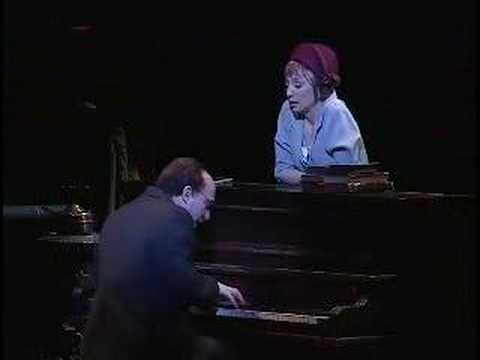
Can a “jukebox” bio-musical be smart without turning into a lecture? LoveMusik tries, and it mostly gets away with it by picking the right subject: Kurt Weill and Lotte Lenya, two artists who treated romance like a rehearsal process. The show’s central trick is also its central risk. Weill’s catalogue supplies the emotional weather, but the lyrics were written by everybody from Brecht to Ogden Nash to Ira Gershwin. That means the evening keeps changing its diction mid-argument. When it clicks, you get a collage of truth: tenderness, satire, sex, politics, and a little self-mythologizing, all in the same breath.
Alfred Uhry’s book steers the material through Berlin, Paris, Broadway, and Hollywood, using song as documentary evidence. A melody arrives with history attached, and the characters have to live inside it. That’s the point: Weill and Lenya are not “people who burst into song.” They’re people whose private life keeps getting scored by the era’s public noise. Harold Prince’s staging leans into that distance. The best moments feel like cabaret that forgot it’s supposed to flirt with the audience.
Musically, LoveMusik lives in Weill’s borderlands: cabaret bite, Broadway polish, European irony, American sentimentality. The style shift is not decorative. It’s character. Lenya’s numbers often weaponize roughness, the sound of a woman refusing to be turned into a classy anecdote. Weill’s numbers, by contrast, tend to “compose” the mess, as if harmony could domesticate chaos. The show doesn’t always balance those instincts, but it’s rarely dull doing it.
How It Was Made
LoveMusik was conceived after Harold Prince read the published correspondence between Weill and Lenya, then pushed the idea toward Alfred Uhry. The source material matters because it’s not gossip. It’s two artists documenting their own mythology in real time. Prince and Uhry reportedly spent years shaping the piece, which helps explain why the show feels curated rather than “built.” It isn’t trying to invent Weill’s voice. It’s trying to place it, like evidence on a table.
That curation became a technical challenge: stitching together songs written for different shows, countries, and decades, without turning the score into a museum playlist. Jonathan Tunick’s orchestrations solve a lot of that problem by giving the evening a consistent sonic frame, even as the lyricists keep changing. The Broadway cast recording, produced by Joel Moss, captured that chamber-scale approach in studio, with the principals singing as if the microphone is a confession booth.
Key Tracks & Scenes
"Speak Low" (Kurt Weill & Lotte Lenya)
- The Scene:
- A first meeting that plays like a dare. The light is intimate, almost stingy, as if Berlin itself is eavesdropping. They circle each other, testing tone and tempo the way musicians do before committing to a duet.
- Lyrical Meaning:
- Ogden Nash’s lyric treats love as a timing issue: say less, feel more, before the moment evaporates. In the show, it reads as foreshadowing. Their relationship will be full of talking. The song begs for silence because silence is the only thing they rarely grant each other.
"Berlin im Licht" (Lotte Lenya)
- The Scene:
- A city number with a bite behind the grin. Lenya is presented as both participant and product: the performer shaped by night streets, cheap glamour, and a crowd that wants attitude on demand.
- Lyrical Meaning:
- This is Lenya’s thesis statement: survival first, romance later. The lyric lands like a cigarette flicked onto a polished floor. It tells you she can do beauty, but she prefers control.
"Tango Ballad" (Bertolt Brecht & Brecht’s Women)
- The Scene:
- The stage turns into a stylized argument. Brecht is framed by women like an author surrounded by his own footnotes. The lighting goes angular, more nightclub than living room.
- Lyrical Meaning:
- Brecht’s language turns desire into politics and politics into sport. In LoveMusik, this number is less about plot than about contamination: Brecht’s worldview infects the room, and Weill has to decide how close he can stand without becoming it.
"Alabama Song" (Auditioners & Lotte Lenya)
- The Scene:
- An audition setting where the world feels loud and slightly cruel. The number lands with a grin that dares you to judge it. The staging often plays it as performance-within-performance: who is acting, and who is exposing themselves?
- Lyrical Meaning:
- The lyric’s hunger is blunt on purpose. In the context of Weill and Lenya, it becomes a warning label for the whole marriage: appetites rarely stay polite, and somebody always pretends not to be starving.
"Wouldn’t You Like to Be on Broadway?" (Kurt Weill & Lotte Lenya)
- The Scene:
- A pivot point into America. The energy brightens, the rhythm tightens, and the stage starts to behave like show business. It’s optimism with a price tag attached.
- Lyrical Meaning:
- It’s the show’s sharpest wink: aspiration as seduction. The lyric sells Broadway as both refuge and reinvention, while quietly admitting that reinvention is a kind of amnesia.
"Surabaya Johnny" (Lotte Lenya)
- The Scene:
- Lenya in a pocket of darkness, as if the rest of the show steps back to let her tell the truth without interruption. The sound is stripped down. The audience is forced into listening mode.
- Lyrical Meaning:
- This is not heartbreak as poetry. It’s heartbreak as indictment. Brecht’s language turns love into evidence and Lenya into the prosecutor, listing the reasons she should leave, then admitting she will not.
"Buddy on the Night Shift" (Allen Lake)
- The Scene:
- A side character steps forward and the show briefly becomes American in the plainest way: work, loneliness, routine. The lighting is practical, like a late-night diner or a stage door corridor.
- Lyrical Meaning:
- Oscar Hammerstein II’s lyric is humane and direct, which is exactly why it stings inside this score. It implies a world where tenderness is possible without theatrics. For Weill and Lenya, that’s almost science fiction.
"September Song" (Lotte Lenya & George Davis)
- The Scene:
- A late-act reckoning. The mood shifts from ambition to timekeeping. The staging often softens here, fewer angles, fewer jokes, more air around the performers.
- Lyrical Meaning:
- Maxwell Anderson’s lyric is a negotiation with mortality. In LoveMusik, it plays like the show finally admitting what the lovers spend decades dodging: success is loud, time is not.
Live Updates
Information current as of January 28, 2026. LoveMusik is not currently running on Broadway or the West End, and there is no widely announced 2025/2026 commercial revival at the time of writing. The practical “live” story is licensing: the show is available for secondary-stage production through Concord Theatricals, which has made it a plausible candidate for universities, conservatories, and regional companies that want Weill without mounting a full Threepenny-sized circus.
For watchers who want to sample the piece now, there are officially released tracks from the Original Broadway Cast Recording on major streaming platforms, and promotional/archival video material circulates through theatre outlets online, including footage packages that preserve Prince’s cool, presentational approach. If you’re auditioning or researching, start with the cast album in sequence rather than shuffling. The score is curated to tell you where you are in the relationship, not just what the hit songs are.
Recent performance history remains more “pockets” than trends: documented revivals and international productions have appeared intermittently since the 2007 Broadway run, including notable activity outside the U.S. earlier in the past decade. If a new high-profile production gets announced, it tends to arrive via director-driven programming rather than tourist-market economics. This is a connoisseur title, not a souvenir.
Notes & Trivia
- LoveMusik is built from Weill songs written across multiple eras and collaborators, which is why the show’s lyric voice intentionally shifts from number to number.
- The Broadway production was mounted as a limited engagement at Manhattan Theatre Club and then extended before closing in late June 2007.
- Jonathan Tunick’s orchestrations were recognized during awards season, underscoring how crucial the arranging is when the score is assembled from different source works.
- Myth to retire: this is not a “greatest hits of Weill” concert with dialogue. The narrative spine is Weill and Lenya’s relationship as a work partnership, not only a romance.
- Listening tip: play “Surabaya Johnny” and “September Song” back-to-back. You can hear the show’s core tension: Lenya’s raw insistence versus Weill’s late-period American lyricism.
- Production tip: the piece benefits from clear scene titles or projected locations (Berlin, Paris, New York, Hollywood). Without that, first-time viewers can feel the time jumps as blur.
Reception
LoveMusik arrived to praise for its stars and a split verdict on its form. Some critics admired the ambition of making a biographical musical that refuses to behave like comfort food. Others heard a concept straining against itself: a cool, intellectual frame asking popular song to do the job of intimate drama. The disagreements were not minor quibbles. They were arguments about what musical theatre is allowed to be.
“Two luminous, life-infused portraits glow from within a dim, heavy frame …”
“LoveMusik … is moody, daring, and downright bewildering.”
“The main attraction is the astonishing catalog of Weill’s music, a treasure trove of cabaret-inflected songs for cosmopolitan highbrows.”
Quick Facts
- Title: LoveMusik
- Broadway opening: May 3, 2007
- Run: Limited engagement (Manhattan Theatre Club)
- Type: Biographical jukebox musical using Kurt Weill songs
- Book: Alfred Uhry
- Music: Kurt Weill
- Lyrics: Multiple lyricists (varies by song)
- Director (Broadway): Harold Prince
- Musical staging: Patricia Birch
- Orchestrations: Jonathan Tunick
- Selected notable placements: “Speak Low,” “Alabama Song,” “Surabaya Johnny,” “September Song”
- Cast album: Original Broadway Cast Recording (Ghostlight Records), released November 27, 2007
- Licensing: Available via Concord Theatricals
Frequently Asked Questions
- Is LoveMusik an original score?
- No. It is constructed from existing Kurt Weill songs, originally written for different stage works and contexts, then reshaped into a biographical narrative about Weill and Lenya.
- Who wrote the lyrics?
- It depends on the song. The piece draws on Weill’s collaborations with multiple lyricists, which is part of the show’s design and also part of its dramatic friction.
- Is the cast recording the best way to understand the plot?
- It helps, but the plot is carried by scenes between songs. Use the album as an emotional map, then read a synopsis to place each number in time and location.
- Is LoveMusik currently running in 2025/2026?
- There is no broadly announced commercial run as of January 28, 2026, but the title is actively available for licensing and appears periodically in regional and educational programming.
- What should I listen to first if I only have ten minutes?
- Start with “Speak Low,” then jump to “Surabaya Johnny,” then “September Song.” You’ll hear the arc from seduction to endurance to time running out.
Key Contributors
| Name | Role | Contribution |
|---|---|---|
| Kurt Weill | Composer | Song catalogue forming the score; stylistic bridge between European cabaret and American musical theatre. |
| Alfred Uhry | Book writer | Biographical structure shaping the Weill-Lenya relationship across decades and continents. |
| Harold Prince | Conceiver/Director (Broadway) | Concept rooted in Weill-Lenya letters; presentational staging that keeps biography at a cool remove. |
| Patricia Birch | Musical staging | Musical storytelling and transitions across time periods. |
| Jonathan Tunick | Orchestrator | Unifies disparate Weill sources into a coherent theatrical sound world. |
| Michael Cerveris | Original Broadway cast | Created Kurt Weill on Broadway; featured on the cast album. |
| Donna Murphy | Original Broadway cast | Created Lotte Lenya on Broadway; central vocal presence on the cast album. |
| Ghostlight Records | Label | Released the Original Broadway Cast Recording. |
| Joel Moss | Producer (cast album) | Produced the original cast recording sessions. |
| Kurt Deutsch | Executive producer (cast album) | Executive producer for the cast recording release. |
Sources: Kurt Weill Foundation for Music; IBDB (Internet Broadway Database); Playbill; Concord Theatricals; Ghostlight Records; TheaterMania; BroadwayWorld.