Lone Star Love Lyrics – All Songs from the Musical
Lone Star Love Lyrics: Song List
- Carry Me Home
- Cold Cash
- The Ballad of Falstaff
- Texas Cattlemen
- Prairie Moon
- Caius's Theme
- Throwdown in Windsor
- Cowboy's Dream
- Hard Times
- World of Men
- By Way of Frank Ford
- Lone Star Love
- A Man for the Age
- Count on My Love
- Code of the West
- Quail Bagging
- Texas Wind
- The Wildcat Moan
- The Ballad Of Falstaff (Reprise)
- Lone Star Love (Reprise)
- Dance Finale
About the "Lone Star Love" Stage Show
Musical was created in the 1980s in Houston, Texas. Author was composing this work for a long time. J. Herrick wrote the score. The story was taken from the book by R. Horn & J. L. Haber. The heart of this is Shakespeare’s play Merry Wives of Windsor. They moved actions onto Wild West. All events occur in the small town of Texas.The first off-Broadway exhibition of this histrionics held at Theatre of J. Houseman in New York. The performance lasted for about a year in 2004 – 2005. M. Bogdanov directed the production. Choreography – R. Skinner. The main roles were played by B. Leavell & J. O. Sanders.
Official premiere on Broadway supposed to be in early November 2007. But creators decided to provide first mid-September preview in other city. The histrionics lasted on 5th Avenue only for 11 days. It had much of changes comparing to the original. R. Skinner directed & choreographed. R. Quaid, R. Kachiolli, D. Hoti & L. Kennedy performed the leading roles. The performance received a lot of negative feedback that affected its fate. In late September 2007, it was officially announced that the November’s premiere of it won’t take place as musical has been considered unsuitable for Broadway because of the slow pace.
Release date: 2004
"Lone Star Love" – The Musical Guide & Song Meanings
Review: what the lyrics are aiming for
Lone Star Love takes a familiar Shakespeare engine and runs it on fiddles, yodeling, and pure hustle. The lyric-writing job here is not “make poetry.” It is “keep the plot moving while the band sells the joke.” When it works, the words behave like stage directions with a hook: quick cues, clear stakes, and a grin you can hear.
The show’s best lyrical idea is structural. It starts by greeting the audience like a neighbor, then keeps breaking the boundary between stage and house the way Shakespeare’s clowns used to. In the working script, the prologue is designed for the aisles, with characters singing to the crowd as part of the storytelling grammar. That choice makes the lyric voice conversational by necessity, which fits Jack Herrick’s country-bluegrass idiom and keeps Falstaff’s scams from feeling antique.
Theme-wise, the score keeps returning to two kinds of “love.” There’s the public version, the town’s talk, the moral code. Then there’s Falstaff’s private version, which is basically arithmetic. He sings like a man negotiating with the universe: money, appetite, and self-mythology. The contrast is the point. When the wives finally flip the script, the language turns communal, almost hymn-like in the big ensemble moments, as if Windsor, Texas has decided it is done being played.
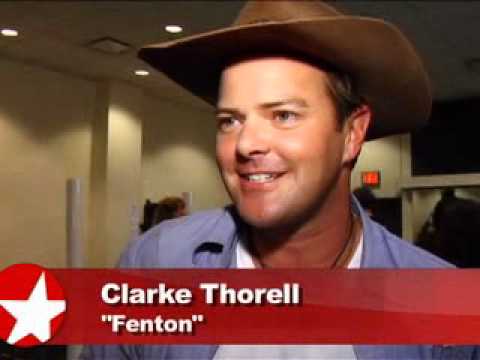
Musically, you can hear the show reaching for three textures: a rowdy band number for the company, a lyrical open-sky romance sound for MissAnne and Fenton, and a brassy, lust-and-greed groove for Falstaff. The lyric style follows suit: plainspoken in the love songs, punchier and more contemporary in Falstaff’s material, with a deliberate wink at labor rules and showbiz itself (a joke that only lands if the words are modern enough to feel like they were written yesterday).
How it was made
This is not a “written in a weekend” musical. It had a long American development trail, with early versions reaching back to Houston in the late 1980s, then moving through regional stops and workshops before the Off-Broadway run. By the time it landed at the John Houseman Theatre under Amas, it had already absorbed multiple hands and practical lessons about how to make Shakespeare’s farce play as a Western musical comedy.
Two behind-the-scenes facts matter if you care about lyrics. First, Herrick is not an outside composer hired to imitate “country.” He is part of the Red Clay Ramblers, and the band is baked into the storytelling, even appearing as Falstaff’s cohort in the production. Second, the creative file keeps evolving. The bandcamp release notes that additional songs were added “for the continuing life of the musical,” which is basically a polite way of saying: the lyric draft never stops being rewritten when a show keeps chasing its next production.
The other origin story is the cautionary one. A revised version headed toward Broadway in 2007 after a Seattle tryout, and then the Broadway engagement was canceled. Whatever your appetite for theater gossip, the practical upshot is simple: the score and book you hear on the cast album represent one moment in a longer rewrite timeline, not a frozen museum piece.
Key tracks & scenes
"The Ballad of Falstaff" (Bardolph, Pistol, Nym, and Falstaff)
- The Scene:
- House lights hover at half. The band is already part of the world. Falstaff’s boys enter from the back of the house and sing straight to the audience, turning exposition into a barn-raising. Falstaff pops up from the crowd like trouble in a Sunday suit.
- Lyrical Meaning:
- This number is a thesis statement: Falstaff as folk legend, built from insults, bragging, and tall tales. The lyrics make him sound bigger than the plot so the plot can spend two acts shrinking him back down to size.
"Texas Cattlemen" (Company)
- The Scene:
- Act One, Scene 1: the Page ranch barn. The show’s physical metaphor is literal here, a multi-level barn that plays like a Texas cousin of the Globe, with doors that suggest the prairie beyond.
- Lyrical Meaning:
- Community identity as chorus. These lyrics are less character confession and more civic branding: who runs Windsor, what they value, and why an outsider like Falstaff is either a mascot or a menace.
"Prairie Moon" (MissAnne and Fenton)
- The Scene:
- Act One, Scene 5: out on the prairie. It is the score’s breath of air, the romantic pocket away from the town’s scheming, with the implied night sky doing most of the lighting work.
- Lyrical Meaning:
- The lyric vocabulary softens and lengthens. The metaphors stop hustling. It is strategic: the show needs one lane where love is not a transaction, so the title phrase can later sting when it is thrown back as warning.
"Hard Times" (Bardolph, Pistol, and Nym)
- The Scene:
- Act Two entr’acte into Scene 1 at the Garter Saloon. The Ramblers sing like men taking inventory of bad decisions. Falstaff then drifts down the aisle wrapped in a patchwork blanket, already half-defeated, still demanding service.
- Lyrical Meaning:
- Suddenly the cohort has inner life. The lyrics admit the cost of orbiting Falstaff. One review singled this out as the score’s sharpest writing, which tracks: the words here have bite, not just bounce.
"Texas Wind" (Mrs. Ford)
- The Scene:
- Act Two, Scene 4: the Ford ranch. The jealous-marriage subplot turns inward. The setting narrows, the temperature drops, and the song sits in the emotional draft created by a relationship that cannot stop accusing itself.
- Lyrical Meaning:
- This is where the show tries sincerity without letting go of its comic chassis. The lyric is written like an earnest confession that knows it might be overheard, which is exactly the Ford problem: privacy is impossible in a town made of gossip.
"Cold Cash" (Falstaff and Ladies)
- The Scene:
- Early Act Two. Dream-lady harmonies appear, then vanish. Lights shift mid-number, as if Falstaff’s fantasy can’t hold steady long enough to be believable. It is lust as a sales pitch, performed to an audience of himself.
- Lyrical Meaning:
- Falstaff’s worldview in one phrase: desire plus profit. The lyric is blunt on purpose. The show wants you to hear his motivation as a jingle, so the wives’ revenge reads like justice, not cruelty.
"Lone Star Love" (Company)
- The Scene:
- Act One finale. After the ensemble lands the title idea, Falstaff is dumped into “Devil Creek” with a huge stage splash and a deliberately wacky bit of stagecraft that suggests him sliding downstream, still yelling.
- Lyrical Meaning:
- The title becomes a warning label. “Love,” in this town, is not just romance. It is reputation, consequences, and a community that keeps receipts.
"Code of the West" (Company)
- The Scene:
- Act Two, Scene 3: behind the school house at high noon. It is the show’s faux-mythic moment, a Western ritual played for laughs, complete with bravado and the public performance of honor.
- Lyrical Meaning:
- The lyric treats morality as a singable rulebook. In a Shakespeare farce, “code” is always negotiable, which is why this lands as both satire and a genuine civic anthem.
Live updates (2025/2026)
As of the most concrete recent activity, Amas Musical Theatre mounted a reunion concert on May 19, 2025 at Theater 555 in New York, framed explicitly as a benefit event and featuring the Red Clay Ramblers, directed by Randy Skinner. That is not a commercial remount, but it is real evidence the piece still has a heartbeat in the industry network that first birthed it.
On the recording side, the Off-Broadway cast album remains the easiest way in. It has long been available via major streaming platforms, and in 2023 the Red Clay Ramblers/Jack Herrick also issued a digital release on Bandcamp that notes additional songs were added for the show’s continuing life. If you are tracking lyric revisions, that detail matters: multiple “authorized” listening experiences are in circulation.
What you do not see right now is a publicized 2025 or 2026 tour announcement. The last Broadway attempt remains the 2007 path: a Seattle tryout, a planned Belasco engagement, and then a cancellation. For fans, the practical move is to watch Amas-style concerts, festival concert series, or regional Shakespeare-themed seasons, where this title tends to reappear when someone wants a bard adaptation that does not sound like everyone else’s.
Notes & trivia
- The 2004 Off-Broadway run at the John Houseman Theatre opened December 8, 2004 after previews that began in late November, and it played through February 6, 2005.
- In the working script’s staging note, the set is a multi-level barn that pays homage to the Globe, and it explicitly allows modern elements (like microphones) to coexist with period objects.
- The prologue is engineered for audience contact: signs around the theater, band members visible, and the opening number sung partly from the house.
- The Red Clay Ramblers are not just “the sound.” In the Off-Broadway production they appear as Falstaff’s entourage, folding the band into the narrative.
- A Theatre on Film and Tape recording exists, with a listed recording date of February 3, 2005.
- The score credits are unusually hybrid: Herrick writes music and lyrics, with documented contributions from Michael Bogdanov, Bland Simpson, and Tommy Thompson in later materials.
- Amas returned to the title for a May 19, 2025 reunion concert benefit, suggesting the show’s advocates still consider it viable in concert form.
Reception, then vs. now
Critically, Lone Star Love has always lived in a specific lane: likable, tuneful, and sometimes too polite about its own jokes. Reviews tended to praise the band-driven energy and individual performances more than the overall dramatic pressure. When critics zeroed in on the lyrics, the compliments got more specific, often reserving their sharpest praise for the numbers that gave the Ramblers narrative authority.
“The Red Clay Ramblers are a pleasure to hear!”
“The wonderful Red Clay Ramblers’ country-flavored score is consistently tuneful and fun!”
“The Red Clay Ramblers get the best song in the show, ‘Hard Times.’”
Over time, the show’s reputation has drifted toward “curio with craft,” especially because its Broadway chapter ended abruptly. That history can distort the conversation, but it also keeps the lyric-writing in focus: when a show does not become a repertory staple, the surviving evidence is the text and the album. In Lone Star Love’s case, the strongest numbers still read clearly on the page and record as self-contained storytelling.
Quick facts
- Title: Lone Star Love (or, The Merry Wives of Windsor, Texas)
- Year: 2004 (Off-Broadway)
- Type: Musical comedy; Shakespeare adaptation; country/bluegrass score
- Book: John L. Haber, Robert Horn
- Music & Lyrics: Jack Herrick
- Off-Broadway production: Amas Musical Theatre, John Houseman Theatre (Dec 8, 2004 – Feb 6, 2005)
- Director / Choreographer (Off-Broadway): Michael Bogdanov / Randy Skinner
- Cast album label: PS Classics
- Cast album release date: October 25, 2005
- Recording location: Clinton Studios, New York (cast album)
- Availability: Streaming (major platforms) and digital release (Bandcamp edition with added songs)
- Selected notable placements: “The Ballad of Falstaff” (prologue in the house); “Lone Star Love” (Act One finale splash); “Code of the West” (high-noon schoolhouse scene)
Frequently asked questions
- Is there a cast recording, and where can I hear it?
- Yes. The Original Cast Recording was released by PS Classics and is widely available on streaming services. A separate Bandcamp release from Red Clay Ramblers/Jack Herrick notes added songs for later life.
- Did Lone Star Love ever make it to Broadway?
- No. A Broadway run was planned after a 2007 Seattle tryout, with previews scheduled at the Belasco Theatre, but the engagement was canceled.
- Is the show touring in 2026?
- No major tour announcement is currently visible in the most recent official and industry sources. The most concrete recent performance activity was a May 19, 2025 reunion concert benefit in New York.
- Why does the title phrase matter in the lyrics?
- “Lone Star Love” works like a local proverb. In the ensemble writing, it shifts from romance to warning: love in this town carries consequences, and the community enforces them.
- Are the Red Clay Ramblers part of the story or just the band?
- In the Off-Broadway production, the Ramblers appear as Falstaff’s entourage, making the onstage music-making part of the narrative machinery.
- Is there a filmed performance?
- A Theatre on Film and Tape listing indicates a recorded performance dated February 3, 2005.
Key contributors
| Name | Role | Contribution |
|---|---|---|
| Jack Herrick | Composer & Lyricist | Wrote the score; performed within the show’s band ecosystem. |
| John L. Haber | Conceiver / Book | Adaptation framework; shepherded the Shakespeare-to-Texas concept through multiple versions. |
| Robert Horn | Book | Co-wrote the book in later iterations credited for the Broadway-aimed version. |
| Michael Bogdanov | Director (Off-Broadway) | Staging approach that foregrounded audience contact and band integration. |
| Randy Skinner | Choreographer / Director (later) | Choreographed Off-Broadway; later directed and choreographed the 2007 tryout iteration. |
| Tommy Krasker | Cast album producer | Produced the PS Classics cast recording. |
| Derek McLane | Scenic design | Designed the playful physical world (noted in contemporary coverage). |
| Jane Greenwood | Costume design | Costumed the show’s rough-and-tumble Texas palette. |
| The Red Clay Ramblers | Onstage band / performers | Performed as musicians and characters (Falstaff’s cohort) in the Off-Broadway staging. |
Sources: Playbill, TheaterMania, Amas Musical Theatre, Red Clay Ramblers (official site), Bandcamp, AllMusic, Spotify, Learning on Screen (TOFT listing), Overture/ovrtur production listing, Broadway.com.