Little Women Lyrics – All Songs from the Musical
Little Women Lyrics: Song List
- Act 1
- Overture
- Operatic Tragedy
- Better
- Our Finest Dreams
- Here Alone
- Could You?
- I'd Be Delighted
- Take a Chance on Me
- Off to Massachusetts
- Five Forever
- More Than I Am
- Astonishing
- Act 2
- Weekly Volcano Press
- How I Am
- Some Things Are Meant to Be
- Most Amazing Thing
- Days of Plenty
- Fire Within Me
- Small Umbrella in the Rain
- Sometimes When You Dream (Reprise)
About the "Little Women" Stage Show
Little Women is the Broadway musical based on the eponymous semi-autobiographic novel of writer Louisa May Alcott, which is classic that was depicted even in Friends cult serial movie. It is considered a classic not only of American, but also of world literature. The script for the show has been developed by Allan Knee, songs & lyrics written by Mindy Dickstein. Musical accompaniment of the project belongs to Jason Howland, best known for his excellent work in the musical Blessing in Disguise in 2002.Before Little Women went on a bigger stage, there were 55 preliminaries conducted. This confirmed that despite this classic is loved by many people, the great interest of the public to this production hasn’t been created and producers didn’t manage to gain enough money for the start of the long-term show. The first Broadway exhibit was on January 2005. As the place of the performance, Virginia Theatre was selected. The project lasted exactly three months and was closed on May of the same year. During this period, the audience saw it 137 times, which were directed by Susan H. Schulman. The team included choreographer M. Lichtefeld, decorator D. McLan, costume designer C. Zuber & lighting designer K. Posner.
Release date: 2005
"Little Women" – The Musical Guide & Song Meanings
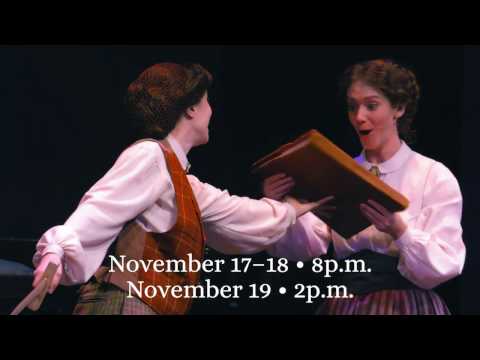
Review: why the lyrics keep cutting back to Jo’s pen
“Little Women” (Broadway: 2005) has a built-in problem and a clever fix. The problem is that Alcott’s novel is episodic, famously rich in texture, and allergic to tidy act breaks. The fix is also the show’s best lyrical idea: make Jo’s writing a second stage world. The score keeps snapping between lived life (Concord) and written life (Jo’s melodramas), so the lyrics can comment on the plot while still being the plot.
Mindi Dickstein’s lyric voice is clean and serviceable when the show is reporting events, and sharper when it’s framing a choice. The standout songs are not the ones that summarize the story; they’re the ones that argue with it. “Astonishing” is not “a big belt because Jo is ambitious.” It’s a mission statement built out of refusal: refusing romance as destiny, refusing family as a leash, refusing the polite version of womanhood that the period tries to sell her. On the other end of the evening, “Days of Plenty” is the show admitting it cannot out-sing grief. It has to name it, then live next to it.
Musically, Jason Howland leans into a Broadway-pop vocabulary with period gestures that read more like flavor than pastiche. When the show works, the lyrics do the heavy lifting: they tell you which sister’s scene you are in, what the family myth is today, and what’s about to crack.
How it was made
This musical has a rare kind of creative backstory: a producer becomes the composer. MTI’s production history notes that Howland was initially attached as a producer, then stepped into the composing role after workshop changes removed the original songwriters. That pivot matters because the final score behaves like a rebuilt machine. It is designed to move a familiar story briskly, with songs that function as emotional signposts.
Another widely repeated piece of behind-the-scenes lore is that Dickstein’s “Astonishing” functioned as a calling card during the lyricist search. Whether you hear that as savvy or opportunistic depends on your taste, but it fits the show’s own worldview: you write yourself into the room, or you do not get in.
The most concrete structural decision is documented directly in MTI materials: the creators fully stage excerpts of Jo’s “operatic tragedy” as a formal contrast to her grounded life. That is the show telling you how to watch it. The lyrics are not only character expression; they are also a lens, constantly reminding you that Jo is turning experience into text in real time.
Key tracks & scenes
"An Operatic Tragedy" (Jo, Bhaer, Clarissa/Braxton/Rodrigo company)
- The Scene:
- Summer 1865, Mrs. Kirk’s New York boarding house. Jo performs her “blood and guts” story like a private vaudeville, with heightened acting and theatrical lighting that makes the room feel like a cheap stage.
- Lyrical Meaning:
- The song establishes Jo’s defense mechanism. When real life hurts, she rewrites it. The lyrics also set up the professor’s critique, which becomes the engine for her growth as an artist.
"Here Alone" (Marmee)
- The Scene:
- Christmas 1863, the March attic. The girls’ energy drops out, and the space narrows to Marmee. The quiet is the point: war has made the house feel larger and lonelier.
- Lyrical Meaning:
- Marmee gets the show’s most adult lyric writing: bravery as performance. The song gives her permission to admit fear without collapsing the family’s morale.
"Take a Chance on Me" (Laurie)
- The Scene:
- Annie Moffat’s ball. The scene is social pressure in formalwear. Laurie’s charm reads as playful until the lyric starts sounding like insistence.
- Lyrical Meaning:
- The lyric is pursuit as flirtation, which becomes important later when Jo refuses the marriage script. It’s the show demonstrating how “romance” can also be a trap.
"Five Forever" (Jo, Meg, Beth, Amy, Laurie)
- The Scene:
- Late winter 1864, the March parlor. After a crisis, the group seals itself into a vow, lit warmly like a family portrait.
- Lyrical Meaning:
- The lyric is comforting and naïve on purpose. It’s the show planting a promise it knows it will break, which makes Act II’s losses hit harder.
"Astonishing" (Jo)
- The Scene:
- Late spring 1865, the attic. Laurie exits after proposing. Jo is alone with her notebook and the sound of a life changing without permission. The number plays like a self-directed audition under a single, insistent light.
- Lyrical Meaning:
- This is Jo’s declaration of authorship over her own story. The lyric is full of forward motion and self-invention, and it works because it’s also grief. She can feel the family era ending, and she chooses ambition as the only way to survive it.
"How I Am" (Professor Bhaer)
- The Scene:
- Late summer 1866, Mrs. Kirk’s boarding house. Bhaer tries and fails to write an honest sentence. The staging often treats his restraint as comedy, then lets it become sincerity.
- Lyrical Meaning:
- The song is emotional literacy as a struggle. Jo writes easily; Bhaer edits himself to death. The lyric’s halting quality is character, not weakness.
"Some Things Are Meant to Be" (Beth, Jo)
- The Scene:
- Fall 1866, Cape Cod. The world is calm while the truth is brutal. The lighting tends toward late-afternoon softness, as if the day is already leaving.
- Lyrical Meaning:
- The song is acceptance without sentimentality. The lyric refuses to bargain, which is why it lands: it is the show finally stopping the sprint and letting the consequence speak.
"Days of Plenty" (Marmee)
- The Scene:
- Winter 1867, the March parlor. After Beth’s death, the house feels rearranged. Marmee steadies the room with a lullaby-like assurance that does not erase sorrow.
- Lyrical Meaning:
- This is the musical’s moral spine: gratitude as survival, not cheerfulness. The lyric gives permission to remember joy without pretending loss did not happen.
"Small Umbrella in the Rain" (Jo, Professor Bhaer)
- The Scene:
- Spring 1867, outside the March house, amid wedding bustle. Bhaer arrives with a kite, not a speech. The staging often plays the confession as awkward, then suddenly sincere.
- Lyrical Meaning:
- The lyric frames love as partnership in weather. It’s modest, domestic, and intentionally un-grand, which makes it feel like a choice Jo can live with.
Live updates (2025–2026)
Information current as of January 28, 2026.
“Little Women” remains active in two lanes at once: touring presentations and a steady pipeline of licensed productions. A new North American tour launched February 3, 2024 and was announced as traveling to more than 50 cities across the U.S. and Canada, with casting publicized in early 2024. That tour history matters because it keeps the show in circulation beyond “school favorite” status.
In New York, a family-oriented run is listed at 92NY Theater for Young Audiences from February 8–28, 2026, which signals the title’s continued positioning as intergenerational programming. Meanwhile, MTI’s productions map shows clusters of scheduled performances across late April and early May 2026 in multiple U.S. cities, a useful real-world indicator that the show is still being mounted frequently.
One point of confusion to watch in 2026 press: Reuters covered the London premiere of “Jo - The Little Women Musical,” a separate “Little Women” adaptation with different writers and a different development history. It is not the 2005 Broadway musical by Knee, Dickstein, and Howland.
Notes & trivia
- Broadway run: Jan. 23, 2005 to May 22, 2005, 137 performances, at the Virginia Theatre.
- MTI notes the show’s formal device: fully staged excerpts of Jo’s “operatic tragedy” open each act, contrasting fantasy writing with Concord reality.
- A U.S. national tour began shortly after Broadway closed and concluded in 2006.
- The cast album was recorded in February 2005, with Playbill reporting a Ghostlight Records session on Feb. 28.
- Release dates for the Original Broadway Cast Recording are widely listed as May 3, 2005 by major music retailers and databases.
- “Astonishing” is positioned as the Act I closer in published study guides, following Jo’s refusal of Laurie’s proposal.
Reception
Critics tended to agree on the headline: the material is beloved, the adaptation is tidy, and the evening depends heavily on Jo. In trade coverage, the show is often framed as structurally efficient but emotionally abbreviated, a consequence of compressing a long novel into a conventional musical shape. The more generous readings focus on performance and on the show’s clearest lyrical move: making writing the dramatic engine.
“It’s hard not to love the March girls of Concord, Mass.”
“As played by Sutton Foster, Jo is a joy to watch in an otherwise lukewarm new musical.”
“Writers … have ignored almost all the warm and winsome coming-of-age …”
Quick facts
- Title: Little Women
- Year: 2005 (Broadway)
- Type: Musical adaptation of Louisa May Alcott’s novel
- Book: Allan Knee
- Music: Jason Howland
- Lyrics: Mindi Dickstein
- Original Broadway venue: Virginia Theatre (New York)
- Original Broadway run: Jan 23, 2005 – May 22, 2005 (137 performances)
- Setting: Concord, Massachusetts and New York City; Christmas 1863 to Spring 1867
- Selected notable placements: “An Operatic Tragedy” (Act I, Mrs. Kirk’s), “Here Alone” (Act I, attic), “Astonishing” (Act I finale, attic), “Some Things Are Meant to Be” (Act II, Cape Cod), “Days of Plenty” (Act II, parlor), “Small Umbrella in the Rain” (late Act II)
- Original Broadway Cast Recording: commonly listed release date May 3, 2005; label Ghostlight Records
- Availability: widely available on major streaming services and retailers
Frequently asked questions
- Can you provide the full lyrics here?
- No. Full lyric text is copyrighted. This guide focuses on song meaning, where each number happens, and how the writing functions in the story.
- Why does the show include “operatic tragedy” scenes?
- They externalize Jo’s imagination. The staged excerpts let the musical show Jo’s inner life as theatre, not narration, and they help compress the novel’s episodic structure.
- Where does “Astonishing” happen in the plot?
- It closes Act I, after Laurie proposes and Jo refuses. Alone in the attic, she decides she must leave Concord and commit to becoming a writer.
- Is there a current tour or is it mainly licensed productions?
- Both. A North American tour launched in February 2024, and MTI’s listings show ongoing licensed productions scheduled through 2026.
- Are there multiple “Little Women” musicals?
- Yes. The 2005 Broadway musical is by Allan Knee, Mindi Dickstein, and Jason Howland. Separate adaptations exist, including a different “Jo - The Little Women Musical” covered in 2026 London press.
Key contributors
| Name | Role | Contribution |
|---|---|---|
| Allan Knee | Book writer | Compressed Alcott’s episodic novel into a two-act musical structure with a Jo-as-writer frame. |
| Mindi Dickstein | Lyricist | Lyric architecture that distinguishes family realism from Jo’s staged fiction sequences. |
| Jason Howland | Composer | Broadway-pop score with period gestures; built clear act-structure around Jo’s artistic arc. |
| Susan H. Schulman | Director (Broadway) | Original staging and tone control between intimate family scenes and theatrical “story” interludes. |
| Kim Scharnberg | Orchestrations | Orchestral palette supporting shifts between Concord domesticity and heightened melodrama. |
| Sutton Foster | Original Broadway cast | Originated Jo; performance frequently cited as the production’s primary asset. |
Sources: MTI, IBDB, Playbill, Variety, Talkin’ Broadway, AllMusic, New York Theatre Guide, BroadwayWorld, 92NY, Official Broadway Study Guide (PDF).