Little Me Lyrics – All Songs from the Musical
Little Me Lyrics: Song List
About the "Little Me" Stage Show
This histrionics based on the P. Dennis’ novel. The book contains very private memoirs of fictional star of theater, film & TV named Belle. N. Simon wrote the script to the project. Music is the creation of Cy Coleman, lyrics & songs belong to C. Leigh. All they are leading theatrical figures, therefore, their future creation has been in advance prophesized to have a great success.Staging of Little Me is somewhat unique in the theater’s area, as it has been produces three times with a break of 36 years on Broadway. And all three times were more & more successful: the musical received critical praises and a number of prestigious awards: 9 nominations for Tony in 1963 and 1 win, plus 1 win of Theatre World Award; 3 Tonies nominations in 1982; 1 Tony win in 1999 and 3 more nominations, plus 2 Drama Desks in 1999.
The last Broadway’s appearance of the play was on 1998. Almost 100 performances were delivered along with 43 preliminaries. Rob Marshall choreographed & directed. This fellow is known in the world of cinema for the film Memoirs of Geisha. But he did even more: he received 4 Tony nominations in the period 1993-1998, shoot 11 films in period 1995-2014, among which such hits as: Victor/Victoria, mega huge hit Chicago, Pirates of the Carribean and Into the Woods in 2014. The latter was tremendously magnificent creation!
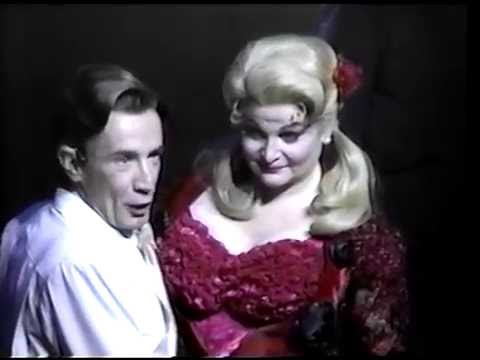
Stars here were: F. Prince & Martin Short. Last one is also a star of the scene, lesser amount of achievements he has in cinemas. Rob Marshall said that they were happy to have Marty engaged, as production with his participation takes place with ease & very productively.
Release date: 1999
"Little Me" – The Musical Guide & Song Meanings
Review
“Little Me” is a musical comedy that dares you to admire the craftsmanship while laughing at the characters. That’s the thesis and the trap. Neil Simon builds a plot that behaves like a vaudeville trunk, while Cy Coleman and Carolyn Leigh write songs that sound effortless, then hide the work inside the rhyme. The show succeeds when it is staged with the straight-faced precision of a farce. The joke is not that musical comedy is silly. The joke is that everyone onstage is deadly serious about being silly.
The lyric engine is Carolyn Leigh’s specialty: dense, joke-forward, and engineered for performers who can land consonants like punchlines. Her best songs in “Little Me” work in two directions at once. They advance Belle Poitrine’s biography, and they comment on the very act of turning a messy life into a “star” narrative. That’s why the score keeps returning to themes of self-invention, class-climbing, and romantic fantasy that curdles into transaction.
Musically, Coleman writes in the language of classic Broadway swing with a satirical grin. The songs are not museum pieces. They are performance puzzles. “I’ve Got Your Number” is built like a flirtation routine with gears. “Real Live Girl” is a character song that begs for comic dignity. And “The Other Side of the Tracks” is Belle’s origin story as propulsion, two tempos, one obsession. If you want to understand why great comedy lyrics are hard, start here.
If you are coming to the 1998 Broadway revival recording era (recorded in 1999), listen once for plot, then a second time for technique. Notice how often Leigh uses internal rhyme and conversational phrasing that still scans cleanly. The laughs are not random. They are timed.
How It Was Made
“Little Me” started as an adaptation of Patrick Dennis’s comic novel about an invented diva writing her own myth. That source is crucial: the story is already a performance of memory, which gives Neil Simon permission to be “slapdash” on purpose, then use that looseness as a launchpad for set pieces. The original Broadway production was also a dance-forward event, with musical numbers staged by Bob Fosse. That matters even when you are only listening, because the score often implies motion: snaps, struts, pivots, and punchline pauses.
There is also a tasty bit of Broadway folklore in the score’s ecosystem. A Masterworks Broadway essay notes the claim that two songs associated with “Little Me” had earlier lives as material Coleman and Leigh wrote when asked to audition for “Gypsy.” Whether you treat that as fact or legend, it frames what you are hearing: Leigh and Coleman writing in dialogue with earlier Broadway archetypes, sometimes by borrowing the archetype’s clothes and tailoring the seams for comedy.
The late-1990s revival was explicitly shaped around a specific performer. Rob Marshall’s comments about tailoring the production for Martin Short underline what the show has always been: a star vehicle that requires athletic comic acting and fast character switches. In that sense, “Little Me” is less a period bauble than a machine that only runs at full speed when its cast can drive it.
Key Tracks & Scenes
"Little Me" (Belle and Company)
- The Scene:
- Belle frames her autobiography as entertainment, usually with a showbiz glow: footlights, a touch of sparkle, and an ensemble that behaves like her memory coming alive. In the revival track listing, it functions as a brisk thesis statement.
- Lyrical Meaning:
- The lyric compresses a life into brand management. Belle’s “I” becomes a product, which is funny because it is recognizable. The satire is that autobiography is choreography.
"The Other Side of the Tracks" (Belle)
- The Scene:
- Venezuela, Illinois, split by class. Productions often stage it with a literal divide: light and dark, storefront and mansion, the dream line drawn like a sidewalk crack. The revival even plays with tempo variants, underlining obsession as momentum.
- Lyrical Meaning:
- This is Belle’s central engine: ambition dressed as romance. The lyric is funny because it is specific about status while pretending it is about love.
"I Love You" (Noble and Belle)
- The Scene:
- A young-love moment that plays like a parody of operatic sincerity. Directors usually keep it clean and centered, letting the song’s earnest posture heighten the comedy.
- Lyrical Meaning:
- The lyric sells devotion, then exposes how devotion can be a social plan. Belle’s love is real, and also strategic. That double exposure is the show’s heartbeat.
"Be a Performer!" (Benny and Bernie)
- The Scene:
- A backstage pep talk delivered like a vaudeville lecture. It tends to be staged with busy stage-business and sharp angles, as if the world is literally shoving Belle into show business.
- Lyrical Meaning:
- Leigh turns a career instruction manual into comedy. The song argues that “talent” is less important than survival skills. It is cynical, jaunty, and true enough to sting.
"I've Got Your Number" (George Musgrove and Belle)
- The Scene:
- A nightclub seduction where the rhythm does half the flirting. In many stagings, the lighting tightens into a cabaret pool, giving the number a “routine within the show” feel.
- Lyrical Meaning:
- This is the score’s masterclass in charm as manipulation. The lyric’s confidence is the joke, and also the danger. Belle learns how power talks.
"Real Live Girl" (Fred Poitrine)
- The Scene:
- A near-sighted romantic misread played at full sincerity. The staging often emphasizes physical comedy, but the best performances let the character believe every word, even as the audience sees the mistake.
- Lyrical Meaning:
- Leigh writes innocence with a cracked edge. The lyric is a love song to an illusion, which makes it both sweet and ridiculous. That balance is why it has outlived the show.
"Boom-Boom" (Val du Val)
- The Scene:
- A flamboyant entrance number that stops the plot and demands attention. It is usually staged with a wink of burlesque and a blast of warm light, because the character is basically a spotlight with legs.
- Lyrical Meaning:
- It parodies sexual bravado as showmanship. The lyric’s insistence is the gag: the character cannot imagine not being adored.
"Here's to Us" (Belle and Company)
- The Scene:
- A toast that plays like an end-of-story self-congratulation. Productions often stage it with party energy, then let a faint melancholy peek through, because triumph can feel thin when it is rehearsed.
- Lyrical Meaning:
- On paper it is celebratory. In context it reads as a coping mechanism. Belle’s life is a performance, and the lyric dares you to decide whether that is sad, smart, or both.
Live Updates
Information current as of January 28, 2026.
The most active “Little Me” footprint in 2025 to early 2026 is licensing, not a commercial Broadway run. Concord Theatricals continues to license the title and positions it as a full-length comedy with a compact cast and a clear “star vehicle” spine. That keeps it attractive for schools, conservatories, and companies that have one comic virtuoso to build around.
On Broadway itself, “Little Me” is not listed among currently announced, Tony-eligibility-season productions for the 2025–2026 window as published by Broadway Direct. In practice, that means your next major New York “Little Me” is more likely to arrive as a concert staging, a gala, or a limited engagement rather than an open-ended commercial run.
If you are producing it now, the modern adjustment tends to be tonal: directors lean into the show’s satire of fame and class, and they handle the period caricature with more intentional framing. The score can take it. The lyrics are sturdier than the jokes around them.
Notes & Trivia
- The 1998 Broadway revival (often associated with a 1999 cast recording release cycle) opened November 12, 1998 and closed February 7, 1999.
- Martin Short played a carousel of Belle’s men in the revival, a direct echo of the original star-vehicle design established by Sid Caesar.
- The revival was directed and choreographed by Rob Marshall, and it was openly tailored to Short’s strengths.
- A Masterworks Broadway essay notes the claim that “Dimples” and “Be a Performer” may have originated as audition material Coleman and Leigh wrote when invited to audition for “Gypsy.”
- The 1999-era “New Broadway Cast Recording” documentation lists a studio recording date in March 1999, after the Broadway run had ended.
- Leigh’s lyric reputation is not just fan lore: Playbill has singled out “Little Me” as one of her funniest bodies of Broadway lyric work, emphasizing how joke-dense the writing is.
Reception
Critically, “Little Me” often gets graded on what it tries to be: an old-school musical comedy built for a comedian, with songs sharp enough to justify the “musical” part of the label. That framing is why Carolyn Leigh’s lyrics keep coming up in serious commentary. Even when reviewers argue about whether the piece is “great,” they tend to concede the score’s professional bite.
The 1998 revival discourse also underlines something useful for listeners: “Little Me” is only as alive as the performer velocity. When the cast is crisp, the lyrics sound like champagne. When the staging gets broad, the same lines can sound like community-theatre mugging. The writing is not the problem. The calibration is.
“Leigh came up with one of Broadway’s funniest sets of comedy lyrics for Little Me, joke-filled and wildly inventive.”
“Encores! may finally have met a musical that doesn’t suit the mission.”
“Little Me perfectly straddles the worlds of old-fashioned musical comedy and modern metatheater for a nonstop laugh fest.”
Quick Facts
- Title: Little Me
- Year focus for this page: 1998 Broadway revival and its 1999 cast recording cycle
- Original Broadway premiere: 1962
- Book: Neil Simon
- Music: Cy Coleman
- Lyrics: Carolyn Leigh
- Based on: Patrick Dennis’s comic novel about Belle Poitrine
- 1998 Broadway revival: Roundabout Theatre Company, Criterion Center Stage Right; ran 99 performances after previews
- Revival leadership: Rob Marshall (direction and choreography)
- Signature songs often excerpted: “The Other Side of the Tracks,” “I’ve Got Your Number,” “Real Live Girl,” “Be a Performer!”
- Label context (1999 cast recording): Released as a “New Broadway Cast Recording,” commonly associated with Varese Sarabande in reviews and discography listings
- Availability: Licensed for production through Concord Theatricals
Frequently Asked Questions
- Can you post the full lyrics?
- No. Full lyric reprints are typically copyrighted. This guide focuses on meaning, scene function, and songwriting technique.
- Why do people say the 1999 recording is a “1998 revival” album?
- The Broadway revival opened in 1998 and closed in early 1999, while documentation for the commercial studio recording points to a 1999 recording date. The production and the recording live on adjacent calendar pages.
- What songs should I start with if I only want the essentials?
- “The Other Side of the Tracks” for Belle’s engine, “I’ve Got Your Number” for the score’s comic swagger, “Real Live Girl” for character writing, and “Be a Performer!” for the show’s survival manual in rhyme.
- Is “Little Me” mostly a dance show because of Bob Fosse?
- The original staging had musical numbers and dances staged by Fosse, and many productions keep the movement vocabulary sharp. Even when choreography changes, the score still implies physical comedy and stylized motion.
- What is the show’s main lyrical theme?
- Self-invention. Belle narrates her life like she is selling a legend, and the lyrics keep exposing the bargain between romance, class, and performance.
Key Contributors
| Name | Role | Contribution |
|---|---|---|
| Neil Simon | Book | Builds the faux-memoir structure that lets scenes play like comic chapters. |
| Cy Coleman | Composer | Writes swing-forward Broadway craft that supports rapid-fire comedy. |
| Carolyn Leigh | Lyricist | Joke-dense lyric writing with clean scansion and performer-friendly timing. |
| Patrick Dennis | Source author | Provides the diva autobiography premise: a life-story as a staged act. |
| Bob Fosse | Original musical staging | Set the show’s physical comedy expectations and dance-forward identity. |
| Rob Marshall | Director and choreographer (1998 revival) | Tailored the revival for a multi-role comic star and kept the pacing athletic. |
| Faith Prince | Belle (1998 revival) | Anchors the satire with clarity and vocal polish across Belle’s timeline. |
| Martin Short | Multiple roles (1998 revival) | Delivers the show’s core stunt: a rotating gallery of lovers and husbands. |
Sources: IBDB, Playbill, Masterworks Broadway, Concord Theatricals, TheaterMania, Vulture, Overture (production and recording database), MusicWeb International, Amazon/Discogs track listings.