Little Mary Sunshine Lyrics – All Songs from the Musical
Little Mary Sunshine Lyrics: Song List
- Act 1
- Forest Rangers
-
Little Mary Sunshine
-
Look for a Sky of Blue
-
You're the Fairest Flower
-
In Izzenschnooken on the Lovely Essenzook Zee
-
Playing Croquet
-
Swinging
- How Do You Do?
- Tell a Handsome Stranger
-
Once in a Blue Moon
-
Colorado Love Call
-
Every Little Nothing
- What Has Happened?
- Act 2
-
Such a Merry Party
-
Say Uncle
-
Heap Big Injun
-
Naughty, Naughty Nancy
-
Mata Hari
-
Do You Ever Dream of Vienna?
-
Coo Coo
-
Finale
About the "Little Mary Sunshine" Stage Show
For the first time, this off-Broadway musical production was shown on the stage of New York's Orpheum Theatre, located in the East Village. The premiere took place on November 1959. The director & choreographer of the production was Ray Harrison. Eileen Brennan starred as Mary Sunshine. William Graham played Captain Jim, John MakMartin was Ranger Billy.The musical was very popular with the public – it stayed on the stage of the theater for almost three years. It was shown 1143 plays before withdrawal from the scene was announced. Showing the musical officially ended in September 1962. West End hosted it under the leadership of Paddy Stone, starring P. Routledge, T. Cooper, B. Cribbins & E. Bishop. The premiere of the musical was held in May 1962 in the local theater of comedy. In the UK, only 43 performances have been shown & because of the negative reviews, it was closed. The performance received Obie award in the category of best musical of the season. Its originality was noted by critics from Broadway and West End.
This production is a good satire on the mores of the recent past. In the names of the songs and the main characters, references can be found to well-known operettas and classical productions of that time. The histrionics is based on a variety of standard templates, elevated to the grotesque.
Release date: 1959
"Little Mary Sunshine" – The Musical Guide & Song Meanings
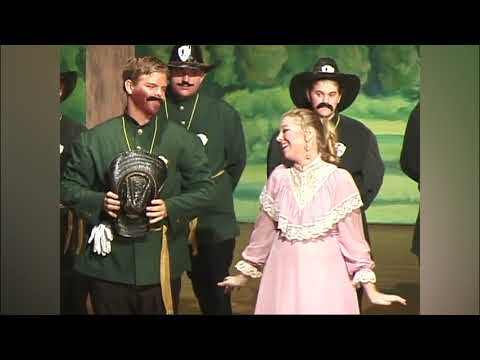
Review
How do you parody a genre built on grand feeling without turning it into a cheap joke? “Little Mary Sunshine” answers by playing the melodies straight and letting the lyrics smirk. Rick Besoyan writes like someone who knows operetta’s manners from the inside: he keeps the etiquette, then slips banana peels under it. The score’s big trick is tonal: it sounds like romance, it behaves like satire. That tension is why the piece still lands when it’s staged with discipline instead of mugging.
Lyrically, the show weaponizes innocence. Mary’s optimism is written as a high sheen that the plot keeps trying to scratch, while the supporting characters get sharper punchlines and knowingly overcooked rhymes. It’s also a show about performance itself: characters sing as if they learned love from sheet music. That’s the point. The text keeps nudging you to hear the quotation marks around every “pure” declaration, without stopping the music from being genuinely singable.
Musically, think “operetta” as a production system: waltz glow, faux-European nostalgia, patter-adjacent comedy, and love duets built like monuments. Besoyan’s craft is in the imitation, plus the little intentional wrongness: a cadence that arrives too proudly, a sentiment that stays up a beat too long. It’s affectionate, but it’s not soft.
How It Was Made
Before “Little Mary Sunshine” became a 1959 Off-Broadway phenomenon, it had a nightclub life. Besoyan wrote a revue for a New York nightclub, and material connected to “Little Mary Sunshine” appeared there in embryo, in a form built for quick laughs and fast musical recognition. That origin matters: the show’s best jokes still feel like they were designed to land cleanly in a room where people are holding drinks, not breath.
Then it moved into theatre history through a smart limitation. The early Off-Broadway version famously leaned on lean resources, which suited the parody: operetta’s “big” emotions, performed in a smaller vessel, become funnier and more intimate at the same time. When it hit, it hit hard enough to become an awards player, and the cast album helped the spoof travel beyond New York, where the genre references were already baked into the audience’s ears.
Key Tracks & Scenes
"Look for a Sky of Blue" (Little Mary Sunshine)
- The Scene:
- Outside the Colorado Inn, a bright, almost storybook afternoon. Mary projects cheer like it’s stage lighting. The blocking typically keeps her open to the audience, as if optimism is a sales pitch she refuses to stop making.
- Lyrical Meaning:
- The lyric sells “positive thinking” so hard it becomes a satire of motivational romance. Mary’s worldview is a refrain, not a choice, and that is exactly why the plot can threaten it.
"Colorado Love Call" (Mary and Captain Jim)
- The Scene:
- A classic duet setup in the Rockies: two leads positioned as if the mountains demanded harmony. Even in modest productions, directors often isolate them in a soft pool of light to mimic operetta’s postcard glow.
- Lyrical Meaning:
- A deliberate send-up of operetta’s “destined lovers” rhetoric. The lyric leans into ceremonial romance, then overcommits, exposing how formula becomes funny when you push it one notch past tasteful.
"Once in a Blue Moon" (Billy Jester and Nancy Twinkle)
- The Scene:
- A garden scene that plays like a flirtation lab. The rhythm usually shifts the body language: suddenly the show is about timing, not destiny. Comedy breathes here.
- Lyrical Meaning:
- The song argues about fidelity in the language of “sweet” musical theatre. The lyric’s charm is that it sounds romantic while describing a relationship built on bickering and appetite.
"In Izzenschnooken on the Lovely Essenzook Zee" (Madame Ernestine von Liebedich)
- The Scene:
- An opera guest star stops the plot and insists on atmosphere. Staging often shifts toward “concert mode”: a stronger front light, fewer interruptions, a character who knows she has the room.
- Lyrical Meaning:
- A parody of Old World nostalgia songs that treat geography like perfume. The lyric is funny because it’s specific in all the wrong ways, and the specificity is the joke.
"Playing Croquet" (Ensemble)
- The Scene:
- Young ladies and rangers collide in a choreographic party trick. This is where directors can underline the spoof with precise, “too proper” posture that keeps cracking into flirtation.
- Lyrical Meaning:
- The lyric treats polite recreation like a mating ritual. The jokes live in how seriously the text takes the trivial, then how quickly it admits it’s not trivial at all.
"Mata Hari" (Nancy Twinkle)
- The Scene:
- A character number with cabaret energy. Nancy often steps out of the show’s innocent frame and performs directly at the audience, with a sly edge the “heroine” never allows herself.
- Lyrical Meaning:
- Nancy’s lyric is a fantasy of glamour and danger, sung by someone stuck in servant status. The comedy is aspiration. The bite is class.
"Do You Ever Dream of Vienna?" (General Fairfax and Madame Ernestine)
- The Scene:
- Two older characters slip into memory in a scene that usually warms the palette: slower movement, softer focus, and a sincere waltz shape that briefly quiets the spoof.
- Lyrical Meaning:
- This is the show admitting it likes operetta, not just its clichés. The lyric plays nostalgia as romance’s second act: less hormonal, more haunted.
Live Updates
Information current as of January 28, 2026.
There is no long-running commercial “Little Mary Sunshine” engagement on Broadway or the West End right now, and the title’s modern life is primarily in licensing. Concord Theatricals continues to handle rights and materials, positioning it explicitly as a spoof-operetta with flexible casting and both full-orchestra and duo-piano options, which keeps it viable for colleges and community companies.
Recent programs and listings show the show still circulates in the amateur ecosystem, where its success depends on two choices: (1) play the music honestly, (2) calibrate the book and lyric jokes so they feel sharp rather than creaky. If you are seeing it in 2026, the most common “update” is interpretive rather than textual: directors often stage it with a clearer satirical frame and more careful contextualization around the show’s period caricatures.
Notes & Trivia
- The original Off-Broadway run began November 18, 1959 at the Orpheum Theatre and became a true long-run hit by Off-Broadway standards.
- The show earned Obie recognition in the 1959–1960 season, with Eileen Brennan among the notable honorees associated with the production.
- Besoyan wrote book, music, and lyrics, which helps explain why the parody voice feels unified across scenes and songs.
- Its joke architecture is largely “genre quotation”: operetta sentiment, slightly over-inked, then snapped into punchline.
- “Colorado Love Call” is built to trigger recognition of earlier operetta love-duet language, even for audiences who cannot name the reference.
- The licensing ecosystem keeps the piece alive because it can be played with two pianos or expanded orchestration depending on budget and space.
Reception
Contemporary reaction clocked the show’s central paradox: it is “genteel” parody, not demolition. The best reviews praised the tunefulness and the lyric technique, which is harder than it looks when you are writing jokes that must still scan in waltz time. Later reviews, especially from regional and community contexts, tend to treat it as a craft test: you can ruin it with winking, or you can make it sing by trusting the form it’s spoofing.
“Bubbles with music and mirth.”
“Wild improbabilities follow one another in woolly sequences.”
“Taken on its own rather undemanding terms, ‘Little Mary Sunshine’ is a delight.”
Quick Facts
- Title: Little Mary Sunshine
- Year: 1959 (Off-Broadway premiere)
- Type: Full-length musical comedy; operetta parody
- Book / Music / Lyrics: Rick Besoyan
- Original staging: Directed and choreographed by Ray Harrison (Off-Broadway)
- Setting: Exterior of the Colorado Inn; early 1900s
- Selected notable placements (scene anchors): “Look for a Sky of Blue” (Scene 1, outside the Inn); “Once in a Blue Moon” (garden scene); “Colorado Love Call” (late Act I); “Such a Merry Party” (Act II opening)
- Album status: Original cast recording exists (Capitol era release history; later reissues noted in collector databases)
- Availability: Licensing and rentals via Concord Theatricals; orchestration options include full pit and duo-piano by request
Frequently Asked Questions
- Can you print the full lyrics here?
- No. Full lyric reprints are typically copyrighted. What I can do is explain song meaning, placement, and what the lyric is doing structurally.
- Who wrote the lyrics?
- Rick Besoyan wrote the book, music, and lyrics, which is why the satire voice stays consistent across the score.
- Is “Colorado Love Call” making fun of something specific?
- Yes. It is designed as an operetta-style love duet that leans hard into the genre’s romantic signaling, making the form itself the punchline.
- Is the show running anywhere in 2025–2026?
- It is not a standing Broadway or West End property. Its current footprint is mostly licensed productions, where it remains a popular choice for schools and community theatres.
- What’s the best way to stage it so it does not feel dated?
- Play the music sincerely, keep the comedy precise, and be intentional about context and characterization around period caricatures.
Key Contributors
| Name | Role | Contribution |
|---|---|---|
| Rick Besoyan | Book, Music, Lyrics | Unified parody voice: operetta craft plus comic lyric engineering. |
| Ray Harrison | Director, Choreographer (original production) | Built the physical “operetta posture” that makes the jokes read. |
| Eileen Brennan | Original star (Little Mary Sunshine) | Helped define the role’s “pure” vocal and comic center in the Off-Broadway hit. |
| John McMartin | Original cast | Key original company performer, associated with the show’s early identity. |
| Arnold Goland | Orchestrations (cast album credits) | Orchestration work associated with recorded versions in collector documentation. |
Sources: Concord Theatricals, Obie Awards, TIME, Los Angeles Times, Playbill, NYPL Archives, Cast Album Reviews, Overture (production database), Concord Players (scene list).