Little Fish Lyrics – All Songs from the Musical
Little Fish Lyrics: Song List
About the "Little Fish" Stage Show
The plot of “Little Fish” was laid on united stories “Days” and “Flotsam” of Deborah Eisenberg. Michael J. LaChiusa made the sound, lyrics, libretto of a play. He called the musical “parable of sorts” of September 11th's events as people understood they wish to spend more time with relatives and friends they love.The first presentation of the play has been performed at the theater called Second Stage in NY. The role of the main heroine Charlotte was played by J. L. Thompson, the ex-boyfriend`s character Robert was played by H. Panaro, the roommate Cinder role was performed by L. DeLaria and friend`s character – J. T. Ferguson. A choreograph and director of the musical became Graciela Daniele. People get acquainted with this work on February 13, 2003. The producing of the play in this theater ended on March 9. It`s important to mention that the director and the author saw in Charlotte`s fight against nicotine the metaphor of stress, that helps us to understand ourselves better.
The play was shown on October 9, 2007 at The Blank Theater in Hollywood, USA. The producing of the play ended on November 18. The play featured A. Ripley as a main character, G. Jbara as a former boss, C. Kimball as a friend, R. Torti as an ex-boyfriend and S. Shelton as a roommate in NY.
In Europe, the first presentation of the musical appeared on October 27, 2009. The play was shown at the Finborough Theater in London. The producing of the musical closed on November 21. Roles were performed by A. Campbell, N. Holder, K. Foster-Barnes, M. Cantwell, A. Maria, J. Worsley and L. Pitt-Pulford. Produced by company JQ Productions. The director of the play became Adam Lenson.
Release date: 2003
"Little Fish" – The Musical Guide & Song Meanings
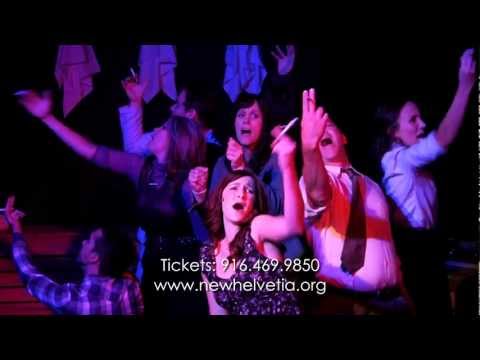
Review: a post-9/11 parable that refuses tidy catharsis
What does Little Fish want? It wants to dramatize a nervous system. Michael John LaChiusa’s 2003 one-act follows Charlotte, a thirtysomething short-story writer in New York, who quits smoking and discovers that sobriety can be louder than nicotine. The show’s big idea is sneaky: withdrawal is not the plot. Withdrawal is the lens. Through it, the city looks harsher, friendships feel more transactional, and memory shows up like a creditor.
LaChiusa’s lyrics operate in shards. They flicker between present-day New York and earlier life in Buffalo, held together by recurring images: the pool, the track, the locker room, a gallery’s sterile white, and the metaphor of “flotsam” that clogs a person’s inner current. The words do not soothe you with inspirational closure. They measure how people talk when they are cornered by their own habits, and how quickly “help” can become noise.
Musically, the score behaves like a city mixtape with a thesis. Styles pivot fast, from jazz-inflected bite to rock grit to quieter, almost classical introspection, and the shifts are part of the storytelling. Charlotte’s inner life is not stable enough for a single genre. The show’s most persuasive lyric trick is also its most brutal: even the jokes feel like coping mechanisms that might expire mid-sentence.
How it was made: Eisenberg stories, LaChiusa’s one-person authorship, Second Stage in 2003
Little Fish is suggested by two Deborah Eisenberg short stories, Days and Flotsam, and LaChiusa wrote the music, lyrics, and book. That “one author” control is audible. The show’s structure is vignette-based, with quick time jumps and short scenes that can feel like thought fragments, which matches Charlotte’s mental state and the post-9/11 New York lens LaChiusa has described as part of his intent.
The original Off-Broadway production opened at Second Stage in February 2003, directed and choreographed by Graciela Daniele, with Dan Lipton as musical director and a design team that leaned into urban abstraction: Riccardo Hernández’s set and Peggy Eisenhauer’s lighting are repeatedly cited in contemporary accounts as essential to the show’s “concrete canyon” mood.
The recording story is its own footnote. The best-known album is not the 2003 cast. It’s a later “world premiere recording” tied to The Blank Theatre’s Los Angeles production (with Alice Ripley as Charlotte) released on Ghostlight Records, which gives the score a second life for listeners who never saw the original 90-minute sprint.
Key tracks & scenes: 8 lyrical moments that do the heavy work
"Days" (Charlotte, Company)
- The Scene:
- The city wakes up. A compressed rush of faces, errands, and minor collisions. Lighting tends to feel fluorescent and impatient, as if New York is always slightly overexposed.
- Lyrical Meaning:
- The lyric frames time as something you survive, not something you savor. It sets the show’s baseline: Charlotte is living inside routine, but she is not inside her life.
"The Pool" (Charlotte, Company)
- The Scene:
- A public pool as a self-imposed replacement for cigarettes. Chlorine air, echoing tiles, bodies in lanes. The staging often emphasizes repetition: strokes, laps, breath.
- Lyrical Meaning:
- Swimming becomes a substitute addiction, but also a ritual of control. The lyric tests whether “healthy” behavior can still be compulsive when the mind is still bargaining.
"Winter Is Here" (Charlotte)
- The Scene:
- The pool in winter. The idea of warmth is memory. The light cools. The space feels emptier, and Charlotte’s solitude gets louder.
- Lyrical Meaning:
- This is the show admitting that coping strategies have seasons. The lyric reads like a weather report for depression: factual, bleak, oddly calm.
"Cigarette Dream" (Charlotte, Company)
- The Scene:
- A dream sequence where nicotine returns as fantasy and threat. Lighting can go expressionistic, with sharp angles and sudden blackouts like cravings cutting the power.
- Lyrical Meaning:
- LaChiusa treats desire as a character with its own agenda. The lyric is not “I want.” It is “this wants me,” which is a more honest description of addiction.
"Flotsam" (Anne)
- The Scene:
- Anne Frank appears as a childhood heroine and a warning system. The space tends to narrow, with a single, focused light that feels like a memory you cannot shake.
- Lyrical Meaning:
- “Flotsam” is emotional debris. The lyric gives Charlotte vocabulary for what blocks her: not trauma as headline, but leftover fragments that keep snagging the present.
"I Ran" (Marco)
- The Scene:
- Marco’s kinetic release. Staging often suggests a run through the city: forward motion, stops, starts, and the sense of fleeing your own thoughts.
- Lyrical Meaning:
- A companion piece to Charlotte’s swimming. The lyric exposes the friend-group’s shared habit: movement as avoidance dressed up as self-care.
"Little Fish" (Marco)
- The Scene:
- A parable delivered inside the hangout energy of the friend group. It can land as a joke until it quietly turns into diagnosis.
- Lyrical Meaning:
- The metaphor is the show’s title in miniature: survival in a city-pond. The lyric nudges Charlotte toward community, but without pretending community is painless.
"Simple Creature" (Charlotte)
- The Scene:
- Late in the piece, Charlotte finally stops sprinting. The staging often isolates her in a still pocket, with the city’s noise reduced to a hum.
- Lyrical Meaning:
- The lyric is a self-portrait stripped of performative cleverness. It is not a victory lap. It is a decision to be human, even if that means being ordinary and frightened.
"In Two's and Three's" (Charlotte, Company)
- The Scene:
- Final convergence. The ensemble gathers without turning it into a triumphal finale. Lights widen, but the atmosphere stays uneasy, like an honest morning after.
- Lyrical Meaning:
- The lyric suggests connection as math: imperfect grouping, uneven pairs, accidental trios. It is companionship without promises, which is the show’s most adult ending.
Live updates 2025-2026: licensing, recordings, and where “Little Fish” lives now
Current as of January 28, 2026. There is no major commercial run currently announced in New York or London based on widely available listings and recent coverage. The show’s practical life is licensing: Concord Theatricals continues to list Little Fish for production, emphasizing its 90-minute running time and its “darker New York” palette.
For listeners, the key access point remains the Ghostlight Records “world premiere recording,” which preserves a full 23-track sequence and circulates on mainstream streaming platforms. If you are building an evergreen lyrics page, that matters more than a one-off revival: the album is where discovery happens now.
One SEO note that saves headaches: “Little Fish” is also the title of unrelated films, theatre companies, and playlists. On-page disambiguation helps. Lead with “Michael John LaChiusa” and “2003 Off-Broadway at Second Stage” early, and the search intent will settle down fast.
Notes & trivia
- The original Off-Broadway run opened February 13, 2003 at Second Stage and closed March 9, 2003, directed and choreographed by Graciela Daniele.
- LaChiusa wrote the music, lyrics, and book, and the piece is suggested by Deborah Eisenberg’s short stories Days and Flotsam.
- Concord credits the 2003 design team as Riccardo Hernández (set) and Peggy Eisenhauer (lighting), with Scott Lehrer (sound) and Toni-Leslie James (costumes), and Dan Lipton as musical director.
- The best-known cast recording is the 2008 Ghostlight Records “world premiere recording,” tied to The Blank Theatre’s Los Angeles production, not the 2003 Second Stage cast.
- The Ghostlight track list includes “The Ninety-Year Old Man” and “Revelations,” giving the album two titles that often get missed in casual song lists.
- Academic criticism has read the show as an intentionally fragmented musical that dramatizes postmodern disconnection and the failure of easy epiphany.
Reception: critics on the score’s brilliance and the book’s jittery shape
Critical response has been consistent in shape, even when critics disagree on temperature: the writing is smart, the score is restless and accomplished, and the narrative can feel like it is dodging traditional payoff. A scholarly essay later argued that the show uses fragmentation to express postmodern disconnection, making “epiphany” structurally difficult by design. In other words, the lack of a clean catharsis is not necessarily a flaw. It is the thesis.
At the time, major reviews tended to admire the craft while questioning whether Charlotte’s interior loop could sustain a full evening. The most generous takes singled out “Simple Creature” as the moment when the show’s scattered materials suddenly lock into emotional focus.
A 90-minute, intermissionless one-act at Second Stage built from sharp vignettes and a contemporary downtown sound.
A reading of Little Fish as a postmodern musical whose form expresses disconnection and resists simple epiphany.
A review praising the score’s stylistic range and pointing to the lyric wit that threads through the show’s anxiety.
Quick facts
- Title: Little Fish
- Year: 2003 (Off-Broadway premiere)
- Type: One-act musical (approximately 90 minutes)
- Music & lyrics & book: Michael John LaChiusa
- Suggested by: Deborah Eisenberg’s short stories Days and Flotsam
- Premiere venue: Second Stage, New York City
- Original director/choreographer: Graciela Daniele
- Musical director (2003): Dan Lipton
- Selected notable placements: “The Pool” at the public pool; “Winter Is Here” in a colder, lonelier pool atmosphere; “Cigarette Dream” as a craving-fantasy sequence; “Flotsam” as a memory lesson; “Simple Creature” as Charlotte’s late-show self-diagnosis.
- Album status: Little Fish (World Premiere Recording) (Ghostlight Records), 23 tracks; widely streaming.
- 2025-2026 status: Licensed via Concord Theatricals; no major commercial revival broadly listed at this time.
Frequently asked questions
- Who wrote the lyrics for Little Fish?
- Michael John LaChiusa wrote the music, lyrics, and book.
- Is Little Fish based on a book or an original story?
- It is suggested by two Deborah Eisenberg short stories, Days and Flotsam, adapted into a musical collage of present action and memory.
- Is there an original cast recording from 2003?
- The widely available album is the 2008 Ghostlight Records “world premiere recording” from The Blank Theatre’s Los Angeles production, rather than the 2003 Second Stage cast.
- Why is there an Anne Frank character?
- Charlotte’s childhood admiration is dramatized as a voice of warning, tied to the idea of “flotsam,” emotional debris that blocks the flow of life.
- What is the title metaphor supposed to mean?
- It frames survival as scale. Charlotte is a “little fish” in a city-pond, learning that isolation feels safe until it becomes suffocating.
- Is the show being produced in 2026?
- It is available for licensing and does appear in smaller productions, but there is no widely publicized Broadway or West End run currently announced.
Key contributors
| Name | Role | Contribution |
|---|---|---|
| Michael John LaChiusa | Music, lyrics, book | Built the show’s fragmented lyric voice and genre-shifting score around addiction, memory, and city life. |
| Deborah Eisenberg | Source author | Wrote the short stories Days and Flotsam that inspired the musical’s narrative DNA. |
| Graciela Daniele | Director, choreographer (2003) | Staged the Second Stage premiere as a fast-moving vignette structure. |
| Dan Lipton | Musical director (2003) | Led the premiere’s musical life and helped shape the show’s downtown sound on stage. |
| Riccardo Hernández | Set design (2003) | Created an urban frame that supports rapid time shifts and interior landscapes. |
| Peggy Eisenhauer | Lighting design (2003) | Used shifting states to snap the show between memory, craving, and city reality. |
| Ghostlight Records | Label | Released the 2008 “world premiere recording,” the main way listeners encounter the score now. |
| Concord Theatricals | Licensing | Represents the show for production licensing and rentals in 2026. |
Sources: Concord Theatricals; Ghostlight Records; Wikipedia; Variety; CurtainUp; Critical Stages; TheaterMania (Blank Theatre casting); BroadwayWorld (Chicago/Kokandy production news); Spotify.