Likes of US, The Lyrics – All Songs from the Musical
Likes of US, The Lyrics: Song List
- Act 1
- Overture
- Twice in Love Every Day
- I'm a Very Busy Man
- Love is Here
- Strange and Lovely Song
- The Likes of Us
-
How Am I to Know
- This is My Time
- We'll Get Him
- Lion-Hearted Land
- We'll Get Him (Reprise)
-
Love is Here (Reprise)
- A Man on His Own
- Act 2
- Entr'acte
- You Can Never Make it Alone
- Hold A March
-
Will This Last Forever
-
You Won't Care About Him Anymore
-
Going Going Gone
- Man of the World
- Have another Cup of Tea
- A Strange and Lovely Song reprise
- The Likes of Us reprise
About the "Likes of US, The" Stage Show
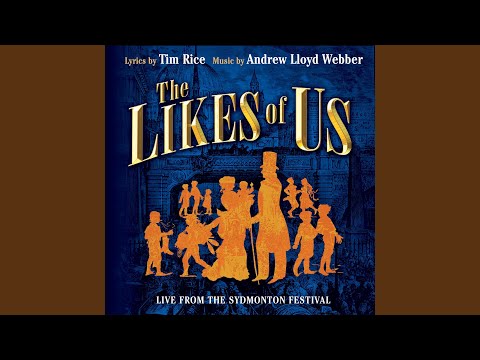
The basis of the musical The Likes of Us is the book of the same name by Leslie Thomas. The latter is dedicated to the history of a real person Thomas John Barnardo. He was a philanthropist, who found a shelter to many homeless children in England. More than 60.000 teenagers were literally rescued and trained life in difficult financial conditions of those times. Lyrics belong to Tim Rice, music was performed by Andrew Lloyd Webber. Interestingly, the idea of a musical first appeared in 1965. It should be produced by the above-mentioned figures, but at that moment, the project has not received adequate funding.The premiere of The Likes of Us took place in 1975 on Sydmonton Festival. The musical was quite warmly received by audiences & critics. The last noted the high realism of what was happening on stage. According to many artists, the creators managed to tell the quality story of Thomas John Barnardo. The musical has never lost its artistic value. There were several interpretations of this spectacular show, including the amateur version called Kidz R Us. But neither it nor many other performances were successful in the repeating of the achievements of the musical in 2005.
Release date: 2003
"The Likes of Us" – The Musical Guide & Song Meanings
Review: what the lyrics reveal about early Lloyd Webber and Rice
If you came here expecting “2003,” you are not crazy, but you are early. The Likes of Us was written in the mid-1960s, then effectively mothballed, then premiered in 2005 in concert form. That time-warp is the point: it’s an origin document that arrived after its authors became institutions.
Tim Rice’s lyrics already show the brand: forward-driving rhyme, clean storytelling, and a strong instinct for public argument sung as entertainment. But the writing also has a student-show bluntness that later Rice learns to disguise with character nuance. Here, the world divides into doers (Barnardo), cynics (the Cockney crowd), and respectable power (politicians, benefactors). The songs play those factions like cards, which makes the show move fast, even when the emotional shading is thin.
Andrew Lloyd Webber’s score is the more surprising artifact. You can hear him trying on two futures at once: pop-inflected romantic duets for the secondary couple, and sturdier, quasi-anthem material for public scenes. It is not “early masterpiece” material. It is early blueprint material. The show’s best trick is tonal contrast: a cheeky pub number, then a rooftop lament for homeless children, then a patriotic cabinet sing-along that can be staged as either sincere pageantry or a wink.
And because the piece surfaced in a concert-style premiere, the lyric style becomes even clearer. With limited dialogue and a narrator bridging gaps, Rice is forced to let songs do the plot work. Some numbers thrive under that pressure. Others feel like well-made songs waiting for a more muscular book to lean against.
How it was made: 1965 writing sprint, 2005 unveiling, and why the narrator exists
Lloyd Webber and Rice met in April 1965 and quickly started writing together. Their first joint effort, The Likes of Us, did not reach the stage, and the public-facing collaboration route detoured into a school commission that became Joseph and the Amazing Technicolor Dreamcoat. The official Lloyd Webber history is blunt about it: they realized The Likes of Us would not see a stage any time soon.
The musical finally surfaced as a 40th-anniversary event: a private Sydmonton Festival performance dated July 9, 2005, followed by a one-night concert at London’s Mermaid Theatre a few days later, recorded for broadcast and album release. Promotional coverage at the time framed it as the “first collaboration” finally getting daylight, with Stephen Fry narrating and Tim Rice appearing in the company.
One structural consequence of that late, concert-first life is the narrator. At least one production report notes that the show’s script was lost at some point, pushing narrative clarity onto the narrator role and giving the piece a “concert” feel rather than a standard book musical. That’s not just trivia. It changes how the lyrics land. The songs do not emerge from scenes so much as arrive like curated evidence in Barnardo’s case file.
Key tracks & scenes: 8 lyrical moments that matter
"Twice in Love Every Day" (Rose)
- The Scene:
- The Edinburgh Castle gin palace in London’s East End. A rough room, warm light, loud laughter, and a performer who knows exactly how to work the crowd.
- Lyrical Meaning:
- Rice introduces the street world with a grin that has teeth. The lyric sells vice as normal commerce, setting up Barnardo as an outsider who will be punished for taking poverty personally.
"I'm a Very Busy Man" (Barnardo, Cockneys)
- The Scene:
- Barnardo tries to move through the pub with purpose, gets dragged into confrontation, and the room turns into a chorus of mockery.
- Lyrical Meaning:
- A character thesis with a satirical edge: Barnardo’s ambition reads as arrogance to people surviving on cynicism. The lyric is about class friction disguised as banter.
"Love Is Here" (Johnny, Jenny)
- The Scene:
- Outside the tavern, the noise drops. A small pool of light. Two young people bargaining with the future.
- Lyrical Meaning:
- Rice writes the secondary couple as the show’s “ordinary” emotional meter. The lyric argues that romance can be its own form of poverty management.
"Strange and Lovely Song" (Barnardo)
- The Scene:
- Barnardo alone, reflective, walking London streets that feel endless. The staging can be simple: a moving lantern line, fog, and distance.
- Lyrical Meaning:
- One of the score’s early signs of Lloyd Webber’s later gift for yearning. The lyric turns vocation into obsession, suggesting Barnardo is being “called,” whether he wants it or not.
"The Likes of Us" (Children)
- The Scene:
- On London rooftops where homeless children sleep. Cold light, height, and the sense that the city would rather not look up.
- Lyrical Meaning:
- The show’s moral center. The lyric is direct, almost reportorial, and that plainness is its power. It forces the audience to admit the children are not metaphor. They are policy consequences.
"We'll Get Him" (Rose, Chorus)
- The Scene:
- The East End turns on Barnardo. A mob number that can be staged as a music-hall stomp or a genuinely threatening march, depending on the director’s appetite for darkness.
- Lyrical Meaning:
- Rice’s crowd-writing is already sharp: the lyric shows how quickly a community can confuse “interference” with “attack,” especially when shame is involved.
"This Is My Time" (Syrie)
- The Scene:
- Syrie steps out of the public bustle into a focused, devotional moment. A tight spotlight, stillness, and resolve.
- Lyrical Meaning:
- A mission song that also reads as romantic self-definition. The lyric frames charity as identity, which makes Syrie a partner in Barnardo’s work, not just a love interest.
"Lion-Hearted Land" (Prime Minister, Cabinet)
- The Scene:
- A party or official gathering around Lord Shaftesbury’s circle. Polished manners, brighter chandeliers, and a patriotic sing-along that can be played as sincere or satirical.
- Lyrical Meaning:
- The lyric is a mirror held up to respectable Britain: self-congratulation as performance. It’s also an early Rice move, making ideology catchy enough to hum.
"Going, Going, Gone!" (Auctioneer, Barnardo, Crowd)
- The Scene:
- The gin palace is auctioned. Fast patter, rising stakes, and a public gamble staged like sport. Bright, brittle light like a sales floor.
- Lyrical Meaning:
- Money becomes plot. The lyric turns property into leverage and shows Barnardo learning to beat the system with its own tools, even if it stains his hands.
Notes & trivia
- The Likes of Us was written after Lloyd Webber and Rice met in April 1965, completed by 1967, and not produced then, partly because Victorian child poverty had recently been staged successfully in Oliver!.
- The world-premiere period is documented as July 2005, with a Sydmonton Festival performance followed by a Mermaid Theatre concert recorded for broadcast and album release.
- Stephen Fry served as narrator for the 2005 performance and recording; Tim Rice appeared as the Auctioneer in that version.
- One new song, “This Is My Time,” was added for the 2005 presentation, according to contemporary coverage.
- At least one production report notes the script was lost, resulting in a narrator-led structure that plays more like a concert than a conventional book musical.
- The show remains active in amateur and community theatre circuits, including documented 2024 performances by CAODS at Trinity Theatre (Cowes) with a NODA report.
Reception: what people praised, what stayed awkward
The Likes of Us is reviewed less like a commercial title and more like a recovered early painting. The praise tends to focus on how recognizably “Rice” some of the lyric mechanics already are, and how the score contains seeds of later Lloyd Webber impulses. The recurring critique is structural: concert-style storytelling, heavy narrator dependence, and a plot that can feel like earnest history lesson between tunes, unless the staging finds bite.
“It’s the first show that Tim Rice and I wrote together,” Lloyd Webber said, joking it was “over 450 years ago.”
The 2005 concert “added” one new song, “This is My Time,” while otherwise keeping the 1965 material intact.
A production report notes the narrator-led structure gives the piece “a feel of a concert rather than a traditional ‘book musical’.”
Live updates 2025-2026: licensing, streaming, and real-world sightings
Current as of January 28, 2026. There is no major commercial run to track. The show’s real life right now is licensing and listening. Concord Theatricals maintains the title in its catalogue with a plot overview and history notes, and Andrew Lloyd Webber’s own show-licensing portal continues to offer performance licensing information for companies seeking rights.
In the “proof of life” category, the show is still being mounted by amateur societies. A NODA listing documents a June 2024 CAODS production at Trinity Theatre (Cowes), and related local coverage framed it as a rare chance to see a Lloyd Webber and Rice early collaboration staged.
On the soundtrack front, the 2005 Sydmonton Festival recording remains widely available on streaming platforms, and official track uploads continue to circulate on YouTube under rights-holder distribution credits. For SEO purposes, that matters more than a tour: the album is the primary access point, and it is still one search away.
Quick facts
- Title: The Likes of Us
- Year (written): 1965 (completed by 1967)
- Year (first staged): July 2005
- Type: Two-act musical (often presented with narrator-led, concert-style clarity)
- Music: Andrew Lloyd Webber
- Lyrics: Tim Rice
- Book: Leslie Thomas
- Story subject: Dr. Thomas Barnardo and the founding of Barnardo’s homes for children
- Notable placements: “Twice in Love Every Day” in the Edinburgh Castle gin palace opener; “The Likes of Us” on the rooftops with homeless children; “Lion-Hearted Land” at a political society gathering; “Going, Going, Gone!” at the auction of the gin palace.
- Recording: Live double-album from the 2005 Sydmonton Festival-era concert with Stephen Fry narrating; released commercially and still streaming.
- 2025-2026 status: Licensed through Concord Theatricals and ALW Show Licensing; seen primarily in amateur and community theatre productions; album remains the key point of entry.
Frequently asked questions
- Is The Likes of Us a 2003 musical?
- No. It was written in the mid-1960s and first staged publicly in July 2005, decades after it was created.
- Who wrote the lyrics?
- Tim Rice wrote the lyrics, with Andrew Lloyd Webber composing the music and Leslie Thomas writing the book.
- Why is there a narrator?
- The show is often presented in a concert-forward style, and at least one production report notes the script was lost, pushing narrative continuity onto the narrator role.
- Is there a cast recording?
- Yes. The 2005 Sydmonton Festival-era live recording, with Stephen Fry as narrator, is widely available on streaming platforms.
- Where is the show performed today?
- Mostly in licensed amateur and community productions. It is not a current Broadway or West End commercial staple.
- What songs should I start with if I only want two?
- Try “The Likes of Us” for the show’s moral center, then “Going, Going, Gone!” for the sharpest plot-meets-music momentum.
Key contributors
| Name | Role | Contribution |
|---|---|---|
| Andrew Lloyd Webber | Composer | Wrote the score; an early map of later melodic and anthem-writing instincts. |
| Tim Rice | Lyricist | Wrote lyrics that already favor velocity, clarity, and public argument as entertainment. |
| Leslie Thomas | Book | Shaped the Barnardo narrative for musical storytelling; later presentations rely heavily on narration. |
| Stephen Fry | Narrator (2005 recording) | Anchored the concert-style narrative bridges on the premiere-era recording. |
| Concord Theatricals | Licensing | Maintains worldwide secondary-stage availability and show background for producers. |
| ALW Show Licensing | Licensing portal | Provides performance licensing pathway for Andrew Lloyd Webber titles in relevant territories. |
Sources: Concord Theatricals; AndrewLloydWebber.com; ALW Show Licensing; Playbill; BroadwayWorld; NODA; Wikipedia; Spotify; YouTube (rights-holder distributed audio); Island Echo (local coverage).