Light in the Piazza Lyrics – All Songs from the Musical
Light in the Piazza Lyrics: Song List
About the "Light in the Piazza" Stage Show
The Light in the Piazza is musical from Broadway, based on the book of Craig Lucas. Music and lyrics were written by American composer A. Guettel. Partly the basis is Elizabeth Spencer’s novel, transporting the reader in the 1950th year and telling the story of the tragic love of younglings, American and Italian.Largely this musical pays tribute to the era of classic neo-romanticism. Strong opera singing, structured music, an incredible cast – all of the above elements the audience can see and hear in The Light In The Piazza. Color added with the fact that half of his compositions sung on pure Italian. To a greater extent this applies to male parties of M. Morrison (Fabrizio – popular Italian name) and M. Berresse (Giuzeppe, his father).
The first show on Broadway was on April 2005. Creation was warmly welcomed by both the audience & critics. Stay on the wide stage was limited to 504 performances. In the same year, The Light In The Piazza was the winner of numerous prestigious awards, including six Tonies and 5 Drama Desks. Columnist The New York Times Ben Brantley called the musical ambitious and daunting. He also noted the extraordinary vocal abilities of artists and excellent work of costumiers.
Release date: 2005
"The Light in the Piazza" – The Musical Guide & Song Meanings
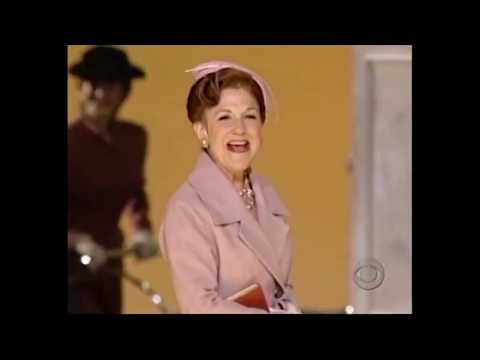
Review
What is the show trying to do? It’s staging a mother’s panic as a love story. The Light in the Piazza looks like romance in sunlit Florence, then steadily reveals its real engine: Margaret Johnson’s fear that love, for her daughter, will be both salvation and exposure. It mostly succeeds because the lyrics behave like thoughts, not slogans. They interrupt themselves, double back, switch languages, and admit things the characters cannot say in conversation.
Adam Guettel’s writing loves unfinished sentences. Clara’s lines often feel like sensations before they become logic, which is exactly how first love lands. Margaret’s lyrics are sharper, self-editing, full of adult qualifiers. When she sings, you can hear a woman translating her own life into something she can live with. The score’s Italian phrases are not decorative. They are a plot device: language keeps pace with intimacy, and misunderstanding becomes a kind of weather.
Musically, the show sits closer to neoromantic classical writing than pop-forward Broadway, and that choice forces a different kind of listening. Motifs recur, harmonies shift under familiar words, and the vocal lines stretch as if the characters are trying to hold onto a moment that is already leaving. The result is sensual and restless. It’s also why the album rewards repeat plays: it’s built like memory, not like a playlist.
How it was made
The piece is adapted from Elizabeth Spencer’s 1960 novella, with Craig Lucas writing the book and Guettel writing music and lyrics. Development ran through major regional houses before Broadway: Intiman Theatre in Seattle (2003) and Goodman Theatre in Chicago (2004), then Lincoln Center Theater’s Vivian Beaumont on Broadway (opening April 18, 2005).
One of the more revealing origin notes comes from a study-guide account of Guettel’s early collaboration attempts, including a reported false start with Alfred Uhry before Lucas became the key partner. That matters because Piazza feels like a show built through hard editorial choices: what you keep offstage is as important as what you sing.
There is also a practical theatrical fingerprint: the show has a long life in licensing precisely because it can scale. It plays as a full-orchestra Lincoln Center romance, but it can also be mounted in more chamber-sized versions, where the lyrics feel even more like close-up confession.
Key tracks & scenes
"Statues and Stories" (Margaret, Clara, Company)
- The Scene:
- Morning in Florence, in a famous piazza. A bustle of tourists and locals. Bright, honeyed light and the hum of a city that feels ancient and alive at once.
- Lyrical Meaning:
- A travelogue that quietly announces the show’s real subject: how a place can loosen a person. The lyric lets Florence act as a third character, tempting both women toward change.
"The Beauty Is" (Clara)
- The Scene:
- Clara, newly awake to the world around her, stops seeing Florence as “sightseeing” and starts seeing it as possibility. The staging often isolates her in a pocket of stillness amid motion.
- Lyrical Meaning:
- Clara’s lyric philosophy is simple, even childlike, and that simplicity is the point. The song argues that beauty is not earned. It is noticed. It sets up why she falls so fast.
"Il Mondo Era Vuoto" (Fabrizio)
- The Scene:
- Fabrizio clocks Clara like a lightning strike. The city noise fades into a romantic close-up. His Italian lyric lands as pure, unmediated feeling.
- Lyrical Meaning:
- It’s a thesis statement for first love: the world was empty until it wasn’t. The lyric is intentionally total, which later makes the show’s moral questions sting.
"Dividing Day" (Margaret)
- The Scene:
- Margaret alone in a hotel room. Late afternoon light, half-shadow. She measures time like a budget, separating what she permits from what she fears.
- Lyrical Meaning:
- This is the show’s adult song. The lyric is about control, and about how control masquerades as protection. Margaret’s language keeps slipping into confession, then snapping back into management.
"Hysteria / Lullaby" (Clara, Margaret)
- The Scene:
- On the street, Clara gets lost and panics. The sound world fractures. Margaret arrives and tries to soothe her, not just as a mother but as a crisis handler.
- Lyrical Meaning:
- Two realities at once: Clara’s terror and Margaret’s practiced calm. The lyric structure mirrors the relationship, with tenderness braided into emergency.
"Say It Somehow" (Clara, Fabrizio)
- The Scene:
- A private corner, or back in the hotel space. The lovers fight their way through language barriers, leaning on tone, gesture, and stubborn certainty.
- Lyrical Meaning:
- The show’s argument about communication. The lyric insists that love will find a syntax, even if it’s broken. It also plants the question that haunts Margaret: what if “somehow” is not enough?
"Aiutami" (The Naccarelli Family)
- The Scene:
- Back in the Naccarelli home, chaos. Everyone needs something. Overlapping voices, quick entrances, comedic spikes, and real familial heat.
- Lyrical Meaning:
- A family portrait in counterpoint. The lyric is less about plot and more about culture: how people talk when they love each other and annoy each other in the same breath.
"The Light in the Piazza" (Clara)
- The Scene:
- Rome, among ruins. A confrontation with Margaret that turns physical and painful. Clara’s emotional flood takes over the stage as the setting feels suddenly enormous.
- Lyrical Meaning:
- Clara’s most mature argument. The lyric is about love as proof of aliveness. It forces Margaret to confront the truth she is avoiding: denying Clara risk also denies her adulthood.
"Octet / Clara’s Tirade" (Company)
- The Scene:
- At the Duomo and in the orbit of wedding preparation. Clara is being tutored in Latin catechism. Emotions simmer across the family. A social kiss sparks Clara’s fury, and the tirade detonates.
- Lyrical Meaning:
- The lyric architecture becomes the drama. Everyone sings what they cannot say politely, then Clara breaks the room open with a truth-telling fit. It’s the show admitting that romance is not only pretty. It’s disruptive.
"Fable" (Margaret)
- The Scene:
- Margaret alone near the end, after the arguments and the paperwork and the compromises. The light cools. The world quiets. She finally speaks in complete sentences.
- Lyrical Meaning:
- Margaret’s reckoning. The lyric reframes the story as a moral tale, not about Italy, but about letting your child step into danger because a safe life can still be a lonely one.
Live updates
Current as of January 28, 2026. There is no active Broadway run, but The Light in the Piazza is very much “in circulation.” It remains available for licensing through Concord Theatricals, and 2025-2026 listings show it continuing to pop up in academic and regional contexts, including scheduled November 2025 performances at James Madison University and April 2026 dates at Pepperdine’s Smothers Theatre.
The show’s modern reputation also got a notable boost from New York City Center Encores! in June 2023, a high-profile reminder that the score plays like a luxury item when you put a powerhouse cast in front of it. That kind of event tends to ripple into programming decisions, plus streaming re-listens of the cast album.
For listeners, the most useful 2026 framing is simple: this is one of the rare 2000s scores that classical singers, theatre singers, and music directors all claim as “their” show. When that many tribes agree, it usually means the writing is doing something unusually exact.
Notes & trivia
- The Broadway production opened April 18, 2005 at Lincoln Center’s Vivian Beaumont Theatre and closed July 2, 2006 (504 performances, after 36 previews).
- The original cast album was released by Nonesuch Records on May 24, 2005, and sources list recording dates in late April 2005.
- The show was developed with support from the Sundance Institute Theatre Laboratory.
- Italian lyrics and translation for “Il Mondo Era Vuoto” are credited to Judith Blazer (with Maria Vernole Blazer also credited for translation in some program materials).
- The Broadway cast featured Victoria Clark (Margaret), Kelli O’Hara (Clara), and Matthew Morrison (Fabrizio).
- Tony attention in 2005 was substantial, including wins for Original Score and Leading Actress (Victoria Clark), plus design wins.
- One reason the lyrics feel so “of place” in Broadway terms is the deliberate multilingual texture: Italian, English, and broken bilingual communication are built into the storytelling, not layered on top.
Reception
Critics in 2005 agreed on one thing: the score was the event. Where they split was on whether the book fully matched the music’s emotional specificity. That tension has followed the show ever since, and it is part of why it has aged interestingly. In later revivals and concert-style mountings, when directors lean into the intimacy, the lyrics often land with more clarity than they did inside the original “grand” Lincoln Center frame.
“Autumn leaves blow across Michael Yeargan’s set” during the Florence opener, with “Statues and Stories” placing us in 1953.
“The Light in the Piazza is a musical about human beings.”
A “tentative but significant step forward” for the American musical, or “a noble failure.”
Quick facts
- Title: The Light in the Piazza
- Year (Broadway opening): 2005
- Type: Romantic drama / book musical
- Based on: Elizabeth Spencer’s novella The Light in the Piazza (1960)
- Music & lyrics: Adam Guettel
- Book: Craig Lucas
- Original Broadway director: Bartlett Sher
- Original Broadway theatre: Vivian Beaumont Theater (Lincoln Center)
- Broadway run: Apr 18, 2005 to Jul 2, 2006 (36 previews; 504 performances)
- Label: Nonesuch Records (Original Broadway Cast Recording)
- Album release date: May 24, 2005
- Selected notable placements: “Dividing Day” in Margaret and Clara’s hotel room; “Hysteria / Lullaby” on the street after Clara gets lost; “The Light in the Piazza” in Rome among ruins; “Octet / Clara’s Tirade” during catechism and wedding preparation at the Duomo.
- 2025-2026 status: Licensed availability via Concord; continuing productions on academic and regional calendars; Encores! highlight in 2023 keeps the title culturally warm.
Frequently asked questions
- Who wrote the lyrics for The Light in the Piazza?
- Adam Guettel wrote both music and lyrics, with Craig Lucas writing the book.
- What is Margaret hiding, and why does it matter lyrically?
- Margaret’s fear centers on Clara’s long-ago injury and what adulthood means for her. The lyrics matter because Margaret’s language is constantly edited, cautious, and protective, while Clara’s is direct and sensation-driven.
- Is the cast album the full score?
- It’s a rich listening experience, but like many Broadway albums it functions as a curated version of the show’s musical storytelling rather than a document of every spoken and sung moment.
- Why are there Italian lyrics?
- Because the story is about love crossing language. The Italian is part of the plot mechanics, not just local color.
- Is there a movie version of the musical?
- There is no widely released film capture of the Broadway musical as a commercial movie. The title originates from Spencer’s novella and an earlier screen version of that story, but the musical itself is primarily experienced live and through the cast album.
- Is the show performed in 2026?
- Yes, in licensed productions. It is not a current Broadway run, but listings for 2025-2026 show it being mounted by educational and presenting organizations.
Key contributors
| Name | Role | Contribution |
|---|---|---|
| Adam Guettel | Composer, Lyricist | Wrote the sung text and the neoromantic score with recurring motifs and multilingual texture. |
| Craig Lucas | Book | Adapted Spencer’s story for stage, structuring revelations around Margaret’s withheld truth. |
| Elizabeth Spencer | Source author | Wrote the 1960 novella that supplies the plot engine and Florence setting. |
| Bartlett Sher | Director (Original Broadway) | Staged the Lincoln Center production that introduced the score to mainstream Broadway audiences. |
| Jonathan Butterell | Choreography | Created movement that supports the show’s observational, city-in-motion atmosphere. |
| Victoria Clark | Original Broadway Margaret | Originated Margaret’s lyric arc of control, regret, and release; won major awards for the performance. |
| Kelli O’Hara | Original Broadway Clara | Originated Clara’s vocal and lyrical innocence-to-agency journey. |
| Matthew Morrison | Original Broadway Fabrizio | Anchored the Italian romantic lead with a lyric style that depends on sincerity over polish. |
| Christopher Akerlind | Lighting design (Original Broadway) | Helped define the show’s visual thesis: emotional warmth and shadow coexisting in the same space. |
| Catherine Zuber | Costume design (Original Broadway) | Created period silhouettes that reinforce class, culture, and Margaret’s guarded elegance. |
| Concord Theatricals | Licensing | Represents the show for 2026 production licensing and rentals. |
Sources: IBDB; Playbill; Nonesuch Records; AllMusic; Variety; Village Voice; New York Magazine; Concord Theatricals; ACU Study Guide (PDF); James Madison University; Pepperdine University; Playbill (Encores! casting); Scribd program excerpts; McGill program (PDF).