Leader of the Pack Lyrics – All Songs from the Musical
Leader of the Pack Lyrics: Song List
- Act 1
- Be My Baby
- Wait 'til My Bobby Gets Home
- A . . . My Name Is Ellie
- Jivette Boogie Beat
- Why Do Lovers Break Each Other's Hearts
- Today I Met the Boy I'm Gonna Marry
- I Wanna Love Him So Bad/Do Wah Diddy
- And Then He Kissed Me
- Hanky Panky
- Not Too Young To Get Married
- Chapel Of Love
- Baby I Love You
- Leader of the Pack
- Act 2
- Look of Love
- Christmas (Baby Please Come Home)
- I Can Hear Music
- Rock of Rages
- Keep It Confidential
- Da Doo Ron Ron
- What a Guy
- Maybe I Know
- River Deep, Mountain High
-
We're Gonna Make It After All
About the "Leader of the Pack" Stage Show
The plot is based on the life of Ellie Greenwich, as it is obvious. The first show of the histrionics took place in New York’s nightclub in Greenwich Village from April to May 1984. It received excellent reviews. The performance was soon ready for Broadway.The way of Leader of the Pack was thorny. A lot of directors changed before it was Michael Peters who took it over. The man also carried choreography’s performance. The composer of the musical was – surprise, surprise – Ellie Greenwich. The script & lyrics created by her, J. Barry, P. Spectrum, G. S. Morton, J. Kent, E. Foley & A. Beatts. Previews on Broadway were held at February 1985. The premiere of the musical took place on April at the stage of Ambassador. After 120 shows, the production derived from the repertoire. It happened at the end of July 1985. In the musical were involved E. Greenwood, D. Manoff, P. Cassidy, D. Bailey, A. Golden, D. Love & G. Taylor.
In 2000-2001, there was a US tour. In 2015, the play was shown in London in two locations: in the Waterloo Theater and in the West End on the stage of Aldwych Theatre. Production was nominated for Tony for Best Musical.
Release date: 1984
"Leader of the Pack" – The Musical Guide & Song Meanings
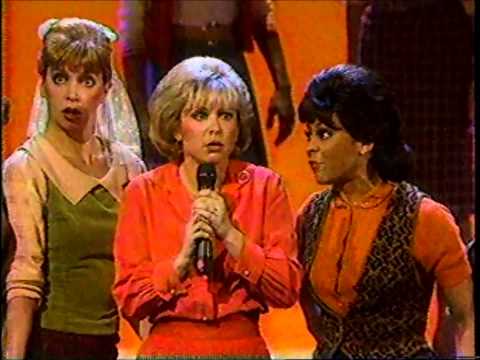
Review: what the lyrics are doing when the “plot” won’t
Leader of the Pack (first presented in 1984, Broadway in 1985) has a blunt strategy: if the book cannot out-muscle the hits, let the hits out-muscle the book. This is a biography built from chorus hooks, Phil Spector thunder, and Brill Building brag. The “lyrics” that matter most are not new lines written for a character, they are familiar pop narratives reassigned to a woman’s career arc. In this show, a love song becomes a résumé entry. A teen tragedy becomes a cautionary press clipping. A Christmas standard becomes the sound of adulthood arriving too early.
That reassignment is the show’s best argument. Ellie Greenwich’s catalog is already full of mini-dramas: devotion, jealousy, longing, the kind of romantic exaggeration that fits perfectly inside two minutes and forty seconds. The musical turns those exaggerations into biography by treating them as emotional snapshots. When it works, you hear how a songwriter can pour private mess into public sparkle and still clock in for the next session.
There is also a craft irony that the show never quite says out loud: the girl-group era sold innocence with professional ferocity. Greenwich’s songs can sound sweet while they are also tightly engineered, rhythmically aggressive, and made for mass consumption. The stage version underlines this by keeping everything in motion, even when the story wants to pause.
Listener tip: try the cast recording with the dialogue segments on. It is not “bonus content,” it is the show’s connective tissue, and it reveals how aggressively the production pushes you from one hook to the next.
How it was made: cabaret roots, “liner notes,” and a risky Broadway bet
The cleanest origin detail is also the most telling: the piece began as a cabaret-style presentation at the Bottom Line in Greenwich Village in 1984, assembled by Melanie Mintz, and only later got inflated into a full Broadway production. A major critic at the time described the Broadway version as a producer’s upgrade attempt, a move from unexpectedly popular club act to something larger, louder, and more “official.” The show kept that cabaret DNA, meaning the evening’s real engine was still the catalog, not the scenes. :contentReference[oaicite:0]{index=0}
Instead of a traditional book, the show leans on what it calls “liner notes,” written by Anne Beatts, with additional material credited to Jack Heifner. That framing is not a cute gimmick. It explains the experience. You are not watching a conventional biographical musical; you are flipping through an album jacket while the needle keeps dropping on the next track. :contentReference[oaicite:1]{index=1}
One more production choice shapes how the lyrics land: on Broadway it ran as a single, continuous act, a fast, compressed ride that behaves like a concert with annotations. Later licensed versions often split it into two acts, which changes the listening experience. In one act, the songs feel like a mixtape that refuses to stop. In two, you get space to think, and the biography reads clearer. :contentReference[oaicite:2]{index=2}
Key tracks & scenes: 8 lyrical moments that carry the story
"Be My Baby" (Darlene Love, Company)
- The Scene:
- A narrator-introduction that plays like a radio turning on. The staging often starts in “now,” then slides into the early 1960s with nightclub-bright lighting and backup-singer geometry.
- Lyrical Meaning:
- The lyric is devotion as spectacle. In the show’s frame, it becomes the first proof of Greenwich’s superpower: taking yearning and making it sound like a parade you can dance to.
"A... My Name Is Ellie" (Young Ellie)
- The Scene:
- Levittown teenager energy, bedroom daydreams, a kid practicing a future introduction. The light feels suburban and boxed-in, with ambition pressing at the edges.
- Lyrical Meaning:
- This is one of the numbers written specifically for the musical, and it functions like a mission statement. The lyric is not about romance, it is about identity, and the need to be heard before anyone grants permission.
"Chapel of Love" (Company)
- The Scene:
- A communal burst that can play as wedding fantasy or wedding irony, depending on the director’s mood. On stage it often arrives as a pop-culture montage: beehives, smiles, choreographed certainty.
- Lyrical Meaning:
- As a stand-alone hit, it promises permanence. Inside the biography, it becomes a reminder that the era’s romance messaging rarely matched the private realities of the people writing it.
"Songwriting Medley" (Ellie, Jeff, Gus, Company)
- The Scene:
- The Brill Building as assembly line and playground. Desks, riffs, quick deal-making, a producer’s impatience, and the sensation of ideas being sold before they finish forming.
- Lyrical Meaning:
- These are not confessional lyrics, they are work lyrics. The meaning is momentum. The show argues that craft itself can be character, and that “hitmaking” is its own emotional condition.
"Christmas (Baby Please Come Home)" (Darlene Love, Company)
- The Scene:
- A holiday song in a non-holiday story, staged like nostalgia with teeth. Many productions let the lighting turn softer while the band stays punchy, because the sadness is hiding in the groove.
- Lyrical Meaning:
- In the biography, this lyric becomes adulthood loneliness, the kind that arrives even when your career looks loud and successful from across the room.
"Rock of Rages" (Young Ellie)
- The Scene:
- A personal crash sequence. The set tightens, the sound edges sharper, and the performer often looks like she’s trying to outrun her own nervous system.
- Lyrical Meaning:
- Another show-written number, it gives Greenwich something pop singles rarely allow: anger without cute packaging. The lyric is career pressure turning into a private emergency.
"Da Doo Ron Ron" (Adult Ellie, Guys)
- The Scene:
- A flash-forward framing device, frequently staged as a master-class or retrospective moment. The performer teaches the room how the past was built, then the past builds itself around her.
- Lyrical Meaning:
- The lyric is famously nonsense-syllable joy, which is exactly why it works as autobiography here. It hints that technique can be playful, and that “meaning” is sometimes the beat, not the sentence.
"River Deep, Mountain High" (Darlene Love, Company)
- The Scene:
- A showstopper slot. The stage goes concert-wide, the band feels bigger than the room, and the singer drives straight through the center of the evening.
- Lyrical Meaning:
- It is devotion turned mythic, and inside the show it doubles as industry history, a reminder of how songs can be reassigned, re-voiced, and still carry an original writer’s fingerprints.
"Leader of the Pack" (Annie, Company)
- The Scene:
- The title moment leans into theatrical sound effects and teen melodrama. You often get a stylized motorcycle fantasy, a lighting snap into comic danger, and a chorus that plays like gossip turned into choreography.
- Lyrical Meaning:
- As a pop hit, it is tragedy with chrome. In the show, it becomes the thesis about girl-group storytelling itself: high emotion, fast narrative, and consequences packed into a hook you can sing on the way out.
Live updates 2025-2026: notable productions and where it’s popping up
Information current as of January 28, 2026. The title is firmly in the regional-and-stock circuit, with periodic “name-theatre” productions that treat it like a party with a point. In summer 2025, Bucks County Playhouse mounted a new production (June 20 to July 20) with Shea Sullivan directing and choreographing, and a cast led by Kyra Kennedy as Ellie Greenwich, alongside roles representing Darlene Love and Annie Golden. :contentReference[oaicite:3]{index=3}
For 2026, the show continues to surface in announced seasons, including a spring run publicized by The Harmony Theater in its main stage lineup. That kind of scheduling is the modern life of this piece: a familiar catalog that can sell tickets, plus a biographical frame that lets theatres market it as more than an oldies concert. :contentReference[oaicite:4]{index=4}
Notes & trivia: structure, cuts, recording quirks
- The first presentation was a Bottom Line cabaret in winter 1984, later expanded for Broadway. :contentReference[oaicite:5]{index=5}
- Broadway opened April 8, 1985 at the Ambassador Theatre and ran through July 21, 1985. :contentReference[oaicite:6]{index=6}
- On Broadway it played as one continuous act without an intermission; many later versions split into two acts. :contentReference[oaicite:7]{index=7}
- Several songs were written specifically for the musical (including “A... My Name Is Ellie” and “Rock of Rages”). :contentReference[oaicite:8]{index=8}
- “Keep It Confidential” was cut shortly after opening and later restored in a different spot during the Broadway run, according to production notes and summaries. :contentReference[oaicite:9]{index=9}
- The original cast recording was released as a 2-LP set and is notable for including dialogue segments, not just songs. :contentReference[oaicite:10]{index=10}
Reception: critics, defenders, and the jukebox problem
This musical has always carried a critical dare: can a string of beloved singles behave like drama? Some reviewers basically said no, and they said it loudly. Others have defended it as a high-energy time machine whose value is not plot mechanics but the rare focus on a woman hitmaker’s working life, staged inside the sound she helped invent. Both camps have a point, because the show itself contains the contradiction: it wants to be biography while it behaves like a set list.
One reason the lyric conversation stays interesting is that the catalog predates the “jukebox musical” label, and the show’s structure predicts what would later become a genre default. A newspaper feature about a later production put it plainly: the Broadway version arrived before the term had even entered common use. :contentReference[oaicite:11]{index=11}
“an incoherent succession of twenty-four songs.”
“touchingly innocent or hopelessly dopey.”
“delivering a ‘jukebox musical’ … before the term even existed.”
Quick facts: album and production metadata
- Title: Leader of the Pack: The Ellie Greenwich Musical
- Year (first presentation): 1984 (Bottom Line, Off-Broadway cabaret roots) :contentReference[oaicite:12]{index=12}
- Broadway opening: April 8, 1985 (Ambassador Theatre) :contentReference[oaicite:13]{index=13}
- Format: Jukebox musical, biographical revue :contentReference[oaicite:14]{index=14}
- Book (“liner notes”): Anne Beatts; additional material credited to Jack Heifner :contentReference[oaicite:15]{index=15}
- Original concept: Melanie Mintz :contentReference[oaicite:16]{index=16}
- Music and lyrics: Ellie Greenwich and collaborators including Jeff Barry, Phil Spector, and others :contentReference[oaicite:17]{index=17}
- Broadway director/choreographer: Michael Peters :contentReference[oaicite:18]{index=18}
- Recording: Original cast recording released as a 2-LP set (Elektra), later issued on CD as a complete set :contentReference[oaicite:19]{index=19}
- Notable recording quirk: dialogue segments included between tracks :contentReference[oaicite:20]{index=20}
- Selected notable placements: “Be My Baby” as the narrator-driven opener; “Rock of Rages” as a breakdown moment; “Da Doo Ron Ron” as retrospective/master-class framing :contentReference[oaicite:21]{index=21}
Frequently asked questions
- Who wrote the lyrics in Leader of the Pack?
- It’s a catalog show. Most lyrics come from Ellie Greenwich’s pop songs, co-written with partners such as Jeff Barry and others; a few numbers were written specifically for the stage piece. :contentReference[oaicite:22]{index=22}
- Is the show a traditional “book musical”?
- Not really. It uses “liner notes” as connective tissue, closer to an annotated concert than a scene-driven biography. :contentReference[oaicite:23]{index=23}
- Which recording should I start with?
- The original cast recording is the clearest snapshot of the Broadway concept, and it includes dialogue segments that explain how the songs are being framed. :contentReference[oaicite:24]{index=24}
- Why does the show sometimes feel like a concert?
- Because it began as a club-style presentation and never fully hides that origin. Even in its Broadway expansion, the catalog remains the engine. :contentReference[oaicite:25]{index=25}
- Was it really early for a jukebox musical?
- Yes. Coverage of later productions notes that it arrived before the “jukebox musical” label became common, even though the model is now everywhere. :contentReference[oaicite:26]{index=26}
Key contributors
| Name | Role | Contribution |
|---|---|---|
| Ellie Greenwich | Primary songwriter; featured performer (original) | Provided the catalog and appeared in the Broadway production, anchoring the biography inside her own songs. :contentReference[oaicite:27]{index=27} |
| Anne Beatts | Book (“liner notes”) | Wrote the connective “liner notes” material that links the hits to Greenwich’s life story. :contentReference[oaicite:28]{index=28} |
| Melanie Mintz | Original concept; cabaret assembler | Assembled the Bottom Line presentation that became the basis for the Broadway expansion. :contentReference[oaicite:29]{index=29} |
| Jack Heifner | Additional material | Contributed additional written material credited alongside the “liner notes.” :contentReference[oaicite:30]{index=30} |
| Michael Peters | Director and choreographer (Broadway) | Staged the Broadway version with a concert-forward pace and high-movement staging. :contentReference[oaicite:31]{index=31} |
| Darlene Love | Featured performer (original) | Served as a musical narrator figure in the show’s framing and a signature voice for key numbers. :contentReference[oaicite:32]{index=32} |
| Annie Golden | Featured performer (original) | Helped embody the girl-group sound onstage and on the cast recording. :contentReference[oaicite:33]{index=33} |
Sources: The New Yorker; Variety; IBDB; Playbill; Concord Theatricals; Las Vegas Review-Journal; Discogs; Amazon Music; BroadwayWorld.