Last 5 Years, The Lyrics – All Songs from the Musical
Last 5 Years, The Lyrics: Song List
- Still Hurting
- Shiksa Goddess
- See I'm Smiling
- Moving Too Fast
- A Part of That
- The Schmuel Song
- A Summer in Ohio
- The Next Ten Minutes
- A Miracle Would Happen/When You Come Home to Me
- Climbing Uphill
- If I Didn't Believe in You
- I Can Do Better Than That
- Nobody Needs to Know
- Goodbye Until Tomorrow/I Could Never Rescue You
About the "Last 5 Years, The" Stage Show
This is musical drama of the new generation. Music, lyrics, songs – all created by a single person, whose name is J. R. Brown. Off-Broadway show took place in March 2002. In the future, many interpretations of the musical were under production, but none of them could repeat the success of the original.There are many guesses about what was the basis for The Last 5 Years. The answer is the story of relations of J. R. Brown with his ex-wife T. O'Neill. Last one noticed in creation of her ex-husband too many coincidences to their real life. Once she even threatened to file a lawsuit, but after Brown changed scenario a little bit, the woman discharged her position.
Most critics responded flattering about this project. They noted the irregular structure of the musical and interesting narrative style. Actions go in different time intervals. According to the director, he wanted to give the viewer a more detailed study of the emotions of the main characters, their stance and attitude towards each other.
The musical is characterized by a wide variety of music. Lyrical songs dominate, among which stands out the song Still Hurting by S. R. Scott (Katie). There is more exotic music like Latin. At the time, The New York Times released an article that expressed admiration for the way the director has managed to combine harmoniously in the project a large number of musical styles.
Release date: 2002
"The Last Five Years" – The Musical Guide & Song Meanings
Review: why the lyrics feel like receipts
Can a breakup musical be fair if each character only gets half the calendar? The Last Five Years (Off-Broadway, 2002) doesn’t try. It commits to subjectivity so hard it turns into structure: Jamie sings forward from first blush to last mistake; Cathy sings backward from divorce rubble to the first time she let herself hope. They share a stage, rarely a moment. That’s the point. They cannot quite share a reality, so the lyrics do the arguing for them.
Jason Robert Brown writes like a person who knows exactly where the laugh lives, then chooses the bruise anyway. His lyric craft is conversational but engineered: internal rhymes pop up like nervous habits, and the melody often contradicts the line just enough to expose self-deception. Jamie’s songs are full of velocity words, the vocabulary of a guy being carried by his own momentum. Cathy’s songs are full of qualifiers and stage directions, the vocabulary of someone constantly asked to “be easier.” If you’ve ever replayed a conversation to find the moment it turned, this score understands you. It also refuses to flatter you.
The soundtrack album matters because The Last Five Years lives or dies on clarity. Every song is a scene. There is no chorus of bystanders to soften the edges, no subplot to let you breathe. When people call it “relatable,” what they often mean is “uncomfortably specific.” That specificity is the show’s advantage and its trap: the more intimate the lyric, the more listeners try to pick a side. Brown’s best trick is that he gives each character enough self-awareness to sound right, and enough blind spot to be wrong.
Editorial method note for readers: factual statements below (dates, venues, casts, album label, the forward-and-backward structure, and recent productions) are tied to primary sources and major outlets. Interpretive lyric readings are mine, informed by those sources and by how the songs function in the official synopsis and performance history.
How it was made: Jason Robert Brown and the “semi-autobiographical” spark
Brown has described the piece as rooted in personal experience, and critics and program notes have long treated it as “semi-autobiographical.” That label is both useful and lazy. Useful because it explains the show’s forensic detail. Lazy because it tempts audiences to treat the work like gossip with piano accompaniment. What’s more interesting is the compositional decision: the timeline split is a formal answer to an emotional problem. How do two people remember the same love story so differently? You let each of them sing their own edit, uninterrupted.
Brown has also openly written about revisiting the text, admitting that even after a show is “finished,” there can be a line that nags or a moment that does not land cleanly. That confession is not a humblebrag. It is craft. A two-hander offers nowhere to hide. Any fuzzy motivation becomes a bright-red hole in the wall, and the writer hears it every night.
Production history backs up why the score stayed alive: it is easy to stage and hard to sing. That combination makes it a rite of passage for actors and a recurring title for regional companies, colleges, and concert versions. And then, finally, it reached Broadway in 2025, with Brown noting updates for a larger house and a contemporary audience.
Key tracks & scenes: 8 lyrical pressure points
"Still Hurting" (Cathy)
- The Scene:
- Opening image, end of the marriage. Cathy is alone in the aftermath, reading what feels like a final note. The light is plain and unromantic, the kind that makes an apartment look like evidence.
- Lyrical Meaning:
- It’s an aria built from contradictory sentences, because grief is contradictory. She insists she is fine, then admits she is not. The lyric repeats like a mind caught in a loop: if you say it enough times, maybe it becomes survivable.
"Shiksa Goddess" (Jamie)
- The Scene:
- Early in Jamie’s timeline. He meets Cathy and turns attraction into mythology at full speed, like he’s writing jacket copy for his own feelings. The staging is often bright and comic, because he is showing off.
- Lyrical Meaning:
- He frames Cathy as escape, a fantasy of difference that flatters him as much as it flatters her. The lyric is funny, but it also exposes a habit: Jamie makes people into stories before he learns how to live with them.
"See I’m Smiling" (Cathy)
- The Scene:
- Cathy is mid-performance, mid-marriage, mid-disappointment. She’s forced to be charming while Jamie’s attention drifts elsewhere. The best stagings let “smiling” read as labor, not mood.
- Lyrical Meaning:
- The lyric is a tightrope: she wants to support him and scream at him in the same breath. Brown writes the pain as etiquette, which makes it sharper. Resentment becomes a sentence she keeps swallowing.
"Moving Too Fast" (Jamie)
- The Scene:
- Jamie’s career begins to lift. He is exhilarated and slightly terrified, but the tempo wins. The light feels like a city at night: momentum, glare, opportunity.
- Lyrical Meaning:
- He claims he’s aware of the danger, then barrels through it anyway. The lyric is self-diagnosis without treatment. It’s also one of Brown’s clearest portraits of ambition as a drug.
"The Schmuel Song" (Jamie)
- The Scene:
- Jamie tries to soothe Cathy with a story, equal parts bedtime tale and pep talk. The staging often narrows into warmth: a private glow that suggests, briefly, they know how to be kind.
- Lyrical Meaning:
- This is Jamie at his most generous and most controlling. He wants to inspire her, but he also wants to author her emotional weather. The lyric shows how love can slide into management without either person noticing.
"A Summer in Ohio" (Cathy)
- The Scene:
- Cathy is out of town doing theatre work while Jamie stays in New York. The number plays as comedic release, a postcard written with clenched teeth.
- Lyrical Meaning:
- She turns loneliness into punchlines because sadness is harder to mail. The lyric is a small masterclass in deflection: when she sounds most hilarious, she is often most isolated.
"If I Didn’t Believe in You" (Jamie)
- The Scene:
- A fight that feels like a reckoning. Jamie defends himself while claiming he’s defending her. The light often goes colder here, less nightclub, more kitchen-table cross-examination.
- Lyrical Meaning:
- He frames criticism as faith, and that’s where the lyric turns dangerous. Brown lets Jamie’s logic sound persuasive long enough for you to realize it’s also a dodge. It’s a love song written in the grammar of a lecture.
"Nobody Needs to Know" (Jamie)
- The Scene:
- Late in Jamie’s timeline. He has crossed a line and narrates his own rationalizations as if he can outtalk the consequences. Many productions isolate him in a tight pool of light, because there is nowhere else to put that kind of confession.
- Lyrical Meaning:
- The lyric is the sound of a person building an emergency exit in real time. He tries on excuses, discards them, picks them back up. The horror is not that he lies. It’s how much he needs the lie to be true.
"Goodbye Until Tomorrow / I Could Never Rescue You" (Cathy & Jamie)
- The Scene:
- The only true intersection. Their timelines meet at the wedding, and the staging often turns ceremonial and suspended, like time briefly agrees to behave. Two songs overlap as two realities finally touch.
- Lyrical Meaning:
- Even here, they sing past each other. Cathy’s lyric is full of arrival. Jamie’s lyric contains a warning disguised as honesty. The duet is romantic, and it is also the show telling you, politely, what the ending will cost.
Live updates 2025-2026: Broadway, the UK run, and what’s next
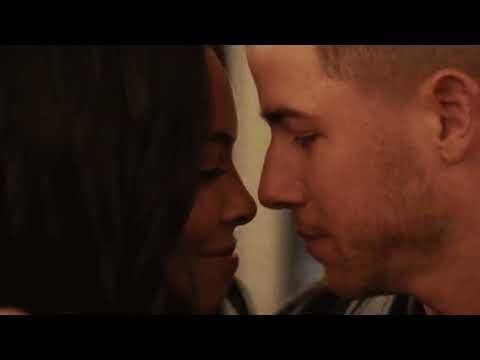
Information current as of January 28, 2026. After two decades as a fan-favorite chamber musical, The Last Five Years finally played Broadway at the Hudson Theatre from April 6 through June 22, 2025, with Nick Jonas (Jamie) and Adrienne Warren (Cathy) in a limited engagement directed by Whitney White. Reporting around the run noted that Brown updated references and adjusted the sound for the larger venue, an unusually public reminder that this piece is living text, not museum property.
In the UK, a Barn Theatre, Reading Rep, and Theatre Royal Bath co-production moved through late 2025 and into early 2026 at the Ustinov Studio, with Martha Kirby and Guy Woolf leading. This matters for lyric fans because the show’s current life is not just celebrity casting. It is repertory muscle: small and mid-size venues programming it as a premium two-hander that can sell tickets without selling its soul.
Outside headline markets, 2026 is full of licensed productions and short runs. That is not filler. It is how this musical has always survived: two actors, one band, and a score that punishes vagueness. The piece keeps returning because each era hears different villains in the same couple.
Notes & trivia: album facts, structure facts, craft facts
- The show’s signature device is structural: Jamie’s songs run forward in time, Cathy’s run backward, and they meet only once, at the wedding.
- The Original Cast Recording is tied to the early Off-Broadway life of the show and is commonly credited as one of Sh-K-Boom Records’ foundational releases.
- Major outlets covering the 2025 Broadway run emphasized that Brown made updates for a contemporary audience and the Hudson’s scale.
- Because the piece is a two-hander, performances live and die on diction and intention. Critics who dislike a production often still praise the writing.
- The 2014 film adaptation (released in 2015 in several markets) broadened the score’s reach, especially for listeners who met the show through streaming rather than theatres.
- Brown has publicly written about returning to the script and tweaking lines, acknowledging that “finished” can be a flexible word when a piece keeps being revived.
Reception: critics vs. cult devotion, and why both are right
Critically, The Last Five Years tends to produce the same split reaction, over and over. Some critics recoil from the premise, calling it emotionally manipulative or structurally gimmicky. Others argue that the structure is the moral of the story: you cannot reconcile two accounts if you only listen to one at a time. The 2025 Broadway reviews were a perfect case study. Several noted uneven performances while still treating Brown’s lyrics as the enduring asset: songs that dramatize thought as it happens, not as it gets cleaned up later.
The cult devotion is easy to explain: the score is playable like a diary. People listen to it in order, then reverse it, then pick a single song and repeat it until it stops hurting. That behavior is not accidental. Brown’s lyric writing invites obsession because it is packed with micro-turns: a justification, a confession, a pivot, then a joke to cover the pivot. The characters keep revising their own memories, and listeners recognize the habit.
The show’s “heart” is in its musical storytelling, even when staging choices wobble.
Brown’s lyrics and melodic lines function as dramatizations of people thinking and reaching conclusions in real time.
Coverage of the Broadway debut highlighted updates to references and sound for a bigger venue.
Quick facts: album and production metadata
- Title: The Last Five Years
- Year (Off-Broadway): 2002
- Type: Two-person chamber musical
- Book, music & lyrics: Jason Robert Brown
- Structure: Jamie tells the story forward; Cathy tells it backward; they meet at the wedding duet
- Original cast recording: Released in 2002; widely available on major streaming platforms
- Broadway production: Hudson Theatre, April 6 to June 22, 2025
- Selected notable placements: “Still Hurting” (opening, end of marriage); “Goodbye Until Tomorrow / I Could Never Rescue You” (timeline intersection)
- Film adaptation: Feature film produced in 2014 and released in 2015 in multiple markets
Frequently asked questions
- Who wrote the lyrics to The Last Five Years?
- Jason Robert Brown wrote the book, music, and lyrics.
- Is the musical meant to be autobiographical?
- Brown and many commentators have described it as rooted in personal experience, but the show works best as crafted drama rather than a scavenger hunt for real-life counterparts.
- What is the one moment where both characters are together?
- The wedding sequence, typically staged as “Goodbye Until Tomorrow / I Could Never Rescue You,” where Cathy’s backward timeline and Jamie’s forward timeline overlap.
- What’s the best way to listen to the cast album?
- First, straight through in track order so the opposing timelines register. Then pick one character’s arc and replay only their songs, which reveals how each lyric strategy changes as the relationship shifts.
- Did it really reach Broadway?
- Yes. The first Broadway production ran at the Hudson Theatre from April through June 2025.
- Is there a movie version?
- Yes, a film adaptation was produced in 2014 and released in 2015 in multiple markets, starring Anna Kendrick and Jeremy Jordan.
Key contributors
| Name | Role | Contribution |
|---|---|---|
| Jason Robert Brown | Writer-composer-lyricist | Created the show’s two-timeline form and wrote the full score and text. |
| Whitney White | Director (Broadway, 2025) | Staged the first Broadway production at the Hudson Theatre. |
| Nick Jonas | Performer | Played Jamie in the 2025 Broadway run, bringing pop-star scrutiny to a notoriously exacting score. |
| Adrienne Warren | Performer | Played Cathy in the 2025 Broadway run, praised by multiple outlets for vocal power and emotional precision. |
| Norbert Leo Butz | Original cast | Originated Jamie Off-Broadway; his performance shaped early listener expectations on the cast album. |
| Sherie Rene Scott | Original cast | Originated Cathy Off-Broadway; her vocal acting defines the album’s emotional temperature. |
Sources: Music Theatre International; IBDB; AP News; The Guardian; Exeunt NYC; Jason Robert Brown (official site); Theatre Royal Bath; What’s On Stage; Apple Music; IMDb.