
Kitty's Kisses Lyrics: Song List
- Act 1
- Overture
- Walkin' the Track
- Choo Choo Love
- Kitty's Kisses
- Finaletto Act I, Scene 1
- Thinking of You
- Two Fellows and a Girl
- I'm in Love
- Promise Your Kisses
- Finale Act I
- Act 2
- Early in the Morning
- I Don't Want Him
- Needles
- First Telephone Scene
- Whenever I Dream
- Second Telephone Scene
- Bounce Me
- Finale Ultimo
About the "Kitty's Kisses" Stage Show
The CD’s release must thank to not the genius of the histrionics itself. We cannot say that it was a phenomenal or a fantastic job, but it was certainly good with lots of thin and thick humor. Fairly even to consider these things as heritage of Broadway, a part of its history.
In the 1920s and 1930s, production played on Broadway and had some success on the West End of London. The actors playing the roles were charismatic and have been repeatedly seen in other successful productions. But after all, the records of the musical went on a long box on the Warner Brothers Music warehouse in Secaucus, that in New Jersey. Long sixty years entries were lying there, lost in time as well as any other spectacular that has not received publicity for millions of people. Once, a theater historian, Tommy Krasker, found them and decided to create a new record.
Mr. Krasker usually took more famous, earlier works, but for some reason, could not ignore this one. Tommy Krasker and his colleague, Sam Davis, who helped him to restore the original Broadway cast of music for Con Conrad, knew what they were doing. This musical had not a single hit, neither songs that deserved to become a hit. But the simplicity and charm of melodies touched professionals and they could not pass-by this. Long and hard work had its outcomes. The album brought them success. It has been memorized, and will forever remain in the history as the Broadway’s classics, accurately reflecting the mood of those times.
Release date of the musical: 2009
"Kitty’s Kisses" – The Musical Guide & Song Meanings
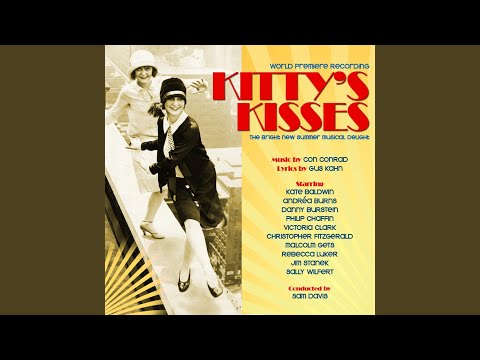
Review
Why does a 1926 musical comedy still land in the ear like a fresh gossip item? Because Kitty’s Kisses is built on the oldest Broadway engine: strangers collide, identities slip, and the lyrics do the winking so the plot can sprint. The story is fluff by design, a young woman misidentified at a hotel and a romance scrambled by timing and reputation. What survives is the language: Gus Kahn’s knack for punchy, conversational rhymes, and Con Conrad’s gift for melodies that move like a dance floor rumor. The 2009 studio recording makes the case that this show was never about “what happens next.” It was always about how quickly a line can turn a situation into a joke, then into a sigh.
Listen for how often Kahn writes about social behavior as choreography: flirting has a route, gossip has a tempo, desire has a rulebook everybody pretends not to read. The score toggles between Charleston pep and operetta-adjacent yearning, with orchestrations that can snap into a brassy dance-band profile and then thin out for parlor-romance intimacy. In other words: the music tells you when the characters are performing for the room, and when they are accidentally honest.
How It Was Made
The show opened on Broadway in 1926, ran a respectable stretch, and then did what most commercial musicals do: disappeared. Its second life is the real drama. Producer Tommy Krasker traced the project back to 1986, when he was helping catalog thousands of musical-theatre manuscripts discovered in a Warner Brothers music warehouse in Secaucus, New Jersey. He describes opening folders where materials were scattered and incomplete, then gradually piecing the score together as he kept finding parts and sketches. What began as curiosity about a composer he mostly knew from film songs became a multi-decade rescue mission, finished as a PS Classics “world premiere recording” with a starry studio cast and freshly prepared orchestrations from original manuscripts.
That context matters because it explains the album’s slightly forensic joy. The recording is not cosplay; it is restoration with a grin. It also comes with one big, candid compromise: the original “Finale Ultimo” is considered lost, and a new finale was created for the album using “The Continental,” Conrad’s later Oscar-winning film song. If that makes purists twitch, it also underlines the point of the enterprise: get the music back into circulation, even if one corner has to be rebuilt.
Key Tracks & Scenes
"Walkin’ the Track" (Lulu and the Boys)
- The Scene:
- A train platform at the start of the story. Light snaps on like a stage manager’s cue: daytime glare, bustling bodies, suitcase handles and impatience. The ensemble sells the era before any character sells a lie.
- Lyrical Meaning:
- This is Jazz Age small talk as propulsion. The lyric treats movement as identity: you are who you are while you are going somewhere. It sets up a show where momentum is a moral alibi.
"Choo Choo Love" (Engineer / Train Crew)
- The Scene:
- Inside a railcar that feels half public, half confessional. The lighting is warm and slightly too flattering, like a chance encounter you want to remember as destiny. The rhythm has that “wheels on track” insistence.
- Lyrical Meaning:
- Kahn writes flirting as a travel schedule, with strangers accelerating from banter to pet names before the next stop. It is funny because it is observational, and it is useful because it foreshadows how quickly Kitty and Robert can fall into the story’s main mistake: trusting a moment to behave like a promise.
"Kitty’s Kisses" (Kitty Brown and Robert Mason)
- The Scene:
- Two people on the edge of romance, with the world insisting they keep it polite. The staging in your head is close-up: softer light, less crowd noise, the sense that the orchestra is eavesdropping.
- Lyrical Meaning:
- The title number is not subtle and does not need to be. The lyric states its terms with a cheerful ultimatum: if love is real, it is exclusive. In a show about mistaken identity, the song argues for a single, unmistakable truth.
"Thinking of You" (Telephone Girl and Day Clerk)
- The Scene:
- Hotel Wendel after-hours. The switchboard becomes a little altar of interference: wires, plugs, half-heard voices. Lighting narrows to pools, as if each connection is its own private booth.
- Lyrical Meaning:
- The song treats longing as a job you cannot clock out of. It is also a neat tonal bridge: the show can joke about romance while still admitting that waiting hurts.
"Needles" (Telephone Operator)
- The Scene:
- Same hotel ecosystem, but now the vibe is brighter and sharper, like a desk lamp aimed at a shopping list. The operator is in control, literally routing other people’s voices while narrating her own plan.
- Lyrical Meaning:
- The lyric is a comic manifesto about “needs” that keep multiplying. It reads like an early pop-culture cousin of material ambition, except Kahn makes it theatrical: the punchline is that desire is both strategy and sport.
"Whenever I Dream" (Robert and Kitty)
- The Scene:
- Romberg-adjacent moonlight. The hotel, the train, the misunderstandings all fade behind a single aim: say the feeling cleanly. The lighting is soft focus; the tempo relaxes.
- Lyrical Meaning:
- This is where the score admits it can do sentiment without quotation marks. Dreaming becomes a safe space where identity cannot be misread, and the lyric leans into that relief.
"Bounce Me" (Comic Pair)
- The Scene:
- Daylight again, with a little hangover energy. The staging wants angles: people entering too fast, exiting too late, doors that behave like conspirators.
- Lyrical Meaning:
- The lyric is playful about boundaries, using physical comedy language to keep things spicy but not scandalous. It is Kahn’s reminder that this world runs on rhythm more than rules.
"Finale Ultimo" (Company)
- The Scene:
- The final knot unties in public. Bright, full-stage lighting. The ensemble returns as social jury and dance floor, blessing the couple and laughing off the mess.
- Lyrical Meaning:
- On the 2009 recording, the ending carries an asterisk: the original finale is considered lost, and the album crafts a replacement using “The Continental.” It is a practical choice that turns into an accidental thesis: for Conrad, a great hook can survive its original narrative and still land as celebration.
Live Updates
Information current as of January 2026. Kitty’s Kisses is not a touring title in the modern commercial sense; its active footprint is the recording. The PS Classics “world premiere recording” remains widely available on major streaming services, and individual tracks also circulate as official “Topic” uploads on YouTube, which has helped the album stay findable for younger listeners who discover cast albums via recommendation loops rather than CD shelves.
If you want the most “stage-like” listen, do it in two sittings and treat the telephone cues and scene-labeled tracks as your scene changes. For headphones: the orchestrations often behave like camera work, tightening around ballads and widening for dance numbers. For speakers: “Choo Choo Love” and “Bounce Me” read best when the rhythm section can punch.
Notes & Trivia
- The show opened on Broadway in 1926 and played 170 performances at the Playhouse Theatre.
- The 2009 album is a studio recording rather than a cast document of a specific production.
- Tommy Krasker traces the project’s origin to manuscript discoveries in a Warner Brothers music warehouse in Secaucus, New Jersey, where materials were scattered across folders and boxes.
- Sam Davis conducted the recording and prepared orchestrations from original manuscripts for the project.
- The plot hinges on a hotel mix-up: Kitty is mistaken for Mrs. Dennison, triggering the central misunderstanding and the show’s comic panic about appearances.
- “Needles” frames consumer “needs” as a running joke and a character philosophy, a surprisingly modern comic angle for a 1920s number.
- The original “Finale Ultimo” is considered lost; the recording’s finale was created using “The Continental,” Conrad’s later film song.
Reception
There is no neat critical through-line from 1926 to now because most listeners meet Kitty’s Kisses as an album, not a production. The modern response tends to be grateful surprise: it is “new” music that feels instantly legible, because its comedy is built from behavior, not references. Critics also tend to praise how the recording frames the score with period-aware orchestrations that keep the songs buoyant rather than antique.
“There are rediscoveries and there are rediscoveries — but Kitty’s Kisses is a lulu.”
“I was hired… to assist… in cataloguing… vintage musical theatre manuscripts… all randomly stored away in boxes… and I began to piece together the score.”
“ ‘Choo Choo Love’ from Kitty’s Kisses sounds like a natural for Eddie Korbich.”
Quick Facts
- Title: Kitty’s Kisses
- Original Broadway year: 1926
- Recording featured here: Kitty’s Kisses (World Premiere Recording), 2009 (studio cast)
- Type: Musical comedy
- Music: Con Conrad
- Lyrics: Gus Kahn (with additional lyric credit on “I’m in Love” noted in Broadway records)
- Book: Philip Bartholomae and Otto Harbach
- Conductor / Orchestrations for recording: Sam Davis
- Producer (recording): Tommy Krasker (PS Classics)
- Notable placements (story world): Train platform and railcar opening run; Hotel Wendel mistaken-identity suite; hotel switchboard “telephone” sequences
- Release context: PS Classics “forgotten musicals” restoration project
- Label / album status: PS Classics; streaming widely available
Frequently Asked Questions
- Is “Kitty’s Kisses” a 2009 musical?
- No. The musical opened on Broadway in 1926. 2009 is the year of the studio “world premiere recording,” which brought the score back into circulation.
- Who wrote the lyrics and music?
- The score is credited to composer Con Conrad and lyricist Gus Kahn, with the book by Philip Bartholomae and Otto Harbach.
- What is the show’s plot in one sentence?
- A young woman is mistaken for a wealthy hotel guest after losing her money, and the resulting identity mix-up tangles romance and reputations overnight.
- Why does the album’s ending feel different from the rest?
- The original “Finale Ultimo” is considered lost, so the recording created a finale using “The Continental,” a later Conrad song written for film.
- Is there a film version?
- There is no widely known film adaptation of the stage musical; the most accessible modern version is the 2009 recording.
- Where should I start if I only want one song?
- Try “Choo Choo Love” for comic observation, or “Whenever I Dream” for the score’s romantic sincerity.
Key Contributors
| Name | Role | Contribution |
|---|---|---|
| Con Conrad | Composer | Wrote the score; also wrote “The Continental,” used in the recording’s reconstructed finale. |
| Gus Kahn | Lyricist | Primary lyric voice of the show; specializes in punchy, conversational rhyme with period slang snap. |
| Otto Harbach | Book (co-author) | Co-wrote the libretto and is credited in Broadway records with lyric contribution on “I’m in Love.” |
| Philip Bartholomae | Book (co-author) | Co-wrote the libretto for the original Broadway production. |
| Tommy Krasker | Producer (recording) / Restorer | Led the manuscript-to-album restoration and produced the PS Classics recording. |
| Sam Davis | Conductor / Orchestrator (recording) | Conducted and prepared orchestrations from original manuscripts for the 2009 studio recording. |
| Rebecca Luker | Performer (recording) | Sings Kitty Brown on the 2009 recording, anchoring the album’s romantic through-line. |
| Philip Chaffin | Performer (recording) / PS Classics co-founder | Performs on the album and helped bring the restoration to release. |
Sources: Playbill, IBDB, Houston Chronicle, PS Classics, Ovrtur, Apple Music, TheaterMania, Footlight.