
King and I, The Lyrics: Song List
- Overture
- I Whistle a Happy Tune
- My Lord and Master
- March of the Siamese Children
- Hello, Young Lovers
- Puzzlement
- Getting to Know You
- Garden Rendezvous
- We Kiss in a Shadow
- I Have Dreamed
- Shall I Tell You What I Think of You?
- Something Wonderful
- Temple Scene
- Banquet Scene
- Western People Funny
- Song of the King
- Shall We Dance?
- I Whistle a Happy Tune (Reprise)
- Letter
- Finale
About the "King and I, The" Stage Show
The musical was based on the book "Anna and the King of Siam", of authorship of M. Landon, the basis of which, in turn, was a story of a woman Anna, who lived in the late nineteenth century. The play was created based on the book and the first film that appeared in 1946. Music for the play was written by Richard Rodgers, and the lyrics – by Oscar Hammerstein. Budget of musical was decent, more than 350 thousand dollars, which at that time made it the most expensive work of these two authors.
Opening of the performance on Broadway was March 1951 at the site of St. James Theatre. The authors expected great response from the press and the public, but could not guess what the reaction would be. Not to say that the play was very popular, but it definitely had a success. Perhaps not as loud and clear as the film that was made after, but it helped to recoup its creation.
A problem in the way of the team was the sudden illness that was found at the performer A. G. Lawrence. It turned out that the woman was dying of liver cancer. That has not stopped the actress to win a Tony Award for Best Actress in a Musical. The fact that she was mentioned in the newspapers in the positive reviews has raised the morale, but, nevertheless, the disease won, and a great actress left the stage once and for all. Her place was taken by her understudy, Constance Carpenter. Y. Brynner, who collected many awards and public recognition, played the role of king, not only in the play but also in the subsequent film adaptation of the musical. In 1952, the original histrionics took Tony for best show.
Revivals of the musical were more than once, it went on tour in the USA and the UK, and the last resurrection of the legendary history occurred in 2015 on Broadway, which also earned Tony Award for Best Revival.
Release date of the musical: 1956
"The King and I" – The Musical Guide & Song Meanings
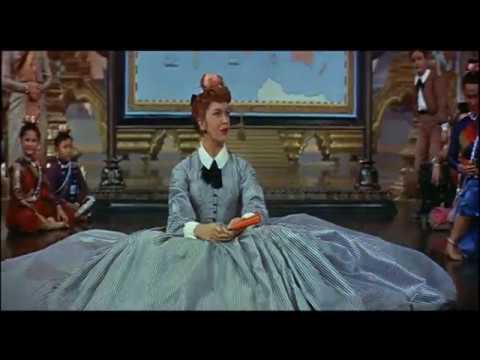
Review: the lyric trick that makes the “classic” feel dangerous
Here’s the uncomfortable secret: The King and I works because it refuses to let its prettiest melodies win the argument. Oscar Hammerstein II writes lyrics that sound conversational, even gentle, and then he uses that gentleness as a lever. The show is full of “teaching” songs, but the real lesson is about power. Who gets to name reality. Who gets to be “civilized.” Who gets to be forgiven for being rude because they think they’re right.
Listen closely and you can hear the lyric strategy. Anna’s words are often framed as reassurance: to a child (“I Whistle a Happy Tune”), to young lovers (“Hello, Young Lovers”), to a roomful of royal kids (“Getting to Know You”). The surface is etiquette. Underneath, it is boundary-setting. The King’s big moments, meanwhile, are argument songs. “A Puzzlement” is not introspection as poetry, it is a ruler trying to modernize without surrendering authority. “Song of the King” turns gender into policy. Even “Shall We Dance?” is less a flirtation number than a diplomatic incident in waltz time.
Richard Rodgers matches that push-pull with a score that keeps returning to “order” and “disorder.” The music can be courtly, then suddenly jittery, with harmonic sidesteps that read like doubt. That matters for lyric meaning: it makes the show’s politeness feel provisional. A song can smile while the scene keeps its fists clenched.
Listener tip: if you’re coming in through the 1956 soundtrack, do not treat it like a souvenir. Play it like a plot outline. Follow the sequence “I Whistle a Happy Tune” to “Hello, Young Lovers” to “Getting to Know You,” then jump to “A Puzzlement,” then “Something Wonderful,” and only then take “Shall We Dance?” as dessert. The lyrics land harder when you hear how often reassurance is used as defense.
How it was made: the song that arrived late, and the one that got recycled into a hit
The first useful behind-the-scenes fact is that Hammerstein did not always write fast. On “Hello, Young Lovers,” he reportedly got stuck for about a month and admitted it in a letter to director John Van Druten. When he finally finished, director Joshua Logan called it “the single greatest dramatic song” he’d ever heard. That quote is a little grand, but it nails what the lyric does: it is character revelation disguised as advice.
The second fact is messier, and more Broadway: “Getting to Know You” was not always part of the show. During tryouts, the creative team felt Act I needed a lift. They took a melody that had been cut from South Pacific, wrote new lyrics, and dropped it into Siam like it had always belonged there. The result is so inevitable that people forget it was a patch. Which is the nicest compliment you can give a patch.
Then the 1956 film adaptation happens, and the lyrics get a new kind of scrutiny. The movie keeps the score’s prestige, but shifts emphasis toward pictorial romance. Vocals were also handled with studio pragmatism: Marni Nixon dubbed Deborah Kerr, shaping the film soundtrack’s “Anna” as a crafted illusion that still has to feel like speech. It is fitting, in a show about translation, that the star voice arrives through translation too.
Key tracks and scenes
"I Whistle a Happy Tune" (Anna)
- The Scene:
- A ship nearing Bangkok. Early morning light, humid air, a child scanning the shoreline like it might bite. Anna performs calm while her body gives her away.
- Lyrical Meaning:
- Hammerstein writes courage as technique. The lyric is a manual for pretending, and it quietly admits the pretending is for her as much as for Louis.
"Hello, Young Lovers" (Anna)
- The Scene:
- Anna with the wives, telling a story about her late husband. The room softens. The lighting often narrows, like the court briefly allows privacy.
- Lyrical Meaning:
- It is a grief song that refuses melodrama. The lyric turns memory into mentorship, then uses that mentorship to reveal how alone Anna is in this palace.
"A Puzzlement" (The King)
- The Scene:
- The King, surrounded by tradition, trying to think his way into a modern identity without letting anyone see him sweat. The court listens. No one helps.
- Lyrical Meaning:
- The lyric makes him legible without excusing him. It is the rare “ruler song” that sounds like a man discovering that learning is humiliating.
"Getting to Know You" (Anna and Royal Children)
- The Scene:
- A schoolroom in the palace. Bright, busy staging. Children clustering, copying, testing her. She chooses warmth as a form of authority.
- Lyrical Meaning:
- On the surface, it is friendliness. In context, it is negotiation. The lyric proposes curiosity as a political act, and it makes “day by day” sound like survival.
"We Kiss in a Shadow" (Tuptim and Lun Tha)
- The Scene:
- A hidden corner of the palace, lit like secrecy. The lovers sing with their heads turned slightly, as if even the air has ears.
- Lyrical Meaning:
- One of Hammerstein’s cleanest metaphors: love as shadow-life. The lyric’s restraint is the point, because the characters cannot afford poetry that calls attention to itself.
"Something Wonderful" (Lady Thiang)
- The Scene:
- Lady Thiang with Anna, steadying the room. The music slows. The palace stops performing for outsiders and starts confessing to itself.
- Lyrical Meaning:
- The lyric is persuasion with bruises. It asks Anna to accept contradiction: a man can be cruel and still be worthy of loyalty. The song does not solve the ethics. It exposes the cost.
"Shall We Dance?" (Anna and The King)
- The Scene:
- After a successful diplomatic evening. Private space at last. The room is set for celebration, and then turns charged when they touch. The movement expands until it feels like they are trying to outrun consequences.
- Lyrical Meaning:
- The lyric flirts, yes, but the real subject is permission. She explains a social custom; he tests whether the custom can rewrite his isolation. The romance hits because it is also about control slipping.
"The Small House of Uncle Thomas" (Ballet)
- The Scene:
- Tuptim stages Uncle Tom’s Cabin as a court entertainment that becomes protest. The stage language shifts from realism to silhouette and gesture, often with stark, graphic shapes.
- Lyrical Meaning:
- Even without sung text, it is lyric thinking: an adaptation used as argument. It is Tuptim making herself speak in a court that would rather keep her decorative.
Live updates: 2025-2026 staging, touring, licensing
Where the big revival sits right now: Bartlett Sher’s Lincoln Center staging played a U.K. and Ireland tour beginning in 2023 and then returned to London’s West End (Dominion Theatre) for a limited run into early 2024. As of early 2026, there is no confirmed Broadway engagement for that production on the public calendar, but the Sher version remains the most visible “default” template for large-scale remounts.
Licensing is the real engine in 2025-2026: Concord Theatricals lists multiple licensable versions and explicitly warns producers to choose the intended version before applying. Translation: the title is alive in schools, community theatres, and regionals, and it is going to look different depending on which materials you rent.
Anniversary gravity: 2026 marks the musical’s 75th anniversary, which tends to trigger gala concerts, themed seasons, and high-profile one-offs even when a commercial run is not in place. If you see “anniversary programming” announcements, they are often concert-format rather than a full sit-down engagement.
How audiences are talking about it now: Recent criticism keeps returning to the same tension: the score is charming, and the story’s colonial framing is a problem. Modern productions try to play the worry inside the music rather than pretending the worry is not there.
Notes & trivia
- “Getting to Know You” was added during tryouts and uses a melody originally written for South Pacific that had been cut from that show.
- Hammerstein reportedly took about a month to finish the lyric for “Hello, Young Lovers,” and he admitted being stuck in correspondence with director John Van Druten.
- The 1956 motion picture soundtrack album was released on Capitol Records and includes three songs not used in the final cut of the film.
- Marni Nixon dubbed Deborah Kerr’s vocals for the 1956 film, working to match Kerr’s speech patterns so the singing would feel like the same person talking.
- The 1951 Original Broadway Cast album was recorded in April 1951, released in May 1951, and was inducted into the Grammy Hall of Fame in 2000.
- A famous piece of lore around the original production: Gertrude Lawrence’s ball gown for “Shall We Dance?” was later used for her burial, a theatrical image turned literal farewell.
- Rodgers and Hammerstein’s official song notes frame “Shall We Dance?” as the night’s release valve after a successful dinner for visiting English guests.
Reception: then vs. now
Critics have long praised the craft: the score’s elegance, the integrated storytelling, the way the show can pivot from comedy to dread without changing its outward manners. What has shifted is the moral temperature. In 1951 and 1956, reviewers often leaned into spectacle and romance. In 2024, major criticism is more likely to name the colonial framing directly, then ask whether a production has the nerve to stage the discomfort instead of smoothing it away.
“Songs in the shadow of power can’t escape an extra frisson of fear.”
“Getting to Know You … has never seemed more relevant to the score.”
“A master craftsman of the theatrical experience.”
Quick facts
- Title: The King and I
- Stage premiere: 1951 (Broadway)
- Film year: 1956
- Music: Richard Rodgers
- Lyrics & book: Oscar Hammerstein II
- Based on: Margaret Landon’s novel Anna and the King of Siam
- Signature lyrical subjects: etiquette as power, cultural translation, gender as policy, love under surveillance
- Selected notable placements: ship arrival (“I Whistle a Happy Tune”); palace schoolroom (“Getting to Know You”); diplomatic dinner aftermath (“Shall We Dance?”); private persuasion (“Something Wonderful”)
- 1956 soundtrack album: Capitol Records release; conducted by Alfred Newman; new arrangements credited to Gus Levene; includes songs not used in the final film cut
- Availability: widely streaming as “Original Motion Picture Soundtrack” (digital platforms list it as a 1956 album)
- Licensing status: available via Concord Theatricals, with multiple versions/materials
- Recent major staging: Sher-directed revival toured the U.K./Ireland (2023-2024) and played the West End (2024)
Frequently asked questions
- Who wrote the lyrics to The King and I?
- Oscar Hammerstein II wrote the lyrics and the book; Richard Rodgers composed the music.
- Is the 1956 film soundtrack the same as the stage score?
- It overlaps heavily, but the 1956 soundtrack album includes material not used in the final film, and it reflects film-specific vocal and orchestral decisions.
- When does “Shall We Dance?” happen in the story?
- After the King and Anna pull off a successful evening for visiting English guests, they end up alone and attempt a polka that turns intimate and risky.
- Why is “Getting to Know You” such a big deal lyrically?
- Because it frames curiosity as behavior, not a slogan. In the schoolroom, the lyric turns mutual learning into a negotiation about respect and authority.
- Is The King and I touring in 2025-2026?
- The most recent large commercial run of the Sher staging concluded its West End engagement in early 2024. In 2025-2026, the title’s most consistent “tour” is its licensed life across regionals, schools, and community theatres.
- How do I choose the right licensed version?
- Concord notes that multiple versions exist. Before applying, confirm which script/score package you want and peruse the materials to match your production needs.
Key contributors
| Name | Role | Contribution |
|---|---|---|
| Richard Rodgers | Composer | Score that balances courtly poise with harmonic unease, reinforcing lyric tension. |
| Oscar Hammerstein II | Lyricist & librettist | Conversational lyrics that turn reassurance, instruction, and etiquette into dramatic power. |
| Alfred Newman | Conductor (1956 film soundtrack) | Led the 1956 soundtrack recordings with film-scale orchestral weight. |
| Gus Levene | Arranger (1956 film soundtrack) | New arrangements credited on the 1956 soundtrack release. |
| Marni Nixon | Vocal performer (film dubbing) | Dubbed Deborah Kerr’s singing for the 1956 film, matching speech patterns for continuity. |
| John Van Druten | Director (original Broadway production) | Directed the original staging; correspondence is cited in official notes about lyric development. |
| Bartlett Sher | Director (major modern revival) | Revival approach that foregrounds anxiety inside the music and reframes lyric moments for modern ears. |
Sources: Rodgers & Hammerstein Official Site, Concord Theatricals, The Guardian, Entertainment Weekly, The New Yorker, Playbill, Broadway Direct, Apple Music, Wikipedia.