Just So Lyrics – All Songs from the Musical
Just So Lyrics: Song List
- ACT 1
- Just So
- Another Tempest
- There's No Harm In Asking
- Silly Questions
- The Limpopo River
- Living On This Island
- Thick Skin
- The Parsee Cake Cake Walk
- The Crime
- The Chase
- We Want To Take The Ladies Out
- Pick Up Your Hooves And Trot
- Jungle Light/Just So (Reprise)
- The Limpopo River (Reprise)
- ACT 2
- Just So (Reprise)
- The Argument
- Wait A Bit
- Aboriginally I
- Leaps and Bounds
- Leaps and Bounds (Reprise)
- Does The Moment Ever Come?
- Please Don't Touch My Stove
- Little One Come Hither
- If -The Crab
- Finale - Just So (Reprise)
About the "Just So" Stage Show
The first show of this musical took place in 1984 in the town of Newbury, as a preliminary reading in the framework of the graduate works of students from the college. In 1985, the work-out after the preliminary reading started as a full-fledged piece of music play, and a full demonstration took place only 14 years later. However, we cannot say that the preliminaries were highly disastrous – the students even won a local prize for the best graduate work. In 1998, the show was already in the opera house, in 2000 and 2003 – in conventional theaters. In 2005 – a few days it was running during the festival in the Chichester, a year later – in the Globe Theatre, after another 2 years – in Kanata Theatre, and finally, in 2010, Birmingham Repertory Theatre held its show a last time as of today.The plot’s basis are the stories of Rudyard Kipling about animals that are intertwined here in a long epos, where the main protagonist is a small elephant, unsure of himself, but honest, bold and frank. Antagonist – a great big crab, which became so due to some kind of magic, and now, like a mafia, terrorizing all the inhabitants of the coastal waters during own devastating forays onto land.
From the appearance of the original idea until the financial payback of this stage production, it has been almost 20 years, and mostly because the creator had a great belief in success, promoted his creation by all means available to him. If it weren’t, the play might be under the line. The main idea, which is postulated in this histrionics – for great achievements a small participator sometimes enough, if he constantly oppresses his line and persistent in his insistence, without departing from the planned, investing every available effort.
C. Mackintosh was the creator and co-producer. In 1989, its director was J. McKenzie, and a year later the chair of director took M. Ockrent (the last guy is known as the creator of the shows for TV (in particular, A Christmas Carol) and musicals like Atkinson, Crazy for You and Big, which was produced after a film With Tom Hanks).
Release date: 1984
"Just So" – The Musical Guide & Song Meanings
Review
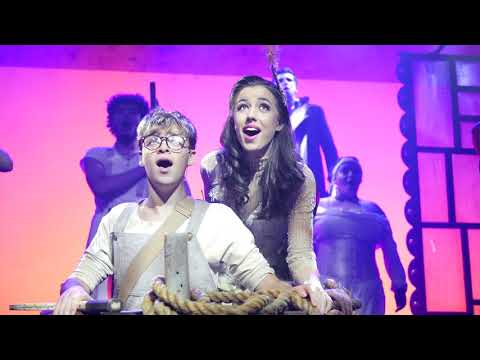
Can a family musical be both a bedtime story and a leadership seminar? “Just So” tries, and it mostly gets away with it. Anthony Drewe’s lyrics give the animals a sweet surface voice, then quietly slip in stakes: identity, responsibility, and the cost of not asking questions. George Stiles answers with a pop-leaning score that changes gears fast, which is useful when your cast includes elephants, a cooking stove, and a crab big enough to bully the sea.
As lyric writing, the show’s strongest move is how it treats curiosity. The Elephant’s Child’s “why?” is not a personality quirk. It is the central conflict. In song after song, Drewe frames questioning as social friction: it annoys authority, exposes hypocrisy, and forces the group to admit it has been drifting on habit. The Eldest Magician’s early material has the clean cadence of a rule-maker. The Elephant’s Child gets increasingly direct language, less decorative, more urgent. By Act II, the lyrics stop admiring the jungle’s order and start interrogating it.
Musically, Stiles writes in bright, rhythmic bursts, then saves his simplest melodic line for the moments when the show needs sincerity rather than cleverness. That contrast is the piece’s secret weapon. When the score is playful, it sells wonder. When it narrows, it makes the moral land without a lecture.
Viewer tip: if you are listening to the cast recording first, read the synopsis once before you press play. This is a story-forward score. The jokes land harder when you know who is being polite, who is panicking, and who is pretending not to care.
How it was made
“Just So” belongs to the Stiles and Drewe origin myth that is actually true: two Exeter University graduates win a brand-new national prize, get noticed by Cameron Mackintosh, and suddenly a “kids’ show” is being treated like a real commercial property. Their official history ties the breakthrough to the first Vivian Ellis Prize, which they won with early material for “Just So.”
There is a second timeline that matters for the lyrics. The show is described by licensing materials and later reviews as a long-developing project that kept being revised across multiple productions. That explains why the writing sometimes feels unusually clean for a family title. It has been stress-tested. Songs like “There’s No Harm in Asking” operate as a mission statement, and later numbers keep returning to that premise as if the show is checking its own work.
Myth check, because the title causes confusion: there was also an American “Just So” world premiere in 1984 in Pennsylvania with a different creative team (Mark St. Germain, David Zippel, Doug Katsaros). If you see credits that do not include Stiles and Drewe, you are reading about the other one.
Key tracks & scenes
"Just So" (Full Company)
- The Scene:
- “The Time of the Very Beginnings.” The Eldest Magician presides as animals arrive into a world that looks unfinished. Lighting often reads like sunrise, fresh and open, with the ensemble behaving like a newly invented ecosystem testing its legs.
- Lyrical Meaning:
- The lyric sets the rules of the universe and hints at the problem. Everything is “just so” until someone starts pushing against it. It is a creation song that doubles as foreshadowing.
"There’s No Harm in Asking" (Elephant’s Child, Eldest Magician)
- The Scene:
- A small animal squares up to an authority figure without realizing it. Staging often isolates the Elephant’s Child in a tighter pool of light, with the Magician framed higher or more centrally, as if the set itself is enforcing hierarchy.
- Lyrical Meaning:
- This is Drewe’s thesis in singable form: questions are how you grow, and also how you get in trouble. The lyric is gentle, but it plants the show’s core argument about courage.
"The Limpopo River" (Company, featured characters)
- The Scene:
- The journey expands. Water becomes the visual language, often a blue wash or rippling gobos, with movement that suggests current and risk. The jungle feels wider, less friendly, and the sound of the band tends to get more restless.
- Lyrical Meaning:
- The lyric treats travel as transformation. “Limpopo” is not a postcard. It is where curiosity meets consequence, and where the show starts rewarding bravery rather than obedience.
"Living on This Island" (Pau Amma the Crab)
- The Scene:
- Pau Amma arrives as a force, not a friend. Directors often stage the crab with bold shape and strong front light, the kind of presence that throws a shadow even in a bright show.
- Lyrical Meaning:
- The lyric is entitlement with rhythm. Pau Amma’s language frames disruption as play, which is exactly why the floods can start as “fun” and end as a crisis the others are too timid to stop.
"The Parsee Cake Cakewalk" (Parsee Man, Company)
- The Scene:
- A comic set-piece with food, bargaining, and busy stage traffic. In actor-musician stagings, this is often where the show leans into visible instrumentation and choreographic hustle, like a market turning into a dance floor.
- Lyrical Meaning:
- It is comic, but it also underlines a theme: survival depends on exchange. Even kindness has terms. The lyric’s bounce hides how transactional the jungle can be.
"Thick Skin" (Rhinoceros)
- The Scene:
- A character-defining number played broad, sometimes with costume detail doing half the punchline. Lighting usually pops brighter here, like the show is giving you a cartoon close-up.
- Lyrical Meaning:
- The lyric treats defensive behavior as identity. The joke lands because it is recognizable: the song is about how we call our coping mechanisms “personality.”
"Does the Moment Ever Come?" (Elephant’s Child)
- The Scene:
- The show tightens to one character asking a private question. Staging often strips back the comedy traffic, with steadier light and fewer interruptions, letting the performer sell intention rather than charm.
- Lyrical Meaning:
- The lyric is the mature heart of the piece. It is about waiting for permission to be brave, and realizing permission is not coming. If “There’s No Harm in Asking” is the kid-friendly motto, this is its adult echo.
"Jungle Light / Just So (Reprise)" (Company)
- The Scene:
- Resolution after disorder. Productions often bring back earlier stage pictures, but altered, as if the jungle is the same place with new rules. Lighting warms, then settles.
- Lyrical Meaning:
- The reprise reframes “just so” as earned balance, not fixed fate. The lyric closes the loop: the world is stable again because someone changed it.
Live updates
Information current as of 28 January 2026. “Just So” does not behave like a nonstop commercial tour title. It behaves like a high-quality licensing property that spikes when the right venue wants a family show with craft. MTI continues to license the piece, and the song list and concert selections remain actively maintained on its site.
Recent professional visibility leans UK. The Watermill Theatre’s 2021 outdoor staging, reviewed as far more than “semi-staged,” kept the title in the conversation and highlighted how well it plays in actor-musician form. For 2026, the National Youth Music Theatre lists “Just So” among its residential projects, which is a strong signal of the show’s continued life as a training ground for young performer-musicians.
For listeners, the cast recording most people mean is the Chichester Festival Theatre cast album released via First Night Records in 2006. It is widely available on streaming services. Also worth knowing: not every number made it onto that album, which can confuse first-time listeners when a favorite moment from a production is missing.
Notes & trivia
- Stiles and Drewe’s official history ties the project’s early momentum to their win of the first Vivian Ellis Prize.
- MTI’s show history frames “Just So” as an early title that helped bring the writers to Cameron Mackintosh’s attention.
- The 2006 cast album is credited as a Chichester Festival Theatre recording and is associated with First Night Records.
- That 2006 album does not include all songs that have appeared in the show’s performance history.
- The Watermill’s 2021 production used the theatre’s outdoor lawn setting, with action staged among trees and audience tables, emphasizing mobility and direct address.
- There is a separate, unrelated US “Just So” that premiered in Pennsylvania in 1984 with a different book, lyricist, and composer.
- The MTI materials present an unusually clear “concert selections” pathway, which is often a sign a title is being performed in flexible formats.
Reception
Critical response has always been divided along a predictable line: charm versus tooth. Supporters praise the lyric wit and the show’s forward motion. Skeptics argue the writing can drift into cuteness. The interesting part is that both camps are reacting to the same strategy: Drewe writes for children without talking down, which means the jokes are bright and the lessons are explicit. Whether that feels joyous or cloying depends on your tolerance for a moral that insists on being sung.
“Many of Drewe's larky lyrics are sharp and smart enough to draw a smile.”
“Many of the lyrics are dubiously rhymed and unbearably twee.”
“The description ‘semi-staged' short-changes this joyous action-packed show.”
Quick facts
- Title: Just So
- Year written: 1984
- Type: Family musical inspired by Rudyard Kipling’s “Just So Stories”
- Book: Anthony Drewe
- Music: George Stiles
- Lyrics: Anthony Drewe
- Early development note: Won the first Vivian Ellis Prize (competition recognition tied to early material)
- Original producer association: Cameron Mackintosh (early production pathway)
- Core conflict: Pau Amma the Crab causes catastrophic floods; the Elephant’s Child chooses action when others freeze
- Notable song placements: “There’s No Harm in Asking” (curiosity as courage), “The Limpopo River” (journey pivot), “Living on This Island” (Pau Amma’s disruption), “Does the Moment Ever Come?” (Act II emotional anchor), “Jungle Light / Just So (Reprise)” (earned balance)
- Cast recording: Chichester Festival Theatre cast; First Night Records; released 2006; widely streamed
- Current performance ecosystem: MTI licensing; youth and regional programming; flexible concert selections
Frequently asked questions
- Who wrote the lyrics for “Just So”?
- Anthony Drewe wrote the lyrics and the book, with music by George Stiles.
- Is “Just So” the same as the 1984 American musical with the same title?
- No. Stiles and Drewe’s “Just So” is a UK musical written in 1984. A different “Just So” premiered in Pennsylvania in 1984 with book by Mark St. Germain, lyrics by David Zippel, and music by Doug Katsaros.
- What is the show’s main story engine?
- The Eldest Magician sends animals out to discover what makes them different, then Pau Amma the Crab’s ocean play triggers flooding that forces the Elephant’s Child into leadership.
- Which song best explains the title’s lyric logic?
- “There’s No Harm in Asking.” It turns curiosity into a rule of life, then lets the plot prove how costly and necessary that rule is.
- Does the cast album include the whole score?
- No. The 2006 Chichester cast album is the key recording in circulation, but documentation notes that it omits some numbers performed in certain versions.
- Is the show active in 2026?
- Yes, mainly through licensing and youth-sector productions. NYMT also lists “Just So” in its 2026 programme, suggesting continued profile for young performer-musicians.
Key contributors
| Name | Role | Contribution |
|---|---|---|
| George Stiles | Composer | Eclectic pop-driven score engineered for fast storytelling and actor-musician energy. |
| Anthony Drewe | Book & lyrics | Lyric voice that turns “why?” into plot, with jokes that still carry moral pressure. |
| Cameron Mackintosh | Producer (early productions / recording rights holder association) | Early champion; production pathway that helped the piece gain professional footing. |
| John Barrowman | Performer (cast recording) | Featured as the Eldest Magician on the Chichester/First Night Records cast album. |
| Julie Atherton | Performer (cast recording) | Featured performer on the Chichester cast album (recording-era credited cast). |
| Paul Hart | Director (Watermill 2021) | Outdoor actor-musician staging that emphasized mobility, play, and direct audience contact. |
| Tarek Merchant | Musical direction (Watermill 2021) | Music direction for the outdoor Watermill production (as credited in production materials). |
| Chi-San Howard | Choreography (Watermill 2021) | High-energy movement language supporting rapid character shifts and ensemble storytelling. |
| Katie Lias | Design (Watermill 2021) | Production design supporting outdoor staging and quick transformations. |
Sources: Stiles & Drewe (official site), MTI (show page and show history), What’s On Stage, The Guardian, British Theatre Guide, Musical Theatre Review, BroadwayWorld, American Theatre (archive), NYMT (2026 programme), Apple Music, Amazon.