Jekyll & Hyde Lyrics – All Songs from the Musical
Jekyll & Hyde Lyrics: Song List
- Act 1
- Lost In The Darkness
- Facade
- Pursue The Truth / Facade (Reprise 1) / Emma's Reason
- I Must Go On / Take Me As I Am
- Letting Go
- Facade (Reprise 2)
- No One Knows Who I Am
- Good 'N' Evil
- Now There Is No Choice / This Is The Moment
- First Transformation
- Alive
- Your Work- And Nothing More
- Sympathy, Tenderness
- Someone Like You
- Alive (Reprise)
- Act 2
- Murder, Murder
- Once Upon A Dream
- Obsession
- In His Eyes
- Dangerous Game / Facade (Reprise 3)
- The Way Back
- A New Life
- Confrontation
- Facade (Reprise 4) / Finale
- Other Songs:
- I Need To Know
- Bitch Bitch Bitch
- The Engagement Party
- The Board Of Governors/ Jekyll's Plea
- Bring On The Men
- Reflections
- The World Has Gone Insane
- The Girls Of The Night
- If You Only Knew
- Lucy Meets Jekyll/ Heres to the Night
- Lucy Meets Hyde
- No One Must Ever Know
- Love Has Come Of Age
- Possesed
About the "Jekyll & Hyde" Stage Show
The pre-Broadway tour started in 1990, scoring a box office records and collected a lot of positive feedback. The productions involved almost unknown actors of that time, but, obviously, they were able to cope with their task. Musical has reached the Broadway only in 1997. The production was based on the book by Robert Stevenson, and being already on Broadway, it was re-written in another way, as libretto under the direction of Robin Phillips.Until the opening on Broadway, 45 preliminary runs were made. On the stage of the Broadway’s Plymouth Theatre, musical survived through 1543 times, which was a record number of runs in the theater of that time. Opening of Jekyll & Hyde on Broadway happened on April, 1997, and closure was on January, 2001. The musical was very popular, it was mentioned in the newspapers and posters to it were bright and colorful, proving a great time spent on the Broadway’s stage. DVD has been recorded and TV show in 2000 was filmed. It was the only recording of this musical, which was released on disc – in 2001. In 1999, a musical went in the US tour for the first time. The second time happened in 2000. Both times were successful and paid off the invested money.
Revival of the spectacle was scheduled on April 2013. Not to say that this time histrionics was able to succeed, but it survived for about fifty runs. The play was also staged in different countries: Italy, Malta, Philippines, South Korea, Taiwan, Brazil, Poland, Czech Republic, Slovakia, Ireland & New Zealand. In 2015, the series was filmed based on the musical of the same name, but, unfortunately, unsuccessful.
Release date: 1997
“Jekyll & Hyde” (1997) – The Musical Guide & Song Meanings
Review: the show that turns a chorus into a crime scene
“Jekyll & Hyde” wants to be two things at once: a Victorian morality play and a radio-ready belt parade. That tension is the point, and also the problem. The score is built like a scientific argument that keeps slipping into confession. The lyrics rarely aim for subtlety; they aim for velocity. In this musical, a tidy metaphor is less important than a clean strike of language you can sing from the balcony.
The writing’s core move is repetition with consequences. “Façade” returns to remind you that London’s respectability is a costume, not a virtue. “Alive” is the same engine in a different body: Hyde’s vocabulary is simpler, nastier, and more physical, as if the lyric itself has stopped pretending to be civilized. Even the romance numbers function as data points. Emma’s language is future-oriented and devotional; Lucy’s is survivalist and sensory. The text keeps insisting that love is real, but it keeps staging love as collateral damage.
Musically, it leans pop-rock with Broadway architecture: big intros, big lifts, big final notes, and recurring motifs that work like auditory fingerprints. MTI’s own description calls out the “pop rock” identity, and that’s accurate, with one caveat: the rock attitude is often a mask for old-fashioned musical-theatre moralizing. The show is not shy about telling you what it means, because the story is about a man lying to himself for two acts.
How it was made: a long development, a very loud arrival
Frank Wildhorn and Steve Cuden conceived the piece for the stage, with Leslie Bricusse ultimately supplying the book and sharing lyric duties. The development history is unusually public: an early demo, then a concept recording, then the 1990 Houston premiere, then years of revisions before Broadway. The paper trail matters because “Jekyll & Hyde” has always behaved like a show in motion, swapping songs and reshaping tone depending on the production goal and the star at the center.
The concept-recording approach also telegraphed the show’s commercial instincts. It sold the idea as an album-first experience: a narrative you could buy, replay, and memorize before you ever saw a lab table onstage. Masterworks Broadway’s synopsis of the 1990 concept recording frames the story with almost cinematic punch: engagement party glitter, institutional rejection, then the lure of the Red Rat and the self-experiment that unlocks Hyde. That sequencing is the musical’s spine, no matter which edition you meet first.
Key tracks & scenes: the 8 lyrical moments that define the score
“Lost in the Darkness” (Jekyll)
- The Scene:
- At home, close to his father’s sickbed, Jekyll lays out his thesis. Many productions keep the lighting tight and clinical here: a man talking to himself, pretending it’s research.
- Lyrical Meaning:
- This is the show’s mission statement: the idea that “good” and “evil” are not abstract concepts but roommates. The lyric treats morality like anatomy, which is exactly the flaw that will consume him.
“Façade” (Company)
- The Scene:
- London in motion. Faces, footsteps, polite cruelty. It often plays like a street montage, with the ensemble moving as a single organism that smiles and judges at the same time.
- Lyrical Meaning:
- A community chorus that sounds like gossip and functions like prophecy. The repeated word becomes a verdict: the city’s virtue is performative, and Hyde will exploit that loophole.
“This Is the Moment” (Jekyll)
- The Scene:
- In or near the lab, just before the point of no return. The staging frequently isolates Jekyll, turning the room into a cathedral of self-belief.
- Lyrical Meaning:
- A victory song that is secretly a consent form. The lyric’s confidence is the seduction; it convinces Jekyll he’s choosing destiny, when he’s really choosing risk without restraint.
“The Transformation” / “Alive” (Jekyll, then Hyde)
- The Scene:
- The formula hits. The body becomes theatre. Even productions with minimal effects tend to sharpen light and sound here, because the score is doing the heavy lifting.
- Lyrical Meaning:
- The lyric switches from aspiration to appetite. Hyde’s language is blunt, possessive, and thrilled by permission. The clever part is that Hyde doesn’t argue with Jekyll’s worldview; he simply weaponizes it.
“Someone Like You” (Lucy)
- The Scene:
- After Lucy’s encounter with Jekyll, when kindness feels unfamiliar enough to be dangerous. It is often staged with a single pool of warm light, a private fantasy in a public life.
- Lyrical Meaning:
- Lucy sings hope like she’s trying it on for size. The lyric is romantic, yes, but also tactical: imagining a future is how she survives a present designed to erase her.
“In His Eyes” (Emma & Lucy)
- The Scene:
- Two women, separate worlds, the same mystery. Often staged as parallel confession: each is lit in her own space, connected by the music rather than the geography.
- Lyrical Meaning:
- The song is a lyrical triangulation. It treats love as evidence, but the evidence is flawed. What they are both reading as depth is actually division.
“Dangerous Game” (Lucy & Hyde)
- The Scene:
- In the Red Rat ecosystem or an adjacent shadow-world, where flirtation can become threat without warning. Many stagings push contrast: saturated, low light, bodies too close.
- Lyrical Meaning:
- The lyric weaponizes desire. Hyde’s lines treat romance as conquest; Lucy’s responses are a mix of bravado, bargaining, and alarm. It is a duet that keeps changing who holds the power.
“Confrontation” (Jekyll/Hyde)
- The Scene:
- Late in Act II, when Jekyll tries to negotiate with his own violence. It is frequently staged as a literal split: mirrors, shadows, or a second self created through blocking and light.
- Lyrical Meaning:
- A courtroom inside one skull. The lyric is less about “who am I?” and more about “who gets to drive?” It is the moment the show admits the experiment was never controlled.
Note: exact blocking, lighting, and song order vary by licensed edition and production. The scene context above follows the widely circulated stage narrative and the filmed “Direct from Broadway” plot outline, plus MTI’s published song list for the licensed version.
Live updates (2025/2026): where the show lives now
Last updated: January 27, 2026. “Jekyll & Hyde” is not sitting still, even when Broadway is. The current life of the title is largely regional and licensed, where the piece remains a dependable star vehicle and a reliable box-office flirtation with darkness. MTI’s production listings show booked performances into 2026, a useful indicator of continued demand at the community and semi-pro level.
In Chicago, Kokandy Productions mounted a 2025 revival that extended into early January 2026 after selling out its initial run. That kind of extension tells you something basic and important: whatever critics argue about structure, audiences still show up for the sound and the central performance challenge.
On the screen-adaptation front, the project has been “in the works” for years. The 2019 announcement named Alexander Dinelaris as writer-producer, and more recent roundups still frame it as a waiting game with no fresh, definitive production start publicly confirmed.
Notes & trivia
- MTI describes the licensed stage version as a “pop rock” gothic musical, and it leans into that identity as a casting and marketing feature.
- The Broadway production opened April 28, 1997, and closed January 7, 2001, after 1,543 performances, per MTI’s show history and Playbill’s retrospective.
- The “Original Broadway Cast Recording” is widely listed with a release date of July 15, 1997 (Atlantic Theatre/Atlantic), with a 31-track album length around 73 minutes depending on platform metadata.
- Steve Cuden is credited as co-lyricist on a cluster of key numbers, including “Alive” and “Murder, Murder,” reflecting how the show’s voice is partly split behind the scenes as well.
- Different editions swap or restore songs over time; the title has a reputation for revision, and that history is documented in production notes and fan-facing summaries.
- The 2013 Broadway revival opened April 18, 2013 and closed early on May 12, 2013, a reminder that “name recognition” and “Broadway momentum” are not the same thing.
- Internationally, the show has maintained long-running popularity in markets that embrace big emotional pop writing, including South Korea, where major runs have been reviewed as cultural events.
Reception, then vs. now: critics vs. the crowd
“Jekyll & Hyde” has long been the kind of musical that makes reviewers reach for metaphors and audiences reach for the cast album. The critical through-line is skepticism about tone: does the show’s pop musculature deepen the story, or flatten it into melodrama? Yet the flip-side is equally consistent: even hostile reviews tend to concede the sheer propulsion of the score and the performer-a-thon at the center.
“Jekyll & Hyde” has half the personality of its title character, and it's the dour, humorless half.
It's akin to a well-designed haunted house from which you find yourself eagerly longing to escape.
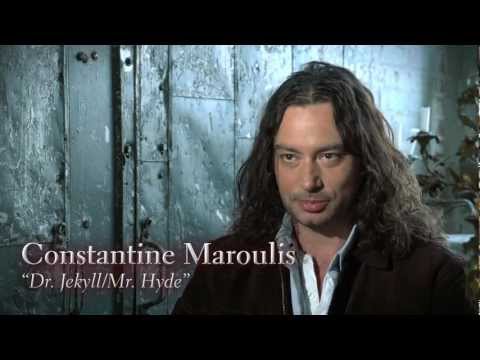
In the current Broadway-bound revival... Constantine Maroulis is dangerously sexy.
What changes over time is not the critique, but the context. In a post-streaming theatre culture, “Jekyll & Hyde” functions as a shareable object: signature numbers, audition staples, and a role that lets an actor demonstrate range in neon. Regional revivals and international productions keep proving the same point: the show’s afterlife is louder than its notices.
Quick facts
- Title: Jekyll & Hyde
- Broadway year: 1997 (opened April 28, 1997)
- Type: Gothic pop-rock musical thriller
- Music: Frank Wildhorn
- Book: Leslie Bricusse
- Lyrics: Frank Wildhorn, Leslie Bricusse, Steve Cuden (by number)
- Conceived for the stage by: Frank Wildhorn, Steve Cuden
- Orchestrations (commonly licensed materials): Kim Scharnberg
- Selected notable placements: “Lost in the Darkness” (Jekyll’s thesis), “Façade” (London’s hypocrisy chorus), “This Is the Moment” (pre-experiment vow), “Alive” (Hyde unleashed), “Confrontation” (the split made literal)
- Original Broadway Cast Recording label: Atlantic Theatre / Atlantic
- Cast album release date (OBC): July 15, 1997
- Streaming availability: Major platforms list the album as available (platform catalog varies by territory)
Frequently asked questions
- Is there an official cast album for “Jekyll & Hyde”?
- Yes. The Original Broadway Cast Recording is widely cataloged with a July 15, 1997 release date on Atlantic, and it remains the most common entry point for the score.
- Who wrote the lyrics?
- Lyric duties are shared. Wildhorn and Bricusse are the primary credited lyricists, with Steve Cuden credited on specific songs.
- What is “Façade” actually about?
- It is the show’s social diagnosis: a city insisting on respectability while enabling cruelty. The repeated hook is the musical’s way of saying the environment is complicit.
- Is “This Is the Moment” meant to be heroic or ominous?
- Both, and that double charge is why it endures. The lyric reads like triumph, but in-story it is the last time Jekyll speaks in pure certainty before consequences arrive.
- Is a movie version happening?
- A screen adaptation has been announced in various forms over the years, including a 2019 report naming Alexander Dinelaris as writer-producer. As of early 2026, recent roundups still describe it as in development without a newly confirmed release timeline.
- Why do Emma and Lucy feel like they’re in different shows?
- Because they are singing different survival strategies. Emma’s lyrics tend toward promise and patience; Lucy’s tend toward cost and escape. The score uses that contrast to make Jekyll’s double life emotionally legible.
Key contributors
| Name | Role | Contribution |
|---|---|---|
| Frank Wildhorn | Composer; co-lyricist; co-conceiver | Wrote the score’s pop-rock engine and several lyric strands; shaped multiple editions through revisions. |
| Leslie Bricusse | Book; co-lyricist | Built the stage narrative structure and the show’s declarative lyrical voice. |
| Steve Cuden | Co-conceiver; co-lyricist (selected songs) | Conceived the stage approach and contributed lyrics to a set of signature numbers. |
| Kim Scharnberg | Orchestrations (licensed materials) | Orchestral architecture that supports both rock drive and Broadway sweep. |
| Robert Cuccioli | Original Broadway leading performer | Created the dual role on Broadway in 1997, setting the acting and vocal template for many successors. |
| Linda Eder | Original Broadway leading performer | Originated Lucy on Broadway and helped define the show’s vocal signature in recordings and performance lore. |
Sources: Music Theatre International (MTI), Playbill, Masterworks Broadway, AllMusic, Variety, The Hollywood Reporter, Wikipedia, BroadwayWorld, Korea Times.