Jane Eyre Lyrics – All Songs from the Musical
Jane Eyre Lyrics: Song List
- Act 1
- The Orphan
- Children of God
- Forgiveness
- The Graveyard
- Sweet Liberty
- Secrets of the House
- Perfectly Nice
- As Good as You
- Secret Soul
- Finer Things
- The Pledge
- Sirens
- Act 2
- Things Beyond This Earth
- Painting Her Portrait
- In the Light of the Virgin Morning
- The Gypsy
- The Proposal
- Slip of a Girl
- Sirens (Reprise)
- Farewell, Good Angel
- My Maker
- Rain
- The Voice Across the Moors
- Poor Sister
- Brave Enough for Love
About the "Jane Eyre" Stage Show
Initial production was on Manhattan in 1995, in the reading mode. In the same year, the musical’s development was carried out in Kansas, where the main role went to amateur actors from the local population, and only a few major actors came from the Big Apple. These two productions have received some success, which has allowed the organization of the subsequent transfer of the musical on Broadway. Premiere as a full-fledged piece of the spectacle was held in 1996 in Canada, and only after 3 years in California were the first pre-Broadway shows. It was also decided that the original star command of 30 people was too big and was decreased by 11 people.In 2000 only the Broadway saw the histrionics in Atkinson Theatre, but the show had a mediocre success and closed after 240+ performances, if to count with preliminary ones. M. Schaffel, who was depicting Jane, received a Drama Desk Award, among others rewards, for her play. In the creation, such people were involved: J. Caird with S. Schwartz both directed & produced, J. Paterson was responsible for choreography, J. Napier – sets & props, A. Neofitou – wardrobe, J. Fisher with P. Eisenhauer – light. Famous Alanis Morissette partially saved the musical from the imminent closure, when she bought tickets at USD 0.15 million, giving them out to the poor, but this prolonged the date of closure just for 2-3 weeks.
Among the subsequent production, worth noting one in 2005 in Maryland College Park, which was greeted quite warmly by critics. The show came to London in 2007, for 1 month, staying at Jack Lyons Theatre, where M. Ryan was a director, with J. O. Edwards responsible for music. The revised version was performed in 2008 and 2009, both cases as regional formats.
Original production on Broadway has received such awards: Drama Desk in 2001 and 4 Tony nominations in the same 2001.
Release date: 2000
"Jane Eyre" – The Musical Guide & Song Meanings
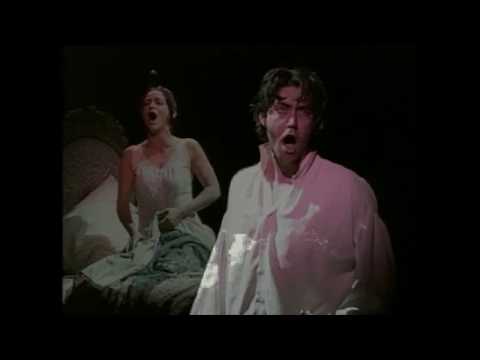
Copyright note: This guide focuses on meaning, placement, and craft. It does not reproduce full song lyrics.
Review: a heroine who refuses to be “handled,” even by the score
How do you musicalize a novel built on interior weather: shame, restraint, religious fear, desire, and the terrifying relief of finally speaking plainly? John Caird and Paul Gordon’s Jane Eyre answers with a risky strategy. It turns Jane’s mind into stage architecture. The lyrics keep returning to moral vocabulary (truth, vow, duty, forgiveness), while the music keeps trying to melt it. That friction is the show’s engine.
On Broadway, the production leaned into a “world assembling around Jane” concept, with screens, projections, and a carousel-like overhead machine constantly reshaping space. It was an elegant technical metaphor for memory and haunting, and it also made the show’s narrative sprint feel even faster. When this musical works best, it is not trying to “summarize Brontë.” It’s translating her pressure points: the fear of being dependent, the ache of being unseen, the thrill of being chosen without being diminished.
Lyric-wise, Gordon writes in clean, muscular sentences. Jane’s songs favor self-audit over self-pity. Rochester’s songs do the opposite: he performs cynicism as camouflage, then cracks. The show’s recurring motif is the private vow. You can hear it in the way promises keep getting rephrased, tested, broken, and finally rebuilt under different terms.
How it was made
The adaptation is the Caird-Gordon handshake: Caird (book and additional lyrics) compresses the novel into theatrical chapters, while Gordon (music and lyrics) tries to keep Jane’s inner life audible without turning every paragraph into a ballad. The project developed across multiple productions before Broadway, and Playbill’s Broadway-opening coverage makes clear how much rewriting and technical refinement were baked into the run-up. Even the official opening shifted because the scenic machinery and design needed more time to stabilize.
One unexpectedly revealing production detail: the cast album was recorded before Broadway audiences had even heard the show in New York, fast-tracked to hit during previews. That choice tells you the producers believed the score could sell the story on headphones, even if the Broadway event was still finding its footing.
And yes, the most “Broadway” plot twist happened offstage: when the show’s closure was looming in May 2001, Alanis Morissette’s highly public ticket purchase and donation bought it time to reach the Tony telecast window. In a musical about last chances and moral courage, the bailout was oddly on-theme.
Key tracks and scenes
"Sweet Liberty" (Jane)
- The Scene:
- Lowood. Years compress into a few stark stage pictures. The light shifts from institutional gray to a first hint of open sky. Jane steps forward as if she’s testing air for the first time.
- Lyrical Meaning:
- This is not “I want” in the usual musical-theatre sense. It’s “I have survived, now I choose.” Jane’s language frames freedom as responsibility. She is not asking for rescue. She is authoring her exit.
"Perfectly Nice" (Mrs. Fairfax, Adèle, Jane)
- The Scene:
- Thornfield Hall, first impressions. Warm lamps, domestic bustle, a polite surface that feels rehearsed. Mrs. Fairfax sells comfort like it’s a service, and Adèle tries to charm her way into safety.
- Lyrical Meaning:
- The number is social varnish. Underneath, the lyrics hint that “nice” is a performance that keeps people from asking better questions. In this show, niceness is not innocence. It’s a curtain.
"As Good As You" (Rochester)
- The Scene:
- After Rochester’s rough edges have stopped reading as mere rudeness and started reading as damage. He paces the room like he’s arguing with his own reflection. The lighting narrows, as if the house is judging him.
- Lyrical Meaning:
- Rochester defines himself by failure, then preemptively rejects tenderness before it can reject him. The lyric craft here is character defense mechanism as melody: a man insisting he is unworthy because worthiness would require change.
"Secret Soul" (Jane, Rochester)
- The Scene:
- In the aftermath of the fire. Smoke memory lingers. Jane and Rochester are close, but the staging keeps a sliver of distance, like a rule neither wants to name.
- Lyrical Meaning:
- This is the romance thesis statement: intimacy without possession. The language reaches toward confession, then retreats into restraint. What’s “secret” is not only the attic. It’s also how much each character wants to be known.
"The Pledge" (Jane, Rochester)
- The Scene:
- A promise with a shadow attached. Rochester presses for assurance, the house presses back with its noises. The stage picture is almost still, the way conversations become when they turn into vows.
- Lyrical Meaning:
- The song is about language as a contract. Jane’s morality is not decorative. It is a rulebook she uses to survive. The pledge matters because it sets up the later question: what promises are ethical when the facts are incomplete?
"Painting Her Portrait" (Jane)
- The Scene:
- Act II. Jane alone with her materials, turning self-knowledge into something visible. The lighting becomes clinical, like she’s interrogating herself.
- Lyrical Meaning:
- One of the show’s sharpest lyric moments: Jane performs self-critique so ferociously it becomes a kind of prayer. She is not merely jealous of Blanche. She is terrified that love will require self-erasure.
"Sirens (Reprise)" (Jane, Rochester)
- The Scene:
- After the wedding revelation detonates the story. Everything feels colder. The same musical idea returns, but the emotional temperature has flipped. The house is no longer a home; it’s evidence.
- Lyrical Meaning:
- Reprises can be lazy. This one is brutal. It recontextualizes earlier longing as warning. The lyric point is clarity: Jane can love Rochester and still refuse the terms available to her.
"Farewell, Good Angel" (Rochester)
- The Scene:
- Jane has fled. Rochester is left with the consequences he cannot outtalk. The stage empties. The soundscape feels wider, lonelier.
- Lyrical Meaning:
- A rare Rochester moment without swagger. The lyric posture changes from persuasion to lament. He finally stops narrating himself as a romantic hero and starts sounding like a man who understands loss.
"Brave Enough for Love" (Jane, Rochester, Ensemble)
- The Scene:
- After Thornfield’s ruin and Rochester’s physical fall. The staging tends to simplify here: fewer tricks, more human scale. The light warms. The air feels earned.
- Lyrical Meaning:
- The title says it outright: love is courage, not fate. The final lyric argument is that equality is not a mood. It’s a condition Jane insists on before she returns.
Live updates for 2025–2026
New York, February 15, 2026: Jane Eyre in Concert is scheduled for a one-night performance at Lincoln Center’s David Geffen Hall (Wu Tsai Theater), presented by Manhattan Concert Productions. The listing names Erika Henningsen as Jane and Ramin Karimloo as Rochester, supported by a large chorus and orchestra in concert form. If you want to understand the score’s architecture (themes returning, vow-motifs, reprises doing narrative work), concert staging can be a revealing way to hear it.
Licensing status: The show is listed by Music Theatre International, including an “Original Broadway Version (2000)” show page. MTI also notes separate handling for concert selections and performance rights for those extracted materials. For schools and regional companies, that means the licensing path is clear, but concert-only programming can require additional rights steps.
Staging trend worth watching: Recent commentary around the piece keeps circling back to scale. When productions strip back spectacle and push attention toward character and text, the score tends to read richer and less “busy.” If your only reference point is the Broadway machine, seek out smaller-cast or chamber-minded versions when available.
Notes and trivia
- The Broadway run began previews November 9, 2000, opened December 10, 2000, and closed June 10, 2001 at the Brooks Atkinson Theatre.
- The Broadway cast album was recorded October 5–6, 2000 and was scheduled for release during previews, an unusually aggressive timeline.
- Marla Schaffel won the 2001 Drama Desk Award for Outstanding Actress in a Musical for playing Jane.
- Schaffel was also an Outer Critics Circle Award recipient (in a tie) for Outstanding Actress in a Musical.
- Playbill reported that Alanis Morissette’s $150,000 ticket purchase helped keep the show running into the Tony season window.
- MTI’s plot notes emphasize how “As Good as You” and “Secret Soul” sit directly around the fire sequence, making the romance surge out of danger rather than banter.
Reception: then vs. now
In 2000–2001, the conversation split into two camps: admirers of the score’s emotional directness and skeptics who found the Broadway version weighed down by its own machinery. Over time, the piece has built a second life through cast-album fandom and smaller-scale stagings where the book reads cleaner and the lyrics land closer to the bone.
“Jane’s world appear[s] around her via projections on a series of screens that rise and fall around her.”
“Eschews scenic marvel to place the focus firmly on the characters and their travails.”
“Her rendition of ‘Painting Her Portrait’ in Act II really captures Jane’s tense, bitter, self-flagellatory anguish.”
Quick facts
- Title: Jane Eyre
- Year: 2000 (Broadway opening)
- Type: Musical drama
- Book: John Caird
- Music & Lyrics: Paul Gordon
- Additional Lyrics: John Caird
- Broadway venue: Brooks Atkinson Theatre
- Broadway run: Previews began November 9, 2000; opened December 10, 2000; closed June 10, 2001
- Running time (as widely reported for Broadway): approximately 2 hours 45 minutes
- Cast album: Recorded October 5–6, 2000; fast-tracked for release November 21, 2000 (Sony Classical / Masterworks Broadway)
- Selected notable placements (plot pivots): “Sweet Liberty” at Lowood turning point; “As Good As You” as Rochester’s self-indictment; “Painting Her Portrait” as Jane’s self-judgment; “Sirens (Reprise)” after the wedding revelation; “Brave Enough for Love” as the earned reunion
- 2026 event: One-night concert at Lincoln Center (David Geffen Hall) on February 15, 2026 (Manhattan Concert Productions)
Frequently asked questions
- Who wrote the lyrics in the 2000 musical?
- Paul Gordon wrote the music and lyrics, with John Caird credited for additional lyrics and the book.
- Is there an official cast recording?
- Yes. The Original Broadway Cast Recording was recorded in early October 2000 and was released during the Broadway preview period via Sony’s classical and theatre imprints.
- Where does “Sweet Liberty” happen in the story?
- It lands at Lowood when the years have passed and Jane’s desire for a self-directed life finally outweighs institutional safety. It is the musical’s pivot from survival to choice.
- What is “Painting Her Portrait” actually about?
- Jane uses comparison as self-punishment, measuring herself against Blanche and trying to force her feelings into silence. Dramatically, it externalizes the novel’s private self-scrutiny as an action scene with a pencil.
- Is the show running or touring in 2026?
- There is a high-profile one-night concert performance scheduled in New York on February 15, 2026. Beyond that, the title is generally encountered via licensed productions rather than an open-ended commercial tour.
- Can schools and community theatres license it?
- MTI lists the show and provides licensing and materials pathways. Concert programming can involve separate performance-rights steps for extracted songs.
Key contributors
| Name | Role | Contribution |
|---|---|---|
| John Caird | Book, additional lyrics; co-director (Broadway) | Compressed Brontë’s narrative into stage chapters; shaped the show’s moral vocabulary. |
| Paul Gordon | Music & lyrics | Wrote a score built around vows, restraint, and emotional release without pop cynicism. |
| Scott Schwartz | Co-director (Broadway) | Helped stage the Broadway production’s technical and storytelling blend. |
| John Napier | Scenic design (Broadway) | Created the projection-and-screen environment that made memory and haunting visible. |
| Jules Fisher & Peggy Eisenhauer | Lighting design (Broadway) | Lit the show as shifting psychology: corridors, shadows, and sudden moral clarity. |
| Larry Hochman | Orchestrations (Broadway) | Orchestral palette that supports the show’s romantic sweep and darker undertow. |
| Steven Tyler | Music director; vocal and incidental arrangements (Broadway) | Helped define the score’s vocal style and connective tissue. |
| Tony Yazbeck | Stage director (2026 concert) | Leads the Lincoln Center concert staging for Manhattan Concert Productions. |
| Brad Haak | Music director (2026 concert) | Helms the concert’s musical forces, including orchestra and chorus. |
Sources: Playbill, Music Theatre International (MTI), Masterworks Broadway, Ovrtur, Lincoln Center, SF Gate, Musical Theatre Review, Manhattan Concert Productions.