Jacques Brel Is Alive and Well and Living in Paris Lyrics – All Songs from the Musical
Jacques Brel Is Alive and Well and Living in Paris Lyrics: Song List
About the "Jacques Brel Is Alive and Well and Living in Paris" Stage Show
The musical is completely based on the songs written by the composer J. Brel, which were translated into English. The characteristic feature of the musical is that the show has been made in a revue genre, which has no certain plot. The first display took place at a small village theater in 1968. The actors were the following: E. Stone, M. Shuman, S. Elliott & A. Whitfield. M. Yakim became the director. In the musical, there are about 25 songs. Brel himself took an active part in the creation of the musical. He also added some French lyrics to the show.In 1972, a big concert, at which the creators were present, took place and 22 actors played in it. The musical was popular not only in Northern America. In 1968, the producers decided to create the Canadian version of the show. R. Jeffrey, J. Lander, A. Meadows and S. Porter took part in it. The displays in South Africa became the longest. The show also took place in Australia, France, Ireland, Nederland & Denmark, amongst others.
In 1973, in Ohio, two-weeks display of the musical was planned. Because of the increased popularity, it was prolonged for two years. The funds, raised during the show displays, helped to restore a theater, in which the musical was exhibited. In 1975, there was a movie created, which included several new songs. In 1988, Brel died. In spite of that fact, the name of the show remained invariable. The performance was nominated for the prestige awards, such as Drama Desk, Drama League & Outer Critics Circle. D. Bowie included the lyrics from the musical into his list of favorite 25 songs.
Release date: 1968
"Jacques Brel Is Alive and Well and Living in Paris" – The Musical Guide & Song Meanings
Review: the hook, the bite, the bruise
Why does a 1968 off-Broadway revue about a Belgian songwriter still land like a fresh argument? Because “Jacques Brel Is Alive and Well and Living in Paris” is engineered as a pressure chamber. Four performers rotate masks: lover, cynic, clown, witness. There is no plot to hide behind, so the lyrics have to do the heavy lifting. They do. Brel’s writing does not flatter the singer. It exposes them.
The English versions by Eric Blau and Mort Shuman aim for performable honesty rather than museum accuracy. That choice is the whole show’s gamble. When it works, the language feels spoken through clenched teeth, with rhyme arriving like an afterthought. When it misses, you can sense the translation reaching for a landing. Either way, the evening keeps its central promise: every number is a character study, and every character is a self-portrait in bad lighting.
Musically, the revue behaves like a cabaret mixtape that never relaxes. Waltzes accelerate into panic, tangos flirt with menace, ballads turn sentimental and then retract the sentiment. The style matters because Brel’s narrators are always performing, even when they claim they are confessing. The score is a rotating mirror, and the lyrics are the fingerprints.
How it was made: a translation job that became a phenomenon
The show opened January 22, 1968 at the Village Gate, built for rickety tables, proximity, and the sense that the singer might borrow your drink. The original concept and English lyric translations were created by Eric Blau and Mort Shuman, using Brel’s songs as the spine of the evening.
Mort Shuman later described a near-instant post-opening crisis: harsh notices, a decision to close, and a producer (Hank Hoffman) essentially daring the show to survive on word of mouth. That legend is valuable because it explains the revue’s DNA. It was never meant to be “big.” It was meant to be contagious. The form rewards intimacy, and the material rewards bravery.
One more behind-the-scenes detail that feels almost too perfect: Shuman recalls Brel showing up in Paris as a stagehand and sound helper when the revue played there. It matches the mythic version of Brel fans carry around in their heads: ferociously famous, still allergic to the velvet rope.
Key tracks & scenes: the 8 lyrical moments that define the evening
"Amsterdam" (Man 2, often)
- The Scene:
- A bare stage turns into a dock with nothing but bodies. Lighting goes brassy and low, like a bar that refuses daylight. The singer plants their feet and narrates the city as if it is chewing them up.
- Lyrical Meaning:
- This is reportage that becomes indictment. The lyric stacks images until pleasure reads as desperation. The trick is that the song judges nobody, then judges everybody, then admits the narrator is part of the same machinery.
"If You Go Away" (Woman 1, often)
- The Scene:
- A spotlight isolates the performer. Everything else pulls back. The band turns careful. The air changes from party to plea in one breath.
- Lyrical Meaning:
- The lyric is bargaining dressed as poetry. It offers seasons, rooms, futures, anything, to prevent abandonment. Its power is how it keeps escalating, showing the mind turning itself inside out to stay lovable.
"Next" (Company)
- The Scene:
- The stage becomes a queue. A repeated gesture suggests the cattle-chute rhythm of processing. Lighting snaps into harsher whites, less romance, more bureaucracy.
- Lyrical Meaning:
- This is Brel’s anti-hero journalism: the lyric uses repetition as violence. It shows how the system makes people interchangeable, then shows how quickly we accept it because the alternative is terror.
"Jackie" (Man 2, often)
- The Scene:
- A show-within-the-show. The performer plays “famous” and “ridiculous” at the same time. Lighting becomes theatrical, almost too pretty, with a wink.
- Lyrical Meaning:
- Ambition as self-harm. The lyric lists fantasies and bargains with humiliation. It is comic until it is suddenly not. The payoff is the admission that success is sometimes just a louder costume for loneliness.
"The Middle Class" (Company)
- The Scene:
- A toast that turns sour. The performers crowd the front line, as if addressing a room of acquaintances. The rhythm is buoyant enough to seduce you into agreeing.
- Lyrical Meaning:
- Social satire without the safety padding. The lyric mocks manners, respectability, and the smug comfort of judging “up” and “down.” It lands because it also implicates the singer and, by extension, the audience.
"My Death" (Woman 1, often)
- The Scene:
- The room quiets. The performer stands almost still, letting the band carry the pulse. Lighting narrows until the face becomes the landscape.
- Lyrical Meaning:
- It is not morbidity. It is inventory. The lyric frames death as a final editor: what remains when the noise stops. Sung well, it becomes a love song to the act of living without pretending it lasts.
"Marieke" (Company, rotating)
- The Scene:
- A memory fog. Softer edges, less literal staging. Often a hand-to-hand moment, almost danced, as if language is failing and the body has to translate.
- Lyrical Meaning:
- Desire and place collapse into one word. The lyric often plays with bilingual texture in performance, and that friction is the point: longing rarely stays in one language, even inside your own head.
"If We Only Have Love" (Company)
- The Scene:
- The closer typically opens outward, inviting ensemble harmony. Lighting warms, not because everything is resolved, but because the show chooses to end on a human bet.
- Lyrical Meaning:
- The lyric argues for love as a practical resource, not a Hallmark concept. After two hours of cynicism and confession, it reads like a deliberately naive conclusion that still refuses to feel fake.
Listening tip for first-timers: play “Amsterdam,” “Next,” and “If You Go Away” before you see any production. If you can track those three emotional engines, the rest of the revue clicks into focus.
Seating tip: choose the closest rows you can tolerate. This is a face-forward show. Half the story is the performer deciding, in real time, whether to confess or perform.
Live updates for 2025–2026: what’s happening now
Information current as of January 27, 2026. The big practical issue is rights. A 2025 University of Georgia event description states that the Brussels-based Brel Foundation (managed by France Brel) has not granted production rights since 2017, placing the musical in “suspended animation.” If you are planning a staging, assume licensing may be restricted and verify directly with the rights holders or your usual licensing channels.
And yet, the title still surfaces in the wild: a listed September 2025 Cape Town engagement (Artscape) promoted a student-driven production. This may reflect local arrangements, educational contexts, or permissions outside standard pipelines. The takeaway for audiences is simple: there is no stable “touring version” to track, but there are periodic pop-up productions and concert-style evenings.
For listeners, the most reliable “current” experience is recorded: the original 1968 cast recording remains the reference point for the English performance tradition, and the 2006 Off-Broadway cast recording documents a revised, more overtly theatrical staging with reordered material.
Notes & trivia (the kind you actually repeat at intermission)
- The original Off-Broadway run began January 22, 1968 at the Village Gate and became a long-haul hit.
- It is built for four vocalists (two men, two women) rather than character roles, which is why great productions feel like an ensemble argument instead of a book musical.
- The revue made it to Broadway in 1972 for a limited run.
- The 2006 Off-Broadway revival reshuffled the song order and reorchestrated material, leaning into expanded staging and choreography.
- Common misconception: “Seasons in the Sun” is “in the show.” The revue uses “Le Moribond” in translated form; the later pop hit is a different adaptation path.
- David Bowie’s relationship with “My Death” runs through the revue’s English lyric tradition, and the show’s cast recording has been cited as a key artifact in that lineage.
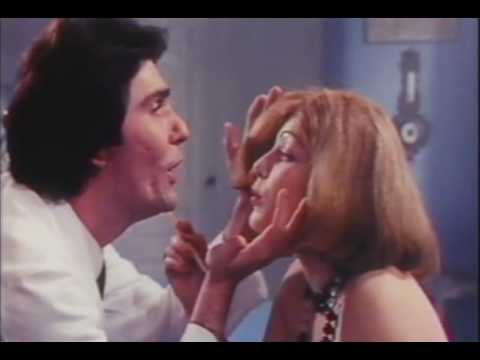
- The 1975 film adaptation adds songs and includes Brel himself performing “Ne Me Quitte Pas.”
Reception: 1968 heat, 2006 polish, 2026 afterlife
In 1968, critics tended to treat the piece as a test: can chanson survive English and still cut? One prominent contemporary capsule review argued that the songs retained their point and wit in English, even suggesting the adaptations sharpened certain targets. Decades later, the 2006 revival wave reframed the show as an act of cultural memory, with reviewers focusing on how arrangement and staging affect the material’s bite.
What has changed most is the audience’s tolerance for emotional extremity. Brel’s narrators do not do “likable.” Today, that reads less as melodrama and more as a refusal to sanitize male ego, romantic need, political anger, and shame.
“Brel’s sardonic French songs retain a great deal of their point and wit when adapted into English for an offBroadway revue.”
“A whole new audience [gets] a chance to connect with the fierce antiwar poetry of earlier generations.”
“Greenberg and his cast emphasize the yearning at the core of Brel’s bittersweet melodies and darkly probing lyrics.”
Quick facts (for humans and search engines)
- Title: Jacques Brel Is Alive and Well and Living in Paris
- Year: 1968 (Off-Broadway premiere)
- Type: Musical revue (cabaret-style song cycle)
- Music: Jacques Brel
- French lyrics: Jacques Brel
- English conception / book / lyric translations: Eric Blau, Mort Shuman
- Original venue: The Village Gate, Greenwich Village, New York
- Notable later staging: 2006 Off-Broadway revival (reordered, reorchestrated)
- Film: 1975 screen adaptation (includes Brel performing “Ne Me Quitte Pas”)
- Album status: Multiple cast recordings; original 1968 cast recording is the baseline listening text; 2006 cast recording documents the revival revision
- Availability notes: Film availability varies by platform; cast recordings are widely distributed via major music services and label catalogs
Frequently asked questions
- Can you post the full lyrics?
- I can’t provide full copyrighted lyrics. I can, however, explain themes, structure, and key images song by song, and help you identify which recording matches the version you saw.
- Is this a “story” musical?
- No. It is a revue: the songs are curated into an emotional arc, performed by an ensemble rather than fixed characters. Productions often suggest personas, but the structure stays song-forward.
- Who wrote the English lyrics?
- Eric Blau and Mort Shuman created the English conception and translated Brel’s songs into performable English, shaping the versions most audiences know.
- What’s the best first recording to start with?
- Start with the 1968 original cast recording for the foundational English performance tradition. Then sample the 2006 Off-Broadway cast recording to hear how rearranged order and updated orchestration change the dramatic temperature.
- Is the 1975 film worth watching?
- Yes, especially for context and for Brel’s on-screen presence performing “Ne Me Quitte Pas.” Treat it as a cousin of the stage experience, not a perfect capture.
- Is the show touring in 2026?
- There is no consistent commercial tour to track. Rights have reportedly been restricted since 2017, and most appearances are venue-specific productions or special presentations.
Key contributors
| Name | Role | Contribution |
|---|---|---|
| Jacques Brel | Composer / Original lyricist | Wrote the songs that form the revue’s core; shaped the modern chanson performance model. |
| Eric Blau | Conception / Book / English lyrics | Co-created the revue’s structure and English performance text. |
| Mort Shuman | Conception / English lyrics | Co-translated and shaped singable English versions; documented the show’s early history. |
| Moni Yakim | Director (1968) | Directed the original Village Gate production in its cabaret intimacy. |
| Gordon Greenberg | Director (2006 revival) | Led the revised Off-Broadway staging with reordered songs and heightened theatricality. |
| Eric Svejcar | Music director (2006 revival) | Musical supervision and performance leadership for the revival’s reorchestrated approach. |
Sources: The Atlantic; IBDB; Masterworks Broadway (official label catalog); Mort Shuman official site; Broadway.com (critical roundup quoting major outlets); University of Georgia events listing; Artscape event listing; Overture (production database); Playbill; Ghostlight Records.