Illya Darling Lyrics – All Songs from the Musical
Illya Darling Lyrics: Song List
- Act 1
- Po, Po, Po
- Dance
- Zebekiko
- Piraeus, My Love
- Golden Land
- Zebekiko (Reprise)
-
Love, Love, Love
- I Think She Needs Me
- I'll Never Lay Down Any More
- After Love
- Birthday Song
- Medea Tango
- Illya Darling
- Act 2
- Dear Mr. Schubert
- The Lesson
- Never on Sunday
- Piraeus, My Love (Reprise)
- Medea Tango (Reprise)
- Dance 2
- Ya Chara
About the "Illya Darling" Stage Show
The first performance of the musical took place in 1967 on the Broadway. The plot of the show is based on the Greek movie, which experienced wide popularity among the audience at that time. The movie was called "Never On Sunday", and it made M. Mercouri, who played the main female role, popular. She has acted a leading role in the musical too. The scriptwriter and the producer of the movie was G. Dassin. Dassin has also played the female role in Broadway show.But here, the coincidence of the musical and the movie doesn't come to an end. For the production of the musical, the same costumier (T. V. Aldredge) and the same composer (M. Hadjidakis, who wrote several songs for the musical and received an Oscar for the best song for the movie) were invited. The musical has a rather difficult history. It was planned to make small performances in the country, but they didn't make success.
The show was also exposed to the censorship influence. The committee recognized this musical as inadmissible for the audience less than 16 years old and demanded to cut some scenes out of it, including a scene on the motor ship, a conversation scene in a bed and a scene in the shower. Therefore, the version, which has been put on the Broadway, is considered the first and official version of the musical. After a premiere, the popularity of the main actress has increased. The admirers sent her lots of love letters. Because of its wide popularity, the show was performed on Broadway through the whole year. The musical was nominated for six Tonies, but didn’t win any. After a series of displays on Broadway, the musical has gone on tour with C. Chariss.
Release date: 1967
“Illya Darling” – The Musical Guide & Song Meanings
A musical about a “free woman” that keeps getting graded like homework
Illya Darling (1967) has one clear thesis: Illya’s joy is a form of intelligence. The score keeps insisting that pleasure, chosen freely, is not ignorance. It is policy. The problem is that the show’s plot is a Pygmalion-style lecture disguised as a vacation romance, and the lyrics are forced to argue two things at once: Illya’s right to live on her terms, and Homer Thrace’s urge to turn her into a museum exhibit. The best songs win that argument. The weaker stretches sound like the show is trying to prove its own respectability.
Joe Darion’s lyrics often operate as translation. Not language translation, though Greek identity is everywhere, but moral translation. Illya sings in the key of appetite and community, and Homer sings in the key of improvement. When their worlds collide, the lyric job is to make the collision funny without making Illya small. That balance is why “Love, Love, Love” and “Never on Sunday” endure: they are not apology songs. They are boundary songs.
Manos Hadjidakis’ music brings the film’s Mediterranean swagger to Broadway scale, with dance breaks and choruses that can whip a room into a taverna. The sound is sunlit, but the lyric tension is darker: a woman is being asked to trade the friends who love her for a man who wants to “save” her. If you listen closely, the score is not neutral about that deal.
Listening tip: sample “Love, Love, Love,” then jump to “The Lesson.” If you can hear Illya’s independence being negotiated in real time between those tracks, the whole show snaps into focus, even without staging.
How it was made: a film hit, a Broadway gamble, and an Oscar song brought indoors
Illya Darling is adapted from Jules Dassin’s 1960 film Never on Sunday. Dassin wrote the book and directed the Broadway production, and he kept the core setup: Illya, a prostitute in the port of Piraeus, meets Homer, an American classicist who decides to “educate” her. Concord’s licensing synopsis still frames the show around that tug-of-war between Illya’s autonomy and Homer’s reform project.
The headline move was bringing Melina Mercouri to Broadway to recreate her film role. The show ran in 1967–1968 at the Mark Hellinger Theatre, and the casting shaped everything downstream. This is not a subtle piece. It is a showcase that expects charisma to do heavy lifting, and many reviewers said exactly that, sometimes cruelly. Time’s 1967 take is blunt: Mercouri is the “trace of Greek fire,” and the rest is thin.
The origin story worth keeping is musical, not gossip: the stage score folds in “Never on Sunday,” the film’s Oscar-winning song (known in Greek as “Ta Paidia tou Pirea,” “The Children of Piraeus”). In other words, Broadway didn’t just adapt the story, it imported the tune that already had international proof-of-life. That kind of interpolation looks normal now. In 1967, it still read like a calculated flex.
Key tracks & scenes
“Piraeus, My Love” (Illya)
- The Scene:
- Piraeus, present day. Illya moves through the port like she owns the air. The men orbit. The other working women watch, half admiring and half irritated. The mood is bright and public, like midday sun bouncing off white walls.
- Lyrical Meaning:
- This is Illya’s philosophy in postcard form. The lyric ties her identity to place and community, not shame. It is the show’s first refusal to let anyone define her from above.
“Love, Love, Love” (Illya)
- The Scene:
- Illya alone for a moment, still in a world full of noise. The staging often plays best when it stops pushing plot and lets her simply state terms. Light tightens. The room quiets.
- Lyrical Meaning:
- She insists love is chosen, not assigned. The lyric makes Illya’s sensuality sound like self-respect, which is the whole trick of the show when it works.
“I Think She Needs Me” (Homer)
- The Scene:
- Homer watches Illya and mistakes fascination for destiny. His posture is upright, almost academic. The comic edge is that he believes he is being noble while the audience can see the ego in the mission.
- Lyrical Meaning:
- Homer’s lyric mindset is improvement-as-romance. The song is a self-portrait of a man who turns desire into a project plan.
“After Love” (Tonio)
- The Scene:
- Tonio, Illya’s local counterpart, hits the stage with heat and territorial pride. The atmosphere shifts from comedic flirtation to something sharper, the sense that Illya is being pulled between two versions of “freedom.”
- Lyrical Meaning:
- This is the show admitting that “love” can also be possession. Tonio’s lyric emotionality can sound romantic until you catch the ownership hiding in the phrasing.
“Dear Mr. Schubert” (Illya)
- The Scene:
- Homer’s program of education kicks in. Illya is asked to behave like a “proper” lady, and European classical music becomes a symbol of imported virtue. The staging often reads like a lesson in manners, with Illya half amused and half cornered.
- Lyrical Meaning:
- The lyric makes culture feel like an outfit being tailored onto Illya’s body. The subtext is a question: who benefits when she fits the pattern?
“The Lesson” (Illya & Homer)
- The Scene:
- A two-hander that exposes the power dynamic. Homer corrects; Illya absorbs and resists. The smartest productions play this with a smile that keeps curdling.
- Lyrical Meaning:
- It is not really about education. It is about control. The lyric ping-pongs between tenderness and condescension, which is exactly the relationship’s problem.
“Never on Sunday” (Illya & Company)
- The Scene:
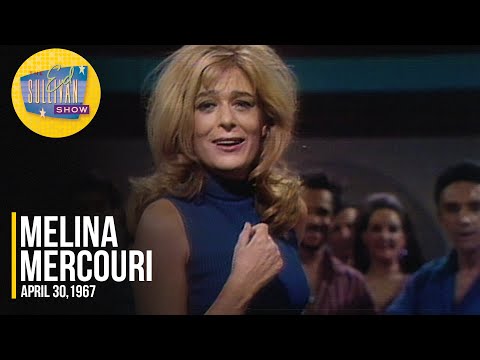
- The show’s calling card. A burst of communal energy, dancers and chorus turning the stage into a celebration that Homer cannot fully domesticate. If you watch the Ed Sullivan performance, you can feel how hard the number leans into audience pleasure.
- Lyrical Meaning:
- A boundary wrapped in a grin. The lyric is playful, but it is also Illya declaring that her time belongs to her, not to clients, not to teachers, not to men with plans.
“Ya Chara” (Company)
- The Scene:
- Finale energy, the group reasserting the world of Piraeus. The lights open up again. Even if the plot has bruises, the ending wants release.
- Lyrical Meaning:
- Community as verdict. Whatever Homer tried to impose, the chorus reminds you who holds the story’s heartbeat.
Live updates (current as of January 27, 2026)
Illya Darling is not in an active commercial Broadway life right now, but it is not extinct. Concord Theatricals continues to license the title and lists rental materials (including libretto-vocal books and piano-conductor materials), which is the practical sign that the show remains producible in 2026.
On the listening side, the Original Broadway Cast Album remains easy to find on major streaming platforms. Also newly useful for fans: official releases of Ed Sullivan performance audio have been issued as singles in the 2022–2023 window on Apple Music and Spotify, which gives you a period snapshot of Mercouri selling the show in real time.
If you are considering a production, a blunt warning from history helps: reviewers often said the story is slight and the evening lives or dies on the lead. That is not snobbery. It is casting math. If your Illya can command a room and make joy look principled, you have a show. If she cannot, you have postcards and a lecture.
Notes & trivia
- The Broadway production opened April 11, 1967 and closed January 13, 1968 at the Mark Hellinger Theatre, running 320 performances.
- It earned six Tony nominations, including Best Musical, Best Score, Best Direction, and Best Choreography.
- Music was orchestrated by Ralph Burns, with Karen Gustafson as musical director for the Broadway production.
- “Never on Sunday” began life as the film song “Ta Paidia tou Pirea” (“The Children of Piraeus”), an international hit associated with Mercouri.
- In an interview, Mercouri credited bringing bouzouki player Harry Lemonopoulos from Athens for the Broadway show, treating authenticity as part of the star package.
- The original cast recording was issued by United Artists Records in 1967 (UAS 9901 for stereo pressings), and later received its first CD release through Kritzerland in 2009, per Playbill’s announcement.
- If you want the show’s temperature fast, watch “Never on Sunday” on Ed Sullivan: it compresses the musical’s entire sales pitch into a few minutes.
Reception: the praise was usually her, the complaints were usually the book
Contemporary reviews made the pattern clear: Mercouri brought electricity, and critics wanted more structure around her. Time described the musical as low-powered with one real flame, and Playbill historian Steven Suskin later summed it up as a huge star vehicle that did not fully deliver on craft. Those judgments can sound harsh now, but they also explain why the score’s best moments still get remembered: they are the places where Illya’s point of view is allowed to win without explanation.
“Illya Darling is a 15-watt musical with one trace of Greek fire, Melina Mercouri.”
“The season’s biggest star-vehicle with the biggest advance sale.”
“The sort of musical that assumed the audience had seen the film.”
Listening in 2026, the reception story lands differently. Audiences are now used to thin-plot star vehicles and to musicals built from screen material. What makes Illya Darling interesting is not that it is an adaptation. It is that it is an argument about autonomy that keeps getting packaged as a makeover fantasy. The lyrics are where you can hear the argument trying to break free.
Quick facts
- Title: Illya Darling
- Year: 1967
- Type: Book musical (screen-to-stage adaptation)
- Book & original direction: Jules Dassin
- Music: Manos Hadjidakis
- Lyrics: Joe Darion
- Based on: Jules Dassin’s film Never on Sunday
- Setting: The Port of Piraeus, Greece, present day
- Broadway venue: Mark Hellinger Theatre
- Broadway run: April 11, 1967 to January 13, 1968
- Orchestrations: Ralph Burns
- Musical director (Broadway): Karen Gustafson
- Cast album: Original Broadway Cast Album (United Artists Records, 1967); CD release (Kritzerland, 2009)
- Availability: Licensed for production via Concord Theatricals; album available on streaming platforms
Frequently asked questions
- Who wrote the lyrics for Illya Darling?
- Joe Darion wrote the lyrics, with music by Manos Hadjidakis and a book by Jules Dassin.
- Is Illya Darling the same story as Never on Sunday?
- Yes. It is based on Dassin’s 1960 film, keeping the central relationship between Illya and Homer and the Piraeus setting.
- Does the musical include “Never on Sunday”?
- Yes. The Broadway show incorporates the famous song associated with the film and Mercouri, and it became the production’s signature moment.
- Is the cast recording available?
- Yes. The original cast album is available on streaming services, and the recording received a CD release through Kritzerland (announced by Playbill in 2009).
- Is Illya Darling available for licensing?
- Yes. Concord Theatricals lists the show for licensing and materials rental.
- What should I listen to first to understand the show’s lyric point of view?
- Start with “Love, Love, Love,” then “I Think She Needs Me,” then “The Lesson.” That sequence lays out the show’s central debate about autonomy versus improvement.
Key contributors
| Name | Role | Contribution |
|---|---|---|
| Jules Dassin | Book & original director | Adapted his film Never on Sunday for Broadway; shaped the stage narrative around Mercouri’s return to the role. |
| Manos Hadjidakis | Composer | Wrote the score and brought the musical language of Piraeus to Broadway. |
| Joe Darion | Lyricist | Crafted English lyrics that translate Illya’s worldview and Homer’s reform agenda into song debate. |
| Melina Mercouri | Original Illya | Created the Broadway performance as a star vehicle continuation of her film persona. |
| Onna White | Choreographer | Built the dance vocabulary that sells the show’s taverna energy. |
| Ralph Burns | Orchestrator | Orchestrated the Broadway score, scaling the film sound into a theatre engine. |
| Concord Theatricals | Licensing | Licenses the title and rents performance materials in 2026. |
Sources: IBDB, Concord Theatricals, TIME, Playbill, Broadway.com, RogerEbert.com, YouTube (Ed Sullivan clip), Wikipedia (for consolidated production notes), Discogs (release metadata), Spotify, Apple Music.