I Do! I Do! Lyrics – All Songs from the Musical
I Do! I Do! Lyrics: Song List
- Act 1
- All the Dearly Beloved
- Together Forever
- I Do! I Do!
- Goodnight
- I Love My Wife
- Something Has Happened
- My Cup Runneth Over
- Love Isn't Everything
- Nobody's Perfect
- A Well Known Fact
- Flaming Agnes
- The Honeymoon Is Over
- Act 2
- Where Are the Snows?
- When the Kids Get Married
- The Father of the Bride
- What Is a Woman?
- Someone Needs Me
- Roll Up the Ribbons
- This House
About the "I Do! I Do!" Stage Show
The plot of the musical is based on the book written by J. de Hartog. D. Merrick became the first person, who made the musical. He didn’t have enough money for the expensive suits and scenery. Besides, there were few actors in his team. Nevertheless, he managed to create the musical, which on four previews has collected some cash to live. After that, the musical was agreed to show on Broadway. The first display took place in 1966. The leading roles were played by M. Martin & R. Preston. They also took part in the national round.The show made great success; therefore, it was closed only in one and a half year. In addition, in 1967, the matinees began. K. Lawrence & G. McRae took part in them, and then they replaced the previous actors at the evening performances. 2 years after the premiere, an America tour began. It was initially planned to visit 27 cities. But the chief actor got sick, and the musical visited about a half of the cities. The other performances had to be cancelled.
Besides the performance on the Broadway scene, the musical has a screen version. The first idea about the creation of the movie came to in 1969, but in 1970 the production was stopped. Financial losses of some performances became the reason for that. The second version was created in 1982 and shown on TV. Because of small expenses, the show still has success at small regional theaters. The audience saw the first remake in 1996. Since then, the musical has pleased the audience of America from time to time. The performance received two Tony awards: for the Best Director and the Best Play.
Release date: 1966
"I Do! I Do!" – The Musical Guide & Song Meanings
Information current as of January 27, 2026. This guide focuses on lyrics, story function, and what the cast recording is actually selling you: a marriage, in verse, with no chorus line to hide behind.
Review: the marriage musical that refuses to leave the bedroom
"I Do! I Do!" is a contrarian Broadway animal: two performers, one room, and fifty years of marriage compressed into song. The plot is simple on purpose. The lyrics have to do the heavy lifting: they mark time, sharpen arguments, and turn domestic detail into punchline or bruise, sometimes in the same couplet. The show’s big structural idea is also its dare. If you cannot make an audience care about a relationship in a single bedroom, you do not get to distract them with a parade.
Tom Jones writes lyrics that behave like spoken dialogue with musical timing. They land cleanly, often without ornament, because the characters are busy living. Michael’s self-satisfied jokes and Agnes’s quick pivots from romance to realism are the text’s engine. When it works best, the words track how affection changes shape: devotion becomes habit, habit becomes resentment, resentment becomes a private language only the two of them understand.
Harvey Schmidt’s score is built for momentum and memory. This is not a show about plot twists; it’s about emotional weather. Musical motifs recur as the couple cycles through optimism, boredom, ego, jealousy, parental fatigue, and a late-life tenderness that arrives almost as a surprise. The sweetest trick is that the score often sounds breezy while the lyric is quietly accounting for time, regret, and the fear of becoming ordinary.
Viewing tip: if you see it live, sit close enough to clock the transitions. "I Do! I Do!" is famous for stage business and time-jumps. The real special effect is not scenery; it’s how performers turn a change of posture, a hairpiece, or a glance into ten years.
How it was made: a star vehicle with a producer’s spreadsheet logic
Jones and Schmidt adapted Jan de Hartog’s play "The Fourposter" into a musical that could run on intimacy rather than spectacle. Producer David Merrick’s interest was practical as well as artistic: a small cast and a single setting reduce costs and increase mobility, which helps explain why the title has stayed alive in regional programming and licensing. The original Broadway production opened December 5, 1966 at the 46th Street Theatre, with Mary Martin and Robert Preston, directed by Gower Champion.
The creative problem was thorny. "The Fourposter" already lives in one bedroom. The musical version had to justify singing without breaking the play’s compact realism. The solution was to make the songs do two jobs at once: they are emotional release valves and also fast-forward mechanisms. A number does not just express feeling; it skips to the next season of the marriage.
Myth-check: people often assume "My Cup Runneth Over" was written as a standalone pop ballad that wandered into a musical later. The paper trail runs the other direction: the song’s hit life is downstream of the show, and its placement inside the stage version has been debated by critics and producers ever since.
Key tracks & scenes: where the lyrics earn their keep
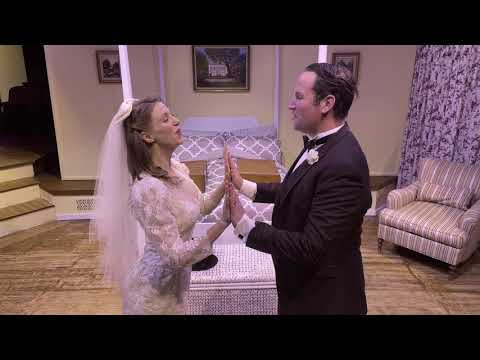
"All the Dearly Beloved / Together Forever / I Do! I Do!" (Michael & Agnes)
- The Scene:
- Wedding-day nerves in a bedroom with a four-poster bed that feels like a prop and a prophecy. Bright, ceremonial light at first, then softer as the door closes and the audience becomes an awkward third wheel.
- Lyrical Meaning:
- The lyric is a contract written in real time. "Together" is not romantic garnish; it’s the premise that will get tested for the next fifty years. The vows are sung before the consequences arrive, which is exactly the point.
"Good Night" (Michael & Agnes)
- The Scene:
- Two newlyweds trying to sound calm. The room darkens. The comedy comes from hesitation, spacing, and the terrifying silence between polite words.
- Lyrical Meaning:
- This is early Jones at his most surgical: the lyric is small talk under pressure. The song makes the case that intimacy is not a mood; it’s a skill, and neither of them has learned it yet.
"I Love My Wife" (Michael)
- The Scene:
- A spotlight confession, half to the audience and half to himself. The staging often plays as a wink, but it is also an announcement of identity: he wants to be the kind of man who says this out loud.
- Lyrical Meaning:
- Michael’s lyric is a humblebrag with a heartbeat. He is proud of being content, which is both charming and a warning sign for later scenes when he confuses comfort with entitlement.
"Something Has Happened" (Agnes)
- The Scene:
- Agnes, pregnant, tidying the bedroom like she can organize the future. The light goes domestic: warm, narrow, and practical.
- Lyrical Meaning:
- The lyric turns motherhood into suspense. The title is plain because the feeling is not: joy, fear, and displacement are braided together. It is one of the show’s best examples of understatement as craft.
"Nobody's Perfect" (Michael & Agnes)
- The Scene:
- A marital inventory delivered at speed. They are in the same room but not on the same planet. Blocking tends to split the stage: dueling dressing tables, dueling narratives.
- Lyrical Meaning:
- This is the show’s argument in miniature: love requires negotiating two imperfect autobiographies. The lyric is funny because it’s petty, and it’s painful because it’s accurate.
"Flaming Agnes" (Agnes)
- The Scene:
- Agnes tries on the fantasy of reinvention, often with bold lighting and a sharper silhouette. It is the bedroom briefly turning into a nightclub in her head.
- Lyrical Meaning:
- Jones gives Agnes a lyric that is both protest and performance. She is not just complaining; she is imagining a self who does not have to be reasonable. That imaginative muscle keeps her alive.
"My Cup Runneth Over" (Michael & Agnes)
- The Scene:
- Midlife reflection after the bruises of parenting and disillusionment. The staging usually slows down. The room feels bigger because time is bigger.
- Lyrical Meaning:
- The lyric is gratitude with teeth. It admits mortality and still chooses love. The song’s history includes a well-known debate about where it belongs in the evening, which is fitting for a number obsessed with timing.
"Where Are the Snows?" (Michael & Agnes)
- The Scene:
- New Year’s Eve, older bones, quieter jokes. Lighting tends to cool, as if the room itself is aging.
- Lyrical Meaning:
- One of the score’s cleanest portraits of time passing: the lyric mourns lost youth without melodrama. It is not nostalgia as perfume; it is nostalgia as weather report.
"This House" (Michael & Agnes)
- The Scene:
- Boxes, memories, the last look. The bedroom becomes an archive. When the two of them move in sync here, it reads like hard-won choreography.
- Lyrical Meaning:
- The lyric blesses the ordinary. After decades of fighting over daily life, the final song reframes daily life as the achievement.
Live updates (2025-2026): still booking, still adaptable
In 2025-2026, "I Do! I Do!" is doing what it has always done best: thriving as an intimate booking for companies that want a recognized title without the overhead. Recent listings and announcements include productions scheduled for February 3-4, 2026 at The Villages (Florida) and March 12-29, 2026 in Quogue, New York. In January 2026, Palm Springs coverage also flagged a current run at Palm Canyon Theatre.
On the licensing side, Music Theatre International continues to circulate a revised version (noted as 2010) and also offers an expanded eight-actor adaptation, "I Do! I Do! I Do! I Do!", which reshapes the piece into four couples and removes "My Cup Runneth Over" entirely. That cut is not a trivial swap. It changes the score’s emotional center of gravity, and it changes what audiences take home: less midlife reckoning, more ensemble momentum.
Listener tip: if you are coming in cold, queue three numbers beforehand: "Good Night" (tone), "Nobody’s Perfect" (conflict grammar), and "This House" (destination). The rest reads more clearly once you know where the evening is headed.
Notes & trivia
- It is a two-character musical comedy set entirely in one bedroom, anchored by a four-poster bed.
- The original Broadway run opened December 5, 1966 and closed June 15, 1968, logging 560 performances.
- Producer: David Merrick. Director: Gower Champion. Scenic design: Oliver Smith. Costume design: Freddy Wittop. Lighting design: Jean Rosenthal.
- Robert Preston won the 1967 Tony Award for Best Actor in a Musical for the original production.
- The original cast album was released by RCA Victor; John Lesko is credited as musical director on the Broadway production, and he is also credited on album documentation.
- "My Cup Runneth Over" became a major pop hit outside the theatre, helping keep the title in circulation.
- MTI’s eight-actor "I Do! I Do! I Do! I Do!" adaptation removes "My Cup Runneth Over," a notable change for a show whose fame is tied to that song.
Reception: then vs. now (and why the lyrics take the blame)
In 1966, critics could admire the stars and still question the material’s slightness. That tension is baked into the show’s reputation: audiences remember the warmth; skeptics point to the clichés. Modern revivals tend to live or die on performance detail. When the acting is specific, the lyrics read like a couple’s private shorthand. When it is generalized, the text can feel like a greeting card fighting for two hours of your life.
“It’s the wrong song in the wrong place.”
“A few fistfuls of delicious ditties.”
“The lyrics are for the most part remarkably plain-spoken.”
The fairest 2026 verdict is that "I Do! I Do!" is a performer’s piece with a critic’s trapdoor. The lyrics are intentionally direct. If you demand poetic density, you may leave hungry. If you value clarity, timing, and the way a couple weaponizes ordinary words, the writing is exactly sharp enough.
Quick facts
- Title: I Do! I Do!
- Year: 1966 (Broadway opening: December 5, 1966)
- Type: Two-hander musical comedy
- Book & Lyrics: Tom Jones
- Music: Harvey Schmidt
- Based on: The Fourposter (Jan de Hartog)
- Original Broadway theatre: 46th Street Theatre (now the Richard Rodgers Theatre)
- Setting: One bedroom, spanning roughly 1895-1945 in the story
- Selected notable placements: “Good Night” (wedding night), “Nobody’s Perfect” (mid-marriage conflict), “My Cup Runneth Over” (midlife reflection), “This House” (farewell)
- Original album: RCA Victor Original Broadway Cast Recording (released as an LP in early December 1966)
- Licensing note: MTI lists a revised version (2010) and an eight-actor adaptation (“I Do! I Do! I Do! I Do!”)
Frequently asked questions
- Who wrote the lyrics in “I Do! I Do!”?
- Tom Jones wrote the book and lyrics, with music by Harvey Schmidt.
- Is “My Cup Runneth Over” originally from this musical?
- Yes. The song originates in the stage show and later took on a separate life through popular recordings.
- Is “I Do! I Do!” a two-person show?
- The standard version is written for two performers (Agnes and Michael). MTI also licenses an expanded eight-actor adaptation.
- Is there a cast recording?
- Yes. The original Broadway cast album was released by RCA Victor in 1966.
- Is it touring on Broadway right now?
- It is not a current Broadway run, but it remains active in regional scheduling and has multiple announced 2026 engagements.
Key contributors
| Name | Role | Contribution |
|---|---|---|
| Tom Jones | Book & Lyrics | Adapted the original play into a two-character musical structure; wrote lyrics with conversational bite. |
| Harvey Schmidt | Composer | Wrote a score built for time-jumps and recurring emotional motifs. |
| Jan de Hartog | Source playwright | Wrote “The Fourposter,” the play that established the bedroom-only premise. |
| David Merrick | Producer | Mounted the original Broadway production with a cost-smart, star-forward concept. |
| Gower Champion | Director | Shaped staging and movement that sell time passing without scenic change. |
| Mary Martin | Original Agnes | Originated Agnes on Broadway; defined early performance expectations for the role. |
| Robert Preston | Original Michael | Originated Michael on Broadway; won the Tony Award for Best Actor in a Musical (1967). |
| John Lesko | Musical Director | Credited as musical director for the original Broadway production and in album documentation. |
Sources: IBDB, Playbill, Music Theatre International, Masterworks Broadway, TheaterMania, The Villages Entertainment, BroadwayWorld, Wikipedia, WorldRadioHistory (HiFi/Stereo Review archive).