High Society Lyrics – All Songs from the Musical
High Society Lyrics: Song List
- Act 1
- High Society
- Ridin' High
- Throwing a Ball Tonight
- Little One
- Who Wants to Be a Millionaire?
- I Love Paris
- She's Got That Thing
- Once upon a Time
- True Love
- Act 2
- High Society/Let's Misbehave
- I'm Getting Myself Ready for You
- Just One of Those Things
- Well Did You Evah?/You're Sensational
- Say It With Gin
- It's All Right With Me
- He's a Right Guy
- I Love You, Samantha
- Samantha/True Love (Reprise)
About the "High Society" Stage Show
The plot of the musical is based on the book written by P. Barry. For the first time, the display of the show took place in 1997 in San-Francisco. The audience of the Broadway saw the musical only the following year. The performance lasted for 4 months. C. Renshaw was the director. W. Cliento worked as a choreographer. The actors were the following: M. Errico, D.McDonald, J. McMartin, S. Bogardus, R. Graff, L. Banes & M. Kudisch.Besides Broadway, the premiere also took place in West End. It was created by G. Gregory. The performance was shown on the open air in Regent's Park in 2005. After the end of a tourist season, the musical moved to the enclosed theater and was performed till January, 2006. The following actors took part in it: K. Kingsley, G. Bickley, R. Jones, P. Robinson, J. McMartin, M. Kudisch, C. Redcliffe, J. Hall & J. Jordan. After that, the musical had a long break in performances. The newest version of the musical was shown in 2015. K. Fleetwood, R. Young, J. Parker, B. Flynn, A.Scholey, J. Rawle & E. Bamber took part in it. M. Friedman became the director.
Release date: 1998
"High Society" – The Musical Guide & Song Meanings
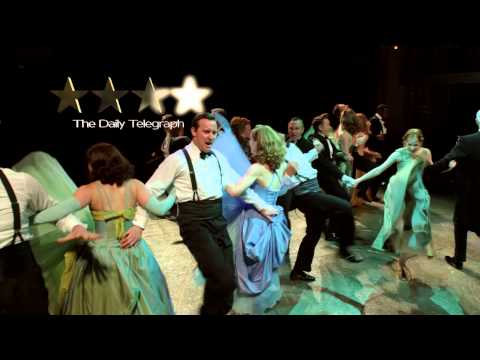
Review: the lyrics smile, then quietly keep score
“High Society” sells itself as a party, then uses its lyrics to count the emotional cost of attending. The setting is moneyed and sunlit. The language is sharp and polite. Porter’s best trick is that every joke has a blade. In the 1998 stage version, that blade is aimed at Tracy Lord’s pride: how quickly wit becomes armor, how easily “class” becomes a refusal to admit you’re hurt.
The show’s lyric engine runs on social performance. People are constantly being watched, measured, recorded. That is why the song choices matter. A number like “Who Wants to Be a Millionaire?” is not only a flirtation. It’s a critique of the entire weekend’s morality, sung with a grin so the room applauds before it notices the insult. “Let’s Misbehave” works the same way, except it turns rebellion into an event, something you can do under chandeliers and still feel respectable the next morning.
The 1998 adaptation also leans into contrast. Porter’s sophisticated internal rhymes sit beside plain spoken realizations about love and regret. Tracy’s journey is not “finding herself.” It’s recognizing the difference between being admired and being understood. The lyrics keep returning to choice, especially the kind that looks small in the moment and permanent in the aftermath.
Musically, it’s jazz-tilted musical comedy with standards you already feel you know. That familiarity is a trap and a comfort. The audience hums along, while the characters make decisions that will land like bruises when the champagne wears off.
How it was made
The 1998 “High Society” is a stage adaptation with a complicated family tree: Philip Barry’s “The Philadelphia Story,” the 1956 MGM film “High Society,” and then Arthur Kopit’s book that tries to make farce behave on a Broadway stage. The show keeps Porter’s iconic songs from the film, then pulls in additional Porter numbers from elsewhere to widen the characters’ inner monologues. Susan Birkenhead supplied additional lyrics for certain moments, a practical fix when a classic song needs to point at a specific plot beat without sounding stapled on.
The Broadway production opened at the St. James Theatre on April 27, 1998, after previews beginning March 31, and closed August 30, 1998. The original cast included Melissa Errico as Tracy, Daniel McDonald as Dexter, Randy Graff as Liz, Stephen Bogardus as Mike, John McMartin as Uncle Willie, and a 12-year-old Anna Kendrick as Dinah.
There’s also an album-story detail that explains why the score’s sheen survives outside the theater. The original Broadway cast recording sessions were held at Edison Recording Studios in New York in August 1998, capturing the show’s version of Porter’s “various vintages” while the production was still fresh in muscle memory. The release is commonly associated with DRG Records’ 1999 issue of the album.
Key tracks & scenes
"Ridin’ High" (Tracy, Staff)
- The Scene:
- Morning at the waterfront estate in Oyster Bay. Staff in motion, wedding lists everywhere. Bright, crisp light that makes everything look expensive, including the nerves. Tracy enters in full command, smiling like it’s her job.
- Lyrical Meaning:
- It’s confidence as choreography. Tracy’s words are a defense mechanism dressed as celebration. The lyric tells you she believes control is the same thing as happiness, at least until Dexter arrives.
"Little One" (Dexter, Dinah)
- The Scene:
- Dexter trails after a distraught Dinah on the edge of the estate. The energy shifts away from wedding bustle into a quieter pocket of shade. Adult regret meets a kid’s clarity.
- Lyrical Meaning:
- Dexter’s lyric voice is gentler than his reputation. The song frames him as someone who can be tender when there’s no audience to impress, which is exactly why he remains dangerous to Tracy.
"Who Wants to Be a Millionaire?" (Liz, Mike)
- The Scene:
- The reporters arrive and immediately start playing their roles: charm as camouflage. The staging often feels like a quick-change con, bright smiles under hard light, as if the house itself is interrogating them.
- Lyrical Meaning:
- The lyric isn’t subtle about money. That’s the point. It punctures the wedding-weekend fantasy by asking whether comfort is love, or just a purchase you learn to justify.
"I Love Paris" (Dinah, Tracy)
- The Scene:
- A “peculiar” performance moment in the house’s social spaces, played with a knowing artificiality. Dinah weaponizes cuteness. Tracy lets it happen because it keeps the adults off balance.
- Lyrical Meaning:
- It’s a postcard song used like misdirection. The lyric becomes a mask for a scene that is really about class theater and who gets to control the narrative in the room.
"Let’s Misbehave" (Tracy, Company)
- The Scene:
- The party after the formalities. Warmer lighting, looser bodies, champagne as an accelerant. Tracy drifts from guests to staff to Mike as the evening blurs its own rules.
- Lyrical Meaning:
- The lyric turns rebellion into flirtation, which is why it’s so revealing. Tracy isn’t trying to be reckless for its own sake. She’s trying to feel something honest without losing face.
"Well, Did You Evah!" (Tracy, Liz, Uncle Willie, Staff)
- The Scene:
- Late-night sparring disguised as entertainment. The song plays like a comic volley, bright spots on the singers, the rest of the house receding into shadow as everyone chooses sides.
- Lyrical Meaning:
- It’s gossip made musical. The lyric is judgment dressed as fun. It shows how quickly this world confuses wit with righteousness.
"Just One of Those Things" (Dexter)
- The Scene:
- Dexter alone with the consequences, often staged in a quieter interior space. The party noise is gone. The light is cooler. The room feels larger because he’s finally honest in it.
- Lyrical Meaning:
- A classic Porter shrug that hurts. The lyric performs detachment while admitting deep attachment, which is Dexter’s defining contradiction with Tracy.
"It’s All Right With Me" (Tracy)
- The Scene:
- Morning-after clarity, the wedding still looming. Tracy is surrounded by evidence: last night’s mess, today’s schedule. The staging often isolates her in a tighter pool of light as the household resets around her.
- Lyrical Meaning:
- The lyric is consent and surrender in the same breath. Tracy is testing what it would mean to stop performing. The song matters because it’s where pride begins to crack into possibility.
Live updates (2025/2026)
Information current as of January 27, 2026. “High Society” is returning to London in a new production at the Barbican Theatre running Tue 19 May to Sat 11 July 2026. The season is billed as a strictly limited eight-week run, directed by Rachel Kavanaugh, with choreography by Anthony Van Laast and musical supervision by Stephen Ridley.
Cast announced so far: Helen George as Tracy Lord and Felicity Kendal as Mother Lord. Barbican’s press materials also state the show will head straight into a major UK and Ireland tour after the London run, opening at Wycombe Swan, with Helen George continuing as Tracy. Ticket listings for the Barbican run commonly show entry prices from around £42, with typical evening and matinee patterns published by London visitor and ticketing sites.
This matters for the lyrics because revivals keep adjusting the tone. In 2026, audiences are likely to hear the show’s “society” jokes less as quaint satire and more as a survival guide for status culture: who gets forgiven, who gets written up, who gets photographed at their worst.
Notes & trivia
- The Broadway production opened April 27, 1998 at the St. James Theatre and closed August 30, 1998 after 144 performances (with 27 previews).
- The show credits: Music and lyrics by Cole Porter, book by Arthur Kopit, with additional lyrics by Susan Birkenhead.
- Anna Kendrick originated Dinah on Broadway at age 12 and earned major awards attention for the role.
- Licensing listings set the story in Oyster Bay, Long Island, New York, June 1938, and position it as a romantic comedy adaptation.
- The original Broadway cast recording sessions were recorded at Edison Recording Studios in New York in August 1998, while the show was still in its Broadway life.
- Digital platforms commonly list the cast album under DRG Records with a 1999 release year.
- For 2026, the Barbican production is announced as a limited London run followed by a UK and Ireland tour.
Reception
In 1998, the Broadway conversation often circled the same tension: a polished package that sometimes struggled to turn sophistication into heat. Later reviews of revivals have tended to be kinder to the piece’s emotional framing, especially when directors play the champagne as a cover for bruised people rather than a substitute for them. The songs have never been the issue. The question has always been what kind of story you ask those songs to tell.
“The musical … has become bigger, blunter and less beguiling entertainment in New York.”
“Against the mere afterglow of Hepburn … Melissa Errico … is not in their league.”
“Keeps the sparkling lightness of the film but adds depth to the characters.”
Quick facts
- Title: High Society
- Year: 1998 (Broadway production)
- Type: Musical comedy adaptation
- Book: Arthur Kopit
- Music & lyrics: Cole Porter
- Additional lyrics: Susan Birkenhead
- Based on: The Philadelphia Story (Philip Barry) and the 1956 film High Society
- Original Broadway run: Previews March 31, 1998; opened April 27, 1998; closed August 30, 1998; St. James Theatre
- Cast album: Original Broadway Cast recording (recorded Aug 1998; commonly issued as a 1999 DRG Records release; available on major streaming platforms)
- Selected notable placements: estate morning bustle; reporters’ arrival; cocktail pavilion games; champagne party; late-night sparring; morning-after reset
- 2026 London run: Barbican Theatre, 19 May – 11 July 2026 (limited season), then tour announced
- 2026 creatives (announced): Director Rachel Kavanaugh; choreographer Anthony Van Laast; musical supervision Stephen Ridley
Frequently asked questions
- Is “High Society” a Cole Porter musical or a compilation?
- It’s a Cole Porter score built from the 1956 film’s songs plus additional Porter standards selected to serve the stage story. Some moments include additional lyrics credited to Susan Birkenhead.
- What’s the main lyrical theme?
- Public image versus private desire. The lyrics keep treating romance as a social negotiation: who you are when people are watching, and who you are when the party ends.
- Who are the main voices in the show?
- Tracy Lord sits at the center, with her ex-husband Dexter and journalist Mike Connor pulling at different versions of her future. Liz Imbrie and Uncle Willie often deliver the show’s sharpest comedic commentary through song.
- When was the Broadway production?
- The original Broadway production opened April 27, 1998 at the St. James Theatre and closed August 30, 1998.
- Is there a new production in 2026?
- Yes. A Barbican Theatre run in London is scheduled from 19 May to 11 July 2026, with Helen George and Felicity Kendal announced, and a subsequent UK and Ireland tour also announced.
- Is there an original cast recording?
- Yes. The Original Broadway Cast recording was recorded in August 1998 and is widely listed as a 1999 DRG Records release, available on streaming platforms.
Key contributors
| Name | Role | Contribution |
|---|---|---|
| Cole Porter | Composer / lyricist | Wrote the score’s core language: satire that lands as romance, and romance that keeps its teeth. |
| Arthur Kopit | Book writer | Shaped the 1998 stage narrative and pacing for Broadway. |
| Susan Birkenhead | Additional lyrics | Added new lyric material where the stage adaptation needed tighter story specificity. |
| Melissa Errico | Original Broadway cast | Originated Tracy Lord on Broadway (1998), defining the role’s vocal and comedic balance for this version. |
| Daniel McDonald | Original Broadway cast | Originated C.K. Dexter Haven, grounding Porter’s cool language in genuine regret. |
| Randy Graff | Original Broadway cast | Originated Liz Imbrie, giving the score a pragmatic, adult edge. |
| Stephen Bogardus | Original Broadway cast | Originated Mike Connor, the outsider voice that keeps asking what this “society” costs. |
| John McMartin | Original Broadway cast | Originated Uncle Willie, a comic valve with a mild tragic tint. |
| Anna Kendrick | Original Broadway cast | Originated Dinah at age 12, a key engine of the show’s mischief and moral clarity. |
| Rachel Kavanaugh | Director (2026 Barbican) | Leading the announced 2026 London production and subsequent tour. |
| Anthony Van Laast | Choreographer (2026 Barbican) | Choreography announced for the Barbican run and tour. |
| Stephen Ridley | Musical supervision (2026 Barbican) | Musical supervision announced for the Barbican run, with press noting a full orchestra. |
| Helen George | Performer (2026 Barbican) | Announced as Tracy Lord for the 2026 limited Barbican season and tour. |
| Felicity Kendal | Performer (2026 Barbican) | Announced as Mother Lord for the 2026 Barbican season. |
Sources: Barbican (event page and press room), London Box Office, LondonTheatre.co.uk, IBDB, Playbill, Concord Theatricals, Discogs, Spotify, SFGATE, New York Magazine, The Guardian.