
Hedwig And The Angry Inch Lyrics: Song List
About the "Hedwig And The Angry Inch" Stage Show
The musical received a huge number of awards. M. Cerveris and N. Patrick Harris (who was a major star in very well-known How I Met Your Mother serial movie) have received Tony award as the best actors. Besides, a set of stars took part in this production. Among them, there are: D. Criss (Emmy nominee), T. Diggs, A. Rannells (who was nominated on Tony), Golden Globe nominee M. Hall; A. Sheedy, K. Cahoon, G. Dante, A. Rapp, N. Garrison. Hedwig was acted by C. Joyce and D. Leitch.
For the first time, the musical was shown in 1998. The performance had been staged for two years. P. Askin & J. Mitchell were directors. J. C. Mitchell played also the main role. The theater, in which the production took place, was located in one of the places, where "Titanic" was shot. Besides Mitchell, the main role was also played by: M. Cerveris, D. Leitch, A. Sheedy, K. Cahoon, A. Somers and M. McGrath. This version of the show received Outer Circle & Obie Awards (for the best actors and musical).
The Broadway version appeared in 2014. M. Mayer was responsible for music and S. Liff was the director. The musical has 4 Tony nominations and it won in 3 out of 4. In Great Britain, the performance took place in West End, Edinburgh, and Brighton. K. Kahoon and M. Cerveris took part in it. The musical was also seen by the audience of such countries as Canada, Austria, Germany, Brazil, Italy and Thailand.
Release date of the musical: 1998
"Hedwig and the Angry Inch" – The Musical Guide & Song Meanings
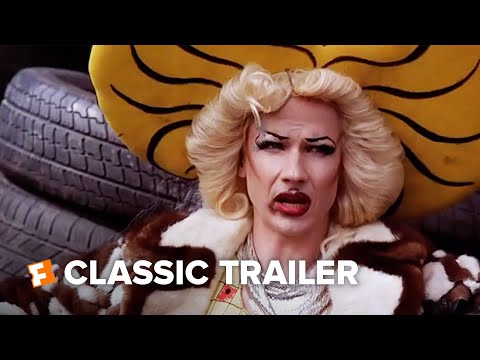
Review: the lyrics that flirt, confess, and bite back
“Hedwig and the Angry Inch” is built like a club set, but written like a memoir you only dare to read out loud once. The lyric voice never stays in one register for long. It cracks jokes, then suddenly speaks in myth. It throws a line into the room like a beer bottle, then waits for the audience to notice the blood on the floor.
The score’s central trick is that it makes philosophy feel like gossip, and gossip feel like scripture. “The Origin of Love” turns an old story from Plato into a pop-singable explanation for longing. “Wicked Little Town” makes love sound like geography. “Angry Inch” refuses polite metaphor and names the wound directly. Across the show, Trask’s lyric choices keep circling one obsession: the desire to be “whole,” and the suspicion that the idea of wholeness can be a trap.
Musically, it is glam rock with a downtown accent. You can hear Bowie and Lou Reed in the attitude and phrasing, but the show’s heartbeat is theatre: motifs that recur as arguments, not decoration. When a line returns, it returns bruised. When a hook repeats, it starts to feel like a coping mechanism.
How it was made
Mitchell and Trask developed “Hedwig” through performance, not polite workshop steps. The work grew in clubs, with an early life tied to Squeezebox, a New York drag-punk scene where rock covers and persona-play shaped the show’s DNA. That origin matters because the lyric style depends on direct address. Hedwig is not “acting” in a conventional plot-first way. Hedwig is working the room, and the text is written to survive heckles, laughter, and sudden silence.
Mitchell has described how his family history and childhood on military bases informed the Berlin-to-America axis, and how encounters with people who fled East Berlin fed the show’s emotional weather. That biography does not reduce the piece to autobiography, but it explains the specificity. The songs are obsessed with borders. Bodies. Language. Passing. Not passing. The lyric engine keeps returning to the same question with different masks.
When the piece moved into larger commercial spaces, the authors treated it as something that could be re-conceived rather than preserved in glass. During the 2014 Broadway revival process, Mitchell spoke about wanting to rethink the show rather than simply repeat his original performance, and the text continued to shift even close to opening. “Hedwig” stays alive partly because it admits it is a performance, and then keeps rewriting what that performance is for.
Key tracks & scenes
"Tear Me Down" (Hedwig with Yitzhak)
- The Scene:
- The lights hit like a cue from a bar manager: we are open, we are loud, pay attention. Hedwig frames the night as a set aimed at Tommy Gnosis. The band locks in. The room becomes both confession booth and boxing ring.
- Lyrical Meaning:
- An origin story told as a dare. The lyric ties Hedwig’s body to Berlin’s split history, then turns that history into personal swagger. It is survival spoken in headlines.
"The Origin of Love" (Hedwig)
- The Scene:
- A tempo shift. The gig pauses for a story that feels older than the amplifiers. In many stagings, the light narrows and softens, as if the club briefly becomes a planetarium.
- Lyrical Meaning:
- The lyric adapts Aristophanes’ myth into a pop parable about longing. It is funny, childlike, and quietly ruthless. It also plants the show’s most dangerous idea: that somewhere there is a missing half who will make you real.
"Sugar Daddy" (Hedwig)
- The Scene:
- Hedwig sells the American dream like a product demo. The band pushes the beat forward with the grin of a late-night commercial. The audience is invited to laugh, then to notice what the laughter is covering.
- Lyrical Meaning:
- Capitalism as seduction. The lyric stacks brand-name references against Cold War deprivation, so “freedom” sounds like shopping. The song is witty, and it is angry, and it knows those two tones can be the same tone.
"Angry Inch" (Hedwig)
- The Scene:
- The stage turns blunt. The jokes get sharper. Hedwig tells the story of the botched surgery with a ferocity that dares the audience to flinch. The lighting often hardens here, less glam, more surgical.
- Lyrical Meaning:
- A refusal to let pain be poetic. The lyric names bodily trauma and humiliation without asking for pity. It forces the audience to hear how desire, escape, and coercion can sit in the same sentence.
"Wig in a Box" (Hedwig)
- The Scene:
- A dressing-room fantasia performed in public. Hedwig tries on identities like stations on a radio dial. The song can feel bright and playful, even as it reads as self-defense.
- Lyrical Meaning:
- Transformation as both joy and necessity. The lyric treats pop icons as costumes and lifelines. It is a hymn to the idea that you can become yourself by becoming many selves.
"Wicked Little Town" (Hedwig)
- The Scene:
- The club vibe drops into intimacy. Hedwig sings about love in a place that feels too small to hold it. The band’s sound opens up, and the room feels briefly less protected.
- Lyrical Meaning:
- A love song that distrusts love songs. The lyric turns the town into an emotional ecosystem, where desire breeds secrecy. It is tenderness with a shadow behind it.
"The Long Grift" (Yitzhak)
- The Scene:
- Hedwig can’t keep performing, and Yitzhak steps forward. The gesture is small and seismic. In that shift, the show admits that the person in the background has been absorbing everything.
- Lyrical Meaning:
- The lyric calls Tommy’s theft what it is: extraction dressed up as romance. It also shows Yitzhak’s precision as a storyteller, and hints at the freedom Hedwig keeps denying him.
"Midnight Radio" (Hedwig)
- The Scene:
- The finale lands like a broadcast to the lost. The lights can feel warmer, as if the room is finally allowed to breathe. It is still a gig, but it becomes a communal benediction.
- Lyrical Meaning:
- A roll call of survival and influence. The lyric reaches out to outsiders listening in their bedrooms and cars, telling them they are not alone. It ends the show by shifting “wholeness” from romance to community.
Live updates for 2025/2026
Information current as of January 27, 2026. “Hedwig” remains highly active as a licensed title, with notable productions continuing across the U.S. and Australia. In the U.S., Signature Theatre in Arlington, Virginia mounted a 2025 revival staged in an intimate club-like setup and ran it through June 22, 2025. Bell Theater at Bell Works (Holmdel, New Jersey) presented a limited engagement from June 13 to June 29, 2025. Maryland Ensemble Theatre scheduled its 2025 run for August 15 to August 23, 2025. For 2026, Theater West End (Sanford, Florida) lists performances from June 12 to June 28, 2026.
In Australia, a major 2025 production played Adelaide Festival at Queens Theatre across multiple dates from February 26 to March 15, 2025, then toured onward. By late 2025, official Australian channels indicated the tour had concluded, while related venue pages and coverage document 2025 Melbourne and Sydney seasons.
For producers and schools, licensing information is available via Concord Theatricals, which positions the piece as a rock musical designed to play like a concert while still delivering plot through direct address.
Notes & trivia
- The show premiered Off-Broadway at the Jane Street Theatre on February 14, 1998, and later closed on April 9, 2000, after a long downtown run.
- The original production space was in the Hotel Riverview’s ballroom, a piece of site-specific irony that became part of the show’s mythology.
- The Original Cast Recording was released by Atlantic Records on February 9, 1999, capturing the Off-Broadway score as a rock album with the band foregrounded.
- The Broadway run at the Belasco Theatre ended on September 13, 2015, after turning a cult title into a mainstream ticket.
- Plato’s Symposium is not a background reference here. It is structural. “The Origin of Love” makes the philosophy singable, then lets the story argue with it.
- The show’s club-gig format invites local riffs and crowd-work, and contemporary revivals often lean into that flexibility to make the material feel immediate.
- Recent revivals sometimes omit the Broadway-added “When Love Explodes,” returning to the tighter core set list from earlier versions.
Reception
In 1998, “Hedwig” landed as a downtown shock with a soft center. It was raunchy on the surface, but its lyric power came from sincerity, and that sincerity arrived without asking permission. Over time, the piece became a kind of rite of passage for performers who can handle comedy, rock singing, and vulnerability in the same breath. Modern criticism often reads it as both a period artifact and a living work, especially as conversations around gender have evolved and intensified.
Plays based on philosophical symposia don't come louder, lewder or more gorgeously original than Hedwig and the Angry Inch.
The sense of self expressed in the show’s glammy, propulsive numbers is for everyone.
Harris picks up Hedwig's hilariously sad story with a vengeance.
Quick facts
- Title: Hedwig and the Angry Inch
- Year: 1998 (Off-Broadway premiere)
- Type: Rock musical in concert format
- Book: John Cameron Mitchell
- Music & lyrics: Stephen Trask
- Original Off-Broadway director: Peter Askin
- Original Off-Broadway musical staging: Jerry Mitchell
- Original Off-Broadway venue: Jane Street Theatre (New York, NY)
- Original cast recording: “Hedwig and the Angry Inch (Original Cast Recording)” (Atlantic; released February 9, 1999)
- Notable later recording: “Hedwig and the Angry Inch (Original Broadway Cast Recording)” (Atlantic; digital July 1, 2014; in stores July 15, 2014)
- Selected notable placements: 2001 feature film adaptation directed by John Cameron Mitchell; 2014 Broadway revival at the Belasco Theatre
- Live production note: Often staged as a gig with Tommy Gnosis “playing nearby,” sometimes with his sound bleeding through a door in the set
Frequently asked questions
- Is “Hedwig and the Angry Inch” a traditional musical with scenes and sets?
- It is structured as a rock gig with monologues and songs that carry the plot. Many productions emphasize the feeling that Hedwig is performing in real time, in a real room.
- Who wrote the lyrics?
- Stephen Trask wrote the music and lyrics. John Cameron Mitchell wrote the book.
- Is there an official cast album?
- Yes. The Original Cast Recording was released by Atlantic in 1999. There is also an Original Broadway Cast Recording released in 2014.
- What is “The Origin of Love” based on?
- It draws from Aristophanes’ speech in Plato’s Symposium, turning a myth about humans being split in two into a lyric argument about longing.
- Do productions still change the song list?
- Some do. Certain stagings return to the earlier core set, while others include Broadway-era additions. Recent reviews note productions that omit the Broadway-added “When Love Explodes.”
- Where can I license the show?
- Licensing and production materials are available through Concord Theatricals.
Key contributors
| Name | Role | Contribution |
|---|---|---|
| Stephen Trask | Composer, lyricist | Wrote a glam-rock score that treats hooks as arguments and turns myth into vernacular. |
| John Cameron Mitchell | Book writer; original Hedwig | Created Hedwig’s direct-address storytelling style and shaped the work’s club-born structure. |
| Peter Askin | Director (1998 Off-Broadway) | Built the original downtown production language: gig-first, plot-through-banters, band visible. |
| Jerry Mitchell | Musical staging (1998 Off-Broadway) | Developed the physical vocabulary of the show’s concert framing. |
| Brad Wood | Producer (1999 Original Cast Recording) | Captured the Off-Broadway score as an album that plays like a live set with theatre bite. |
| Concord Theatricals | Licensing | Distributes performance rights and materials for contemporary productions. |
Sources: Concord Theatricals, Time Out New York, The Guardian, The Washington Post, Variety, Adelaide Festival, Bell Theater, Maryland Ensemble Theatre, Theater West End, Playbill, IBDB, Wikipedia, Apple Music, Discogs, The Advocate, Pitchfork, Vulture.