Happy End Lyrics – All Songs from the Musical
Happy End Lyrics: Song List
- Act 1
- Prologue
- The Bilbao Song
- Lieutenants of the Lord
- March Ahead
-
The Sailors' Tango
- Act 2
- Time in a Shot Glass
- The Sailors' Tango (Reprise)
- Brother, Give Yourself a Shove
- Song of the Big Shot
- Don't Be Afraid
- In Our Childhood's Bright Endeavor
- The Liquor Dealer's Dream
- Act 3
- The Mandalay Song
- Goddam It
- Surabaya Johnny
- Song of the Big Shot (Reprise)
-
Ballad of the Lily of Hell
- In Our Childhood's Bright Endeavor (Reprise)
- The Bilbao Song (Reprise)
About the "Happy End" Stage Show
The show appeared long before the first Broadway’s production. In distant 1929 in Berlin, it has been created by two fairly well-known composers of that times – Weill & Brecht. After sharing their previous success in creating a musical “The Threepenny Opera”, they decided to try again. A couple stocked with patience, ideas, and came up with this musical, written by Elisabeth Hauptmann under the pseudonym of Dorothy Lane. But their company suffered from a lack of time and problems. Hauptmann did not have time to finish the libretto before the start of the play and the cast saw it for the first time only on the 1st day of the preliminary readings.After opening in 1929, the show had only 7 hits, and then was forgotten for almost thirty years. After it was re-breathed with life in 1956 in Munich, in 1957 in Hamburg and in 1965 it reached the West End. And finally, in 1977, it came to Broadway. The musical premiered on Broadway in May 1977. 73 performances were staged before closure in July of the same year, which is far below-the-line moderate indicator.
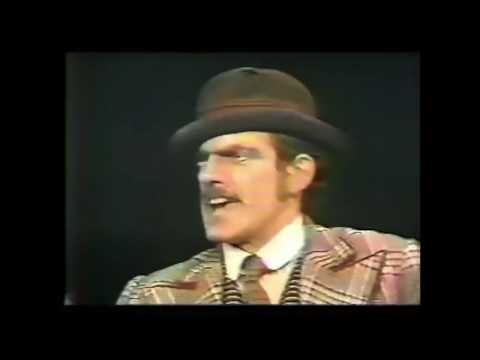
Famous Christopher Lloyd played the leading role, coped with it so fantastically well, that even has been remarked by critics, who did not like this performance generally. The musical was nominated for three Tony Awards and two Drama Desks, losing all of them. The musical is not particularly notable for its music, but it has several musical tracks, named as one of the best songs of Brecht-Weil duo. Critics also noticed them. "Surabaya Jonny", is, could be easily argued, the greatest song ever written for the theater" – a quotation from New York Magazine sounds like this.
Release date: 1977
"Happy End" – The Musical Guide & Song Meanings
Review: a gangster prayer, a Salvation Army hustle
“Happy End” sells you a moral fable, then laughs when you try to buy it. Chicago gangsters, Salvation Army evangelists, a Christmas-week timetable, and a romance that keeps turning into a transaction. The lyrics are the engine. Brecht writes like a pickpocket with perfect diction: every rhyme lands clean, then the meaning tilts. A hymn arrives and you start listening for comfort. A barroom song arrives and you start listening for truth. Then Weill flips the wiring and makes you doubt both.
The show’s lyric strategy is split by tribe. The “Ballhausbande” songs brag, posture, and narrate criminal life as civic pride. The Salvation Army songs promise uplift, yet often sound like discipline and branding. Universal Edition’s work notes describe the score as moving across distinct musical levels, and as dividing the songs into groups tied to plot and people, including the gang versus the Salvation Army. That isn’t academic trivia. It is how the text hits the ear: this world speaks in factions, and the lyrics keep exposing the sales pitch behind each faction’s certainty.
If you want a single thesis line for “Happy End,” it lives in the ending: “Hosanna Rockefeller.” The lyric canonizes power with religious language, forcing praise to sound like a warning. In a modern performance, it can feel less like satire from a safe distance and more like a direct report from the present tense.
How it was made
“Happy End” was built in the wake of “The Threepenny Opera,” with Brecht and Weill chasing another popular-hit machine. The book is credited to Elisabeth Hauptmann, who wrote under the pseudonym “Dorothy Lane,” a credit mask that became part of the piece’s history. Universal Edition notes that Brecht invented the “Dorothy Lane” byline as the author, while Weill insisted Brecht at least take credit for the songs, which tells you something about the authorship politics baked into the work before a single line was sung.
The 1929 Berlin premiere famously collapsed fast. It closed after only a handful of performances, then lived on through songs that refused to die. That afterlife becomes the piece’s real origin story: “Happy End” is a musical where the numbers often outgrow the plot, which is why directors keep returning to it as a flexible container for Weill’s city-night sound and Brecht’s moral mischief.
Experience note for listeners: the 1977 Broadway moment and the 2025 La Scala “songs” framing play very differently. Broadway treated it like a rediscovered musical comedy vehicle, complete with star casting and punchline pacing. La Scala packages it inside a Weill triptych, where the satire is sharpened by context and by the production’s stated environmental angle and “discarded materials” visual world. You can hear the lyrics change temperature depending on that framing.
Key tracks & scenes
"The Bilbao Song" (The Governor, Baby Face, Bill, The Gang)
- The Scene:
- Act I, Bill’s beer hall in Chicago. The room is full of cigarette brag, men congratulating themselves for surviving. A celebration that looks like a toast and feels like an initiation. In performance, it often plays under hard, public light, as if the bar is a stage inside the stage.
- Lyrical Meaning:
- A travelogue that is really a corruption report. The lyric romanticizes a criminal “golden age,” then sneaks in the punchline: even outlaw life turns bourgeois and respectable. It is nostalgia as an alibi.
"Lieutenants of the Lord" (Lilian, Salvation Army, The Fold)
- The Scene:
- Act I, the street outside the bar, then the Army marches in. The staging usually changes the air: brass, movement, a line of bodies claiming the space. A bright beam of righteousness cutting through the bar’s murk.
- Lyrical Meaning:
- The text performs certainty. It sounds like salvation, yet it also sounds like command structure. Brecht’s trick is that the lyric can thrill you while it quietly describes control.
"The Sailors’ Tango" (Lilian)
- The Scene:
- Act I, after the Army leaves and Lilian stays behind. The bar empties into a private confession. Lighting tends to narrow, isolating her against the room’s leftover noise.
- Lyrical Meaning:
- Desire as self-accusation. Lilian is supposed to be a moral agent. Instead, the lyric admits she’s been pierced by the very world she came to redeem. It is the show’s first clear sign that “saving” and “wanting” will collide.
"Song of the Big Shot" (The Governor, later Bill in reprise)
- The Scene:
- Act II, back in the beer hall as the gang’s internal politics harden. Often staged like a lesson, one predator training another. The rhythm can feel like a handshake you shouldn’t take.
- Lyrical Meaning:
- A manual for cruelty, written with a grin. The lyric treats toughness as career development. When Bill reprises it later, it becomes self-defense: a man reminding himself which mask he is allowed to wear.
"The Mandalay Song" (Sam, The Gang)
- The Scene:
- Act III, Christmas Eve preparations for the bank job. Sam is costumed for disguise, the gang toys with performance because the heist is also theatre. The number often lands like cabaret inside a crime scene.
- Lyrical Meaning:
- Escape fantasy with fingerprints on it. The lyric points away from Chicago, away from consequence, while the plot tightens the net around everyone in the room.
"Surabaya Johnny" (Lilian)
- The Scene:
- Act III, the beer hall, just before the heist. Lilian walks in to stop Bill from returning to crime. In a strong staging, the room freezes. The song becomes a trial, and the jury is the audience.
- Lyrical Meaning:
- A love song that refuses romance. The lyric names damage without prettifying it. It is indictment, surrender, and prophecy in one breath, which is why performers treat it like a dramatic monologue that happens to be sung.
"Ballad of the Lily of Hell" (The Fly)
- The Scene:
- Act III, after the gang returns and Bill is missing. The Fly issues orders. It can be staged with stillness, the calm of someone who treats violence as paperwork.
- Lyrical Meaning:
- The lyric turns murder into folklore. Brecht writes power as a bedtime story told by the person holding the gun. The audience laughs, then realizes what it just applauded.
"Epilogue: Hosanna Rockefeller" (Company)
- The Scene:
- Finale at the Mission after revelations and regrouping. The whole company gathers, and the staging often pushes toward ritual: chorus lines, candles, or a wall of sound that feels like a public ceremony.
- Lyrical Meaning:
- Satire disguised as worship. The lyric elevates capitalism with religious language, exposing how easily societies confuse wealth with virtue. Modern critics still cite it as the show’s bitter crown.
Live updates for 2025/2026
In 2025, “Happy End” returned to major-institution attention through Teatro alla Scala’s “Weill Triptych,” presented as “The Songs of Happy End” from 14 to 30 May 2025, with Riccardo Chailly conducting and Irina Brook staging. The listed cast includes Wallis Giunta as Lilian Holiday and Markus Werba as Bill Cracker, with the production also crediting lights by Marc Heinz. La Scala’s “In brief” framing describes an environmental angle and a minimalistic scenography built from discarded materials, which is a very current way to make Brecht’s economics feel bodily again.
For 2025–2026, Opera Zuid also lists a “Happy End” project through Buurt Opera Malpertuis (BOM), described as a music-theatrical collage centered on Kurt Weill’s music. That signals something important for listeners: “Happy End” is increasingly produced as repertoire material that can be re-assembled, excerpted, and reframed, rather than only mounted as a straight book musical.
On the licensing side, “Happy End” performance materials remain available through established rights and rental channels. Schott Music lists the work as hire/performance material, and the Kurt Weill Foundation continues to maintain work pages and guidance that connect productions to authoritative music sources.
Notes & trivia
- The book credit is Elisabeth Hauptmann, who used the pseudonym “Dorothy Lane” during the work’s early life.
- The original Berlin run in 1929 collapsed quickly, yet several songs outlived the show and became standards, especially “Surabaya Johnny” and “The Bilbao Song.”
- The 1977 Broadway production played the Martin Beck Theatre and featured Meryl Streep as Lieutenant Lilian Holiday, with Christopher Lloyd as Bill Cracker.
- IBDB notes Christopher Lloyd missed the opening due to a leg injury, with Bob Gunton stepping in until Lloyd returned.
- The Kurt Weill Foundation work notes include press quotes across decades, including Clive Barnes and Mel Gussow, underscoring how often critics separate the score’s strength from the story’s fragility.
- A widely referenced English-language full-cast recording is tied to American Conservatory Theater’s 2006 production and was released on Ghostlight Records in 2007.
- In La Scala’s 2025 triptych, “Happy End” is presented alongside other Weill works, which changes how the lyric satire lands by placing it in a larger Weill-Brecht argument.
Reception
“Happy End” has always lived in the gap between plot and song. When critics love it, they often write about the score as a kind of nocturnal perfume: jazz-adjacent, devotional, dangerous. When critics resist it, they tend to blame the book for being a clothesline the songs hang from. That split is part of the show’s identity now.
“Meryl Streep… gave a star performance… Her ‘Surabaya Johnny’… deservedly brought down the house.”
“A delight… constantly entertaining… The music is sheer genius.”
“Brecht-Weill never produced better songs than in Happy End.”
Recent criticism also keeps pointing at the finale. A 2025 review of La Scala’s Weill triptych singled out “Hosanna Rockefeller” as a satirical climax that “canonizes” capitalism in grotesque form, which tells you the lyric still has sharp edges even in a grand-house context.
Quick facts
- Title: Happy End
- Year (focus here): 1977 Broadway premiere (Martin Beck Theatre)
- Original premiere: 1929, Theater am Schiffbauerdamm, Berlin
- Type: Play with music / musical comedy in three acts
- Book: Elisabeth Hauptmann (credited in early materials as “Dorothy Lane”)
- Music: Kurt Weill
- Lyrics: Bertolt Brecht (English adaptations vary by production)
- English adaptation (notable): Michael Feingold
- Selected notable placements: Act I in Bill’s beer hall (“The Bilbao Song”); Act I street-to-bar Salvation Army incursion (“Lieutenants of the Lord”); Act III Christmas Eve heist build (“The Mandalay Song”); Act III confrontation (“Surabaya Johnny”); finale at the Mission (“Hosanna Rockefeller”).
- Soundtrack / album status: A major English-language recording is the American Conservatory Theater 2006 cast, released on Ghostlight Records in 2007.
- 2025 headline staging: “The Songs of Happy End” within La Scala’s Weill Triptych (Milan, May 2025).
Frequently asked questions
- Is “Happy End” the same thing as a typical Golden Age Broadway musical?
- No. It uses musical theatre, cabaret, and hymn forms as satire and social critique, with songs often designed to comment on the action as much as advance it.
- Where does “Surabaya Johnny” happen in the story?
- In Act III, Lilian confronts Bill in the beer hall as he returns to crime and prepares for the Christmas Eve bank job.
- Why do the lyrics sound religious in one scene and streetwise in the next?
- The score is built around opposed song worlds: Salvation Army numbers versus gangster numbers, each with its own vocabulary and moral branding.
- What is “Hosanna Rockefeller,” and why does it matter?
- It is the epilogue hymn that praises wealth in religious language, turning “worship” into critique. Many modern readings treat it as the show’s thesis statement.
- Was there a Broadway cast recording in 1977?
- Commonly cited modern listening starts with the American Conservatory Theater 2006 cast recording released on Ghostlight Records in 2007, which is widely available and often discussed as a key English-language reference.
- Is “Happy End” being staged now?
- Yes. In 2025 it appeared at Teatro alla Scala as “The Songs of Happy End” within the Weill Triptych, and additional 2025–2026 activity includes Opera Zuid’s community-based “Happy End” project centered on Weill’s music.
Key contributors
| Name | Role | Contribution |
|---|---|---|
| Kurt Weill | Composer | Wrote a score that blends popular dance rhythms with hymn-like forms and cabaret edge, separating musical worlds by faction. |
| Bertolt Brecht | Lyricist | Crafted lyrics that use irony and moral reversal, often making “praise” sound like warning. |
| Elisabeth Hauptmann | Book | Authored the dramatic framework (credited early as “Dorothy Lane”), shaping the gangster-Salvation Army collision. |
| Michael Feingold | English adaptation (notable) | Provided an influential English adaptation used in major American productions and recordings. |
| Robert Kalfin | Director (Broadway 1977) | Co-directed the 1977 Broadway staging that brought the piece into a modern American musical theatre context. |
| Patricia Birch | Co-director / Staging (Broadway 1977) | Helped shape the Broadway production’s movement and pacing. |
| Riccardo Chailly | Conductor (La Scala 2025) | Led the orchestral and structural framing of “The Songs of Happy End” within the Weill Triptych. |
| Irina Brook | Staging (La Scala 2025) | Staged the 2025 triptych production with an explicitly contemporary interpretive frame. |
Sources: The Kurt Weill Foundation for Music, IBDB, Playbill, The New Yorker, Teatro alla Scala, Operabase, Opera Zuid, Universal Edition, Schott Music, OperaWire, Wikipedia.