Good News Lyrics – All Songs from the Musical
Good News Lyrics: Song List
- Act 1
- Overture / Good News
- He's a Ladies' Man
- Football Drill
- Button up Your Overcoat
-
Together/My Lucky Star
- On the Campus
- Best Things in Life Are Free
- You're the Cream in My Coffee
- Varsity Drag
-
Lucky in Love
- Act 2
- Today's the Day
- Girl of the Pi Beta Phi
- Never Swat a Fly
-
Tait Song
- Just Imagine
- Keep Your Sunny Side Up
- Life Is Just a Bowl of Cherries
-
Finale
About the "Good News" Stage Show
In total, the musical had 3 versions. The original first Broadway version was created in 1917. It was done by E. MacGregor. First of all, the idea consisted in reflecting spirit of that time. Many jazz compositions sounded in this histrionics. There were 557 scenes in an exhibition.Actors are as follows: J. Price, M. Lawlor, G. Shy, I. Courtney & Z. O'Neal. The second version was created in 1974 by H. Rigby. The histrionics was played on Broadway in a version of a first musical. Some songs were excluded from the show, some of them were interpreted or added. The musical became the nominee of Drama Desk for choreography.
It should be noted that in the first version the teacher of astronomy was a man. Producer of the second musical rewrote the scenario to make a new love line. In 1993, the actor, who played Tommy in the second version, offered to create a new play for Music Theatre of Wichita. He made some corrections. For example, the love line of the teacher of astronomy and his trainer it was excluded from a plot again. Connie also didn't help Tom to pass his exam. The version reminded the original one. However, the particular emphasis was placed not on love lines but on relationships of pupils in general.
Release date: 1927
"Good News" – The Musical Guide & Song Meanings
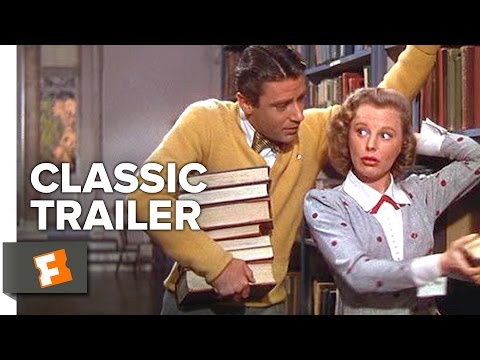
Review: when “college fun” becomes a pressure cooker
What if the cheeriest campus musical is also a story about panic? “Good News” (1927) sells sunlight, then sneaks in a premise that would still terrify a student today: one failed class can erase your whole identity. The lyrics keep pretending everything is fine. That is the trick. Even the big ensemble refrains are built to sound communal, like the campus is hugging you, while the book keeps narrowing the walls around Tom Marlowe.
DeSylva and Brown write in bright, punchy couplets and slogan-ready hooks, the kind that travel beyond the plot and into the culture. That portability is why so many numbers escaped the show and became standards. It is also why the score can feel almost unnervingly confident. The words keep insisting on happiness, luck, pep, and “good news” itself, as if saying it harder will make it true.
Musically, Henderson’s writing sits in the late-1920s pocket: jazz-influenced dance rhythms, glee-club sparkle, and a clean melodic line that makes lyric clarity the main event. That matters for character. Connie’s songs often put imagination and restraint into the foreground, while Babe’s material favors speed, flirtation, and social heat. Tom’s big statements land in the middle: he wants the easy optimism, but the plot forces him to earn it.
Listener tip: if you are coming in cold, play “The Best Things in Life Are Free” before anything else. It teaches you the score’s moral language in three minutes. Everything else is either arguing with it or trying to cash it in.
How it was made
“Good News” arrived as a sleek commercial machine: book by Laurence Schwab with B. G. DeSylva, lyrics by DeSylva and Lew Brown, music by Ray Henderson. It was written to feel current, set on a Roaring Twenties campus and built around football and social life, then staged to amplify that atmosphere with showy, crowd-pleasing momentum.
What makes its lyric-writing stand out, even now, is how shamelessly it favors collective identity. A lot of songs speak as “we”: students, girls, the campus itself. That chorus-first approach is not accidental. The show wants the audience to feel like alumni by intermission.
The show later became a kind of living document. Revivals and revisions reshuffled the score and book. A major reworking in the 1990s (created for Music Theatre of Wichita) became widely licensed, and it has its own recording footprint. This is why “Good News” discussions often turn into version talk quickly: the spine of the story remains, but the emphasis changes depending on the edition.
Key tracks & scenes
"Good News" (Ensemble / Flo, depending on version)
- The Scene:
- Act II, the campus malt shop on Saturday morning, with the crowd buzzing like the day has already “won.” A practical set invites constant traffic: stools, soda taps, a place to show off. Many productions light it bright and open, the opposite of an exam room.
- Lyrical Meaning:
- The title phrase is a social weapon. It resets the room’s mood, forces optimism into the air, and dares the plot to contradict it. It also turns rumor into rhythm, which is exactly how campus culture works.
"Flaming Youth" (Babe O’Day)
- The Scene:
- Act I on Thursday afternoon, out on the Tait College campus, where Babe can perform for an audience even when she is “just talking.” This number usually plays with a hot, kinetic stage picture: friends orbiting, boys watching, authority figures losing control of the frame.
- Lyrical Meaning:
- Babe treats modernity as permission. The lyric is not subtle, and that is the point. It names a new social order where reputation is flexible, flirtation is public, and the present tense is everything.
"Just Imagine" (Connie, with Patricia and friends in some stagings)
- The Scene:
- Act I on the campus, still Thursday afternoon. The number often narrows the focus from group comedy to one person’s private inner life, with softer light or a quieter stage picture to signal the shift.
- Lyrical Meaning:
- Connie’s lyric is self-protection that sounds like romance. “Imagine” is both hope and a boundary. She can want Tom without declaring war on the social hierarchy that favors Patricia.
"The Best Things in Life Are Free" (Tom and Connie)
- The Scene:
- Act I, Thursday afternoon, often staged as a study break that turns into mutual recognition. In many productions, the staging is deceptively simple: two people, a bench, a book, a suddenly shared tempo.
- Lyrical Meaning:
- This lyric is the show’s thesis statement. It argues that value is not owned, which quietly challenges Patricia’s wealth-coded romance. It also gives Tom a new kind of masculinity: not conquest, but contentment.
"On the Campus" (Ensemble)
- The Scene:
- Act I, Friday afternoon on campus, as the weekend energy starts to take over. It is usually staged as a moving postcard: couples crossing, gossip threading through the crowd, small comic bits that make the campus feel lived-in.
- Lyrical Meaning:
- The lyric is world-building. It sells the campus as a self-sufficient universe where romance is a public sport. That matters because it raises the stakes: if Tom fails, he does not just lose a game, he loses his place in the picture.
"The Varsity Drag" (Students / Ensemble)
- The Scene:
- Act I, Friday afternoon, and later reprised at the final dance. This is where choreographic clarity becomes storytelling: lines, kicks, unison, and a feeling that the campus can move as one body.
- Lyrical Meaning:
- The lyric is less confession than signal flare. It brands the school’s identity in rhythmic slogans, the way a chant turns strangers into a team. When reprised, it becomes memory being manufactured in real time.
"Lucky in Love" (Tom and Connie)
- The Scene:
- Act I, Friday afternoon, after the social machinery has done its work. Staging often lets the crowd thin out, giving Tom and Connie a pocket of space to admit what the earlier numbers kept teasing.
- Lyrical Meaning:
- “Luck” is the show’s favorite dodge. Characters say “lucky” when they mean “scared.” Here, the lyric tries to make romance feel inevitable, even though the plot is about tests, status, and consequences.
"Girl of the Pi Beta Phi" (Patricia)
- The Scene:
- Act II, Saturday morning at the malt shop. Patricia’s number often reads like a self-curated advertisement: she is not only a person, she is a brand.
- Lyrical Meaning:
- The lyric frames desirability as membership. It is a musical illustration of social capital. In a modern staging, it can land as comedy or critique, depending on how sharply the production wants to look at privilege.
Live updates (2025/2026)
As of January 27, 2026, “Good News” is primarily alive through licensing rather than a single headline production. Concord Theatricals lists both the classic “Good News” and a separately identified “Good News! (1993)” version, which matters because the licensed material can differ in structure and song usage by edition.
What you can track right now: (1) licensing availability and cast-size requirements via the licensor, (2) local and regional calendars for one-off revivals, and (3) the cast-album ecosystem that keeps the Wichita adaptation circulating. If you are hearing “Good News” online, odds are high you are hearing the 1990s recording pathway, not a surviving original cast document.
Practical ticketing reality: there is no standing Broadway or major commercial tour to follow. For most listeners in 2025/2026, “Good News” is discovered through community theatre, educational productions, and the recordings.
Notes & trivia
- The original Broadway production opened in September 1927 and became a long-running hit for its era.
- Multiple songs from the show became pop standards, which helped the score outlive the book in the public imagination.
- A later Broadway revival (mid-1970s) shifted elements of the show and drew harsh critical pushback, including critiques of “nostalgia” as an industrial product.
- A Wichita-led revision in the 1990s helped define the modern stage life of “Good News,” and it generated a widely circulated recording.
- Scene structure is built around a tight weekend clock: Thursday campus life, Friday anticipation, Saturday game-day social pressure, then the evening release.
- The Concord listing highlights how the title persists as a licensable property with defined roles and casting needs, which is often what enables frequent amateur revivals.
Reception: then vs. now
In 1927, critics responded to the show’s speed and collegiate texture. Decades later, the nostalgia-revival era created a different critical lens: what once felt current began to read as a museum piece or a business model, depending on the reviewer’s tolerance for revival culture.
“For once a musical play based upon undergraduate life and a football game has some resemblance to the disorderly, rhymeless scheme of things...”
“The ancient flapdoodle of a plot...”
“...because a thing is old does not mean it is an antique; junk is junk.”
Quick facts
- Title: Good News
- Year: 1927
- Type: Musical comedy
- Book: Laurence Schwab, B. G. DeSylva (with later adaptations in some editions)
- Lyrics: B. G. DeSylva, Lew Brown
- Music: Ray Henderson
- Key standards associated with the score: “The Best Things in Life Are Free,” “The Varsity Drag,” “Good News”
- Selected notable scene placements (common structure): Campus (Thu afternoon), dorm/campus (Fri), malt shop (Sat morning), stadium/locker room (Sat afternoon), malt shop and dance finale (Sat night)
- Recording highlight: “Good News!” (Music Theatre of Wichita pathway) released on Jay Records, widely available on streaming storefronts
- Licensing status: Listed for performance licensing via Concord Theatricals (edition-dependent)
Frequently asked questions
- Is there a movie version of “Good News”?
- Yes. The property was adapted for film more than once, including a well-known MGM version in 1947, which many listeners use as a visual reference for the show’s dance language.
- Who wrote the lyrics in the stage musical?
- B. G. DeSylva and Lew Brown wrote the lyrics, with Ray Henderson composing the music.
- Which recording should I start with if I want the story to read clearly?
- Try the Jay Records “Good News!” studio pathway tied to the Wichita revision. It is designed to play like a complete listening experience, and it is easy to find digitally.
- Why does “The Best Things in Life Are Free” feel bigger than the show?
- Because it works outside the plot. The lyric is a universal motto, and the melody is built for repetition. That combination makes it travel.
- Are “Good News” and “Good News! (1993)” the same thing?
- They are related, but not identical. The 1993 identifier signals a specific revision history and can imply different script and song configurations.
- Is the show running on Broadway right now?
- No. In 2025/2026, its activity is better tracked through licensed productions and recordings rather than a single commercial run.
Key contributors
| Name | Role | Contribution |
|---|---|---|
| Ray Henderson | Composer | Wrote the score’s melodic engine and dance-forward rhythms. |
| B. G. DeSylva | Lyricist / Book contributor | Co-wrote lyrics and helped define the show’s comic-romantic voice. |
| Lew Brown | Lyricist | Co-wrote lyrics with a gift for slogan-level hooks. |
| Laurence Schwab | Book writer | Built the campus/football framework that the songs animate. |
| Mark Madama | Adapter (1990s revision pathway) | Helped shape the modern revised version that became widely produced and recorded. |
| Wayne Bryan | Adapter (1990s revision pathway) | Co-developed the revision and supported its recording afterlife. |
| Jay Records | Label | Released a key studio recording that anchors modern listening. |
| Craig Barna | Conductor (recording) | Conducted the National Symphony Orchestra for the Jay Records release. |
Sources: Concord Theatricals, IBDB, TIME (Time Vault), Jay Records, WVLO program PDF (scene & musical-number breakdown), Ovrtur, Playbill, Wikipedia (production and revision framework).