Goodbye Girl, The Lyrics – All Songs from the Musical
Goodbye Girl, The Lyrics: Song List
- Act 1
- Overture
- No More
- A Beat Behind
- My Rules/Elliott Garfield Grant
- Good News, Bad News
- Don't Follow In My Footsteps
- How Can I Win?
- Richard Interred
- Act 2
- Good News, Bad News (Reprise)
- Too Good To Be Bad
- Who Would've Thought
- 2 Good 2 B Bad
- Paula (An Improvised Love Song)
- I Think I Can Play This Part
- Jump For Joy
- What A Guy
- Finale
About the "Goodbye Girl, The" Stage Show
For the first time, the audience saw the musical at the Chicago Shubert Theatre in 1992. It was directed by G. Saks, who was soon was replaced by M. Kidd. The musical begins with Paula and Lucie's joint song. According to the idea of authors, the song about their desire to move in California is necessary to show the true character of Paula before moving. A viewer should see a cheerful woman, who is full of hopes to understand that Paula actually isn't rough and captious.The first shows collected a sufficient sum of money to create the musical on Broadway: the first premiere took place in 1993. In total, the musical was shown for 188 times.
The following actors took part in the performance: B. Peters, M. Short with T. Minoff. It was a debut of M. Short on Broadway. The musical was also performed at the Marriott Theatre. It was created by D. Zippel, who entered the changes into the list of songs.
The third version with completely re-thought lyrics was shown at the Albery Theatre in the West End. G. Wilmot and A. Crumb were the main actors. However, show didn't receive many positive comments because of the music part.
Release date: 1993
"The Goodbye Girl" – The Musical Guide & Song Meanings
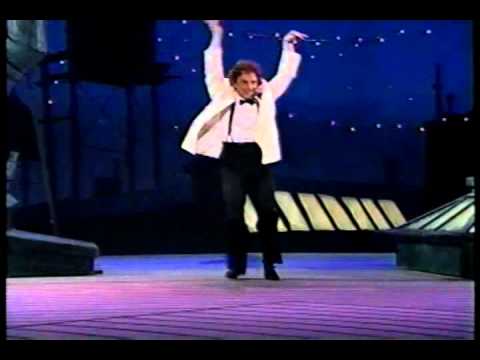
Review: why do these lyrics keep arguing with the rom-com?
The movie is famous for bickering that turns into affection. The musical keeps that engine, then does something riskier: it asks the characters to sing lines that are basically defenses. David Zippel’s lyrics aren’t trying to make Paula and Elliot sound grand. They make them sound cornered. That matters because this story is about space before it’s about love. An apartment. A shared hallway. A door that keeps opening at the wrong time.
Marvin Hamlisch writes in a Broadway-pop idiom that knows how to land a joke, then let a chord hang long enough for embarrassment to show. The best lyric moments feel like a thought escaping mid-argument. Paula’s big declarations come out when she’s tired of being “managed” by actors. Elliot’s come out when he realizes he can’t out-perform sincerity. Even the comedy numbers have a nervous edge, because the show’s funniest idea is also its harshest: artists will do almost anything to avoid saying what they feel.
If you want the score’s real subject, it’s not romance. It’s credibility. Who gets believed. Who gets left behind. Who keeps their word. That is why the lyrics keep circling promises, rules, and “news.” Every tender beat is framed as a negotiation.
How it was made
“The Goodbye Girl” opened on Broadway at the Marquis Theatre on March 4, 1993, after Chicago tryouts that became part of its legend. A major public fact from that period: Gene Saks was replaced by Michael Kidd during the out-of-town run, and the creative team worked to adjust the audience’s perception of Paula, including adding a new opening song for Paula and Lucy. Those are not small tweaks. In a romantic comedy, the first ten minutes decide whether the audience is rooting for the couple or waiting for them to fail.
The score and lyric assignments were a statement of intent. Neil Simon adapting his own screenplay. Hamlisch writing a mix of brassy comedy and plaintive romance. Zippel writing lyrics that can turn a domestic complaint into a hook. The production record also tells you how it wanted to move: Graciela Daniele choreographing, with Kidd directing, so the physical life could stay buoyant even when the book got prickly.
The album’s own narrative synopsis is unusually specific about plot beats and settings, almost like it’s trying to give listeners the missing scenes. That’s a clue to how the show was marketed in 1993: as a complete “star-led” experience you could take home, not just a handful of tunes.
Key tracks & scenes
"This Is as Good as It Gets" (Paula & Lucy)
- The Scene:
- Paula’s apartment, Scene 1. Morning optimism with furniture that already suggests instability: boxes, plans, the sense that the room is about to change owners.
- Lyrical Meaning:
- It’s a promise song that’s written like a defense mechanism. The title is a dare against disappointment, and it quietly tells you how often Paula has had to talk herself into hope.
"No More" (Paula)
- The Scene:
- Still in the apartment, with the letter that detonates the day. The staging works best when it stays plain: Paula reading, the air leaving the room, Lucy watching.
- Lyrical Meaning:
- Zippel gives Paula a vow that sounds clean and brave, then lets you hear the fear underneath. It’s not “no more men.” It’s “no more humiliation.”
"A Beat Behind" (Paula, Billy & Ensemble)
- The Scene:
- A dance studio, Scene 2. Mirrors and bright light. People younger than Paula moving in sync while she counts late.
- Lyrical Meaning:
- The lyric is about choreography, but it’s also about life timing. Paula is behind in work, behind in love, behind in money. The song makes that panic physical.
"My Rules" (Elliot & Paula)
- The Scene:
- Back in Paula’s apartment, Scene 4. The first cohabitation battle. Elliot arrives like a storm with luggage and certainty.
- Lyrical Meaning:
- It’s a comic power duet written as a lease agreement. The lyrics reveal character fast: Paula wants boundaries, Elliot wants control disguised as charm.
"Good News, Bad News" (Elliot, Paula & Lucy)
- The Scene:
- Same apartment, same night. Everyone is stuck with each other, trying to decide whether this is temporary or permanent.
- Lyrical Meaning:
- The title becomes the show’s recurring lens: every romantic step forward comes with a practical cost. The lyric refuses pure sweetness. It keeps balancing the ledger.
"Don’t Follow in My Footsteps" (Paula & Lucy)
- The Scene:
- Central Park, Scene 7. A mother-daughter walk that’s half lecture, half confession. Softer lighting helps the song feel like a private rulebook being written in real time.
- Lyrical Meaning:
- This is Paula trying to protect Lucy from her own pattern. The lyric lands because it admits how easy it is to repeat the same mistake when loneliness starts negotiating.
"Richard Interred" (Company)
- The Scene:
- An Off-Off-Broadway theatre, Scene 9. Opening night. The production is a glorious mess, and the staging usually leans into frantic backstage energy and mortified spectators.
- Lyrical Meaning:
- The lyric is satire with affection. It also tells you what Paula sees in Elliot: he’s ridiculous, but he commits. That commitment becomes unexpectedly attractive.
"Paula (An Improvised Love Song)" (Elliot & Paula)
- The Scene:
- The rooftop of Paula’s building, Act II Scene 6. A romantic set-up that’s slightly cheap on purpose: pizza, twinkle lights, a guy playing “leading man” while hoping it turns into truth.
- Lyrical Meaning:
- Improvisation becomes a metaphor for intimacy. Elliot stops trying to “win” the scene and starts listening. The lyric breathes because it isn’t polished into distance.
"I Think I Can Play This Part" (Elliot)
- The Scene:
- The lake in Central Park, Act II Scene 9. Elliot with Lucy, away from Paula, trying to prove he can be steady. Many stagings treat the rowboat as a comic obstacle and an emotional test.
- Lyrical Meaning:
- It’s a performer’s love song that admits the problem: Elliot thinks in roles. The lyric works when you hear him fighting that instinct, trying to be a person instead of a bit.
Live updates 2025/2026
Information current as of January 27, 2026. “The Goodbye Girl” is active in the way many 1990s Broadway titles are active: licensing and short-run revivals, not a standing commercial tour. Concord Theatricals lists the show for licensing and production materials, including cast-size guidance and runtime notes.
The most visible recent New York footprint was J2 Spotlight Musical Theater Company’s limited Off-Broadway run at Theatre Row in May 2023, directed by David Zippel, with Sierra Boggess and Santino Fontana leading the cast. That production functioned like an industry argument onstage: the score still plays, the jokes still land, and the material benefits from performers who can make prickly characters feel human before they feel funny.
If you’re tracking what’s next in 2025/2026, the practical method is not “tour dates.” It’s licensing calendars and company announcements. The title remains a tempting pick for theatres that can cast two charismatic leads and stage New York with light touch and fast scene changes.
Notes & trivia
- The Broadway run began with previews on February 13, 1993, opened March 4, 1993, and closed August 15, 1993 at the Marquis Theatre.
- The show played 23 previews and 188 performances.
- Playbill’s production record includes weekly gross data and a noted highest weekly gross in late March 1993, plus an average ticket price around the mid-$40 range for the run.
- The Theatre Three program for a later production prints a full scene-by-scene musical-number map, including the rooftop placement for “Paula (An Improvised Love Song)” and the Central Park lake placement for “I Can Play This Part.”
- The creative churn during Chicago tryouts included a director change, and the addition of an opening song for Paula and Lucy to reset audience sympathy early.
- On Playbill, the show is credited with a Drama Desk win for Marvin Hamlisch’s music and multiple major nominations across acting, direction, choreography, and lyrics.
- The Original Broadway Cast Recording is commonly listed as an 18-track album released in April 1993 on streaming services.
Reception: then vs. now
The 1993 critical story is blunt: reviewers liked the premise, worried about the execution, and often singled out the writing choices around tone. Over time, the show’s reputation has softened into something more useful than a verdict. People return to it as a “star vehicle” with a durable central relationship and a score that knows how to turn neurosis into melody. The 2023 Off-Broadway revival talk largely treated it that way: as a piece worth revisiting, with smart performers doing repair work in the margins.
“Nearly all of that is lost in the musical… Simon has written an unfocused… book… Zippel bland lyrics… Hamlisch… music…”
The Broadway record shows a season where the show earned major nominations and awards attention even as the run stayed relatively short.
In 2023 coverage, the revival was framed as a return for a title that hadn’t had a significant New York reappearance in decades, leaning on recognizable stars and nostalgia for the property.
Quick facts
- Title: The Goodbye Girl
- Broadway year: 1993
- Type: Romantic comedy musical
- Book: Neil Simon
- Music: Marvin Hamlisch
- Lyrics: David Zippel
- Based on: Neil Simon’s screenplay for the 1977 film
- Broadway theatre: Marquis Theatre (New York)
- First preview / opening / closing: Feb 13, 1993 / Mar 4, 1993 / Aug 15, 1993
- Run: 23 previews, 188 performances
- Selected notable placements (stage map example): “This Is as Good as It Gets” in Paula’s apartment; “A Beat Behind” in a dance studio; “Richard Interred” at an Off-Off-Broadway theatre; “Paula (An Improvised Love Song)” on the rooftop; “I Think I Can Play This Part” at the Central Park lake; “Jump for Joy” at a TV studio
- Cast album: The Goodbye Girl (Original Broadway Cast Recording)
- Album notes: 18 tracks, released April 1993 on major streaming platforms (Masterworks/Sony family metadata)
- Licensing: Available via Concord Theatricals; digital production materials also circulate through Pro portals tied to licensors
Frequently asked questions
- Who wrote the lyrics for “The Goodbye Girl” musical?
- David Zippel wrote the lyrics, with Marvin Hamlisch composing the music and Neil Simon writing the book.
- Is the musical the same story as the 1977 film?
- It follows the same core premise and characters, since Neil Simon adapted his own screenplay, but the musical reshapes pacing around song set pieces and stage comedy.
- Where does “Paula (An Improvised Love Song)” happen?
- Many production materials place it on the rooftop of Paula’s building, staged as Elliot’s intentionally makeshift romantic “set.”
- What song best explains Paula’s emotional arc?
- “No More,” because it crystallizes her decision to stop letting actors write her life for her, even if that decision later gets challenged by genuine affection.
- Was there a recent revival?
- Yes. J2 Spotlight Musical Theater Company presented a limited Off-Broadway run at Theatre Row in May 2023, directed by David Zippel.
- Is “The Goodbye Girl” touring in 2025/2026?
- No major commercial tour is broadly advertised. Most current activity appears through licensed productions and short engagements.
Key contributors
| Name | Role | Contribution |
|---|---|---|
| Neil Simon | Book; original screenplay author | Adapted his film story for the stage, keeping the comic rhythm and domestic conflict at the center. |
| Marvin Hamlisch | Composer | Wrote a Broadway-pop score that pivots between brassy comedy and vulnerable romance. |
| David Zippel | Lyricist | Gave the characters lyrics that sound like arguments turning into admissions. |
| Michael Kidd | Broadway director | Took over staging after tryouts and guided the Broadway opening version. |
| Graciela Daniele | Choreographer | Built dance language that supports a dancer-protagonist without turning the show into a pure dance vehicle. |
| Bernadette Peters | Original Broadway lead | Originated Paula, setting the vocal and comic baseline for “No More” and the show’s emotional shifts. |
| Martin Short | Original Broadway lead | Originated Elliot, playing performance as both shield and love language. |
| J2 Spotlight Musical Theater Company | Revival producer (2023) | Mounted a recent Off-Broadway revival that reintroduced the score to New York audiences. |
Sources: Playbill (Vault), IBDB, Concord Theatricals, Masterworks Broadway, Apple Music, Spotify, Variety, Forbes, Theatre Three Dallas program PDF, J2 Spotlight Musical Theater Company, TheaterMania.