Golden Boy Lyrics – All Songs from the Musical
Golden Boy Lyrics: Song List
About the "Golden Boy" Stage Show
The theatrical was staged according to the book written by Cl. Odets in a co-authorship with W. Gibson. Those, who were engaged in a musical component and verses, are Charles Strouse & Lee Adams.Notably, the main character in the original narrative was the showing promises doctor, who practiced boxing to pay for the studying. He was trying to apply his hands carefully and the rescue of lives of the Afro-Americans, whom white doctors didn't pay attention, was his purpose.
After attempt of the Detroit performance, one of authors of the book died, and the second had to process the original. The main character suddenly lost noble motives and turned into the embittered man, who is compelled by fists to gain authority of oneself and to be reconciled with contempt of people around.
On Broadway, the musical was staged in 1964 for the first time. The well-known Majestic Theatre became a scene of action. Arthur Penn was engaged in direction and dancing part of theatrical was staged by Donald McKayle. Besides 25 different previews, the musical passed 568 spectacles. Such actors as P. Wayne, K. Tobey, B. Daniels and others, made a cast. The leading role was played by legendary "Sammy" Davis. The musical was delivered on four nominations of "Tony", but won neither.
Release date: 1964
"Golden Boy" – The Musical Guide & Song Meanings
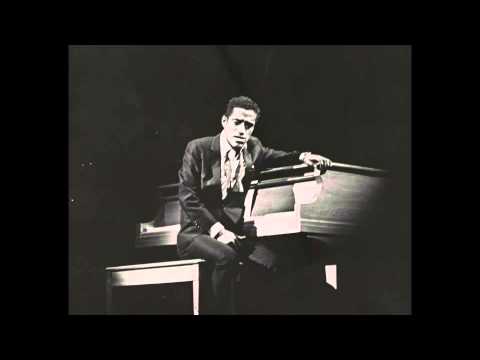
Review: the show that starts in a gym and ends in your throat
Why does Golden Boy feel like a “show tune” musical that keeps refusing to behave like one. The answer is in its lyric strategy. Lee Adams writes as if every rhyme is a moral compromise: the words want polish, but the characters keep smearing them with need. Joe Wellington’s songs are rarely about “winning.” They are about what winning is allowed to cost a man before he stops recognizing his own voice.
Musically, Charles Strouse builds a city at night: jazz harmonies, street-corner pulse, and a habit of letting rhythm tell the truth before melody softens it. Even the opening rejects the cozy Broadway greeting card. The show leans into ring sounds and training cadence as an overture substitute, so the first thing you hear is work, not applause.
For listeners coming in through the cast album, the main plot engine is simple: Joe’s rise is loud; Joe’s self-knowledge is quiet. The lyrics keep switching between public language (salesmanship, headlines, money talk) and private language (heat, loneliness, hunger). That split is the show’s real romance and its real tragedy.
How it was made
Golden Boy arrived on Broadway in a very specific collision: Clifford Odets’ 1937 drama, a star vehicle for Sammy Davis Jr., and a writing team (Strouse and Adams) coming off the bright snap of Bye Bye Birdie. IBDB’s production record captures how heavyweight the original build was, from Arthur Penn directing to Donald McKayle shaping the movement language, with Tharon Musser’s lighting and Tony Walton’s designs giving the piece a modern city sheen.
The best origin clue is how the writers talk about “Night Song.” In a PBS interview, Strouse points straight at the lyric’s existential punch (“who the hell am I”) as the center of the number. That is not an incidental line. It is the thesis of the score: the boxer as a man forced to introduce himself to himself.
There is also a business-side story baked into the album’s existence. Contemporary databases and production histories note label involvement and investment around the show and its recording, a reminder that this score was treated as an event, not a souvenir.
Key tracks & scenes
"Workout" (The Boxers)
- The Scene:
- Act I opens in the gym. Bodies in motion. The stage picture reads like a percussion section: ropes, breath, gloves, feet. (Archival programs list the gym as Scene 1, with an “Opening” for the company.)
- Lyrical Meaning:
- There is almost no “lyric” here, and that is the point. The show tells you its first language is labor. In this score, sweat is exposition.
"Night Song" (Joe)
- The Scene:
- Roof top, late. The city glows below him. In at least one documented scene breakdown, “Nightsong” is placed on a rooftop in Act I. It plays best with tight, solitary light: Joe lit, the skyline implied.
- Lyrical Meaning:
- Joe is not serenading anyone. He is inventorying himself. The lyric sits in that restless space between pride and panic, the place you reach when fame is close enough to touch and still feels like a stranger’s coat.
"Everything’s Great" (Tom & Lorna)
- The Scene:
- Moody’s office. Polite surfaces, controlled smiles. The number is explicitly placed there in at least one production scene list, which matters: an “office song” is where people say what will keep the machine running.
- Lyrical Meaning:
- The lyric is performance management. “Great” becomes a shield word. The subtext is panic about money, race, optics, and the boxer as an asset that can break.
"Gimme Some" (Joe & Terry)
- The Scene:
- Playground park. Heat and appetite. A documented Act I breakdown places “Give Me Some” in a park scene, which frames it as street-life energy rather than nightclub glamour.
- Lyrical Meaning:
- On paper it is vice and flirtation. In context it is Joe learning the vocabulary of wanting. The lyric is a rehearsal for everything he will later take too far.
"Don’t Forget 127th Street" (Joe, Ronnie & Company)
- The Scene:
- 127th Street. Community around him. A documented scene list pins the song to this location, and it plays like a moving street mural: neighbors watching a local kid become a headline.
- Lyrical Meaning:
- This is the show’s moral anchor. The lyric is not nostalgia; it is accountability. Joe is being warned that leaving home is easy, but leaving what made him is harder.
"This Is the Life" (Eddie, Joe & Company)
- The Scene:
- Locker room. The smell of liniment, the clatter of men talking too loudly. In one Act I breakdown, the number is placed in the locker room right before Madison Square Garden, so the celebration has an edge of ritual.
- Lyrical Meaning:
- Eddie Satin sells pleasure as destiny. The lyric is a sales pitch where every “life” rhyme is also a trap door. Joe tries the words on like expensive gloves, unsure whether they fit.
"While the City Sleeps" (Eddie)
- The Scene:
- Penthouse, Act II. Eddie alone with his city. A documented scene list places it there, and it wants nocturnal lighting: window glow, Manhattan in miniature, Eddie as the man who stays awake to count profits.
- Lyrical Meaning:
- This is Eddie’s self-portrait as predator and poet. The lyric turns the city into an accomplice: if everyone sleeps, nobody interrupts the deal.
"No More" (Joe & Company)
- The Scene:
- 127th Street again, Act II. A documented scene list places “No More” there, which is devastating: the home address returns, but the person who comes back is altered. The staging often reads best when the ensemble feels like witnesses, not a chorus line.
- Lyrical Meaning:
- The title sounds like a promise. It is also a threat. The lyric is Joe trying to stop the spiral using language as a brake, right when the plot is building toward impact.
Live updates 2025/2026
Information current as of January 27, 2026. There is no widely advertised commercial Broadway run or national tour for the musical Golden Boy in 2025 or early 2026. What exists, very clearly, is a licensing pathway: Concord Theatricals lists Golden Boy (the Strouse and Adams musical) for request and production materials, which is where most modern performances are likely to live: regional theatres, universities, and concert-style revivals.
A common point of confusion: several high-profile announcements in 2025 press coverage refer to Golden Boy, but they mean the original Odets play, not the 1964 musical. For example, London theatre coverage has discussed a 2026 Almeida season that includes Odets’ drama. That is a different work with a different text, even though the core boxing premise overlaps.
For listening in 2026 terms, the easiest “production” to access is still the original cast recording on major platforms. If you want the show’s narrative without a libretto in hand, play the album straight through and treat the Act I shift from “Don’t Forget 127th Street” into “This Is the Life” as the moment the show’s moral temperature spikes.
Notes & trivia
- The original Broadway run opened October 20, 1964 and closed March 5, 1966 at the Majestic Theatre.
- Arthur Penn directed; Donald McKayle choreographed; Tharon Musser handled lighting design for the original Broadway production.
- The IBDB production listing includes a “While the City Sleeps (Dance)” credit, separate from the vocal number.
- Some documented scene breakdowns place “Night Song” on a rooftop, and “This Is the Life” in a locker room, sharpening how the score moves from loneliness to salesmanship.
- Concord’s show description highlights a rhythmic ring-breath framing device: the piece begins and ends with the exhaustion of the fight world.
- In interview, Strouse has singled out the identity-questioning core of “Night Song” as central to what the number is doing dramatically.
- The album is commonly credited to Capitol Records on streaming-era metadata, with a 1964 release year.
Reception: then vs. now
In 1964, critics heard impact. They wrote about the show like a punch landed cleanly. Over time, the conversation shifted toward craft: what the score does brilliantly, and what the book struggles to reconcile as it balances romance, ambition, and social pressure.
“A knockout, not only for the whirling excitement of its action but for the powerful punch in its comment.”
“The theatrical form of ‘Golden Boy’ as a musical is as crisp as a left jab and as jolting as a right uppercut.”
The Guardian’s 2003 view was cooler, calling the score “smoky” while questioning its memorability and taking aim at the lyrics as overly familiar.
Quick facts
- Title: Golden Boy
- Broadway year: 1964 (opened October 20, 1964)
- Type: Broadway musical (adaptation of Odets’ 1937 play)
- Book: Clifford Odets and William Gibson
- Music: Charles Strouse
- Lyrics: Lee Adams
- Original Broadway director / choreographer: Arthur Penn / Donald McKayle
- Original Broadway leads: Sammy Davis Jr. (Joe Wellington), Billy Daniels (Eddie Satin), Paula Wayne (Lorna Moon), Kenneth Tobey (Tom Moody)
- Selected notable song placements (documented): “Night Song” on a rooftop; “This Is the Life” in a locker room; “While the City Sleeps” in a penthouse; “Golden Boy” in a bar; “No More” on 127th Street
- Album: Original Broadway Cast Recording (15 tracks commonly listed on major platforms)
- Label (common streaming credit): Capitol Records
- Availability: Streaming platforms and physical reissues; stage licensing listed via Concord Theatricals
Frequently asked questions
- Is “Golden Boy” (1964) the same as Clifford Odets’ 1937 play?
- No. The musical adapts the play’s story, but it is a separate work with a different structure and a full score (music by Charles Strouse, lyrics by Lee Adams).
- Who wrote the lyrics to the musical “Golden Boy”?
- Lee Adams wrote the lyrics, collaborating with composer Charles Strouse.
- Where does “Night Song” happen in the story?
- Documented scene breakdowns place “Night Song” on a rooftop in Act I, staged as Joe’s late-night private reckoning above the city.
- What is the most important song for understanding Joe Wellington?
- “Night Song,” because it is where the character’s identity question is stated plainly, with no sales pitch around it.
- Is the musical touring in 2025 or 2026?
- No major commercial tour is broadly advertised in that window. The most reliable “now” pathway is licensing for new productions and the availability of the original cast recording on streaming services.
- Is there a film of the musical?
- There is no widely circulated mainstream feature-film version of the 1964 musical itself. Most audiences encounter it via the cast album and occasional stage revivals or concert presentations.
Key contributors
| Name | Role | Contribution |
|---|---|---|
| Charles Strouse | Composer | Wrote the score, including “Night Song” and the show’s rhythm-driven opening language. |
| Lee Adams | Lyricist | Crafted lyrics that pivot between street realism and Broadway finish. |
| Clifford Odets | Co-book; source playwright | Co-wrote the musical’s book and authored the original play. |
| William Gibson | Co-book | Co-wrote the musical’s book for Broadway. |
| Arthur Penn | Director | Staged the original Broadway production. |
| Donald McKayle | Choreographer | Built movement that connects boxing kinetics to musical staging. |
| Sammy Davis Jr. | Original star (Joe Wellington) | Originated the role and defined the vocal identity of “Night Song” on record. |
Sources: IBDB (Internet Broadway Database), Concord Theatricals, PBS American Masters, Fresh Air Archive, Apple Music, Spotify, Playbill, The Guardian, eNotes (reprinting Taubman review excerpt), archival program scan (Karamu Theatre).