Girl From the North Country Lyrics – All Songs from the Musical
Girl From the North Country Lyrics: Song List
- Sign On the Window
- Went To See The Gypsy
- Tight Connection to My Heart (Has Anybody Seen My Love)
- Slow Train Coming
- License To Kill
- I Want You
- Like A Rolling Stone
- Make You Feel My Love
- You Ain't Going Nowhere
- Jokerman
- Sweetheart Like You
- True Love Tends To Forget
- Girl from the North Country
- Hurricane
- Idiot Wind
- Duquesne Whistle
- Señor (Tales of Yankee Power)
- Is Your Love In Vain?
- Forever Young
- My Back Pages
About the "Girl From the North Country" Stage Show
Duluth, Minnesota. 1934. A community living on a knife-edge. Lost and lonely people huddle together in the local guesthouse.The owner, Nick, owes more money than he can ever repay, his wife Elizabeth is losing her mind and their daughter Marianne is carrying a child no one will account for.
So, when a preacher selling bibles and a boxer looking for a comeback turn up in the middle of the night, things spiral beyond the point of no return...
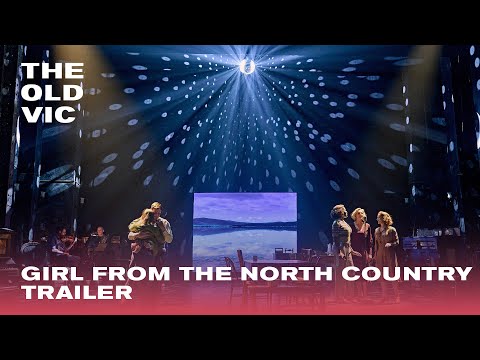
In Girl from the North Country, Conor McPherson beautifully weaves the iconic songbook of Bob Dylan into a show full of hope, heartbreak and soul. It premiered at The Old Vic, London, in July 2017, in a production directed by Conor McPherson.
Release date: 2020
"Girl From the North Country" – The Musical Guide & Song Meanings
Review
How do you stage Bob Dylan without turning the night into a tribute act? “Girl From the North Country” solves that problem by refusing to be about Dylan at all. Conor McPherson plants an original story in Duluth, Minnesota, 1934. Then he lets Dylan’s lyrics behave like weather. They roll in, they change the pressure in the room, and they leave people exposed.
The songwriting is not rewritten, but the meaning is. A familiar line can arrive in a new mouth and feel freshly dangerous. The trick is dramaturgical: songs do not “explain” the plot so much as interrupt it, like private prayer that happens to be audible. Simon Hale’s orchestrations pull Dylan away from rock mythology and into period-leaning textures and ensemble harmony, which is why the score can feel both antique and blunt at the same time.
If you are listening to the cast recording first, do not chase the “hits.” Follow the medleys. The show’s emotional logic lives in the way one song bleeds into another, often before anyone has earned relief.
How it was made
McPherson’s entry point was access and responsibility. In a later licensing announcement, he recalls that Dylan’s management approached him and “entrust[ed]” him with the catalog. That matters because it frames the writing as curatorial rather than opportunistic. McPherson is not building a biography. He is building a boarding house full of people who need language, and borrowing Dylan’s language to supply it.
The Broadway cast album was recorded on March 9, 2020, days before the shutdown. That timing explains the recording’s strange electricity. It is a document made at the edge of silence. The label notes also underline a technical choice that shapes the lyric experience: Hale pushed to avoid instruments that did not exist in the 1930s, which subtly alters how modern ears process Dylan’s words.
Key tracks & scenes
"Sign on the Window" (Company)
- The Scene:
- Act I begins as the guesthouse is introduced like a weary inventory. People stand near microphones as if they have stepped out of their own lives to tell you the truth. The light is low and winter-dim, the room already short of mercy.
- Lyrical Meaning:
- The lyric’s longing becomes communal rather than romantic. In this show, “home” is not a place. It is a rumor. Starting here makes the later plot feel inevitable, not melodramatic.
"I Want You" (Gene and Kate)
- The Scene:
- A young couple’s scene turns into a soft rupture. The staging often keeps them close but emotionally misaligned. The song lands like a letter that arrives too late, read under a single practical lamp.
- Lyrical Meaning:
- In Dylan’s original, desire can feel playful and feral. Here it reads as need and panic. A review of the Public Theater run noted how the number punctuates a scene between Gene and the woman leaving him, making the lyric sound less like seduction and more like pleading.
"You Ain’t Goin’ Nowhere" into "Jokerman" (Company)
- The Scene:
- Act II opens with an ensemble exhale that turns into a gathering pulse. Performers step forward and back from the microphones, a social dance that looks almost like survival training. The rhythm lifts, but the room stays cold.
- Lyrical Meaning:
- The transition reframes “escape” as fantasy. A Dylan studies journal review points out the unexpected segue into “Jokerman,” which turns the opening warmth into suspicion. Someone is always selling something in this house, even if it is hope.
"Like a Rolling Stone" (Elizabeth)
- The Scene:
- End of Act I becomes a kind of sermon. Elizabeth, slipping between lucidity and fracture, takes the stage as the ensemble gathers behind her. The Guardian later emphasized that this famous song closes the first act, and the staging often treats it as ritual rather than plot point, with silhouettes and choral backing that make her feel both alone and carried.
- Lyrical Meaning:
- The lyric is not used for swagger. It becomes indictment and release. A rock anthem turns into a question asked directly into the audience’s face: what happens when your social armor stops working?
"What Can I Do for You?" (Mr. Burke and Company)
- The Scene:
- The number arrives as a spiritual flare inside a story that refuses easy salvation. The singer steps forward, the room organizes itself around listening, and the sound opens up, as if the walls briefly move back. Even the lighting tends to soften, as if the production allows one moment of grace.
- Lyrical Meaning:
- The lyric reads like devotion, but the show keeps it ambiguous. Is this faith, performance, or bargaining? That ambiguity is the point. In the boarding house, even love can feel like a transaction.
"Hurricane" (Joe) with "All Along the Watchtower" and "Idiot Wind" (Company)
- The Scene:
- A man with a past finally takes up space. The staging often pushes the ensemble into percussive support, foot-stomps and harmonies that turn the room into a pressure cooker. A New Yorker review singled out a moment when the former fighter leads a charged “Hurricane,” suggesting the show’s clearest instance of song and story gripping each other.
- Lyrical Meaning:
- “Hurricane” is one of Dylan’s most literal narratives, and the musical uses that literalness as contrast. It is not there to decorate the scene. It is there to argue, loudly, that injustice has a body and a cost.
"Forever Young" (Elizabeth and Company)
- The Scene:
- The ending is not tidy. In an Old Vic review, Elizabeth is described standing on a chair and singing “Forever Young” as her husband sits stooped at the table. It is a stark picture: one body rising, one body collapsing, the room holding its breath.
- Lyrical Meaning:
- In this context, “forever” is not promise. It is defiance. The lyric lands as a blessing spoken into a future that may not deserve it, which is why it can feel both comforting and brutal.
"Pressing On" (Company)
- The Scene:
- The final stretch often shifts into ensemble-forward staging, microphones lined up, harmonies stacked, bodies facing front as if testimony is the only remaining architecture. A recent Old Vic-era review highlights “Pressing On” as a rousing finish, the show’s last insistence on motion.
- Lyrical Meaning:
- The title becomes the thesis. No one “wins.” People continue. The lyric offers a verb, not a cure.
Live updates
Information current as of January 24, 2026.
The most visible recent chapter was the limited Old Vic return, which ran June 24 to August 23, 2025. The publicly listed cast included Katie Brayben (Elizabeth), Colin Connor (Nick), Justina Kehinde (Marianne), and Chris McHallem (Dr. Walker), among others. That London engagement is now closed, and no new West End commercial run has been broadly announced for 2026.
For audiences who missed it in-person, the professionally filmed Broadway capture has become part of the show’s footprint. PBS “Great Performances” broadcast the production on May 23, 2025, and UK streaming was later announced via MarqueeTV availability beginning June 1, 2025.
On the business side, Music Theatre International acquired licensing rights in 2025, but MTI’s own listing has described the title as not yet generally available for licensing, with release timing listed as unknown. That puts the show in a transitional period: famous enough to be in demand, still controlled enough to be strategically rolled out.
On the touring timeline, IBDB lists the North American tour as running October 8, 2023 through October 20, 2024. If you see “touring” pages offering dates beyond that window, treat them as venue-by-venue marketing until a primary producer listing confirms a new leg.
A film adaptation was announced earlier, with McPherson attached to write and direct and a high-profile cast named, but no release date has been firmly set in public reporting. Watch that space, because a film would shift how new listeners first meet the songs: through edits, camera distance, and recorded realism rather than stage ritual.
Notes & trivia
- Myth check: this is not a Dylan bio-musical. It is an original McPherson story set in 1934 Duluth, built from Dylan’s catalog.
- The Broadway cast album was recorded March 9, 2020, just three days before the Broadway shutdown began.
- Legacy’s release notes state the Broadway cast recording contains 22 tracks, many of them medleys or instrumentals, which mirrors how the show uses songs as atmosphere and interruption, not just “numbers.”
- Hale’s period-constraint approach is documented in the label notes: he pushed to avoid instruments that did not exist in the 1930s, changing the sonic frame around the lyrics.
- The show was deemed eligible for the 2022 Tony Awards despite opening in March 2020, due to the shutdown timing and awards rules, and it won Best Orchestrations for Simon Hale.
- IBDB lists a main Broadway run (March 5, 2020 to January 23, 2022) and a return engagement (April 29 to June 19, 2022), both at the Belasco Theatre.
- The Old Vic 2025 return ran nine weeks, from June 24 to August 23, 2025, returning the show to its world-premiere home.
Reception
Critics tend to agree on one thing even when they disagree on the whole: the concept is not the story. The story is whether the songs become drama. When it works, reviewers describe an unusual fusion of playwriting and musical atmosphere. When it misses, they describe a narrative that feels sketched and a score that can seem like commentary rather than consequence.
“Like a Rolling Stone” closes act one, deepening character and emotion rather than advancing plot.
There is “a wonderful moment” when the former fighter leads a foot-stomping “Hurricane.”
Mood binds it: “a pervasive sadness,” yet a “devastating” “Forever Young” can make “quibbles fall away.”
Quick facts
- Title: Girl From the North Country
- Broadway year: 2020 (opened March 5, 2020)
- Type: Jukebox musical with an original book
- Book and direction: Conor McPherson
- Music and lyrics: Bob Dylan
- Setting: Duluth, Minnesota, 1934
- Orchestrations and music supervision: Simon Hale (Tony winner for Best Orchestrations)
- Original Broadway cast recording: Legacy Recordings (Sony), released August 20, 2021
- Original London cast recording: Sony Music UK release date publicized as September 29, 2017 (recorded at Abbey Road per UK announcements)
- Notable staged placements: “Sign on the Window” (opening); “Like a Rolling Stone” (Act I close); “Hurricane” (Joe’s centerpiece); “Forever Young” (final scene); “Pressing On” (late-show push)
- Filmed version: PBS “Great Performances” broadcast on May 23, 2025
- Licensing: MTI acquired rights in 2025; MTI listing has described general availability as not yet released
Frequently asked questions
- Is “Girl From the North Country” a musical about Bob Dylan’s life?
- No. It is an original story by Conor McPherson, set in 1934 Duluth, that uses Dylan songs in new dramatic contexts.
- Who wrote the lyrics in the show?
- The lyrics and music are by Bob Dylan. McPherson wrote the book and directed the stage production.
- Which song closes Act I?
- “Like a Rolling Stone” closes Act I, often staged as a ritualized ensemble-backed moment for Elizabeth.
- What cast recording should I start with?
- If you want the Broadway version’s shape and medleys, start with the Legacy Original Broadway Cast Recording (released August 20, 2021). If you want the earlier London interpretation, begin with the Original London Cast Recording (released September 29, 2017).
- Can I watch it professionally filmed?
- Yes. A filmed performance aired on PBS “Great Performances” on May 23, 2025, and UK streaming was announced via MarqueeTV availability beginning June 1, 2025.
- Is the show available for community or school licensing?
- Rights were acquired by MTI in 2025, but MTI’s show page has described the title as not yet generally released for licensing, with timing listed as unknown.
Key contributors
| Name | Role | Contribution |
|---|---|---|
| Conor McPherson | Book and director | Created the story, structure, and stage language that re-contextualizes Dylan’s catalog. |
| Bob Dylan | Music and lyrics | Song catalog used throughout, with select co-writes noted in label documentation. |
| Simon Hale | Orchestrator, arranger, music supervisor | Shaped the period-leaning sound world; won the Tony Award for Best Orchestrations. |
| Dean Sharenow | Producer (cast album) | Produced the Original Broadway Cast Recording with Hale and McPherson, per label notes. |
| The Old Vic | Producing theatre | World premiere venue and later home for the 2025 limited return. |
| Belasco Theatre | Broadway venue | Home of the Broadway run and return engagement, and the filmed capture era. |
Sources: IBDB; Tony Awards; Playbill; Legacy Recordings (Sony); Sony Music UK; The Old Vic; Official London Theatre; PBS Great Performances; WhatsOnStage; The Guardian; The New Yorker; Financial Times; Music Theatre International; The Dylan Review.