Full Monty, The Lyrics – All Songs from the Musical
Full Monty, The Lyrics: Song List
About the "Full Monty, The" Stage Show
Summer of 2000 was the world’s premiere in San Diego, and a few months later, it opened on Broadway in Eugene O'Neill Theatre. The show lasted for almost 2 years, giving 805 performances, if to include previews. J. O'Brien – director, J. Mitchell – responsible for the choreography, J. Arnone executed scenic design, H. Binkley – staging light, R. Morgan was a costume designer. Actors, participating in the opening, were: K. Freeman, J. Connell, P. Wilson, A. Golden, M. Neville, A. DeShields, E. Skinner, J. E. Conlee, D. Jones & J. Danieley.After such a great success on Broadway, the musical has arrived in the West End at the beginning of 2002 and was staged in the Prince of Wales Theatre until closure by the end of same year. The cast was comprised of: R. Fruge, J. Emick, J. Danieley, D. Bryan, A. D. Shields, M. Neville & J. E. Conlee. Some of the actors were from Broadway composition, some – new guys. This production was marked by Evening Standard Theatre Award, as the best musical of the year. In 2009, after the show came back to London, T. Southerland was its director, and then it moved to the West End at the end of mentioned year.
From regional and international productions can be noted such: New Jersey (2009); Copenhagen, Denmark (2003); Czech Republic (in 2005 and in several subsequent years); South Korea (2006 – 2007); South Africa (2008); Netherlands (2009 – 2010); Italy (2013, as a tour). Other countries, where a show staged, were: Philippines, Sweden, Singapore, Japan, the United Kingdom, Germany, Hong Kong, Greece, Croatia, Bermuda, Iceland, Spain, Israel, Australia, Peru, Canada & Mexico.
Release date: 2000
"The Full Monty" – The Musical Guide & Song Meanings
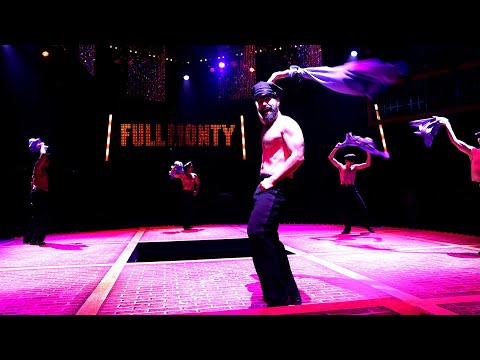
Review: what the lyrics are really selling
Is this a strip-show musical, or a musical about people who think they have nothing left to offer? The answer sits in David Yazbek’s lyrics, which keep dragging the story away from bodies and back toward dignity. The title promises spectacle. The text keeps insisting on stakes: rent, custody, pride, the quiet terror of becoming a punchline in your own town.
Yazbek writes with a comedian’s ear for friction. His rhymes often sound tossed off, then you notice how specific they are. A Victoria’s Secret catalog becomes a plot device. Basketball becomes choreography pedagogy. Wal-Mart becomes the line between survival and betrayal. That specificity is why the score still feels contemporary. It is not trying to be timeless. It is trying to be true to a week in Buffalo where everyone is counting dollars.
Musically, the show sits in a pop-rock Broadway lane, but the emotional job is closer to a book musical. Songs arrive when dialogue runs out of space. “Scrap” is a communal thesis statement. “Breeze Off the River” turns parental panic into a love song. And “Let It Go” closes the loop by admitting the point was never nudity. It was permission to exist in public without shame.
Viewer tip: if you are studying lyric meaning, listen once without skipping spoken setups on a production video, then replay the cast album. Many punchlines are answered by a glance, not a lyric, and you will hear the lines differently once you have seen the timing.
How it was made
The musical is adapted from the 1997 film, but it makes one telling relocation: Sheffield becomes Buffalo. That single change pulls the story into an American labor mood, with union halls, unemployment checks, and a colder kind of civic exhaustion. Terrence McNally’s book keeps the comedy moving, then drops in sudden stillness when the men run into consequences that do not care if they are funny.
Hiring Yazbek as both composer and lyricist was treated as a gamble at the time. Press profiles stressed how little Broadway “pedigree” he had compared with the production’s veteran theatre hands. One detail worth keeping: Adam Guettel helped connect Yazbek to the project, describing him with the kind of compliment that sounds like a warning label.
The show’s recording history tells you what sort of writer he was trying to be. The Original Broadway Cast Recording was released in December 2000 on RCA Victor, and Playbill notes that Yazbek co-produced it with Billy Straus, with the show’s musical director Ted Sperling co-producing. That is not trivia. It is an identity statement. He wanted the album to move like a record, not a museum piece.
Key tracks & scenes
"Scrap" (Jerry, Dave, Malcolm, Ethan, Men)
- The Scene:
- Buffalo, after the plant closes. A bare union meeting house where the men pick up weekly checks. Fluorescent practicality. Bodies slumped into chairs. Everyone trying not to look scared.
- Lyrical Meaning:
- The lyric turns unemployment into a worldview. “Scrap” is not only metal. It is how the men fear they are being classified. The song sets up the show’s main argument: worth is not the same as market value.
"It’s a Woman’s World" (Georgie and the women)
- The Scene:
- Girls’ Night Out at Tony Giordano’s club. Hot lighting, cheers, dollar bills, the gleam of a fantasy sold as empowerment. The men watch from the margins and misunderstand what they are seeing.
- Lyrical Meaning:
- The lyric is celebratory and slightly sharp. The women are not singing about men. They are singing about money and control. The show then uses that shift in power to expose the men’s insecurity.
"Man" (Jerry and Dave)
- The Scene:
- After a humiliating encounter at the club. Jerry pitches the strip idea as a business plan disguised as bravado. It plays like a pep talk that keeps cracking under its own pressure.
- Lyrical Meaning:
- The lyric interrogates masculinity by performing it. “Man” is a word Jerry repeats until it stops sounding stable. The number shows how quickly identity becomes a sales pitch when you are broke.
"Big-Ass Rock" (Jerry, Dave, Malcolm)
- The Scene:
- Jerry and Dave stumble onto Malcolm during a suicide attempt. The staging is usually blunt, with comic rhythm used as a defense mechanism. The air goes quiet, then the jokes arrive too fast.
- Lyrical Meaning:
- This is Yazbek’s tightrope walk. The lyric uses gallows humor to keep Malcolm alive in the scene, then pivots into connection. The show refuses to let despair have the final line.
"Big Black Man" (Horse and the guys)
- The Scene:
- Auditions that are failing until Horse walks in. The light tends to isolate him at first, then the room warms as the men realize they have found a different kind of charisma.
- Lyrical Meaning:
- The lyric plays with fantasy and stereotype, then undercuts it with humanity. Horse is not a punchline. He is a mirror. The men learn that “appeal” is not the same thing as perfection.
"Michael Jordan’s Ball" (The guys)
- The Scene:
- Rehearsal. Harold tries to teach men with no dance vocabulary how to move together. The breakthrough arrives when choreography is translated into basketball teamwork.
- Lyrical Meaning:
- The lyric is a teaching tool that becomes a thesis. They are not training to be sexy. They are training to trust each other. Sports metaphor becomes a language for solidarity.
"Breeze Off the River" (Jerry)
- The Scene:
- Jerry needs money for the club deposit. Nathan hands him savings money meant for college. The room is small. The lighting softens. Jerry’s voice finally stops performing.
- Lyrical Meaning:
- A parental love song with guilt baked into every phrase. The lyric is Jerry admitting that his son has become the responsible one. It is the show’s emotional center of gravity.
"You Walk With Me" (Malcolm and Ethan)
- The Scene:
- After Malcolm’s mother dies. A funeral setting that does not allow flourish. Malcolm confesses loneliness, and Ethan answers with gentle, unforced devotion.
- Lyrical Meaning:
- The lyric refuses sensationalism. It frames love as steadiness. In a musical built on spectacle promises, this song is about showing up and staying.
"Let It Go" (Company)
- The Scene:
- Backstage at Tony Giordano’s club. Panic, second-guessing, the threat of humiliation. Jerry hesitates until Nathan pushes him toward the stage. The number begins, then the story chooses courage.
- Lyrical Meaning:
- The lyric turns the finale into a public release of shame. It argues that the “full monty” is emotional exposure first, physical exposure second.
Live updates 2025/2026
Information current as of January 24, 2026. “The Full Monty” is not sitting inside a single official commercial run right now. It is living the way many post-2000 titles live: through licensing and high-profile regional productions. MTI continues to license the show and promote production tools like digital scripts, rehearsal apps, and authorized programming, which is a practical signal that the musical is still in active circulation.
Recent and near-term examples are easy to spot. Paramount Theatre (Aurora, Illinois) programmed “The Full Monty” in late summer to early fall 2024. Drayton Entertainment in Ontario ran “The Full Monty: The Broadway Musical” in May to June 2025. MTI’s UK site lists licensed productions into 2026. If you want the show in 2026, you are more likely to find it via a major regional house or a sharp amateur company than via Broadway.
What about a Broadway revival? As of today, I could not find an official commercial announcement. The most concrete public hint is Yazbek discussing the idea of a revival in interviews, which reads more like creative interest than a locked date. Keep your eye on credible trade outlets for confirmation, not social chatter.
Notes & trivia
- Yes, this musical ends with a song titled “Let It Go.” No, it has nothing to do with “Frozen.” The overlap is a coincidence that still makes audiences laugh.
- The Original Broadway Cast Recording was released December 12, 2000 on RCA Victor, and Playbill reports the album was recorded October 30, 2000.
- Playbill also credits Yazbek and Billy Straus as producers of the cast album, with musical director Ted Sperling co-producing.
- Adam Guettel helped connect Yazbek to the project, a reminder that Broadway’s “new voice” pipeline often runs through other composers.
- The show’s “Michael Jordan’s Ball” number has been cited as a clean example of how sports metaphor can teach stage movement without losing character logic.
- Many productions include audience advisories for adult themes and attempted self-harm, reflecting the Malcolm storyline as well as the show’s language and nudity.
- MTI tags the title as Pop/Rock and Book Musical, which is accurate: the score has punch, but the narrative structure is doing the heavy lifting.
Reception
In 2000, critics tended to praise the show’s energy and usefulness as a crowd-pleaser, while disagreeing on how “fresh” the material felt. One throughline, though, is that reviewers noticed Yazbek as a writer who brought a modern edge into a conventional Broadway shape. That is why the score is remembered more fondly than the show’s awards record might predict.
“Yazbek's lyrics have an edgy, youthful flair that's nice to hear on Broadway.”
“He is the Ginsu knife of inappropriateness.”
“The male strippers in ‘The Full Monty’ come off looking like a bunch of pink-cheeked boy scouts.”
Now, the show’s critical conversation has shifted. The material reads differently in the 2020s, when audiences are both more fluent in body politics and more skeptical of “male-dignity redemption” stories. The best productions lean into the show’s real subject: economic panic. The strip is simply the form the panic takes.
Quick facts
- Title: The Full Monty
- Broadway year: 2000 (opened October 26, 2000)
- Type: Book musical adapted from the 1997 film
- Book: Terrence McNally
- Music & Lyrics: David Yazbek
- Director (original Broadway): Jack O’Brien
- Choreography (original Broadway): Jerry Mitchell
- Musical direction: Ted Sperling
- Orchestrations: Harold Wheeler
- Selected notable placements: “Scrap” at the union meeting house; “It’s a Woman’s World” at Tony Giordano’s club; “Breeze Off the River” after Nathan hands over savings; “Let It Go” during the club finale
- Cast album: The Full Monty (Original Broadway Cast Recording)
- Label: RCA Victor
- Availability: Licensed worldwide through MTI; cast album widely available on major music services and catalog retailers
Frequently asked questions
- Is “The Full Monty” a jukebox musical?
- No. The stage musical uses an original pop-rock score by David Yazbek. People sometimes confuse it with the film’s pop needle-drops.
- Why does the musical take place in Buffalo instead of Sheffield?
- The stage adaptation relocates the story to Buffalo to frame the plot through an American steel-town economy and union culture.
- Is the ending literally full nudity?
- Staging varies by production and licensing rules, but the story’s point is emotional exposure and reclaimed dignity, with comedy built into the reveal.
- What is “Michael Jordan’s Ball” doing in this show?
- It is a rehearsal breakthrough song. Sports metaphor becomes a way to teach non-dancers how to move as a team, and it doubles as character bonding.
- Does this musical have anything to do with “Frozen”?
- No. The only connection is that both shows have a song titled “Let It Go,” which often surprises first-time listeners.
- Is there a Broadway revival planned for 2026?
- As of January 24, 2026, there is no official Broadway revival announcement that I could verify. There are public hints of interest in interviews, but no confirmed commercial plans.
Key contributors
| Name | Role | Contribution |
|---|---|---|
| David Yazbek | Composer / Lyricist | Wrote a pop-rock score built on character detail, punchlines, and tenderness. |
| Terrence McNally | Book | Structured the story as a fast comedy that keeps interrupting itself with real consequences. |
| Jack O’Brien | Director | Shaped the original Broadway staging and its balance of sincerity and speed. |
| Jerry Mitchell | Choreographer | Built choreography around “men who can’t dance” learning how to move together. |
| Ted Sperling | Musical Director / Vocal Arrangements | Anchored the musical performance style and co-produced the original cast album. |
| Harold Wheeler | Orchestrator | Orchestrated the score for Broadway forces while keeping the pop bite intact. |
Sources: Playbill, Masterworks Broadway, Music Theatre International (MTI), Los Angeles Times, Variety, The Wall Street Journal, Washington Post, Drayton Entertainment, Paramount Theatre Aurora.