
Flora The Red Menace Lyrics: Song List
- Act 1
-
Prologue/Unafraid

-
All I Need (Is One Good Break)
-
Not Every Day of the Week
-
Sign Here
-
The Flame
- Palomino Pal
- A Quiet Thing
- Hello, Waves
-
Dear Love
- Act 2
-
Express Yourself
- Knock Knock
- Comrade Charlotte's Ballet (The Tree of Life)
- Sing Happy
-
You Are You
- Finale
About the "Flora The Red Menace" Stage Show
The original production was in 1965 and the same year it was closed after only 87 exhibitions. The musical was largely written for Liza Minnelli (according to rumors, although official sources denied this, posing such information, as if the role was originally written for Barbra Streisand) so she shone with her acting talent. Other actors were: B. Dishy, C. Damon. George Abbott was here the director. (Delightful personality and an outstanding person. Not only that, he died at the age of 107 years, his period of activity has been as long as 90 years – a record for Broadway and worthy of respect in any case! His most outstanding work was Damn Yankees and Fiorello! (Set was performed during the period of 1955 – 59). He also received 3 Tonies, 1 Pulitzer, 1 Drama Desk Award).
L. Theodore was a choreographer, stage design was performed by J. Eckart. Miss Minnelli won a Tony for this musical, setting a record for the youngest age of rewarding with Tony – 19 years. But already a year after, in 1966, she was seriously exceeded by Frankie Michaels, who got it in his phenomenal 10 years. Afterwards this young actor never distinguished with anything in his life.
The show was moved to Broadway after only 2 days pass its off-Broadway preliminary run, but critics trashed it and the show was closed, lost in this investment USD 0.4 million.
In 1987, the musical has been resurrected, and its creative team was: Scott Ellis (director); S. Stroman (choreographer); V. Cox & P. Frechette (actors). Other significant renewals: 1998 (Great Britain), 2003 (Scotland), 2006 (San Francisco), 2008 (Los Angeles), 2011 (Ohio).
Among the amateur resurrections, the most famous was in the Vineyard Theatre, where the actors did not even try to hide the non-professional level of play.
Recording of music from Broadway was released in 1965, and its re-release on CD was made in 1992, as well as in 1987, when it was released a record from its resurrection.
Release date of the musical: 1965
“Flora the Red Menace” – The Musical Guide & Song Meanings
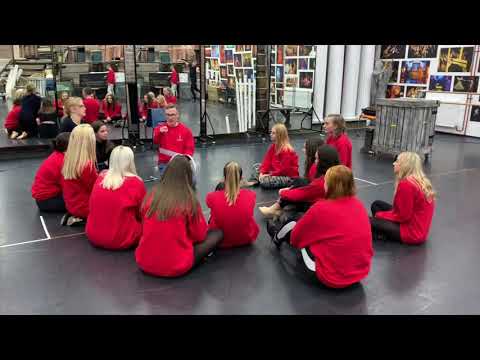
Review: the first Kander & Ebb heroine, already fighting the future
“Flora the Red Menace” is a debut that behaves like a forecast. It is Kander and Ebb’s first Broadway collaboration, and it already contains the obsession that will keep returning in their work: a woman trying to stay herself while the world tries to name her. Flora is not a cynic. That is the danger. Optimism makes her porous. It lets love, money, ideology, and ambition all get inside, then demand rent.
The lyrics are unusually blunt about labor and desire. They do not romanticize the Depression. They make it practical. People sing because they need a job, a union, a break, a promise that tomorrow is not a trick. When the political satire shows up, it lands as social texture rather than speechmaking. The Communist Party cell is presented as both community and pressure cooker. Flora wants belonging. The lyric writing keeps reminding you how expensive belonging can be.
Musically, you can hear a team learning its own power. There are bright ensemble setups, punchy “type” numbers, and then the big surprise: the show’s most famous ballad refuses fireworks. “A Quiet Thing” is the moment where the score makes a moral choice. Achievement is not noisy. Joy can be private. That line of thinking is what gives the show its lingering bite, even when the book stumbles.
How it was made
The musical is based on Lester Atwell’s novel “Love Is Just Around the Corner,” and it opened on Broadway at the Alvin Theatre on May 11, 1965, closing July 24 after 87 performances. George Abbott directed and co-wrote the book with Robert Russell. Harold Prince produced. Liza Minnelli made her Broadway debut as Flora and won the Tony Award for Best Actress in a Musical at age 19. It is a short run with a long shadow because it introduces a major Broadway voice: Kander and Ebb, together for the first time.
One production fact is almost too on-brand for a show about urgency. The original cast album was recorded two days before the Broadway opening, an aggressive release strategy meant to hit stores immediately as reviews landed. That decision makes the album feel like a time capsule pressed under pressure, with Minnelli caught at the exact moment her stage persona becomes a public fact.
There is also a “how did they get the gig” story that reads like Broadway networking in its purest form. In a recollection connected to John Kander’s early career, Hal Prince is described as enjoying working with Kander on a prior Broadway directing assignment and then pushing Abbott to hand “Flora” to Kander and Ebb after liking their work on “Golden Gate.” In other words, the show exists because someone in power heard potential and insisted it be given a room.
Key tracks & scenes
“Unafraid” (Flora, Students, Ensemble)
- The Scene:
- Graduation energy in a city that does not care about diplomas. The stage often feels full, busy, hungry. Flora stands slightly ahead of the pack, selling courage like it is a required skill.
- Lyrical Meaning:
- The lyric is self-hypnosis with a grin. Flora talks herself into the future because the alternative is to admit fear. It sets up her central flaw: she believes words can outmuscle reality.
“The Kid Herself” (Flora and the Artists)
- The Scene:
- At Garret and Mellick’s, Flora bullies a locked door into opening. Artists hustle around her, sneaking designs into the system. It plays like a workplace caper with Depression stakes.
- Lyrical Meaning:
- It is a self-myth number. Flora declares herself before anyone else can dismiss her. The lyric is funny, but it is also a survival tactic: if you announce your value, maybe the world will pretend to agree.
“All I Need Is One Good Break” (Artists)
- The Scene:
- The studio becomes a communal squeeze. Dancers, designers, dreamers. Everyone is one step from quitting and one step from a miracle. The number tends to be staged as organized chaos, a chorus line of near-misses.
- Lyrical Meaning:
- The lyric is a prayer that refuses religion. It is about merit, luck, and the fantasy that success is fair if you just keep moving. Kander and Ebb give “ambition” a collective voice, not a solo.
“The Flame” (Charlotte and the Communists)
- The Scene:
- A Party meeting staged like a recruitment ritual. Charlotte runs the room with velvet authority. Lighting often shifts colder here, more doctrinal. The warmth is conditional.
- Lyrical Meaning:
- The lyric makes ideology seductive. “The flame” is purpose, but it is also hunger for control. This is the show telling you that belief can be theater, and theater can become a trap.
“A Quiet Thing” (Flora)
- The Scene:
- In Mr. Stanley’s office, Flora is offered the unimaginable: $30 a week. The room goes still because her life might finally change. The song lands as a hush, not a victory lap.
- Lyrical Meaning:
- The lyric rejects spectacle. It describes success as strangely silent, almost suspicious. That honesty is why the song endures: it captures the feeling of getting what you wanted and realizing you still do not feel safe.
“Dear Love” (Flora and Company)
- The Scene:
- End of Act I, when romance and politics start pulling at the same sleeve. It often reads as a public-private hybrid: Flora addressing love while the world crowds in.
- Lyrical Meaning:
- The lyric is an attempt to name love as a stabilizing force. The music keeps it tender, but the context makes it fragile. You feel Flora trying to build a home out of a feeling.
“Express Yourself” (Charlotte)
- The Scene:
- Charlotte takes the floor with a number that can play as burlesque, lecture, or both. It is the Party as performance. She is both ringmaster and warning.
- Lyrical Meaning:
- The lyric sounds permissive while controlling the terms of permission. “Expression” becomes a tool for manipulation. It is a character song that tells you exactly who holds power in the room.
“Sing Happy” (Flora)
- The Scene:
- A late-game surge, often staged with bright front light and a sense of insistence. Flora sings as if she can muscle the night into being better, even while the plot argues back.
- Lyrical Meaning:
- The lyric is defiance disguised as cheer. It is not naive. It is a coping mechanism performed at full volume. Flora is trying to survive her own awareness.
Live updates (2025/2026)
In 2025, “Flora the Red Menace” keeps showing up the way many mid-century titles survive now: not as a tour brand, but as a smart, specific pick for smaller companies. A listing from the City of Sydney shows performances at Footbridge Theatre in Glebe on May 8 to May 10, 2025, with ticket pricing and multiple showtimes, a clean snapshot of the show’s contemporary scale and audience appeal.
In the U.S., the recent paper trail looks similar. BroadwayWorld publicized Forager Theatre Company bringing the show to Court Square Theater in April 2024, framing it explicitly around labor rights, female self-actualization, and community, which is exactly how modern audiences tend to hear it now.
As of January 23, 2026, there is no announced Broadway revival attached to a major commercial producer. The current reality is steadier: the show is licensable through Concord Theatricals, and its song list is built for performers who want early Kander and Ebb without pretending the piece is a museum artifact. The score, more than the book, is the reason it keeps getting re-opened.
Notes & trivia
- Broadway opened May 11, 1965 at the Alvin Theatre and closed July 24, 1965 after 87 performances (7 previews).
- The setting is New York City, 1933 to 1935, with Depression pressure baked into the lyric vocabulary.
- This was the first Broadway collaboration between John Kander and Fred Ebb.
- Liza Minnelli made her Broadway debut as Flora and won the Tony Award for Best Actress in a Musical at age 19.
- The Concord Theatricals song breakdown places “A Quiet Thing” in Act I and “Sing Happy” as Flora’s Act II showcase.
- The Original Broadway Cast Recording was released by RCA Victor in May 1965, and it was recorded two days before the Broadway opening.
- TIME’s 1965 review framed the concept as a Communist-cell musical comedy, underlining how unusual the premise looked even then.
Reception: then vs. now
In 1965, critics could admire the novelty and still question the craft. The premise was catchy, the satire was visible, but the show did not convince enough people to stay. Over time, the score has been reassessed as the real story: a young writing team testing the muscle they would later use with far sharper dramatic architecture. Modern revivals and reviews tend to praise the music’s energy and Minnelli’s original star-making context, while admitting the book can feel like a sequence of setups searching for a cleaner landing.
“The idea of spinning a musical comedy around a Manhattan Communist Party cell … bears out Marx’s warning …”
“Each number becomes a pleasing, engaging act of discovery.”
“It may be a footnote show … but it has left an indelible footprint …”
Quick facts
- Title: Flora the Red Menace
- Year: 1965 (Broadway premiere)
- Type: Political-leaning romantic musical comedy (Depression-era New York)
- Book: George Abbott and Robert Russell (later revised by David Thompson for the 1987 Off-Broadway revival)
- Music: John Kander
- Lyrics: Fred Ebb
- Original Broadway venue: Alvin Theatre
- Broadway run: May 11, 1965 to July 24, 1965 (87 performances)
- Producer: Harold Prince
- Selected notable placements: “A Quiet Thing” after Flora’s job offer; “Dear Love” closing Act I; “Sing Happy” as Flora’s late Act II statement
- Original cast album: Released May 1965 on RCA Victor; recorded two days before the Broadway opening
- Availability: Cast recording is widely available via major digital music platforms and catalog distributors
- Licensing: Concord Theatricals
Frequently asked questions
- Is “Flora the Red Menace” a satire of Communism or a love story?
- Both, and that friction is the point. The romance pulls Flora toward ideology, while the lyrics keep showing how ideology behaves like a relationship with demands and conditions.
- Who wrote the lyrics?
- Fred Ebb wrote the lyrics, with music by John Kander. It was their first Broadway collaboration.
- Where does “A Quiet Thing” happen in the story?
- It comes after Flora is offered a job at the department store for $30 a week, staged as a private shock rather than a public triumph.
- Why is “Sing Happy” so important?
- It is Flora turning survival into performance. The lyric is cheer on the surface, but it reads as insistence, a choice to keep going when the plot has given her reasons not to.
- Is there a cast recording?
- Yes. The Original Broadway Cast Recording was released by RCA Victor in May 1965, and it is available digitally today.
- Is the show being staged now?
- It appears mostly in smaller-company productions rather than large commercial runs. A documented example is Footbridge Theatre in Sydney in May 2025, and there was New York-area coverage for a 2024 staging at Court Square Theater.
Key contributors
| Name | Role | Contribution |
|---|---|---|
| John Kander | Composer | Wrote the score that balances satire with vulnerable ballad writing, including “A Quiet Thing.” |
| Fred Ebb | Lyricist | Built a lyric world where labor, love, and belief compete for the same emotional space. |
| George Abbott | Book, director | Co-wrote the original book and directed the Broadway production. |
| Robert Russell | Book | Co-wrote the original book, shaping the Depression-era New York setting and plot mechanics. |
| Harold Prince | Producer | Produced the Broadway production and is linked to bringing Kander into the project’s orbit. |
| Don Walker | Orchestrations (original) | Orchestrated the original cast recording’s band-forward sound, cited in album documentation. |
| Harold Hastings | Music director & conductor (original recording) | Conducted the original cast recording sessions. |
| David Thompson | Book revision (1987 Off-Broadway) | Revised the book for the Vineyard Theatre revival production concept. |
| Susan Stroman | Choreography (1987 Off-Broadway) | Choreographed the Vineyard Theatre revival, documented in production credits. |
Sources: IBDB, Concord Theatricals, TIME, Variety, The Stage, Masterworks Broadway, City of Sydney, BroadwayWorld, DC Theater Arts, SusanStroman.com, Wikipedia.