Dracula Lyrics – All Songs from the Musical
Dracula Lyrics: Song List
- Act 1
- Prelude
- A Quiet Life
- Over Whitby Bay
- Jonathan's Bedroom
- Forever Young
- Fresh Blood
- The Master's Song
- How Do You Choose?
- The Mist
- The Mist (Reprise)
- Modern World / A Perfect Life
- The Weddings
- Prayer for the Dead
- Life After Life
- Act 2
- Undead One, Surrender
- The Heart Is Slow to Learn
- The Master's Song (reprise)
- If I Could Fly
- Mina's seduction
- There's Always a Tomorrow
- Deep in the Darkest Night
- Before the Summer Ends
- All Is Dark,Life After Life (reprise)
- The Longer I Live
- Finale
- Other Songs
- The Seduction
- Nosferatu
About the "Dracula" Stage Show
The premiere of the musical took place in 2001 in La Jolla Playhouse, as a pre-Broadway shows, and then in 2004, it was the launch in Belasco Theatre on Broadway. Lasted just for 157 regular performances, the frustrated blockbuster was forced to shut down due to a drop in ticket sales. The actors in it were: T. Hewitt, M. Errico, D. Ritchie, S. M. Henderson, C. Hoch, D. Stephenson, K. O'Hara, C. Wagner & E. Loyacano. Production was held after in many cities of USA (in Florida, for example) and also in other countries. Its premiere in London took place at The Lowther Pavilion, in 2010.Switzerland hosted the show in the 2005 – 2006 winter season. Austria took it in 2007, Serbia in 2010 and Canada – in 2011; then it came to Sweden and South Korea – both saw the premiere in 2014. Since 2007, a show obtains reworked version, which was much better than a sluggish Broadway’s one.
Release date: 2004
"Dracula" – The Musical Guide & Song Meanings
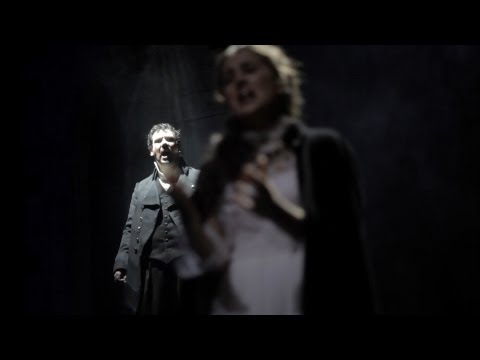
“Dracula” (the 2004 Broadway musical) keeps trying to make you believe the vampire is a lover first. That is its gamble. Bram Stoker’s story is about invasion and appetite. This version wants longing to be the engine, with blood as the price tag. Sometimes that reframing clicks. Sometimes it fights the plot that audiences already know by heart.
Review: The Romance the Score Keeps Insisting On
Frank Wildhorn writes big, pop-forward theatre songs that aim straight for the pulse. You can feel the intent in the repeated hooks and the surge-to-the-chorus architecture. The lyric writing, credited to Don Black and Christopher Hampton, leans on direct statement. Characters often sing what they mean, right away. That has benefits in a story told through letters, diaries, and fast-moving locations. It also costs the material some mystery.
The show’s best lyrical idea is its fixation on Mina as a mirror. In the Stoker tradition, Mina is virtue under pressure. In this musical, she becomes the emotional battleground. “Good woman” is not the end of her identity. It is the costume she is asked to keep wearing while desire rewrites her posture.
On Broadway in 2004, the craft that most consistently landed was not textual. It was technical. The production became a kind of haunted machinery. Sets shifted like trapdoors. Lighting carved the stage into corridors. Flying effects turned bodies into punctuation. The writing is always pushing for a serious, erotic gothic. The staging made sure the audience at least had something to watch while deciding whether they believed it.
How It Was Made
“Dracula, the Musical” began with a developmental world premiere at La Jolla Playhouse in 2001, then arrived on Broadway at the Belasco Theatre in August 2004 under director Des McAnuff. The Broadway run ended January 2, 2005, after 157 performances and 22 previews. The short commercial life is only one chapter, though. The piece was heavily revised after Broadway and found a second identity overseas, with a licensed version tied to those revisions. MTI’s show history describes a deliberate pivot toward the romance between Dracula and Mina, including a key story change: Dracula asks Mina to kill him to spare her from an undead fate. That is not a small tweak. It re-centers the moral weight of the finale and gives the score permission to sing about love with a straight face.
The album story also tells you what kind of property this became. Broadway did not generate an official original cast album. Instead, the main English-language recording people stream today is a 2011 studio cast recording released by GlobalVision Records, with a Broadway-heavy lineup but none of the Broadway production cast. Playbill’s release note makes that explicit. That choice positions “Dracula” less as a documentary of a specific staging, and more as a portable songbook designed to outlive its first commercial swing.
Key Tracks & Scenes
"Prologue / Over Whitby Bay" (Jonathan Harker, Mina)
- The Scene:
- Seaside air and early optimism. Whitby is open space, the opposite of the castle. Light feels clean, almost coastal-white, before the story darkens the palette.
- Lyrical Meaning:
- This song frames Mina and Jonathan as a normal future. The lyric sells safety and routine, so the rest of the show can tear it apart.
"Fresh Blood" (Dracula, Brides, Jonathan)
- The Scene:
- A sudden shift into predation. Shadows thicken. The staging often turns bodies into a circle around Jonathan, like a ritual that does not need words.
- Lyrical Meaning:
- The lyric treats hunger as celebration, which is the point. Horror is more unsettling when it sounds pleased with itself.
"The Master's Song" (Renfield, Dr. Seward)
- The Scene:
- An asylum corridor. Institutional light. Renfield’s devotion plays against a doctor’s clinical distance, the kind of scene that smells like medicine and fear.
- Lyrical Meaning:
- This is the show explaining obsession from the inside. Renfield is not only a victim. He is a believer. The lyric turns servitude into identity.
"The Mist" (Lucy)
- The Scene:
- Night. A bedroom that stops being private. The air becomes visible. Light diffuses so edges blur, as if the room itself is forgetting its shape.
- Lyrical Meaning:
- Lucy’s lyric is seduction without naming seduction. It captures the danger of wanting something you cannot describe without sounding foolish.
"A Perfect Life" (Mina)
- The Scene:
- A calm interior that feels staged, like Mina is arranging her own portrait. Warm lighting, domestic order, and a faint pressure under the surface.
- Lyrical Meaning:
- The lyric is a self-report, but also a self-defense. Perfection is presented as a plan, which hints that it is already cracking.
"Please Don't Make Me Love You" (Mina)
- The Scene:
- A private plea spoken into darkness. The room feels smaller, as if desire is shrinking her options. One strong spotlight can do the whole job here.
- Lyrical Meaning:
- Mina’s central conflict becomes language. The lyric begs for restraint while admitting attraction. It is an argument with herself, not with Dracula.
"Loving You Keeps Me Alive" (Dracula, Mina)
- The Scene:
- Two people in a charged stillness. The world recedes. Lighting often isolates them from the rest of the stage picture, turning romance into a sealed chamber.
- Lyrical Meaning:
- The lyric makes love sound like biology. For Dracula, affection is not decoration. It is survival. That is how the show tries to make the monster legible.
"Life After Life" (Dracula, Lucy)
- The Scene:
- Transformation as spectacle. The body becomes a promise and a warning. Effects and lighting tend to spike here, because the song wants apotheosis.
- Lyrical Meaning:
- This is the score’s thesis about immortality. The lyric sells the afterlife as freedom, while the scene makes clear the freedom is a trap.
Live Updates 2025–2026
In 2025 and 2026, “Dracula” is active primarily through licensing and European touring. MTI continues to list the show for licensing, reflecting the revised version that took shape after Broadway. On the commercial side, multiple ticketing and venue listings point to a 2026 run branded as “Dracula - Das Musical,” with dates spanning late January through early June 2026, including performances in Vienna at MuseumsQuartier (Halle E) and a Berlin engagement at Bluemax Theater. Frank Wildhorn’s official news page also promoted a Germany and Austria tour, highlighting a Vienna premiere date in late January 2026.
That modern footprint matters for lyric listeners because the “Dracula” most audiences meet today is not frozen in the 2004 Broadway script. The property keeps re-presenting itself in revised form, new languages, and re-balanced song lists. If you are chasing definitive lyrics, you have to ask a practical question first: which “Dracula” are you hearing?
Notes & Trivia
- The Broadway production opened August 19, 2004 at the Belasco Theatre and closed January 2, 2005 after 157 performances and 22 previews.
- The show’s world premiere developmental run was at La Jolla Playhouse in 2001, years before Broadway.
- MTI’s official show history notes a story adjustment that spotlights the romance: Dracula asks Mina to kill him so she will not be condemned to undead life.
- The English-language recording most listeners stream is the 2011 “Studio Cast Recording,” released by GlobalVision Records, and Playbill noted it does not feature the Broadway cast.
- MTI’s published song list includes “Prologue - Over Whitby Bay,” “Fresh Blood,” “The Mist,” “A Perfect Life,” “Life After Life,” and “Please Don't Make Me Love You,” outlining the show’s core narrative turns in song titles alone.
- In 2004 reviews, even hostile critics often conceded the production’s technical spectacle, calling out sets, costumes, lighting, and flying effects as the night’s main attractions.
Reception Then vs. Now
In 2004, critical response to the Broadway version was punishing, often aimed directly at the lyric writing and the pop-musical language. The show was treated as solemn without earning its solemnity. That said, the same reviews frequently admired the physical production, which suggests the piece was never short on theatrical muscle. It was short on persuasion. The later revisions, plus the show’s long international life, imply the creators agreed with at least part of the critique and kept adjusting the balance between romance, horror, and narrative clarity.
“...pop music of Frank Wildhorn underscoring ... banal lyrics...”
“...imaginative sets... costumes... lighting... effects...”
“The lyric/book writers here are fully complicit in the tedium.”
Quick Facts
- Title: Dracula, the Musical
- Broadway year: 2004
- Type: Gothic romance musical based on Bram Stoker
- Music: Frank Wildhorn
- Book and lyrics: Don Black; Christopher Hampton
- Conceived by: Des McAnuff; Frank Wildhorn; Christopher Hampton
- Broadway venue: Belasco Theatre
- Broadway run: August 19, 2004 to January 2, 2005 (157 performances; 22 previews)
- Selected notable placements: “Over Whitby Bay” (departure and dread); “The Mist” (Lucy’s seduction); “Please Don't Make Me Love You” (Mina’s resistance); “Life After Life” (immortality sales pitch)
- Primary English album in circulation: “Dracula the Musical (The Studio Cast Recording)” (GlobalVision Records, June 6, 2011)
- International footprint: multiple European productions; a “Dracula - Das Musical” tour is advertised across Austria and Germany in 2026
- Licensing: available through Music Theatre International (MTI)
Frequently Asked Questions
- Is the 2004 Broadway “Dracula” the same as later international versions?
- Not exactly. After Broadway, the show was substantially revised and that revised form has driven many later productions and licensed materials.
- Who wrote the lyrics?
- The Broadway credits list Don Black and Christopher Hampton for book and lyrics, with music by Frank Wildhorn.
- Is there an official original Broadway cast album?
- There is no widely distributed original Broadway cast recording. The main English recording in circulation is a 2011 studio cast recording released by GlobalVision Records.
- What is the show’s signature song for newcomers?
- “Life After Life.” It is the score’s big pitch for immortality and one of the most-performed numbers from the property.
- Is the musical touring in 2026?
- Yes, “Dracula - Das Musical” is advertised with dates across Austria and Germany in 2026, including Vienna and Berlin listings.
- Is “Dracula” licensable for regional and community theatres?
- Yes. MTI lists the title for licensing, including song information and show essentials for producers.
Key Contributors
| Name | Role | Contribution |
|---|---|---|
| Frank Wildhorn | Composer | Wrote the score’s pop-forward gothic sound, including “Life After Life.” |
| Don Black | Book and lyricist | Co-wrote the book and lyrics, shaping the show’s romance-driven framing. |
| Christopher Hampton | Book and lyricist | Co-wrote the book and lyrics, adapting Stoker into a stage narrative. |
| Des McAnuff | Director; Conceiver | Staged the 2004 Broadway production and helped define its theatrical machinery. |
| Doug Besterman | Orchestrator | Orchestrations credited for the Broadway production’s sound world. |
| Howell Binkley | Lighting designer | Used sharp, shifting light to carve the stage into rooms, corridors, and nightmares. |
| Catherine Zuber | Costume designer | Created the Victorian silhouettes and vampire iconography that anchored the look. |
| Heidi Ettinger | Scenic designer | Built a transformable environment that critics frequently singled out. |
| Flying by Foy | Special effects | Delivered signature airborne moments that defined the production’s spectacle. |
| Tom Hewitt | Original Broadway cast | Originated Dracula on Broadway in 2004. |
| Melissa Errico | Original Broadway cast | Played Mina on Broadway, central to the romance the show prioritizes. |
Sources: IBDB; Playbill; MTI Shows; MTI Show History; Variety; New York Magazine; CurtainUp; Apple Music; FrankWildhorn.com; MuseumsQuartier Wien; Berlin.de.