
Do Black Patent Leather Shoes Really Reflect Up? Lyrics: Song List
- Act 1
- Prologue/Get Ready, Eddie
- The Greatest Gift
-
Little Fat Girls

-
It's the Nuns
- Cookie Cutters
- Queen of the May
- Patron Saints
- Private Parts
-
How Far Is Too Far?
- Act 2
- Entr'acte
-
Doo-Waa, Doo-Wee
- I Must Be in Love
- Friends, The Best Of
- Greatest Gift (Reprise)
- Mad Bomber/We're Saving Ourselves for Marriage
-
Late Bloomer & Prom Montage
- Friends, The Best Of (Reprise)
- Thank God
About the "Do Black Patent Leather Shoes Really Reflect Up?" Stage Show
This musical, due to the inclusion of classical issues in the plot, has become very popular for amateur and school productions. For example, in Chicago, when it started in 1979, it lasted until 1983, over 4.5 years, putting a record of duration among musical shows in this city. A story tells, starting from the 1950s, of very young heroes, who at first were in elementary school, and until they grew older and passed lots of various stages, including love. Histrionics is based on a 1975’s book written by John R. Powers. K. Kwapis was the director, who in the adaptation of the script and preparing of the performance was helped by M. Matzdorff and T. A. Dyer.
The preliminary exhibition was in Philadelphia, where the musical brought large audiences and received extremely positive feedbacks. On Broadway, it opened in Alvin Theatre, under the direction of Mike Nussbaum, choreography staged by T. Walsh. The actors were as follows: D. Stitt, J. Graae, R. Thacker, V. Lewis & M. Moore. Recording with this musical was released by Bay Cities Records. The total number of histrionics in North America, including tours in cities, was more than 250.
Release date of the musical: 1982
"Do Black Patent Leather Shoes Really Reflect Up?" – The Musical Guide & Song Meanings
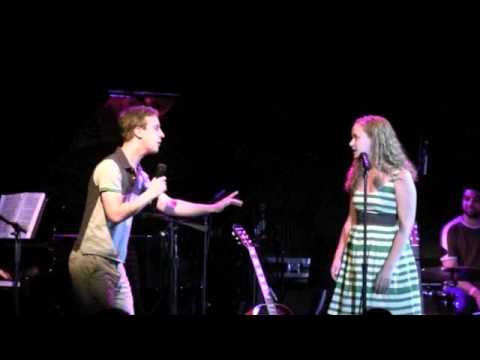
The title sounds like a prank. The show is not. It is a memory play disguised as a class photo, with eight kids locked into a system that is funny until it is not funny anymore. The lyric writing understands that Catholic-school comedy comes from specificity: the rules, the vocabulary, the small humiliations, the holy language used for very human confusion. What keeps the musical alive is its empathy for embarrassment. The jokes land because the songs admit how badly the characters want to be seen.
Review: The Joke Title, the Serious Memory
This score treats adolescence as a series of rituals you barely understand while you are inside them. The lyric lens keeps shifting, year to year, and that is the engine: confession, crushes, social rank, sex education, the moral bargaining you do with yourself at fourteen. The writing rarely aims for poetry. It aims for recognition. You hear it in the way the lines stack ordinary nouns into doctrine, then let doctrine collapse back into ordinary fear.
Musically, Quinn and Jans build a bright, accessible theatre-pop language that can pivot from ensemble bustle to private confession without changing the temperature too much. That restraint matters. The show is about kids learning to act “normal.” Big vocal display would undercut that. The best moments let melody do the emotional work while the lyric stays conversational, like someone trying to keep their voice steady in a hallway.
How It Was Made
John R. Powers’s 1975 novel became a stage musical in Chicago in 1979, then traveled through major regional success before its brief Broadway stop in 1982. The Broadway run was short, but the show’s real life happened elsewhere: community theatres, schools, and regional houses that recognized the material’s built-in audience. Concord’s licensing copy still frames it as an ideal ensemble comedy with a school-friendly footprint, which matches how the piece has survived.
The most revealing behind-the-scenes detail is not glamorous. It is archival. Chicago library collections hold scripts marked with cuts and changes across the late 1970s and early 1980s, suggesting a long development process shaped by practical performance realities: pacing, number order, what lands in front of a hometown crowd, what needs rewriting when the story moves from Chicago intimacy to Broadway scale. When you listen to the cast album, that history is audible in the clean segmentation of “eras” and “lessons.” The show is built in chapters because adolescence is lived in chapters.
Key Tracks & Scenes
"Get Ready, Eddie" (Company)
- The Scene:
- Morning rush. Uniforms, lunchboxes, hair combed too hard. A classroom world assembles in front of you like a machine warming up. Bright, practical lighting, the kind that does not flatter anyone.
- Lyrical Meaning:
- This is the show’s thesis in miniature: Eddie is always trying to catch up with the rules and with his own body. The lyric’s momentum matters more than any single line. It teaches you how fast childhood moves when you do not feel ready.
"The Greatest Gift" (Sister Helen and the Kids)
- The Scene:
- A lesson staged like ceremony. Students sit in rows while a nun controls tempo, tone, and attention. The light tightens, as if morality itself has a spotlight.
- Lyrical Meaning:
- The lyric is the institutional voice of the show. It frames virtue as a clean exchange, then the plot spends two acts proving that the exchange is messy. This is where the musical plants its central irony: kids are taught certainty, then grow up into ambiguity.
"It's the Nuns" (The Kids and the Nuns)
- The Scene:
- A parade of authority figures. Habits read like costumes and armor at the same time. The staging often leans into precision: lines, gestures, a choreography that feels like discipline.
- Lyrical Meaning:
- The lyric turns fear into a singable refrain. It is funny because it is true to a child’s logic: the nuns are both cartoon and myth. Under the jokes, the song establishes the show’s power dynamic, and it never really changes.
"Patron Saints" (Father O’Reilly, Eddie, Kids, and Nuns)
- The Scene:
- Religion class as naming ceremony. Kids recite, compete, and improvise belief the way they improvise popularity. The lighting can soften here, because the scene is playful even when the subject is heavy.
- Lyrical Meaning:
- This number is about bargaining with the universe. Saints become mascots for private anxieties. The lyric shows how faith can be sincere and transactional at the same time, especially for children who want protection more than philosophy.
"Private Parts" (Father O’Reilly and the Boys)
- The Scene:
- A sex-ed talk built from euphemism and panic. Boys clustered like they are awaiting punishment. Lighting often shifts toward awkward intimacy, with adults trying to stay authoritative while the kids try not to laugh.
- Lyrical Meaning:
- The lyric’s comedy is structural: it is what happens when a moral system is forced to talk about bodies. The song is a turning point because it makes shame communal. Everybody learns the rules together, and everybody leaves more confused.
"How Far Is Too Far?" (The Girls and Boys)
- The Scene:
- Teen negotiation in hallways and corners. Couples testing boundaries in half-light, because secrecy is part of the vocabulary. The scene plays best when the staging suggests surveillance even without showing it.
- Lyrical Meaning:
- The lyric is adolescent ethics. It is not really about romance. It is about fear of consequences and hunger for belonging. The writing captures how “rules” become social currency, and how quickly love can turn into reputation management.
"I Must Be in Love" (Eddie)
- The Scene:
- Eddie alone after the noise. A pocket of stillness. Warmer light, less institutional, as if he has stepped out of school time and into private time.
- Lyrical Meaning:
- This is the score’s clearest interior song. The lyric is simple on purpose. Eddie cannot intellectualize his feelings, so he names them like a diagnosis. That plainness makes the moment land. It also sets up the heartbreak of timing that follows.
"Friends, the Best Of" (Becky and Eddie)
- The Scene:
- A familiar hangout that becomes a confession booth without calling itself one. Lighting tends toward gentle realism, because the scene is about what the characters can finally say directly.
- Lyrical Meaning:
- The lyric is the show’s emotional math problem: what happens when friendship carries the weight of romance, and romance arrives late. The song’s value is its restraint. It lets affection exist without forcing it into a neat label.
"Thank God" (Company)
- The Scene:
- Time jump energy. A reunion feeling, sometimes literal, sometimes emotional. The light opens up. The cast reassembles as adults, still carrying their kid selves inside them.
- Lyrical Meaning:
- This finale is relief with a shadow. Gratitude is offered, but the lyric also suggests survival: we got out, we made it through, we are still here. It resolves the score’s central tension by turning memory into a shared chorus.
Live Updates 2025–2026
The show’s modern “status” is licensing, not Broadway news. It remains actively available through Concord Theatricals, with a cast breakdown that keeps it attractive for schools and community theatres. That pipeline is not theoretical. In 2025 alone, the title appears in season programming and received fresh local criticism, including a reviewed run at Little Theatre of Mechanicsburg in late August and early September 2025. The pattern matches the show’s long afterlife: local audiences treat it as a generational in-joke and a warm group-memory piece, even when the writing’s sharper edges still surprise first-timers.
Staging trends have also calcified into a recognizable house style. Most productions lean into minimal set vocabulary, quick scene shifts, and era signifiers that can be assembled on a budget. It is a smart choice. The script and lyrics already do most of the scene painting. What sells the night is not spectacle. It is the precision of behavior: how kids sit at desks, how adults loom, how a crush can feel like a public emergency.
Notes & Trivia
- The Broadway production opened May 27, 1982 and closed May 30, 1982 after five performances at the Alvin Theatre.
- The musical originated in Chicago in 1979 and ran for more than three years at the Forum Theater, a scale of success it never duplicated on Broadway.
- Ovrtur’s musical-numbers record attributes “It’s the Nuns” and “How Far Is Too Far?” to the Broadway staging, which matters because those titles became shorthand for the show’s tone in reviews.
- Chicago Public Library finding aids list scripts marked with cuts and changes dated 1978–1981, documenting active rewrites before Broadway.
- Concord’s licensing page positions the piece as a comedy suitable for community groups and includes audio samples for multiple songs, functioning like a listening room for directors.
- The best-known cast recording metadata in modern databases places the recording date in 1985, with a later commercial release date in the mid-1990s.
Reception Then vs. Now
In 1982, the Broadway press conversation was blunt. One major review framed the piece as a crude caricature of Catholic behavior and singled out the very idea of singing nuns and eighth graders as dramatically uninteresting. That reaction still explains the Broadway outcome. The show asked a national audience to laugh at a private culture with a very specific accent.
Yet the same specificity is what has kept the title working for decades outside Manhattan. Regional and community productions often succeed by treating the material less as satire and more as autobiographical comedy. When the cast plays the kids’ sincerity, the lyrics read as social history. When the cast plays only the gag, the songs flatten. The long life of the show argues for the first approach.
“The crude travesty of Catholic behavior presented here…”
“Nuns singing ‘It’s the Nuns’…”
“Very funny.”
Quick Facts
- Title: Do Black Patent Leather Shoes Really Reflect Up?
- Year: 1982 (Broadway engagement); 1979 (Chicago origin)
- Type: Musical comedy; coming-of-age ensemble piece
- Book: John R. Powers (based on his 1975 novel)
- Music and lyrics: James Quinn and Alaric Jans
- Broadway theatre: Alvin Theatre
- Broadway run: 15 previews; 5 performances
- Selected notable placements inside the story: “Get Ready, Eddie” (opening school-day frame); “Private Parts” (sex-ed discomfort); “How Far Is Too Far?” (teen boundary debate); “I Must Be in Love” (Eddie’s private realization); “Thank God” (adult resolution chorus)
- Licensing and production footprint: Available for licensing via Concord Theatricals; frequently produced by community and school groups
- Album status: A cast recording circulates commercially, with commonly listed mid-1990s release metadata and an earlier recording date in 1985
Frequently Asked Questions
- Is this musical actually about shoes?
- The title is a code phrase for a puberty-era fear: uniforms, modesty policing, and the terror of being embarrassed in public. The “shoe” detail is a doorway into the show’s real subject, growing up under rules.
- Why did the show flop on Broadway but thrive elsewhere?
- Broadway critics in 1982 largely rejected its tone, but the writing plays differently in communities that recognize the rituals being described. The show’s humor becomes warmer when it is received as lived memory rather than as outsider satire.
- Which song best explains Eddie’s emotional arc?
- “I Must Be in Love.” It is the cleanest statement of his delayed self-knowledge, and it makes later choices feel earned rather than random.
- Is “It’s the Nuns” meant to be affectionate or mocking?
- It can read as either. Strong productions let the kids’ fear and fascination coexist, which keeps the song comic without turning it into pure ridicule.
- Does the show require a large orchestra?
- No. Licensing materials commonly support modest instrumentation, which is one reason the title stays viable for smaller organizations.
- Is there a movie version?
- A non-musical film adaptation has been discussed in development history, but the stage version remains the primary performance vehicle for the story.
Key Contributors
| Name | Role | Contribution |
|---|---|---|
| John R. Powers | Book writer; novelist | Adapted his coming-of-age novel into a stage narrative shaped by school rituals and time jumps. |
| James Quinn | Composer-lyricist | Co-wrote the score’s melodic language and comic-psychological lyric focus. |
| Alaric (Rokko) Jans | Composer-lyricist | Co-wrote songs that balance ensemble comedy with Eddie’s interior moments. |
| Mike Nussbaum | Director (Broadway) | Staged the Broadway version at the Alvin Theatre in 1982. |
| Thommie Walsh | Choreographer (Broadway) | Built energetic musical staging for classroom and ensemble sequences. |
| Brendan Gill | Critic | Reviewed the Broadway engagement for The New Yorker, capturing the era’s critical resistance to the show’s tone. |
Sources: Concord Theatricals; IBDB; Ovrtur; The New Yorker; Wikipedia; Chicago Public Library finding aids; AllMusic; BroadwayWorld.