Days of Wine and Roses Lyrics – All Songs from the Musical
Days of Wine and Roses Lyrics: Song List
- Magic Time
-
The Story of the Atlantic Cable
-
There Go I
-
Evanesce
-
Sammen I himmelen
-
As the Water Loves the Stone
-
Are You Blue
-
Underdeath
-
First Breath
- Evanesce (Reprise)
- 435
-
Morton Salt Girl
- Forgiveness
- As the Water Loves the Stone (Reprise)
- Turlycue
-
Forgiveness (Reprise)
- Lila Hangs the Moon
- There Go I (Reprise)
About the "Days of Wine and Roses" Stage Show
Days of Wine and Roses is a 2023 stage musical with music and lyrics by Adam Guettel, and a book by Craig Lucas. It is based on the 1962 film of the same name, which itself is based on the 1958 teleplay of the same name.The musical premiered Off-Broadway in May 2023 to highly positive reviews. The production starred Kelli O'Hara and Brian d'Arcy James with direction by Michael Greif. In September of the same year, it was announced that the production would open on Broadway in the spring of 2024 with O'Hara, James, and Greif returning.
Release date: 2023
"Days of Wine and Roses" – The Musical Guide & Song Meanings
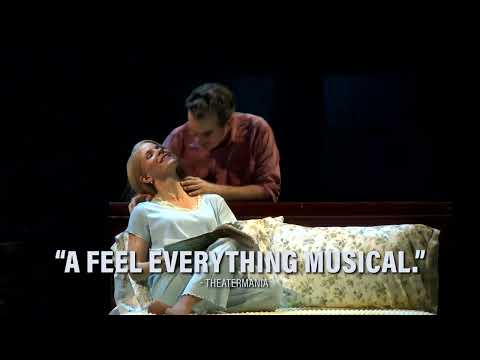
Review
How do you write lyrics about addiction without making them sound like advice? Days of Wine and Roses answers by refusing comfort. The words arrive as impulses, not lessons. The score leans into a mid-century jazz vocabulary, but it does not swing for fun. It swings because the characters do. Joe calls drinking “magic time,” and the phrase is a warning dressed as a pickup line.
Adam Guettel’s lyric writing does something risky here. It makes romance feel exact, then makes the wreckage feel exacter. The language is full of nouns you can touch, then suddenly it slips into abstraction when the mind starts slipping. That is the point. Alcohol becomes a grammar change. When Joe and Kirsten are high on possibility, the lyrics sit in social detail. When they are trapped, the lyric becomes sensation: shame, heat, fog, the body arguing with itself.
Craig Lucas’s book keeps the plot moving through a chain of small concessions. No single scene screams “downfall.” The music does not wait for a big moment either. It puts relapse and recovery on the same musical level, which is why the show can feel relentless. It runs without intermission, and the form matches the subject: one long line from the first drink to the last excuse.
How It Was Made
This musical is rooted in JP Miller’s teleplay and the 1962 film adaptation, but its theatre identity was built the slow way: through years of wanting it, then years of figuring out how to sing it. Vogue reports that Kelli O’Hara pitched Guettel the idea after Sweet Smell of Success, wanting another show with Brian d’Arcy James and more Guettel music. That conversation took more than two decades to reach an audience.
The public trail shows a careful rollout. Atlantic Theater Company hosted the world premiere in 2023, with Michael Greif directing and the original leads in place. By late 2023, Nonesuch had moved quickly to document the score in an original cast recording, releasing it digitally before the Broadway transfer. Playbill also notes Guettel sharing demos of key songs during the Off-Broadway run, a glimpse of a composer testing phrasing and pulse in real time.
If there is a “napkin story” here, it is not a cute anecdote. It is endurance. The show’s origin story is essentially patience colliding with obsession: a star, a composer, and a writer holding onto the same difficult material long enough to make it sing.
Key Tracks & Scenes
"Magic Time" (Joe)
- The Scene:
- An office party in late-1950s New York. The room is social light, all glass and laughter. Joe talks faster than he thinks. Kirsten watches, amused and cautious, then curious.
- Lyrical Meaning:
- Joe’s pitch turns alcohol into an identity. The lyric sells permission. That matters because it shows how addiction enters: as glamour, as wit, as belonging.
"The Story of the Atlantic Cable" (Kirsten)
- The Scene:
- Still near the beginning, with flirtation turning into connection. The lighting feels conversational, not romantic yet. Kirsten begins to reveal what she knows and what she wants to be seen knowing.
- Lyrical Meaning:
- This song is about communication and distance, which is the show’s private joke. Their future will be defined by failed connection. The lyric plants that seed while they are still bright.
"There Go I" (Kirsten)
- The Scene:
- Kirsten tries on her new life like a coat that fits too well. The stage picture often isolates her from the party energy, a single figure realizing she likes the edge.
- Lyrical Meaning:
- It is not a moral confession. It is a thrill report. The lyric frames risk as self-recognition, which explains why later sobriety feels, to her, like exile.
"Evanesce" (Joe and Kirsten)
- The Scene:
- A duet that moves like a quick drink: cold, then warm, then gone. The staging tends to compress space, bodies closer, the world quieter.
- Lyrical Meaning:
- The title is the trick. Love and intoxication share the same disappearing act. The lyric celebrates the vanishing, then makes you dread it.
"Underdeath" (Kirsten)
- The Scene:
- Later, with Kirsten alone caring for Lila. The apartment becomes a hazard. Light tightens. A small domestic space feels like a tunnel. In the story synopsis, she passes out with a lit cigarette and nearly burns the building.
- Lyrical Meaning:
- The lyric is bodily. It treats fear like weather. It is one of the score’s sharpest portraits of dissociation, the mind leaving before the body hits the floor.
"435" (Joe)
- The Scene:
- After a move back toward Kirsten’s family farm and an attempt at sobriety, Joe’s hidden bottle becomes a trapdoor. The world turns clinical. The temperature drops. He ends up in a drunk ward in the synopsis.
- Lyrical Meaning:
- The song is a number, not a metaphor, and that choice stings. Guettel’s lyric refuses poetic cover. Joe becomes a case file. That is how shame sounds when it stops pretending.
"Morton Salt Girl" (Kirsten)
- The Scene:
- Joe turns toward Alcoholics Anonymous. Kirsten hears it as judgment. The stage energy is confrontational, with humor curdling into accusation.
- Lyrical Meaning:
- The lyric is defensive and bright, a blade wrapped in a grin. Kirsten attacks the language of recovery because recovery threatens her one dependable feeling: the old intoxicated happiness.
"Forgiveness" (Joe)
- The Scene:
- Joe with his sponsor, trying to speak plainly. The light goes simple. No romance, no haze, just a man attempting honesty in a room that does not applaud it.
- Lyrical Meaning:
- This is the show’s cleanest lyric idea. Forgiveness is not granted by love alone. It is practiced, and it can fail. The song’s restraint is its heartbreak.
"The Letters" (Kirsten and Lila)
- The Scene:
- Lila waits for her mother to return. The stage often shifts into a memory-like focus, softer edges, time stretching. The story becomes intergenerational in a single breath.
- Lyrical Meaning:
- The lyric is about absence that keeps speaking. Even when Kirsten is offstage in the story, she is still writing the family’s emotional weather.
Live Updates
The 2023 world premiere at Atlantic and the 2024 Broadway engagement are now history, and the current life of Days of Wine and Roses is largely an audio one. The original cast recording is widely available, with Nonesuch documenting a digital release in December 2023 and a CD release in May 2024. That matters for lyric-driven shows because it freezes Guettel’s diction choices and the leads’ phrasing as a reference performance.
On the stage-rights side, Concord Theatricals lists the title for licensing with full show details, but also flags “Notify Me When Available,” a signal that many producers are watching the rights window. As of early 2026, major official pages emphasize licensing and perusal planning rather than announcing a booked national tour. For theatre companies programming 2025-2026 seasons, that usually reads as “not everywhere yet,” not “gone.”
Notes & Trivia
- Concord lists the running time at 105 minutes and notes there is no intermission.
- IBDB lists the Broadway run at Studio 54 with previews beginning January 6, 2024, opening January 28, and closing March 31, 2024.
- The Broadway setting on IBDB spans New York City, Long Island, and Houston in the late 1950s and early 1960s.
- Concord’s character breakdown frames Joe as newly home from Korea and Kirsten as an executive secretary, with a small ensemble covering many roles.
- Playbill reports Guettel released demos of six songs during the Atlantic run, including “Evanesce,” “Underdeath,” and “Forgiveness.”
- Nonesuch’s album page publishes the cast recording track list and lengths, including “Magic Time” at 5:51 and “435” at 3:44.
- Concord lists accolades including three 2024 Tony nominations, including Best Original Score.
Reception
Critics tended to agree on the big thing: the show does not make addiction neat. Some admired that severity. Some wanted more mess, more danger, less polish. That split is useful because it points to the show’s actual subject: not drinking, but the appeal of drinking, and the humiliation of needing it.
“Days of Wine and Roses, a musical treatment of alcoholism, raises a toast that ends in shattered glass.”
“As the show neared its end I wanted more of that thing Kirsten herself sings about: Danger.”
“The songbook is full of minor keys and suffused with a darkness.”
Over time, this musical may be judged less by box office and more by how often other performers want to step into these lyrics. It is a two-hander with teeth, and Guettel writes teeth that sing.
Quick Facts
- Title: Days of Wine and Roses: The Musical
- Year (your tag): 2023 (world premiere)
- Type: Full-length musical drama; adaptation (stage & screen)
- Music and lyrics: Adam Guettel
- Book: Craig Lucas
- Director (premiere and Broadway): Michael Greif
- Choreography: Sergio Trujillo and Karla Puno Garcia
- Broadway venue and dates: Studio 54; Jan 6, 2024 first preview; Jan 28 opening; Mar 31 closing
- Time period and setting: Late 1950s to early 1960s; New York City, Long Island, Houston
- Running time: 105 minutes; no intermission
- Selected notable placements (story spine): office party meet-cute (“Magic Time”); intoxicated courtship (“Evanesce”); childcare crisis (“Underdeath”); institutional bottom (“435”); AA friction (“Morton Salt Girl”); sponsor-facing sobriety attempt (“Forgiveness”); daughter’s waiting song (“The Letters”)
- Label and album status: Nonesuch Records; original cast recording released digitally Dec 15, 2023; CD available May 17, 2024
- Rights and licensing signal: Concord Theatricals listing includes “Notify Me When Available”
Frequently Asked Questions
- Is the Oscar-winning title song used in the musical?
- No. A Broadway guide notes Guettel did not incorporate the film’s Oscar-winning title song, instead writing a fully original score.
- Who wrote the lyrics?
- Adam Guettel wrote both the music and lyrics, with Craig Lucas writing the book.
- Is the show sung-through?
- It is song-forward and tightly scored, and it plays without an intermission. Some critics describe the writing as opera-like in how closely music and scene flow together.
- Where does “435” happen in the story?
- In the published story synopsis for the musical, Joe’s hidden drinking leads him to a drunk ward, and “435” marks that collapse with a blunt, clinical title.
- Is the cast recording available?
- Yes. Nonesuch released the original cast recording digitally in December 2023 and on CD in May 2024.
- Can my theatre license the show for 2025-2026?
- Concord Theatricals lists the title for licensing and provides show details, but also displays “Notify Me When Available,” so availability may depend on territory, dates, and the rights window.
Key Contributors
| Name | Role | Contribution |
|---|---|---|
| Adam Guettel | Composer and lyricist | Wrote a jazz-inflected score with lyrics that track intoxication, shame, and recovery as shifts in language. |
| Craig Lucas | Book writer | Adapted the teleplay and film into a stage structure built from incremental compromises and consequences. |
| Michael Greif | Director | Shaped the staging into a continuous, no-intermission pressure line. |
| Sergio Trujillo | Choreographer | Created movement vocabulary for social scenes that turn brittle as the story darkens. |
| Karla Puno Garcia | Choreography collaborator | Supported choreographic texture and transitions inside the show’s tight runtime. |
| Lizzie Clachan | Scenic designer | Built environments that can snap from party shine to private ruin. |
| Dede Ayite | Costume designer | Anchored the late-50s silhouette while tracking the characters’ fraying control. |
| Ben Stanton | Lighting designer | Used tightening focus and changing temperature to reflect the narrowing of options. |
| Kai Harada | Sound designer | Kept lyric clarity and sonic intimacy while the music grows more jagged. |
| Jamie Lawrence | Orchestrations (with Guettel) | Helped translate Guettel’s harmonic language into a stage palette that can feel both elegant and raw. |
| Kimberly Grigsby | Music direction | Led the musical performance practice documented on Nonesuch’s album credits. |
| Kelli O’Hara | Original leading performer (Kirsten) | Originated the role and helped bring the long-gestating project to production. |
| Brian d’Arcy James | Original leading performer (Joe) | Originated the role and anchors the score’s moral and emotional descent. |
Sources: Concord Theatricals, Nonesuch Records, IBDB, Playbill, Time Out New York, Vulture, The Guardian, Vogue, New York Theatre Guide, Entertainment Weekly.