Cry-Baby Lyrics – All Songs from the Musical
Cry-Baby Lyrics: Song List
- Act 1
- The Anti-Polio Picnic
- Watch Your Ass
- I'm Infected
- Squeaky Clean
- Nobody Gets Me
- Jukebox Jamboree
- A Whole Lot Worse
- Screw Loose
- Baby Baby Baby Baby Baby (Baby Baby)
-
Girl, Can I Kiss You...?
- I'm Infected (Reprise)
- You Can't Beat the System
- Act 2
- Misery, Agony, Helplessness, Hopelessness, Heartache and Woe
- It's All in My Head
- A Little Upset
- I Did Something Wrong...Once
- Thanks for the Nifty Country!
- This Amazing Offer
- Do That Again
-
Nothing Bad's Ever Gonna Happen Again
About the "Cry-Baby" Stage Show
This musical is the stage version of Cry-Baby motion picture, where a young Johnny Depp starred. The film has collected USD 8.2 million in its box office vs. USD 12 M of shooting expenditures. Its first premiere was in California in 2007, where a musical stayed for 2 months, running in front of Broadway. In Marquis Theatre, it opened at the beginning of the spring season and lasted for only 113 performances, including the preliminary ones. Because of its low popularity, there were also morning stagings, but still it was closed in July 2008. The director of the show was Mark Brokaw, choreography was done by R. Ashford. Recording of songs on CD occurred in 2015, 7 years after the closure of the show on Broadway.List of participants of the original show was the following: C. J. Hanke, R. Poe, J. Snyder, C. Balan, E. Stanley, T. Ross, A. Mauzey, L. Kohl, H. Harris, C. Jibson & C. Gregory II.
Missouri State saw the revival of the play in New Line Theatre in 2012. The composition of the cast was less than on Broadway – a total of 16 people and 6 members of the orchestra. Therefore, under the reduced number of participants, music and libretto have been rewritten. This production was the only professional, except for Broadway one, until 2015, when in Melbourne, FL theater company has released a new show, purchasing the rights to produce it. Hank Rion was director and choreographer was A. C. Manis.
Release date: 2008
"Cry-Baby" – The Musical Guide & Song Meanings
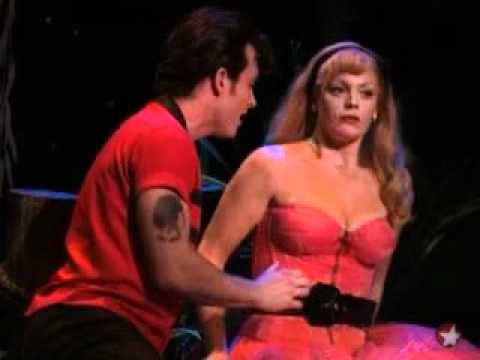
Review
Why does a show that begins with a public-health pep rally feel like a street fight in a poodle skirt? Because Cry-Baby treats “conformity” as a physical object, something you can smear, tear, or set on fire. The lyrics do the heavy lifting. They push the story forward by turning every social rule into a rhyme you can hiss, flirt with, or weaponize.
David Javerbaum’s lines are built for laughter that lands a beat late. That slight lag matters. It gives the jokes a sting, then leaves room for sincerity to slip in through the cracks. Adam Schlesinger’s score speaks fluent 1950s, but it never plays museum guide. Rockabilly grit, doo-wop gloss, hillbilly twang, all of it becomes character logic: Squares sing in straight lines; Drapes move in curves and collision. When Allison’s language starts bending, you can hear her future arriving before she admits it out loud.
The title is a trick, too. Cry-Baby is famous for a single tear, but the show’s emotional engine is infection: love as contamination, class as quarantine, desire as a rumor that spreads faster than the town can disinfect its image. The text keeps returning to purity, safety, and “good taste,” then laughs at the people who believe those words can protect them.
How It Was Made
Cry-Baby comes from a specific Broadway era: the post-Hairspray belief that John Waters could be a reliable pipeline, not just a cult event. The book team (Mark O’Donnell and Thomas Meehan) carried over the period satirist’s eye, but the songwriting assignment went to an unexpected pairing: Emmy-winning TV comedy writer David Javerbaum and pop craftsman Adam Schlesinger.
The most revealing origin detail is also the simplest. Javerbaum has said he was effectively “auditioning” to get hired, and one of the tryout songs was “Girl, Can I Kiss You with Tongue?” John Waters read it and decided that voice belonged in the room. That tells you what the show values: a lyric that can be vulgar and precise in the same breath, with character baked into the joke.
The development path was classic: out-of-town shaping in La Jolla, then the Marquis on Broadway. And like many satires, it had to choose what to sharpen and what to soften. That negotiation is audible in the score. The jokes are loud, but the craftsmanship is quiet: tight forms, clean internal rhymes, and pastiche that still carries plot information instead of decorative nostalgia.
Key Tracks & Scenes
"The Anti-Polio Picnic" (Company)
- The Scene:
- A Baltimore park turned vaccination carnival. Banners snap in bright daylight. Adults smile too hard. Teenagers line up as if “health” is a social ranking.
- Lyrical Meaning:
- Public safety becomes public performance. The lyric frames conformity as civic duty, which makes the Drapes’ arrival feel like a protest that doesn’t need a sign.
"I’m Infected" (Allison, Cry-Baby)
- The Scene:
- Amid the picnic chaos, Allison clocks Cry-Baby like a threat she wants to touch. The lighting shifts warmer, as if the air itself just changed. Mrs. Vernon-Williams’ fear hangs nearby like perfume.
- Lyrical Meaning:
- The show’s core metaphor lands early: desire as disease. It is funny, yes, but it also reveals how the Squares talk about outsiders. The lyric is romance and stigma braided together.
"Nobody Gets Me" (Cry-Baby)
- The Scene:
- A country club “Safety Awareness Day” gets crashed by Drapes. Cry-Baby’s invitation is rejected. The stage picture tightens, the room suddenly smaller than its money.
- Lyrical Meaning:
- It is the show’s plainest confession, which is why it works. Under the swagger, the lyric shows a kid trained to expect rejection. The toughness reads like self-defense, not style.
"Screw Loose" (Lenora)
- The Scene:
- Turkey Point’s “Jukebox Jamboree.” Dupree emcees. Lenora grabs the open mic with the focus of someone who has rehearsed her breakdown. A spotlight isolates her while the crowd becomes a wall of faces.
- Lyrical Meaning:
- Obsession is treated as comedy, then the comedy curdles. The lyric is a love song that keeps confessing the wrong thing. It is also a warning: this town manufactures extremes, then acts shocked when one shows up singing.
"Girl, Can I Kiss You with Tongue?" (Cry-Baby, Allison)
- The Scene:
- A secluded, romantic pocket of Turkey Point. The light goes dusk-blue. Their flirting is both innocent and aggressively specific, like teenagers inventing adulthood in real time.
- Lyrical Meaning:
- This is where the show’s lyric writing earns its nerve. The bluntness is the point: Cry-Baby offers honesty as rebellion, and Allison hears it as permission to stop pretending she is fine.
"You Can’t Beat the System" (Company)
- The Scene:
- The courthouse churns like a factory. Drapes are processed one by one. The lighting is harsh, official, and unflattering, a moral lecture made visible.
- Lyrical Meaning:
- Satire becomes procedure. The lyric reduces “justice” to a chorus line, which is exactly the accusation: the outcome is staged before anyone speaks.
"Misery, Agony, Helplessness, Hopelessness, Heartache and Woe" (Allison, Cry-Baby, Company)
- The Scene:
- Allison appears on a balcony in disarray while Cry-Baby sings from confinement. Two locations share one song. The split staging makes the distance physical, not just romantic.
- Lyrical Meaning:
- The word pile-up is a joke with real weight. The lyric turns teen melodrama into a litany, then admits the feelings are still true. That’s the show’s balancing act in miniature.
"Nothing Bad’s Ever Gonna Happen Again" (Company)
- The Scene:
- Star-Spangled Funland on the Fourth of July. Flags, fanfare, and a too-wide smile from the city itself. The finale lands like a group photo you do not trust.
- Lyrical Meaning:
- It is a closing number that insists on national innocence until the insistence becomes the joke. The lyric’s optimism is so forceful it reads as denial, which lets the satire exit with teeth.
Live Updates
London (Off West End): The show’s profile jumped in 2025 with a first professional UK run at Arcola Theatre in Hackney, scheduled from 6 March to 12 April 2025, directed by Mehmet Ergen. Reviews highlighted the production’s speed, wit, and the score’s genre-mash energy, with special attention paid to “Screw Loose” and the show’s closing irony.
Licensing momentum: Since MTI secured worldwide licensing rights (announced in 2015), Cry-Baby has increasingly lived as a regional and community-theatre title. That matters for the lyrics. The jokes about “polite society” tend to pop harder in smaller rooms where the audience can see itself reflected back.
2026 stage life: A growing number of organizations are listing 2026 productions, including Playhouse Stage Company at Cohoes Music Hall (April 10 to 26, 2026). Conservatoires and university groups are also programming the show, keeping it circulating through young performers who understand its teen politics from the inside.
Notes & Trivia
- Javerbaum has said he landed the job by “auditioning” with songs, including “Girl, Can I Kiss You with Tongue?” which John Waters singled out as the clincher.
- The Broadway production opened April 24, 2008 and closed June 22, 2008 at the Marquis Theatre.
- A full cast recording arrived years later: released digitally on September 25, 2015 and on CD October 9, 2015 (Broadway Records).
- MTI announced worldwide licensing in 2015, accelerating the musical’s afterlife beyond Broadway.
- The show begins at a vaccination carnival, making “I’m Infected” a joke with an unusually sharp cultural target: fear framed as hygiene.
- Lenora’s “Screw Loose” is staged as a spotlight confession at Turkey Point’s open mic, a comedic number that doubles as a character study in isolation.
- The finale’s patriotism is written as a chant. Its “everything’s fine” posture is the punchline.
Reception
In 2008, critics split over whether the show’s retro sound and rude jokes added up to a real Waters bite or a carefully packaged imitation. That argument has aged into something more interesting. When the piece returns now, especially in intimate productions, its lyric strategy reads clearer: it ridicules the language of respectability because that language is how the town enforces class boundaries.
“Without flavor: sweet, sour, salty, putrid or otherwise.”
“Campy, cynical, totally insincere and fabulously well crafted. And funny.”
“A firecracker of a show.”
What changed? Less than you might think. The show did not rewrite itself into seriousness. Audiences simply got better at hearing satire as structure, not garnish. The Arcola run, in particular, drew praise for leaning into the political unease under the jokes: American certainty sung at full volume until it starts sounding like panic.
Quick Facts
- Title: Cry-Baby
- Year: Broadway opening 2008 (after a 2007 La Jolla premiere)
- Type: Rockabilly and doo-wop flavored musical comedy with satire
- Book: Mark O’Donnell, Thomas Meehan
- Music: Adam Schlesinger
- Lyrics: David Javerbaum
- Based on: John Waters’ 1990 film Cry-Baby
- Original Broadway theatre: Marquis Theatre
- Broadway run: Opened April 24, 2008; closed June 22, 2008
- Cast recording: Cry-Baby: The Musical (Original Studio Cast Recording) (digital September 25, 2015; CD October 9, 2015)
- Label: Broadway Records
- Selected notable placements: “The Anti-Polio Picnic” (opening carnival); “Screw Loose” (Turkey Point open mic); “You Can’t Beat the System” (trial sequence); “Nothing Bad’s Ever Gonna Happen Again” (Fourth of July finale)
Frequently Asked Questions
- Is there an official cast recording?
- Yes. The official recording was released in 2015 by Broadway Records, years after the Broadway run.
- Who wrote the lyrics and music?
- David Javerbaum wrote the lyrics and Adam Schlesinger wrote the music, credited together as songwriters.
- Is the musical the same story as the 1990 film?
- It follows the same central romance and the Squares vs. Drapes conflict, but the stage version leans harder into song-driven satire and ensemble commentary.
- Why does the show keep returning to the idea of “infection”?
- It is the show’s main metaphor. Love is framed the way polite society frames outsiders: as something contagious, embarrassing, and dangerous to reputation.
- Is there a pro-shot or filmed stage version?
- No widely released pro-shot is considered standard viewing for the public as of early 2026. Most fans rely on the cast recording and licensed productions.
- What are the best “entry point” songs if I’m new?
- Try “The Anti-Polio Picnic,” “I’m Infected,” “Screw Loose,” and “Nothing Bad’s Ever Gonna Happen Again.” They map the show’s tone from cute to cruel.
Key Contributors
| Name | Role | Contribution |
|---|---|---|
| David Javerbaum | Lyricist / Songwriter | Character-forward comedy lyrics; helped define the show’s “infection” motif and satirical bite. |
| Adam Schlesinger | Composer / Songwriter | Retro-informed score (rockabilly, doo-wop, blues) with pop-tight structure and pacing. |
| Mark O’Donnell | Book writer | Built the stage story engine that turns teen rebellion into civic satire. |
| Thomas Meehan | Book writer | Co-shaped the book’s joke density and period framing. |
| Mark Brokaw | Director (Broadway) | Helmed the Broadway production at the Marquis Theatre. |
| Rob Ashford | Choreographer | Dance language that escalates rivalry into athletic comedy. |
| Steven M. Gold | Cast recording producer | Produced the 2015 original studio cast recording. |
| Mehmet Ergen | Director (London 2025) | Directed the Arcola Theatre production that reintroduced the show to UK critics and audiences. |
Sources: Music Theatre International (MTI), Playbill, IBDB, La Jolla Playhouse, The Harvard Crimson, The Guardian, What’s On Stage, West End Theatre, Broadway Records, Apple Music, New Line Theatre.