Contact Lyrics – All Songs from the Musical
Contact Lyrics: Song List
- My Heart Stood Still
- Anitra's Dance
- Waltz from Eugene Onegin, Op. 24
- L'Arle'sienne Suite No. 2/IV. Farandole. Allegro deciso (Tempo di Marcia) - Allegro vivo e deciso (I
- You're Nobody Till Somebody Loves You
- Put A Lid On It
- Sweet Lorraine
- Runaround Sue
- Beyond the Sea
- See What I Mean?
- Simply Irresistible
- Do You Wanna Dance?
- Topsy
- Sing, Sing, Sing (With A Swing) (Parts 1 & 2)
About the "Contact" Stage Show
Susan Stroman has developed this musical, with the help of her husband, Mike Ockrent, together with the friend John Weidman. It was on Broadway, and Weidman wrote the libretto for this, if it notion applies to the concept of this musical, which is completely danceable, almost without words. Staged on Broadway and beyond its borders, it included three separate dancing acts, each of which was the exact size of one act. Stroman was also a choreographer & director for it in 1999 ÷ 2002. The premiere took place at the Mitzi E. Newhouse, in beginning of the fall season of 1999, in September. Before running, there were workshops, where the concept was finalized. After running, the show shifter to Broadway in March 2000 and held there for an impressive 1010 performances.In 2000, the show received a Tony Award for the best performance of the season. At the same time, the very appearance of this show and this award has affected the fact that in the framework of Tony, had been introduced a new category named Best Special Theatrical Event, which since 2001 was given to unusual shows on Broadway, which couldn’t been characterized as classic musicals (they are containing lyrics, songs, music and dance). Here, of all 4 components, are only the last two, in connection with which the award was widely discussed as controversial.
London's West End has taken the show in Queen's Theatre, at the beginning of the fall theater season of 2002, in October, and continued it there until May of the next year. The international tour began in May 2001 and ended in Toronto in November 2002.
Regional production had appearance in: Norfolk, Virginia (2006); Beverly, Massachusetts (2008); and international – Budapest, Hungary (2009).
Release date: 2000
"Contact" – The Musical Guide & Song Meanings
Review: when a “lyrics page” has to listen with its eyes
What does it mean to look up “lyrics” for a Tony-winning musical where nobody sings? “Contact” forces that question because its text lives in borrowed songs, in classical recordings with no words, and in the book’s quiet scaffolding. Susan Stroman and John Weidman built a dance play that behaves like a jukebox musical, then refuses the comfort of a jukebox plot. The “meaning” is the edit: Rodgers and Hart flirtation in an 18th-century clearing, Grieg and Tchaikovsky turning domestic dread into motion, and swing-era bravado turning loneliness into a contact sport.
The show’s style is a collision of vocabularies. Big-band punch lines. Pop seduction. Orchestral sheen. And underneath, Stroman’s choreography translating lyrical intent into physical choices: who initiates, who withdraws, who breaks eye contact, who gets spun and who gets dropped. In “Contact,” the album becomes a souvenir of a night where the real hook is emotional timing. A chorus lyric can feel like a taunt when it lands on a character who cannot speak. A violin can read like a confession when it arrives in the middle of a lie.
How it was made
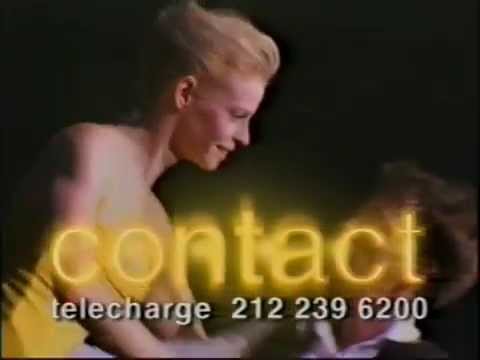
The origin story is unusually concrete. Stroman has described walking into a Manhattan meat-packing district dance club and spotting a woman in a yellow dress who danced with different partners all night. From the sidelines, Stroman thought the woman was going to change someone’s life. That image becomes the show’s gravitational center, and the Girl in the Yellow Dress becomes the silent catalyst across the evening.
Then there’s the structural trick. The creators played with the word “swing,” treating it as a verb, a style, and a moral condition. A Fragonard painting helped spark the first segment, which turns flirtation into choreography on a literal swing. By the time the show reaches its modern-nightclub third act, “swing” has shifted from elegance to survival: bodies trying to find a partner before they fall.
Key tracks & scenes
"My Heart Stood Still" (performed on the album by Stéphane Grappelli)
- The Scene:
- “Swinging,” in an 18th-century forest clearing. A swing slices the space. The stage picture starts like a pastoral joke, then tightens into a game of access. The music is a jazz violin glide, warm and amused, as if romance were an agreed-upon sport.
- Lyrical Meaning:
- Rodgers and Hart’s title becomes the show’s first thesis. “My heart stood still” reads as flirtation, then as alarm. In this piece, attraction is polite until it isn’t. The “lyrics” function like subtext you already know, and Stroman exploits that familiarity to make the physical bargains feel sharper.
"Anitra's Dance" (instrumental, Grieg)
- The Scene:
- “Did You Move?,” inside a Queens Italian restaurant around 1954. Tables frame a marriage that has turned into a performance for other people. The wife’s body keeps escaping the room even while her chair stays put, until the choreography snaps her into the open.
- Lyrical Meaning:
- There are no words, so the “lyrics” are impulse. The melody reads like a smile with teeth. A critic’s image of Karen Ziemba bursting into wild abandon during this cue is the point: repression turns into comedy, then into panic, then into need.
"Waltz Eugene" (instrumental, Tchaikovsky)
- The Scene:
- Same restaurant, same couple, but the room changes temperature. The waltz brings an illusion of elegance, a formal pattern that the husband cannot keep without controlling the partner.
- Lyrical Meaning:
- The waltz is a script. It promises order. In “Contact,” it exposes the cruelty of order when one person is doing the counting and the other is doing the swallowing.
"You're Nobody Till Somebody Loves You" (newly recorded for the album; sung by Boyd Gaines)
- The Scene:
- Beginning of the third segment, “Contact.” The ad executive is raw, and the room around him has the restless glow of night life. The number lands like a public service announcement delivered at the worst possible time.
- Lyrical Meaning:
- This is the show’s bluntest lyric thesis: identity as a social transaction. On the cast album, the track exists because the production could not clear Dean Martin’s recording, so the creators recorded Boyd Gaines instead. That behind-the-scenes fact mirrors the show’s theme. Even the song had to find a new body to speak through.
"Put a Lid on It" (Squirrel Nut Zippers)
- The Scene:
- The billiard parlor sequence. The Girl in the Yellow Dress arrives and the room tilts toward her. The lighting feels club-tight, faces half-seen, everyone pretending they’re casual while watching who gets chosen.
- Lyrical Meaning:
- The lyric is comic pressure. “Put a lid on it” is what the world tells longing people when they start leaking need. Stroman uses the song to stage a community that polices emotion while feeding on it.
"Simply Irresistible" (Robert Palmer)
- The Scene:
- The third segment’s seduction engine. The groove is glossy, and the choreography leans into swagger, spins, and risk, the kind of dancing that looks like confidence even when it’s desperation.
- Lyrical Meaning:
- Palmer’s lyric is a sales pitch, which makes it perfect for an advertising man. The song flatters the fantasy that charisma fixes everything. The show keeps asking what happens after the music stops and the bill comes due.
"Sing Sing Sing" (Benny Goodman and His Orchestra)
- The Scene:
- The night reaches its peak. The ensemble becomes a storm of bodies, a swing-era riot where you can’t tell if people are celebrating or trying to outrun themselves.
- Lyrical Meaning:
- Even without lyrics, the track shouts. It’s the show’s loudest argument that connection is physical labor. The rhythm becomes a dare: keep up, or get left behind.
Live updates (2025/2026)
As of January 23, 2026, “Contact” is not among the Broadway titles broadly reported as headed to Broadway for the 2025–2026 season in major Broadway planning roundups. The show’s life right now is less about an active commercial run and more about availability: the album remains streamable on major platforms, and clips circulate from televised performances and archival-adjacent uploads.
If you are hunting for the closest thing to “the full show,” the major historic artifact remains the PBS “Live from Lincoln Center” broadcast of the final Broadway performance on September 1, 2002, hosted by Beverly Sills. That broadcast is often referenced, has won Emmy recognition as a classical music-dance program, and continues to be discussed by fans because official, easy access has been inconsistent over the years.
Production-wise, “Contact” is famously hard to replicate cleanly because its dramaturgy is glued to specific recordings. Even the cast album had clearance issues: RCA could not clear the Dean Martin recording of “You’re Nobody Till Somebody Loves You,” which is why Boyd Gaines recorded a replacement. That single anecdote is a miniature of the larger problem. Any new staging must navigate “grand rights” for dramatic uses of music, track by track, which can make licensing slower and more expensive than a typical musical with an in-house score.
Notes & trivia
- The show won the Tony Award for Best Musical, a result that sparked industry debate because the production used pre-existing recordings and had no live singing.
- The Broadway run at the Vivian Beaumont Theatre ended on September 1, 2002, and the closing performance was broadcast live on PBS as part of “Live from Lincoln Center,” hosted by Beverly Sills.
- The “Live from Lincoln Center” presentation of “Contact” is credited with an Emmy win in the classical music-dance category.
- The album “Contact: Music from the Broadway Show” was released March 6, 2001 on RCA Victor as a compilation of the recordings used onstage.
- The album includes one newly created element: Boyd Gaines recorded “You’re Nobody Till Somebody Loves You” because the Dean Martin recording could not be cleared for the CD.
- The show’s initiating image was real: Stroman saw a woman in a yellow dress in a Manhattan swing club and built a whole theatrical language around the idea of one dancer changing someone’s life.
- The first segment’s conceptual spark included Fragonard’s “The Swing,” folded into the creators’ obsession with the word “swing” as theme, action, and sound.
Reception
“This inventive dance play by John Weidman and Susan Stroman has made a terrific transition to Broadway.”
“The story is both repetitious and predictable, but Stroman makes it emotionally involving and choreographically absorbing.”
“Contact achieves what few musicals do these days: a euphoric connection between the audience and the stage.”
Put together, the critical record is unusually consistent about one thing: the piece works because it delivers feeling through motion. The skepticism tends to circle taxonomy, not impact. Is it a musical, a dance play, a ballet with jokes, a jukebox show with no singer? The audience reaction it banked was simpler: a night where a familiar lyric lands in an unfamiliar body, and you suddenly hear it as new.
Quick facts
- Title: Contact
- Year: Premiered at Lincoln Center Theater (Newhouse) in 1999; opened on Broadway in 2000
- Type: Dance musical / “dance play”
- Conceived / Directed / Choreographed: Susan Stroman
- Book: John Weidman
- Music / Lyrics: Various (pre-existing recordings)
- Structure: Three segments: “Swinging,” “Did You Move?,” “Contact”
- Selected notable placements: “My Heart Stood Still” (Grappelli) anchors “Swinging”; Grieg/Tchaikovsky/Bizet shape “Did You Move?”; the third segment leans on Goodman, Palmer, Squirrel Nut Zippers, Dion, The Beach Boys, and others
- Album: “Contact (Music from the Broadway Show)”
- Album label / release: RCA Victor, March 6, 2001
- Album availability: Streaming on major platforms (Apple Music, Spotify), plus retail listings via major music storefronts
- Filmed performance context: Broadcast on PBS “Live from Lincoln Center” (September 1, 2002), associated with Emmy recognition in classical music-dance programming
Frequently asked questions
- Does “Contact” have original songs or original lyrics?
- No. The show is built from previously released recordings, so the “lyrics” come from older songs repurposed in new dramatic contexts. The cast album is largely a curated compilation of those tracks.
- Why did it win Best Musical if nobody sings live?
- That debate was central to its awards season. Many admired how completely it used dance and structure to tell story and generate emotion, while others questioned category fit. The controversy is part of the show’s legacy.
- Who is the Girl in the Yellow Dress?
- She is the third segment’s silent catalyst, inspired by a real dancer Stroman observed in a Manhattan club. In performance, she becomes the embodiment of possibility, a person who makes other people move.
- Is there an official filmed version I can stream easily?
- The most-cited filmed artifact is the PBS “Live from Lincoln Center” broadcast of the Broadway closing performance on September 1, 2002. Availability can vary over time, and many viewers encounter it through clips and uploads rather than a permanent commercial release.
- Where can I listen to the soundtrack album?
- The album “Contact (Music from the Broadway Show)” is available on major streaming services and is documented across standard music databases and storefronts.
- Can my theatre license “Contact”?
- It can be complicated. Because the show’s identity depends on specific recordings and dramatic uses of music, rights clearance can be far more complex than a typical musical. Even the commercial album faced clearance hurdles, which hints at what secondary productions may need to solve.
Key contributors
| Name | Role | Contribution |
|---|---|---|
| Susan Stroman | Conceiver, Director, Choreographer | Created the three-part structure; staged choreography to pre-existing recordings; defined the “Girl in the Yellow Dress” engine. |
| John Weidman | Book | Built the dramatic framework and scene logic that lets collage music read like character. |
| Boyd Gaines | Performer | Originated the ad executive in “Contact”; recorded “You’re Nobody Till Somebody Loves You” for the album when the intended recording could not be cleared. |
| Jay David Saks | Record producer (track-specific) | Produced the newly recorded “You’re Nobody Till Somebody Loves You” for the compilation album. |
| Doug Besterman | Conductor / Arranger (track-specific) | Led and arranged the big-band-style studio version of “You’re Nobody Till Somebody Loves You.” |
| Lincoln Center Theater / PBS | Broadcast partners | Presented the “Live from Lincoln Center” closing-performance broadcast, preserving the work in a widely referenced filmed form. |
Sources: Playbill; Variety; New York Magazine; Masterworks Broadway; SusanStroman.com; Lincoln Center Theater; The Television Academy; Apple Music; Spotify; Amazon Music.