Class Act, A Lyrics – All Songs from the Musical
Class Act, A Lyrics: Song List
- ACT 1
-
Light on My Feet
- The Fountain in the Garden
-
One More Beautiful Song
- Fridays at Four
- Bobby's Son
- Charm Song
-
Paris Through The Window
-
Mona
-
Under Separate Cover
- Don't Do It Again
-
Gauguin's Shoes
-
Don't Do It Again (Reprise)
-
Follow Your Star
- The next best thing to love
- ACT 2
-
Better
-
Scintillating Sophie
-
The Next Best Thing To Love
-
Broadway Boogie Woogie
-
Better (Reprise)
- I Choose You
-
The Nightmare
- Say Something Funny
-
When the Dawn Breaks
-
Self Portrait
About the "Class Act, A" Stage Show
Initially, off-Broadway, a musical played on the Manhattan Theatre Club, opened in October and closed in December 2000. It stayed on the stage only half of the season. Lonny Price, who in real life was a friend of deceased Edward Kleban, acted the leading role in it, and also was the director of this musical. The actors were: D. Hibbard, R. Wills, R. Graff, N. Anderson, J. Freeman, J. Murney & C. Carmello.This production went on Broadway one year after Millennium, at the beginning of the summer season, in March, where in Ambassador Theatre it lasted for thirty previews and 105 regular performances with such actors: N. Anderson, P. Quinn, D. Hibbard, D. Bullock, R. Graff, J. Blumenkrantz, L. Price & S. Ramirez.
The premiere in Toronto was in 2009 to commemorate the thirties anniversary of the Civic Light Opera Company. In this version of the play the actors were: L. Gibbs, J. Cascone, S. Douglas, C. Moro-Dalicandro, J. Lennick, D. Haines, E. Botosan & J. Kennedy. A distinctive feature of this musical is that in all the productions, wherever they held, leading actor was also a director. In this case, the director was Joe Cascone. Lesley Ansell was responsible for the choreography, and Paul Christman was the musical director. In this setting, the song Don’t Do It Again was lost.
Recording of music on CD was made in February 2001 by RCA Victor Broadway.
Release date: 2001
"A Class Act" – The Musical Guide & Song Meanings
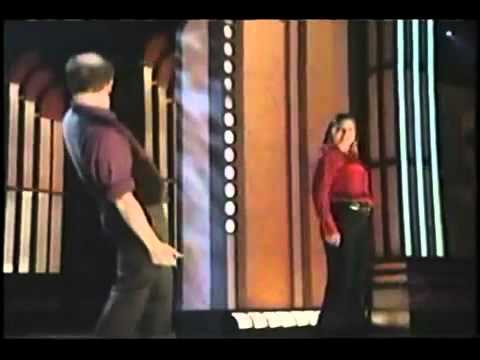
Review
What if the final audition of your life happened after you died. “A Class Act” (Broadway, 2001) opens as a memorial and plays like an argument with time. Ed Kleban, the late composer-lyricist, watches his friends tell stories about him, then fights back by dragging the evening in reverse. The show’s big formal trick, time moving backwards, is not a gimmick. It is a lyrical thesis. Regret makes people reorder facts until they can live with them, and theatre people do that with songs.
Kleban’s writing sits in a tricky pocket. It wants to be clever, then it suddenly wants to be naked. The lyrics are full of internal pivots: a funny setup that ends on a bruise, a bright rhyme that becomes a confession. Because the score was assembled from songs written for other projects, the book has to justify the shifts, and it does by turning each number into evidence. A class critique becomes a relationship scene. A nightclub fantasy becomes a career demand. A love song becomes a self-portrait with the lights turned up. The show is, quietly, about how artists build armor out of craft.
How It Was Made
The origin story is unusually literal. Kleban left behind a trunk of songs when he died in 1987, and the first problem was not “where do we stage this” but “what do we keep.” Linda Kline and Lonny Price spent years cutting, reshaping, and deciding how close they dared to get to the real person. At one point, the central character was not even named Ed. That changed when a producer pushed them to stop protecting the material and let Kleban be the subject, not the subtext.
Once they committed to that, the show found its frame: friends at a memorial, Kleban hovering nearby, and the songwriting workshop that trained so many of them. That workshop setting matters because it is where the lyrics sharpen. “A Class Act” is not a saintly tribute. It keeps the prickliness in view. Then it uses song to reveal what was underneath it: anxiety, ambition, and a need to be understood on his own terms.
Key Tracks & Scenes
"Light on My Feet" (Ed and Company)
- The Scene:
- The Shubert stage, 1988. A memorial service held on the very boards where “A Chorus Line” is playing. Work lights feel too honest, then the theatre glow returns as Ed appears and starts singing, expecting applause that will not come.
- Lyrical Meaning:
- The lyric is an audition as greeting. It announces a man who still believes charm can control the room. The song’s buoyancy reads differently once the memorial speeches turn critical.
"One More Beautiful Song" (Ed and Sophie)
- The Scene:
- Back in college, in a mental hospital. Sophie visits. Ed finds a piano like a life raft. The lighting narrows, soft and clinical, then warms as he plays something new for her.
- Lyrical Meaning:
- This is the show’s core argument: writing is not decoration, it is survival. The lyric treats music as a decision to keep going, one more day, one more page.
"Charm Song" (Lehman and Company)
- The Scene:
- Friday at four in the workshop. A teacher who knows exactly how ruthless the business is asks the students to write something that wins a stranger fast. It plays in bright rehearsal light, with the vibe of a masterclass and a warning.
- Lyrical Meaning:
- The lyric is instruction that becomes philosophy. Charm is craft, but it is also a mask. The song gives the show permission to be funny while describing a system that can be cruel.
"Paris Through the Window" (Ed, Bobby, and Charley)
- The Scene:
- Ed presents a song inspired by painting and travel, then faces the workshop’s blunt response. The atmosphere turns competitive. A spotlight isolates him at the piano as if the room is grading his soul.
- Lyrical Meaning:
- The lyric tries to turn memory into art, then discovers that art gets judged. It is an early glimpse of Kleban’s tension: the desire to share, and the fear of being misunderstood.
"Under Separate Cover" (Lucy, Sophie, and Ed)
- The Scene:
- A song about divorce lands like a late-night confession. The stage picture is spare, three people in their own pools of light, speaking past each other until the harmonies force them to listen.
- Lyrical Meaning:
- The lyric is adult pain without melodrama. It is about paper and bedrooms and emotional logistics. In this show, it also functions as Ed’s education in what love costs when careers take over.
"Broadway Boogie Woogie" (Lucy)
- The Scene:
- Central Park calm snaps into show-business momentum. Lucy pushes Ed to audition material for Michael Bennett. She sings a dancer’s number, playful and sharp, like a pitch delivered with a grin.
- Lyrical Meaning:
- The lyric sells Broadway as motion, hustle, and appetite. It also exposes Ed’s dilemma: he wants to write the whole thing, not just the words, and that pride becomes both virtue and obstacle.
"Better" (Ed and Company)
- The Scene:
- Act II opens with a showstopper that feels like the room finally handing Ed the microphone. The lighting turns theatrical on purpose, a bright wash that suggests the line between performance and self-justification has disappeared.
- Lyrical Meaning:
- “Better” is ambition with teeth. It is also a plea. The lyric keeps promising improvement, but the subtext is fear: that “better” will never be enough, and that the goalposts will always move.
"Self Portrait" (Ed)
- The Scene:
- Near the end, the show stops pretending it is only about theatre craft. Ed steps into the clearest light of the night. The ensemble becomes witnesses rather than characters.
- Lyrical Meaning:
- The lyric is not flattering. That is why it lands. It is a list of contradictions that refuses to resolve: generosity and vanity, sweetness and spite, discipline and self-sabotage.
Live Updates
In 2025 and 2026, “A Class Act” is not a touring brand so much as a repertory favorite. It lives through licensing, especially for companies that want a small cast and a big subject. Concord Theatricals continues to list the show for licensing, including its 4 women and 4 men performance setup, which keeps it practical for regional theatres and conservatories.
On the album side, the Original Cast Recording remains easy to find on major platforms. The official album pages keep the 2001 release intact, and Masterworks Broadway’s YouTube album playlist was refreshed in late 2025, a quiet signal that the recording still has listener demand.
If you are tracking productions, look for announcements from summer-stock and regional companies rather than Broadway rumor cycles. The title tends to appear when a theatre wants a backstage story that is frank about mental health, mentorship, and the bruising economics of wanting to be taken seriously.
Notes & Trivia
- The Broadway production opened March 11, 2001 at the Ambassador Theatre.
- It followed a 2000 Off-Broadway run, with Lonny Price directing and also playing Ed.
- The Original Cast Recording was released February 20, 2001 and runs 19 tracks.
- Masterworks Broadway’s official synopsis places the opening memorial on the Shubert stage, where “A Chorus Line” is playing in the world of the show.
- IBDB credits list additional lyrics on specific songs by Brian Stein and Glenn Slater, a reminder that this “Kleban score” still required careful finishing work.
- The show earned multiple 2001 Tony nominations, including Best Musical, Best Book, and Best Original Score.
- One of the score’s signature numbers, “Better,” is tied to the story of Barbra Streisand recording it and not releasing it, a detail the show turns into emotional fuel.
Reception
“FIRST, there were the songs. Composer-lyricist Ed Kleban left a trunkful of them when he died in 1987.”
“Flaster has cast the piece exceptionally well, with actors of strikingly different types.”
“Highlights of the score... include ‘Under Separate Cover’... and ‘Better,’ a gem recorded by Barbra Streisand but never released.”
Early responses often hinged on the same question the show dramatizes: is the subject lovable enough to hold the room. Later receptions, especially in regional revivals, tend to embrace the sharper edges as the point. The musical has aged into a craft piece, admired by writers and performers who recognize the workshop scenes as documentary with punchlines.
Quick Facts
- Title: A Class Act
- Broadway year: 2001 (opened March 11, 2001)
- Type: Bio-musical built from existing songs
- Music & lyrics: Edward Kleban
- Book: Linda Kline, Lonny Price
- Structure: Memorial frame story with time running backwards
- Selected notable placements: “Light on My Feet” at the Shubert memorial; workshop sequences (“Charm Song,” “Paris Through the Window”); Act II kick-off with “Better”
- Original Cast Recording: Released February 20, 2001; 19 tracks; widely available on streaming services
- Licensing: Available via Concord Theatricals
- Awards notes: Multiple 2001 Tony nominations (including Best Musical, Best Book, Best Original Score)
Frequently Asked Questions
- Is “A Class Act” a jukebox musical?
- It is closer to a biography built from a songwriter’s catalog. The score uses songs Edward Kleban wrote for other projects, then frames them inside scenes about his life.
- Why does the show move backwards in time?
- The reverse structure turns memory into drama. Each earlier scene recontextualizes what the memorial speakers think they know about Ed.
- Is the show connected to the BMI Lehman Engel Musical Theatre Workshop?
- Yes. The workshop appears as a key setting, and Kleban’s growth is shown through class critiques and mentorship.
- What is the most important song in the score?
- Many productions treat “One More Beautiful Song” as the emotional center and “Better” as the thesis statement about ambition and fear.
- Is there a cast recording?
- Yes. The Original Cast Recording was released in 2001 and remains available on major streaming platforms.
- Can theatres still license “A Class Act”?
- Yes. Concord Theatricals lists licensing availability and production details.
Key Contributors
| Name | Role | Contribution |
|---|---|---|
| Edward Kleban | Composer-Lyricist | Wrote the songs that form the score; the narrative centers on his life and creative drive. |
| Linda Kline | Bookwriter | Co-wrote the book and helped source and shape songs into dramatic scenes. |
| Lonny Price | Bookwriter / Director / Original Ed | Co-wrote the book, directed, and originated Ed in the New York productions. |
| Larry Hochman | Orchestrations | Orchestrations credited for the Broadway production (as listed by IBDB). |
| David Loud | Musical Director | Musical direction credit in Broadway production records. |
| Todd Ellison | Incidental Music | Additional music credited in Broadway production records. |
| Lehman Engel | Mentor figure (subject and character) | Leader of the musical theatre workshop that shaped Kleban and other writers. |
Sources: Concord Theatricals, Masterworks Broadway, IBDB, Playbill, BMI, The Washington Post, TheaterMania, Theatre In Chicago, Apple Music, Spotify, YouTube.