Civil War: The Complete Work, The Lyrics – All Songs from the Musical
Civil War: The Complete Work, The Lyrics: Song List
- Disk 1
- Prologue
- Brother, My Brother
- Lincoln: The Better Angels Of Our Nature
- By The Sword/Sons Of Dixie
- Tell My Father
- My Name Is Fredrick Douglass
- Freedom's Child
- Missing You (My Bill)
- If Prayin' Were Horses
- Virginia
- The Day The Sun Stood Still
- Oh, Be Joyful!
- Frederick Douglass: The Destiny Of America
- Father How Long?
- Reprise: Brother, My Brother
- A Nurse's Diary
- I Never Knew His Name
- Still I Rise
- River Jordan
- Disk 2
- Lincoln: The Bottom Is Out Of The Tub
- How Many Devils?
- Old Gray Coat
- With These Hands
- The White House At Night
- A Candle In The Window
- Greenback
- Sojourner Truth: Ain't I A Woman?
-
Someday
-
Regimental Drummer
- I'll Never Pass This Way Again
- Lincoln: Letter To Mrs. Bixby
-
Five Boys
-
Judgment Day
- Sarah
- The Honor Of Your Name
- Northbound Train
- Last Waltz For Dixie
- In Great Deeds
- For The Glory
About the "Civil War: The Complete Work, The" Stage Show
The Civil War: The Complete Work.
Overview.
The Civil War is a musical by Frank Wildhorn, Gregory Boyd, and Jack Murphy. It delves into the American Civil War, presenting perspectives from Union and Confederate soldiers, as well as enslaved individuals. The musical blends gospel, folk, country, rock, and rhythm and blues to convey its narrative.
Production History.
The musical premiered at Houston's Alley Theatre on September 16, 1998. It featured Linda Eder as Hanna Hopes and Keith Byron Kirk as Frederick Douglass. Following its initial run, it opened on Broadway at the St. James Theatre on April 22, 1999, closing after 61 performances. The Broadway cast included Beth Leavel as Mabel/Mrs. Bixby and Matt Bogart as Private Sam Taylor.
Concept Album: The Complete Work.
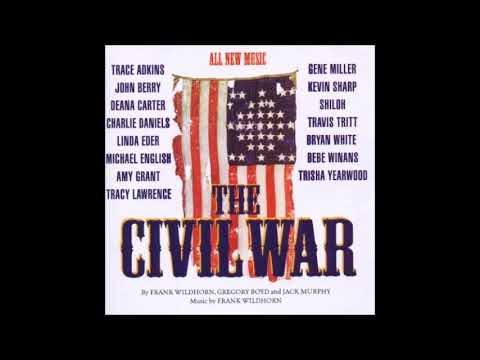
In 1999, a studio cast album titled The Civil War: The Complete Work was released. This two-disc set features 39 tracks, combining songs and narratives to capture the era's essence. Notable contributors include James Garner, Danny Glover, and Maya Angelou, who provide spoken word segments. Musical performances by artists such as Linda Eder, Hootie & the Blowfish, and Travis Tritt enrich the album.
Track Highlights.
Some standout tracks from the album include:
- "Brother, My Brother" – Michael Lanning.
- "Tell My Father" – Kevin Sharp.
- "Freedom's Child" – Hootie & the Blowfish.
- "Missing You (My Bill)" – Deana Carter.
- "The Day the Sun Stood Still" – Travis Tritt.
These songs, among others, offer a poignant exploration of the Civil War's emotional landscape.
Reception.
The album has been praised for its ambitious scope and emotional depth. One reviewer noted, "The Civil War is undoubtedly an awesome and moving listening experience. I was blown away by some of the material, and the whole collection is extremely entertaining."
Legacy.
While the stage production had a brief Broadway run, "The Civil War: The Complete Work" album stands as a testament to the creators' dedication to capturing a pivotal moment in American history through music and narrative. Its diverse musical styles and contributions from renowned artists make it a significant work in musical theater.
Release date: 1999
"The Civil War: The Complete Work" – The Musical Guide & Song Meanings
Review
This album is a strange promise. It calls itself “The Complete Work,” yet it behaves like a national scrapbook. Thirty-nine tracks. Two discs. A run time long enough to feel like an argument you cannot walk away from. Onstage, The Civil War is built as a dramatic theatrical concert. On record, it becomes something else: a concept album with Broadway muscle and pop-market instincts, where narration sits beside gospel, then a country ballad, then a rock-leaning anthem, all under the same historical sky.
Jack Murphy’s lyric writing is doing two jobs at once. It speaks in the plain grammar of letters and testimony, because war does that to language. It also keeps reaching for hooks, because an album needs memory, not just information. You can hear the tension in the best numbers. The words want to be specific, but the format keeps pulling them toward emblem. “Brother” becomes a headline. “Honor” becomes a family heirloom. “Freedom” becomes a chant that has to work on a stage and in a car stereo.
Frank Wildhorn’s score leans hard into vernacular styles. The point is accessibility, but the cost is a kind of emotional compression. The album is at its most effective when the lyric is allowed to stay small inside the big frame: one voice, one letter, one final request. When it swells into anthem too quickly, the phrases can feel pre-approved, as if the war came with a built-in chorus.
How It Was Made
The Civil War began in the theatre, but the record came with its own strategy. Before Broadway, Playbill reporting framed the recording as a star-powered national release, with narration and guest artists designed to widen the audience beyond musical theatre regulars. The narration lineup alone reads like casting for a prestige documentary: James Garner as Abraham Lincoln, Danny Glover as Frederick Douglass, Ellen Burstyn in a featured role, Dr. Maya Angelou as a voice that carries the album’s moral weight, and Charlie Daniels as the narrator. The same report also notes that Atlantic planned two CD configurations, including a two-disc version.
That matters because “complete” here is not a promise of a single stage-night experience. It is a promise of coverage. The album stitches together sung vignettes and spoken interludes so the listener keeps moving forward in time, even when the music keeps switching dialects. It is less a cast recording than a curated panorama, where the singers are invited to bring their own public identities into the room. Hootie & the Blowfish on “Freedom’s Child.” BeBe Winans on “River Jordan.” Patti LaBelle on “Someday.” Dr. John on “Greenback.” The result feels like a musical written for a nation that consumes history through playlists.
Key Tracks & Scenes
"Brother, My Brother" (Lochran)
- The Scene:
- Act One begins with Lochran and a guitar in front of an oversized, war-torn American flag, dated “circa 1862.” Mid-song, the flag flies away and the company is revealed in tableau, with Lincoln heard in voiceover.
- Lyrical Meaning:
- The lyric turns “brother” into both kinship and enemy designation. Its calmness is the trap. It makes the coming violence feel pre-written, like a prophecy delivered in a lullaby rhythm.
"By the Sword / Sons of Dixie" (The Armies)
- The Scene:
- After the opening tableau fractures into personal stories, the armies arrive as noise and momentum. The room becomes recruitment heat, with identities hardening faster than wisdom.
- Lyrical Meaning:
- This is crowd language. The phrases function like uniforms. The lyric power is not nuance, it is insistence, the way a chant can make fear feel like certainty.
"Freedom's Child" (Frederick Douglass and Abolitionists)
- The Scene:
- Douglass steps forward as a moral narrator, stripping away polite framing. The staging often isolates him from the swirl, as if the truth requires a clean line of sight.
- Lyrical Meaning:
- The lyric insists on definitions. Freedom is not mood, it is policy and blood and time. The words drive the show toward its sharpest claim: the war’s meaning cannot be separated from slavery.
"Tell My Father" (Private Sam Taylor)
- The Scene:
- In the war’s early carnage, a Union soldier lies dying and makes a request that sounds simple until you feel its desperation: deliver the message. Deliver the story. Do not let the family version collapse.
- Lyrical Meaning:
- Murphy writes honor as something you plead for at the end, because you cannot prove it anymore. The lyric is structured like a last breath. Each line narrows the world to one job: be remembered correctly.
"If Prayin' Were Horses" (Clayton and Bessie)
- The Scene:
- An enslaved couple faces separation. The staging in many productions pushes them into a small pool of light, surrounded by the machinery of sale and control.
- Lyrical Meaning:
- The lyric tries to translate prayer into transport, into escape, into a body that can move. It is a song about wishing so hard you start inventing physics.
"River Jordan" (Benjamin Reynolds and Others)
- The Scene:
- The ensemble turns toward gospel structure: call-and-response, collective lift, survival as sound. The stage language becomes communal, less narrative, more ritual.
- Lyrical Meaning:
- Jordan is boundary and promise. The lyric is not subtle about that, and it does not need to be. The metaphor is doing pastoral work, giving the song a place to put grief when speech fails.
"A Candle in the Window" (Harriet)
- The Scene:
- Harriet watches the White House at night and imagines a candle burning in the window, a small human sign inside an institution. The staging often leans on hush, shadow, and distance.
- Lyrical Meaning:
- The lyric measures leadership by its smallest visible signal. The candle becomes hope, but also surveillance, a reminder that decisions are being made somewhere you cannot enter.
"The Glory" (Lochran, Douglass, Reynolds, Full Company)
- The Scene:
- The evening builds toward Gettysburg and a confrontation with the word “glory” itself. Smoke, projections, and choral mass replace individualized plot, as if history is swallowing the singers mid-note.
- Lyrical Meaning:
- The title is bait. The lyric repeats the idea until it breaks, exposing how rhetoric recruits bodies. When the chorus arrives, it feels less like triumph than a headcount.
Live Updates
The Civil War: The Complete Work stays present because the licensing stays active and the format is scalable. MTI continues to represent the title, which keeps it in circulation for concert-style staging, schools, and regional companies. In 2025, the show appeared in event listings as “The Civil War: The Musical Story Of Us,” including a dated April 2025 presentation in Tennessee.
For 2026, one of the clearest public signposts is the Henegar Center for the Arts in Melbourne, Florida, which lists The Civil War: The Musical in its season with performance dates in April 2026 and ticket pricing language aimed at a broad local audience. That kind of programming choice tells you what the piece is now: an evening that can be sold as history, vocal spectacle, and civic reflection, without the production costs of a traditional plot-heavy musical.
Notes & Trivia
- Apple Music lists the album as a 39-song set released on January 5, 1999, with a two-disc duration of 2 hours and 16 minutes, and rights metadata tied to Atlantic and Rhino marketing.
- Amazon Music’s track listing shows the album mixing narration (James Garner as Lincoln, Danny Glover as Douglass, Dr. Maya Angelou tracks) with major pop and Broadway voices across the same sequence.
- Playbill’s 1998 reporting frames the album as a “starry” release and notes that Atlantic planned both a two-disc set and a separate edition built for radio-friendly mixes.
- The MTI synopsis pins the opening staging image: Lochran with a guitar before a war-torn flag dated “circa 1862,” with Lincoln heard in voiceover as the tableau is revealed.
- Academic analysis continues to treat the show as a form of musical historiography, including close reading of “A Candle in the Window” and the show’s documentary impulse.
- Contemporary criticism often focused on the tension between big-pop ballad vocabulary and the complexity of the subject, a split you can hear more sharply on the album than in many stage productions.
Reception
For some critics, the album idea was the warning label: pop styles stapled to history, emotion delivered at stadium volume, characters reduced to symbols. Others gave the work credit for the ambition of its collage, especially when productions leaned into projections, modern dress, and concert framing. Over time, the debate has shifted into a simpler question: do the lyrics earn the tears they request. The best numbers do, largely because they are written like letters, not speeches.
“With the opening of The Civil War, has three shows simultaneously dumbing down Broadway.”
“Mounted on Broadway...a concept album is what it stubbornly remains.”
“There’s not a complex emotion or idea...to be found.”
Quick Facts
- Title: The Civil War: The Complete Work
- Release date: January 5, 1999
- Format: Two-disc concept recording / compilation-style “complete work” sequence
- Music: Frank Wildhorn
- Lyrics: Jack Murphy
- Book / co-creators (stage work): Gregory Boyd and collaborators (crediting varies by version)
- Track count: 39
- Run time: 2 hours 16 minutes
- Label / rights metadata: Atlantic Recording Corp.; marketed by Rhino (platform metadata)
- Selected notable placements (stage context): Opening flag tableau (“Brother, My Brother”); candlelit White House scene (“A Candle in the Window”); Gettysburg climax (“The Glory”)
- Availability: Listed on major streaming platforms (Apple Music, Spotify, Amazon Music)
Frequently Asked Questions
- Is “The Complete Work” a cast recording?
- It is closer to a concept recording built as a two-disc anthology. It blends Broadway performers, pop artists, and spoken narration into a continuous timeline.
- Who are the narrators on the album?
- Platform listings and Playbill reporting credit James Garner as Abraham Lincoln, Danny Glover as Frederick Douglass, Dr. Maya Angelou in featured narration tracks, and Charlie Daniels as a narrator voice in the sequence.
- Which songs carry the core story for first-time listeners?
- Start with “Brother, My Brother,” then “Freedom’s Child,” then “Tell My Father,” and save “The Glory” for last. That path gives you thesis, moral pressure, intimate loss, and finale.
- How does the stage version relate to the album?
- The stage work is built as a dramatic theatrical concert with vignettes and projections, and MTI’s synopsis provides the clearest song-to-moment mapping. The album amplifies the collage by adding star voices and narration.
- Is the musical being produced now?
- Yes, primarily through licensed productions and concert-style stagings. Public listings include 2025 events and a 2026 run at the Henegar Center for the Arts in Florida.
Key Contributors
| Name | Role | Contribution |
|---|---|---|
| Frank Wildhorn | Composer; co-creator (stage work) | Built the score’s cross-genre palette so the material can read as both theatre and radio-ready storytelling. |
| Jack Murphy | Lyricist; co-creator (stage work) | Wrote lyrics in the language of letters, testimony, and public rhetoric, keeping the songs anchored to witness. |
| Gregory Boyd | Co-creator (stage work) | Helped shape the concert-vignette structure that the album expands into a full-length collage. |
| James Garner | Narration (album) | Voiced Abraham Lincoln narration tracks that stitch scenes together in documentary cadence. |
| Danny Glover | Narration (album) | Voiced Frederick Douglass narration tracks that frame the story’s moral argument. |
| Dr. Maya Angelou | Featured narration/voice (album) | Delivered spoken-word tracks that function like a conscience line across the record. |
| Linda Eder | Featured vocalist (album) | Sang key dramatic material on the record, including “A Candle in the Window,” giving the album theatre-grade focus. |
| Kevin Sharp | Featured vocalist (album) | Sang “Tell My Father” in the album sequence, shaping the song’s emotional directness through country phrasing. |
Sources: Apple Music, Amazon Music, Playbill, MTI (Music Theatre International), Henegar Center for the Arts, Visit Space Coast, New York Magazine, Entertainment Weekly, SFGate, CUNY Academic Works.