Christmas Carol, A Lyrics – All Songs from the Musical
Christmas Carol, A Lyrics: Song List
- Main Title
- Jolly Good Time
- Nothing To Do With Me
- You Mean More To Me
- Link By Link
- Lights Of Long Ago
- God Bless Us Every One
- A Place Called Home (Scrooge At 10)
- Mr. Fezziwig's Annual Christmas Ball
- A Place Called Home (Reprise)
- Money Montage / The Engagement Is Off
- Abundance And Charity
- Christmas Together
- Dancing On Your Grave
- You Mean More To Me (Reprise)
- Yesterday, Tomorrow and Today / God Bless Us Every One (Reprise)
- What A Day, What A Sky
- Christmas Together (Reprise)
About the "Christmas Carol, A" Stage Show
The first staging of the musical took place in 1994 at the beginning of the winter season. Every year, in December, in the Paramount Theatre, a presentation was until 2003 (on Madison Square Garden). The director of the original musical was Mike Ockrent, Susan Stroman was responsible for choreography, Tony Walton was scene decorator, W. I. Long – dresser, J. Fisher & P. Eisenhauer – illuminators, T. Meoloa was sound designer. The main role acted Walter Charles, then he was replaced by Murray Abraham. At various times the hero was portrayed by such distinguishable actors like R. Daltrey, R. McDowall, F. Langella, T. Curry, T. Randall & others.In 2004, the television adaptation of the musical was filmed, where producing company was Hallmark Entertainment, commissioned by NBC. The director was A. A. Seidelman, starring K. Grammer, J. Alexander, J. L. Martin, J. L. Hewitt. Incidentally, the latter, Jennifer Love Hewitt, is an actress and singer with years of activity from 1989 till the present days. She acted with such stars like Jackie Chan, Sigourney Weaver, Ray Liotta and Gene Hackman.
This production is a classic Christmas theme, which is based on the immortal work by Charles Dickens, which he wrote in 1843. It is one of his many contributions to the literary heritage, which is now known all over the world.
Release date: 1995
"A Christmas Carol" – The Musical Guide & Song Meanings
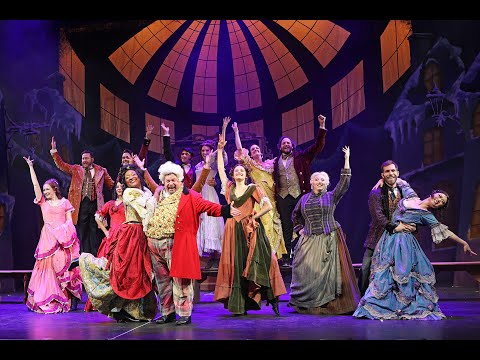
Review: what the lyrics are really doing
Why do we keep coming back to Scrooge when we already know the ending. This score answers by treating redemption as a series of small, spoken-to-the-self decisions, not one grand confession. Lynn Ahrens writes clean, readable lines that land quickly in a big theatre. They are built to be understood on first hearing, and that simplicity is strategic. It lets Alan Menken shift the emotional weather in seconds, from street bustle to private regret, without the audience feeling left behind.
The central lyrical move is contrast. London sings in crowds, Scrooge sings in refusals. Early numbers place him against the city’s argument for connection. When the show pivots into memory, the language softens and the rhyme relaxes. “Home” becomes the loaded word, less a building than a moral compass he misplaced. By the time the piece reaches its final stretch, the lyrics stop insisting and start releasing. Scrooge is no longer being hunted by warning; he is being offered a vocabulary for tenderness, and he has to decide he deserves to use it.
Musically, Menken leans into theatrical melody, warm harmony, and a sense of seasonal glow, even when the plot is cold. That optimism is a feature and a risk. It keeps the evening accessible for family audiences, yet it can smooth the grit Dickens insists on. The best moments solve the tension by letting the words stay plain while the orchestra does the haunting. The result is a show that argues, gently but firmly, that generosity is not an accessory you put on in December. It is a practice.
How it was made
This “A Christmas Carol” has a specific 1990s New York origin story: Madison Square Garden wanted a limited-run holiday musical for its large theatre, and Menken was approached in the early 1990s to build it. He assembled a team that could think at scale, including director and co-book writer Mike Ockrent, choreographer Susan Stroman, and lyricist Lynn Ahrens, whom Menken knew from the BMI Workshop. The mandate was clear. Make it welcoming for kids and still satisfying for adults who know every shadow in Dickens.
Ahrens has described building a detailed structural blueprint with Ockrent and Menken, then writing lyrics that could cut through spectacle. The most revealing behind-the-scenes detail is also the most human: Ahrens says “A Place Called Home” came from picturing her own beloved house while she wrote, translating private imagery into Scrooge’s lost capacity to love. Menken, meanwhile, has said the musical’s central theme began as music that arrived before the project had a scene attached to it, later forming Scrooge’s awakening and feeding into “God Bless Us, Everyone.”
Ockrent’s childhood memory of British holiday pantomimes also mattered. It shaped the show’s intent: a communal event, built to feel like a seasonal ritual, not a museum piece. That idea helps explain why the songs keep returning to crowds, windows, streets, and public celebration. Even when Scrooge is alone, the writing frames him as someone refusing to join a living city.
Key tracks & scenes
"The Years Are Passing By" (Gravedigger)
- The Scene:
- A graveyard on Christmas Eve. The stage picture is spare and stony. The light feels wintry and angled, as if the day has already given up. The sound should land like fate, not decoration.
- Lyrical Meaning:
- This opener puts time in charge. The lyric isn’t selling Christmas, it’s warning you that life moves whether you soften or not. It plants the show’s obsession with what can still be changed before the ground closes.
"Nothing To Do With Me" (Scrooge)
- The Scene:
- The Royal Exchange and the workday machine. Scrooge draws a line around himself while London swirls. The brightness is harsh, more gaslight than candlelight, making his isolation look chosen.
- Lyrical Meaning:
- This is the thesis statement of his cruelty: responsibility is always someone else’s job. The wording is blunt because Scrooge is blunt. Later, every ghost sequence exists to dismantle this one idea.
"Link By Link" (Marley)
- The Scene:
- Scrooge’s house becomes a pressure chamber. Marley arrives and the air changes. The lighting often tightens to a sickly glow, with chains catching highlights like flashes of accusation.
- Lyrical Meaning:
- The song turns punishment into vocabulary. “Link” is practical, almost bureaucratic, which makes the horror sharper. Marley is not poetic. He is procedural. That is the nightmare.
"The Lights of Long Ago" (Ghost of Christmas Past)
- The Scene:
- A bedroom transforms into memory. The light shifts from present-tense realism into a softer, floating wash that can hold childhood without turning it cute. Faces look younger under that kind of light.
- Lyrical Meaning:
- This lyric treats remembering as a kind of illumination and a kind of wound. It argues that Scrooge’s stinginess is not random. It was built, layer by layer, by what he survived and what he chose afterward.
"God Bless Us, Everyone" (Scrooge’s Mother and children)
- The Scene:
- A courtroom memory and a family fracture. The staging can feel like a tableau, with a colder palette and a sense of distance between bodies that should be close.
- Lyrical Meaning:
- The words are famously simple because the emotion is not. Blessing here is not sentiment. It is an act of reaching toward a future that the child cannot guarantee.
"A Place Called Home" (Young Scrooge)
- The Scene:
- A factory and a young life taking shape. The light can warm briefly, as if the idea of “home” is a candle that might still survive the wind. The scene needs stillness so the lyric can breathe.
- Lyrical Meaning:
- This is the score’s emotional hinge. “Home” becomes a moral longing, not nostalgia. The song doesn’t excuse Scrooge. It shows what he abandoned inside himself.
"Christmas Together" (Company)
- The Scene:
- All over London in one sweep. Windows, doorways, tables, and street corners. It plays best with motion and overlapping images, like the city is singing in parallel lives.
- Lyrical Meaning:
- Ahrens writes community as a set of specifics: who eats, who shares, who gets left out. The lyric insists that joy is collective work. Scrooge is present as an observer, and that distance becomes unbearable.
"Dancing On Your Grave" (Ghost of Christmas Yet-To-Be and ensemble)
- The Scene:
- The graveyard returns, now as prophecy. The light drops low and the air feels metallic. The staging can become more stylized, closer to ritual than realism.
- Lyrical Meaning:
- It weaponizes celebration. The lyric is a nightmare mirror of “Christmas Together,” showing what happens when a life leaves no one grateful. Scrooge finally hears how the world speaks about him when he is not in the room.
"Yesterday, Tomorrow, and Today" (Scrooge)
- The Scene:
- Scrooge wakes to Christmas morning as if the room has been scrubbed clean. The light is open, almost too bright, and his body language has to match that shock of possibility.
- Lyrical Meaning:
- The lyric reframes time as a choice. It’s not about regretting the past. It’s about refusing to let the future be written by the same habits. Menken’s theme work here makes the change feel earned, not pasted on.
Live updates 2025-2026
The 1994 to 2003 Madison Square Garden run is history, but the piece is very much alive as a licensed seasonal title. In the U.S., multiple theatres have scheduled the Menken and Ahrens version for late 2025, including runs listed for November and December, and at least one major presenter has already posted dates for December 2026. That is the real current footprint: regional main stages, community companies, and holiday subscription add-ons, where the score’s melodic clarity and large-ensemble energy can sell tickets across generations.
In the U.K., the title has also shown recent momentum through high-profile seasonal programming and critical coverage, including a reviewed production at The Lowry in Salford for the 2024 to 2025 festive window. If you are tracking the show’s next “big” moment, watch for concert-style returns and winter-limited engagements. If you are tracking it as a working theatre property, the signal is licensing demand, not one touring juggernaut.
Notes & trivia
- The musical was presented annually at Madison Square Garden’s theatre from 1994 through 2003, becoming a recurring New York holiday event.
- The official 1995 cast recording is preserved under the Masterworks Broadway banner, with a 15-track album widely available on major streaming platforms.
- Ahrens has said she pictured her own cherished house while writing “A Place Called Home,” grounding Scrooge’s tenderness in specific personal imagery.
- Menken has linked the show’s central thematic music to a period when melodies arrived before they had an assigned story function, later becoming the spine of Scrooge’s awakening and the “God Bless Us, Everyone” theme.
- Song ordering and structure shifted across versions, including the combining of early opening material in later iterations.
- The property expanded beyond the stage via a 2004 television adaptation written by Ahrens, bringing much of the score to a wider audience.
- MTI continues to license the “Broadway Version,” keeping the show in circulation for schools, community theatres, and regional companies.
Reception
From the start, critics treated this “Carol” as a scale play. They wrote about size, craft, and the risk of spectacle swallowing character. The more interesting thread is that reviewers kept returning to the score as the anchor, even when they had reservations about the production’s priorities. In recent coverage of new stagings, the language shifts toward atmosphere and showmanship, suggesting the piece’s durability is tied to how directors pace the ghost story and let the lyrics stay direct.
“After the spectacle, the score by Mr. Menken (with lyrics by Ms. Ahrens) is the production's major drawing card.”
“Menken and lyricist Lynn Ahrens ... have written several lovely tunes for ‘A Christmas Carol,’ but you'd hardly know it...”
“Delivered with Broadway pizazz”
Quick facts
- Title: A Christmas Carol
- Year (cast album): 1995
- Type: Stage musical adaptation of Charles Dickens’ novella
- Music: Alan Menken
- Lyrics: Lynn Ahrens
- Book: Mike Ockrent and Lynn Ahrens
- Original holiday home: Theatre at Madison Square Garden (Paramount Theatre name used during the run)
- Signature scene placements: “Link By Link” (Marley at Scrooge’s house), “The Lights of Long Ago” (Past), “Christmas Together” (tour of London), “Dancing On Your Grave” (Future in the graveyard)
- 1995 album label and availability: Masterworks Broadway release, streaming and digital storefront availability via major platforms
- Licensing: Music Theatre International (MTI) “Broadway Version”
Frequently asked questions
- Is this the same as the 2004 TV musical with Kelsey Grammer?
- They are closely related. The TV version is an adaptation of the stage musical’s book and score, written for television by Lynn Ahrens, with many of the same songs and story beats.
- Why does the show give London so much music?
- Because the show wants community to feel physical. When the city sings, Scrooge’s isolation stops being a personality quirk and starts reading as a moral choice.
- What is the emotional purpose of “A Place Called Home”?
- It frames Scrooge before he calcified. The lyric argues that tenderness was once possible for him, and that his later hardness is something he maintained, not something he was born with.
- Where do the big ghost numbers land in the plot?
- Marley arrives at Scrooge’s house (“Link By Link”), then Past takes him through formative memories (“The Lights of Long Ago”), Present expands the city into a single chorus (“Christmas Together”), and Future closes the trap in the graveyard (“Dancing On Your Grave”).
- Can I legally print the lyrics or post them online?
- Full lyric reproduction is typically protected by copyright. For production, performance, or educational needs, use licensed materials through the rights-holder and authorized vendors.
- Is the show touring on Broadway right now?
- Its current life is primarily regional and licensed seasonal productions rather than a single Broadway run. You will see it recur each winter across different theatres and markets.
Key contributors
| Name | Role | Contribution |
|---|---|---|
| Alan Menken | Composer | Wrote the score and central themes that drive Scrooge’s transformation. |
| Lynn Ahrens | Lyricist, co-book writer | Built direct, audience-first lyric writing and co-shaped the adaptation’s structure. |
| Mike Ockrent | Director, co-book writer | Originated the large-scale holiday event concept and staged the original production. |
| Susan Stroman | Choreographer | Created movement language for crowd-driven numbers and spectral sequences. |
| Paul Gemignani | Musical direction | Helped shape the musical execution for a large cast and orchestral palette. |
| Tony Walton | Scenic design | Designed a Victorian London environment built for spectacle and story flow. |
| William Ivey Long | Costume design | Created contrasting visual worlds for wealth, poverty, and the supernatural. |
Sources: Playbill, Masterworks Broadway, Music Theatre International (MTI), Susan Stroman official site, The Stage, Wikipedia, Apple Music, Spotify, BroadwayWorld, Woodland Opera House, CM Performing Arts Center, Broadway Sacramento.