Chess in Concert Lyrics – All Songs from the Musical
Chess in Concert Lyrics: Song List
- Act 1
- Prologue
- The Story Of Chess
- Merano/What A Scene! What A Joy!
- Commie Newspapers
- Press Conference
- Molokov And Anatoly
- Where I Want To Be
- Difficult And Dangerous Times
- The Arbiter
- Hymn To Chess
- The Merchandisers
- Global TV Fanfare
- Chess Game 1
- The Arbiter (Reprise)
- Quartet (A Model Of Decorum And Tranquility)
- Florence And Molokov
- 1956 - Budapest Is Rising
- Nobody's Side
- Mountain Duet
- Chess Game 2
- Florence Quits
- Pity The Child 1
- Embassy Lament
- Heaven Help My Heart
- Anatoly And The Press
- Anthem
- Act 2
- Golden Bangkok
- One Night In Bangkok
- One More Opponent
- You And I
- The Soviet Machine
- The Interview
- Someone Else's Story
- The Deal (No Deal)
- Pity The Child 2
- I Know Him So Well
- Talking Chess
- Endgame 1
- Endgame 2
- Endgame 3/Chess Game 3
- You And I (Reprise)
- Walter And Florence
- Anthem (Reprise)
About the "Chess in Concert" Stage Show
Release date: 2008
"Chess in Concert" – The Musical Guide & Song Meanings
Review and lyric themes
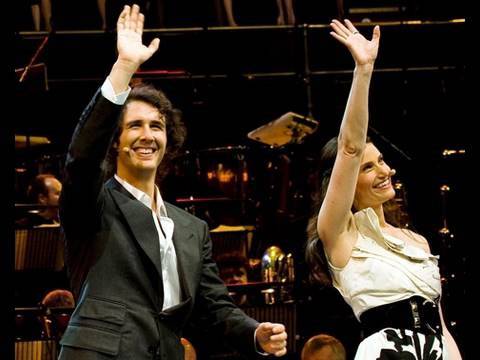
“Chess in Concert” (Royal Albert Hall, May 2008) is a stress test of Tim Rice’s writing. Strip out most dialogue, replace scene-work with voice, orchestra, and cues, and you find out which lyrics actually carry story. The surprise is how much survives. Rice’s best lines are built like headlines that crack into confession, the language of public relations turning personal at the worst possible moment.
The concert’s version of “Chess” is political theatre without the comfort of a book to smooth transitions. That makes the lyric patterns easier to hear. Everybody speaks in systems: strategy, loyalty, leverage, optics. Love arrives as an interruption, then becomes another tool. Even the famous numbers are character defences, not decorative hits. “One Night in Bangkok” is mockery as self-protection. “Nobody’s Side” is a boundary drawn with shaking hands. “Anthem” is an argument with propaganda that still needs a country to belong to.
The other key theme is translation. Florence spends the whole show converting: languages, motives, national myths, men. In concert form, that role becomes brutally clear because she is the hinge between songs that sound like press conferences and songs that sound like private pleading. When it works, it feels like watching someone do simultaneous interpretation of a war.
How it was made
The Royal Albert Hall event ran for two performances, May 12 and May 13, 2008, both at 8:00pm, with Josh Groban (Anatoly), Idina Menzel (Florence), Adam Pascal (Freddie), Kerry Ellis (Svetlana), Marti Pellow (the Arbiter), Clarke Peters (Walter), and David Bedella (Molokov). It used the City of London Philharmonic, plus a large vocal ensemble, and it was filmed for later release and broadcast.
The real making-of story is editorial. “Chess” has lived for decades as competing versions and running orders. This concert tried to assert a preferred shape. Press coverage and release-era reviews describe Rice and director-adaptor Hugh Wooldridge tailoring the piece so it could play as a semi-staged concert, with minimal dialogue, and with a song selection that follows the British spine while importing a small number of American-originated elements that later became popular in mixed versions.
Onstage, it aimed for clarity through framing. Contemporary accounts describe a large screen above the stage to track chess games and signal locations, a practical replacement for fully built scenery. That choice matters for lyrics. When visuals stop explaining everything, lines have to do more work, and weaknesses become obvious fast.
Key tracks and scenes
"Prologue" (Orchestra)
- The Scene:
- The evening begins in pure score. No plot speeches yet. A concert hall hush, then a surge of orchestral intent. In this format, the first “scene” is sound establishing stakes.
- Lyrical Meaning:
- There are no words, and that is the point. “Chess” is about systems that pre-exist the people trapped inside them. The concert announces that you are entering machinery.
"The Story of Chess" (The Arbiter)
- The Scene:
- Introduced like a televised event, with the Arbiter as ringmaster. The stage picture is part concert, part ceremony, with massed voices available to turn rules into ritual.
- Lyrical Meaning:
- Rice frames the game as moral theatre. The lyric sells neutrality while enjoying power. It also sets the show’s emotional trick: the “fair” referee is never only fair.
"Where I Want to Be" (Anatoly)
- The Scene:
- A private confession dropped into a public spectacle. In concert form, it often plays as a single spotlight and a still body, the voice doing all the acting.
- Lyrical Meaning:
- This is the cost of being exceptional in a system that owns you. The lyric is ambition without glamour. It sounds like a man realising his life has been negotiated without his consent.
"Pity the Child" (Freddie)
- The Scene:
- Freddie detonates. A rock-forward burst in a hall built for grandeur. The number lands as confrontation with the audience as much as with the other characters.
- Lyrical Meaning:
- Rice writes self-pity as aggression. Freddie rewrites his history into a weapon, daring anyone to contradict him. The lyric is cruel because it is also recognisable as fear.
"Nobody’s Side" (Florence)
- The Scene:
- Florence stops translating for everyone else and speaks for herself. The concert staging tends to sharpen here: less movement, more precision, a voice cutting through the mass.
- Lyrical Meaning:
- It is a survival pact. The lyric rejects being claimed by nation, employer, lover, or cause, then admits how lonely that refusal is. The chorus of the song is a wall, not a hug.
"One Night in Bangkok" (Freddie)
- The Scene:
- Act II arrives like a nightclub inside a cathedral. Dancers and percussion can push it into spectacle, while Freddie treats the city as a joke he tells to stay untouchable.
- Lyrical Meaning:
- The lyric is distance posing as sophistication. He reduces everything to temptation so he can brag about resisting it. The swagger is a confession that he cannot relax.
"Someone Else’s Story" (Svetlana)
- The Scene:
- After political manoeuvring, a woman stands in stillness and tells the truth quietly. In a concert, this kind of number can hit harder because there is nowhere to hide behind scenery.
- Lyrical Meaning:
- It is the show’s cleanest statement about agency. Svetlana hears the script written for her and refuses to play it. The lyric is not rage, it is clarity.
"Anthem" (Anatoly)
- The Scene:
- A public declaration that feels like a private decision. The hall acoustics make it sound like a civic event, which only increases the tension inside the words.
- Lyrical Meaning:
- Rice turns patriotism into ethics. The lyric refuses slogans and insists on a home that cannot be dictated. It is a big song that stays personal, which is why it keeps being used as an audition standard.
Live updates 2025/2026
In 2025 and early 2026, “Chess in Concert” still functions as a gateway version: a filmed, album-complete route into a show that rarely holds a single “final” book. The Royal Albert Hall recording remains widely available on streaming services as a long, 43-track live album released in 2009, and the filmed performance continues to circulate via major digital storefronts.
On the stage side, “Chess” itself is having a high-profile moment right now. A Broadway revival opened November 16, 2025 and is currently scheduled to run through June 14, 2026, which pulls new listeners back toward the older recordings, especially versions like the 2008 concert that emphasise sung storytelling.
If you are searching lyrics in 2026, this is the practical split. For the cleanest “songs tell the plot” experience, the 2008 concert remains one of the clearest documents. For the newest narrative choices, the 2025-2026 Broadway revival is the live reference point.
Notes and trivia
- The Royal Albert Hall concerts took place May 12 and May 13, 2008 at 8:00pm, and the venue’s own archive lists ticket prices from £17.50 to £72.50.
- Tim Rice introduced the event onstage, and multiple sources describe the production as adapted by Rice and Hugh Wooldridge for a concert format.
- The Royal Albert Hall archive lists dancers and a large choral presence alongside the City of London Philharmonic, reinforcing that this was not a simple “stand and sing” night.
- The filmed performance was later released on DVD, and it also played as a cinema event in the UK and Ireland in 2009.
- PBS aired it as part of “Great Performances” in 2009, giving the concert an American broadcast afterlife.
- Release metadata for the live album credits Heartaches Limited, under exclusive license to Reprise Records, and the album runs over two hours.
- Critical reaction often lands on the same pressure point: a thrilling score, and a running time that can feel heavy even in concert form.
Reception then vs. now
Reviews of the filmed concert in 2009 tend to argue about endurance, not talent. Even critics who respect the music complain about length and narrative sprawl. The praise is usually about the cast, the scale, and the emotional immediacy of hearing big voices attack big melodies in a hall that makes everything sound monumental.
“it’s an expensively mounted show, with pleasingly enthusiastic singing from all concerned. But at two hours plus, it’s a real stretch.”
“Try this experiment: take an everyday phrase ... and sing it using the first melody that comes into your head. Now add a 100-piece rock orchestra.”
“this concert version, says Tim Rice in his introduction, is definitive.”
Now, the concert reads less like a novelty and more like a historical intervention. It captured a starry cast at a moment when filmed stage releases were starting to behave like mainstream product. It also captured Rice publicly asserting a preferred shape for “Chess,” a claim that still sparks arguments among fans because the show keeps changing anyway.
Quick facts
- Title: Chess in Concert (Royal Albert Hall)
- Concert dates: May 12-13, 2008
- Venue: Royal Albert Hall (London)
- Music: Benny Andersson, Björn Ulvaeus
- Lyrics: Tim Rice
- Concert adaptation / staging: Adapted and directed for the concert by Hugh Wooldridge (with Tim Rice credited as adaptor on coverage and reviews)
- Orchestra: City of London Philharmonic
- Principal cast: Josh Groban (Anatoly), Idina Menzel (Florence), Adam Pascal (Freddie), Kerry Ellis (Svetlana), Marti Pellow (Arbiter), Clarke Peters (Walter), David Bedella (Molokov)
- Recording and release: Filmed live in May 2008; DVD release date listed as June 16, 2009; live album released in 2009 and commonly listed as 43 tracks, just over two hours
- Broadcast: PBS “Great Performances” in 2009
- Availability: Streaming (album), and major digital storefront listings for the filmed version
Frequently asked questions
- Is “Chess in Concert” a full performance or highlights?
- It is designed as a near-complete concert performance, built to let the songs carry story with minimal dialogue, and it was released as both a filmed version and a long live album.
- Who is singing Florence, Anatoly, and Freddie in the 2008 Royal Albert Hall concert?
- Florence is Idina Menzel, Anatoly is Josh Groban, and Freddie is Adam Pascal.
- Why does this version feel different from other “Chess” recordings?
- Because it is an editorial statement. It follows the British spine closely, adapts for concert pacing, and incorporates a small number of songs that became popular through other versions, aiming for coherence without leaning on dialogue scenes.
- When does “One Night in Bangkok” happen in this running order?
- It lands in Act II as Freddie’s high-voltage set-piece, timed to feel like a blast of showbiz in the middle of political pressure.
- Was the concert broadcast on television?
- Yes. PBS aired it as part of “Great Performances” in 2009.
- What is the best entry point if I mainly want the lyrics?
- The live album is built for that. It preserves sung storytelling at scale, and it keeps key narrative songs close together so you can track the plot without a script in hand.
Key contributors
| Name | Role | Contribution |
|---|---|---|
| Tim Rice | Lyricist, co-creator | Lyrics; introduced the concert; credited in coverage and reviews as shaping a “definitive” concert version. |
| Benny Andersson | Composer, co-creator | Co-wrote the score that blends pop hooks with symphonic weight. |
| Björn Ulvaeus | Composer, co-creator | Co-wrote the score; helped define the show’s signature melodic architecture. |
| Hugh Wooldridge | Director / adaptor (concert) | Directed and adapted the Royal Albert Hall concert format for filming and performance flow. |
| David Firman | Conductor | Conducted the orchestra for the concert performances (as credited in press coverage). |
| Josh Groban | Performer | Played Anatoly; provided a pop-classical vocal centre for the concert’s moral conflict songs. |
| Idina Menzel | Performer | Played Florence; anchored the score’s emotional translation work, including “Nobody’s Side.” |
| Adam Pascal | Performer | Played Freddie; powered the rock edge of “Pity the Child” and “One Night in Bangkok.” |
| Kerry Ellis | Performer | Played Svetlana; delivered the concert’s quiet pivot moments, including “Someone Else’s Story.” |
| City of London Philharmonic | Orchestra | Provided the concert’s symphonic scale, supporting the show’s pop-opera identity. |
Sources: Royal Albert Hall archive, Playbill, PBS Great Performances, The Guardian, Time Out, British Theatre Guide, Apple Music, Spotify, Amazon (release metadata), CHESS Official Broadway Site, IBDB, Wikipedia.