Catch Me If You Can Lyrics – All Songs from the Musical
Catch Me If You Can Lyrics: Song List
- Act 1
- Live In Living Color
- The Pinstripes Are All That They See
- Someone Else's Skin
- Jet Set
- Don't Break The Rules
- Butter Outta Cream
- The Man Inside The Clues
- Christmas Is My Favorite Time Of Year
- Act 2
- Doctor's Orders
- Don't Be A Stranger
- Little Boy, Be A Man
- Seven Wonders
- (Our) Family Tree
- Fly, Fly Away
- Goodbye
- Stuck Together (Strange But True)
About the "Catch Me If You Can" Stage Show
The first production was in 2005, after the release of the original film with Leo Dicaprio and Tom Hanks with the same name. Jack O'Brien was the director of the original readings, with the main cast of: M. Morrison, N. Lane, A. Schworer, B. Wardell & T. Wopat. Additional actors were: K. McPhee, A. Ashford, A. Tveit, L. A. Zakrin, N. L. Butz, A. Hurlbert, C. Keenan–Bolger, F. Finley & S. Gettelfinger.In 2009, a start of the musical began in Seattle, Washington, and then premiered in July of 2009 at the 5th Avenue Theatre. The premiere of pre-Broadway shows were kept for 2 months, until August 2009. Show premiered on Broadway in 2011 in the Neil Simon Theatre. Opening received average reviews from critics and closed after only 203 displays, including preliminary ones. The first days of the premiere had to be canceled due to the tragedy in the family of one of the main actors, which depicted an FBI agent that in the plot was chasing Frank.
Cities tour was began in 2012 in Providence and ended in 2013.
Release date: 2011
“Catch Me If You Can” – The Musical Guide & Song Meanings
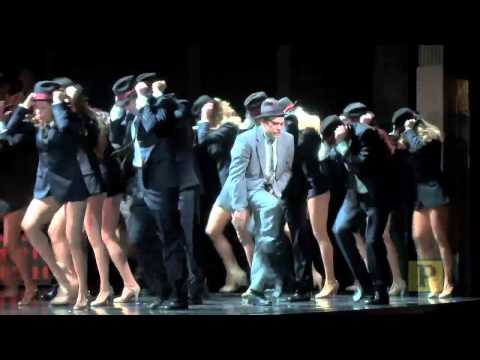
Review: what the lyrics are really selling
How do you write songs for a protagonist who lies for sport, then asks you to root for him anyway? “Catch Me If You Can” answers with velocity. The lyrics keep moving so you do not stare too long at the moral math. Frank Jr. sells an image, and the text sells the act of selling. It is not confession. It is presentation.
That makes the score’s chosen language feel strategic. Shaiman and Wittman lean into early-’60s swing, lounge pop, bright brass, and TV-variety sheen. The sound is all surface, but it is engineered surface. Frank learns that America rewards the uniform, the badge, the title card. The lyric approach mirrors the scam: short hooks, crisp punchlines, and a grin that dares you to ask for paperwork.
The sharpest writing is less about crime than about aspiration. Frank Sr. gives his son the philosophy of optics. Hanratty gives him the counter-philosophy of rules. Brenda becomes the one voice asking what Frank is when nobody is clapping. When the show works, it is because each character’s lyric vocabulary is a costume they can barely keep zipped.
How it was made: workshops, money, and the “con” meta-idea
The adaptation traveled a long runway before it took off. It was shaped through workshops and readings, then premiered at Seattle’s 5th Avenue Theatre in July 2009 with Aaron Tveit, Norbert Leo Butz, Tom Wopat, and Kerry Butler in the core roles. That Seattle engagement was not just an out-of-town tryout. It was a stress test for whether the material could sustain musical storytelling without softening Frank’s elusiveness.
One detail that feels almost too on-brand is how the show’s real-life subject became part of the pitch. A New Yorker report describes Frank Abagnale Jr. appearing at a backers’ audition, charming the room while the production sought funding. When the musical is about persuasion, the fundraising story becomes a mirror: the show itself had to persuade.
By Broadway, the score and book had been tightened, and at least one song that existed earlier was cut, later surfacing as a bonus track on the cast recording. That choice matters. It reveals a central tension: the writers want a big, old-school entertainment machine, but the narrative keeps demanding compression, pursuit, and consequence.
Key tracks & scenes: the lyric moments that steer the story
“Live in Living Color” (Frank Jr.)
- The Scene:
- Miami International Airport, 1960s. Frank Jr. is caught. A shot rings out. Money spills. He insists on telling the story anyway. Bright, showtime lighting fights the reality of handcuffs.
- Lyrical Meaning:
- This is Frank’s prime technique: narrate faster than anyone can judge. The lyric posture is a sales pitch disguised as autobiography. Even “truth” arrives as a performance choice.
“The Pinstripes Are All That They See” (Frank Sr., Frank Jr.)
- The Scene:
- New Rochelle on Christmas Eve. Frank Sr. spins a fable about two mice in cream, then buys the suit anyway. Warm holiday glow, but a shadow of IRS trouble at the edges.
- Lyrical Meaning:
- The song explains the show’s thesis: image is currency. “Pinstripes” are not fabric here. They are permission. Frank Jr. learns that looking legitimate can become a substitute for being legitimate.
“Someone Else’s Skin” (Frank Jr.)
- The Scene:
- After the divorce hearing, Frank Jr. bolts. A train platform becomes his exit ramp. The light shifts to steel and motion, the world turning into a getaway line.
- Lyrical Meaning:
- The lyric is about flight as identity formation. He is not “finding himself.” He is trying on selves. The title becomes literal: new names, new faces, new paper.
“Jet Set” (Frank Jr., Stewardesses, Pilots)
- The Scene:
- Manhattan and then the sky. Frank studies the language of aviation, forges a badge, gets the uniform tailored, and steps into the fantasy. Stage lights go chrome and glossy, like a magazine ad.
- Lyrical Meaning:
- “Jet Set” is desire turned into choreography. The lyrics romanticize status as movement. Frank is not chasing money yet. He is chasing altitude, the sense that he can float above consequences.
“Don’t Break the Rules” (Hanratty)
- The Scene:
- Quantico training. Agents drill. Hanratty argues that the game is meaningless if you cheat to win. Hard, white lighting. The humor is rigid, like a clipped tie knot.
- Lyrical Meaning:
- The lyric frames Hanratty’s obsession as moral structure. It also sets the chase as a twisted duet: Frank breaks rules to exist, Hanratty follows rules to feel alive.
“Butter Outta Cream” (Frank Jr., Frank Sr.)
- The Scene:
- A father-son attempt at restoration. Frank Jr. offers money to buy back the store, to repair the family image. Lighting softens, but the tempo stays hungry.
- Lyrical Meaning:
- This is the fable turned into anthem. The lyric sells struggle as virtue, which is beautiful and dangerous. It gives Frank Jr. a moral story to wrap around illegal behavior.
“Seven Wonders” (Frank Jr., Brenda)
- The Scene:
- Atlanta. Frank Jr. is “Doctor Abagnale,” and he falls for Brenda. The staging often plays this like a private bubble inside a public place: warmer light, quieter air.
- Lyrical Meaning:
- The lyric flips the con into romance. Frank tries to speak in vows instead of alibis. The danger is that he still treats language as a tool, not a promise.
“Fly, Fly Away” (Brenda)
- The Scene:
- Engagement party fallout. Brenda is pressured by family and the FBI. She chooses to give Frank up, and the stage isolates her, often with a single spotlight against the party’s noise.
- Lyrical Meaning:
- Brenda’s lyric is the show’s clearest emotional ledger. She loves him, but she names the cost. The song turns “escape” into grief, and it makes Frank’s glamour feel suddenly small.
“Goodbye” (Frank Jr.)
- The Scene:
- Back at the airport frame. Frank refuses to stop without a big finish. Then Hanratty reveals Frank Sr. has died. The lighting drops the shine. The chase becomes a reckoning.
- Lyrical Meaning:
- This is the moment where the lyric-mask cracks. “Goodbye” reads like a final sales pitch that fails mid-sentence. The con artist runs out of patter and has to hear a truth he cannot forge.
Live updates (2025/2026): licensing life, new productions, and what’s next
In 2025 and into 2026, “Catch Me If You Can” is living the afterlife most mid-2010s Broadway titles aim for: licensing, regional stages, and schools looking for a dance-forward crowd-pleaser with a star vehicle at the center. MTI Europe currently lists the show for licensing, including the “U.S. National Tour Version” as the available edition.
Concrete calendar signals are also visible. A New Jersey production at Play Theater is advertised for January 23–24, 2026. The Colony Theatre in Burbank has announced a run dated September 17 through October 18, 2026, with director Michael Donovan attached. That is not a Broadway revival, but it is evidence of momentum: the title remains bookable, marketable, and easy to pitch in one sentence.
As of January 21, 2026, the most verifiable “news” is this steady production cadence rather than a new commercial transfer. The piece’s selling point stays the same: a handsome lead, fast dialogue, and lyrics that sparkle even when the story turns its head away from consequences.
Notes & trivia
- The Broadway run opened April 10, 2011, after previews that began March 11, 2011.
- The production closed September 4, 2011, after 32 previews and 170 regular performances.
- Norbert Leo Butz won the 2011 Tony Award for Actor (Musical) for playing Carl Hanratty.
- The Original Broadway Cast Recording is a 17-track album, released digitally May 23, 2011, with a physical release date of June 28, 2011.
- The cast album was recorded on April 4 and April 18, 2011, and includes a bonus track: the cut song “50 Checks,” sung by Tom Wopat.
- MTI’s licensing notes frame the show’s sound as a period-fluent, big-band-forward score and reference an available “U.S. National Tour Version.”
- Two publicly advertised 2026 productions include Play Theater (New Jersey) in January and The Colony Theatre (Burbank) in September–October.
Reception: the craft praised, the heart debated
Reviews have long agreed on one thing: the craftsmanship is expensive and skilled. The disagreement is emotional. Some critics argue that the protagonist’s slipperiness, which is thrilling in a caper film, becomes frustrating when you want a musical’s interiority. Others like the very concept: a con man staging his own narrative as entertainment, with lyrics that keep giving you another grin instead of another confession.
“Despite their best efforts, the artists behind the diverting but undercooked musical version of Catch Me if You Can don’t quite pull off the big score.”
One of the sharpest defenses of the concept is the idea that the show’s “TV variety” frame is not a gimmick but a structure, a way to turn deception into staging logic. MTI Europe’s production notes quote a New York Times line that captures this view.
“[Catch Me If You Can] uses the TV song-and-dance show the way Chicago uses vaudeville.”
Even opening-night coverage, which tends to be generous, framed the evening as a collision of story, craft, and the odd thrill of dramatizing a real person’s myth. Playbill’s report nailed that tension in one sentence.
“Con artistry and stage craft crisscrossed April 10 at the Neil Simon Theatre to create a brand-new can-do musical called Catch Me If You Can.”
Quick facts: album and production metadata
- Title: Catch Me If You Can (The Musical)
- Broadway year: 2011 (opened April 10, 2011)
- Type: Book musical, big-band and early-’60s pop pastiche
- Book: Terrence McNally
- Music: Marc Shaiman
- Lyrics: Scott Wittman and Marc Shaiman
- Original Broadway venue: Neil Simon Theatre (New York)
- Tony highlight: Norbert Leo Butz won Actor (Musical) in 2011
- Cast album: “Catch Me If You Can (Original Broadway Cast Recording)”
- Album release context: Digital release May 23, 2011; physical release June 28, 2011; 17 tracks; includes bonus “50 Checks”
- Label and availability: Released via Ghostlight Records; widely available on major streaming platforms
- Selected notable placements (story): Miami airport arrest frame; Pan Am uniform con; Quantico rule anthem; Atlanta hospital identity shift
Frequently asked questions
- Who wrote the lyrics for “Catch Me If You Can”?
- The lyrics are by Scott Wittman and Marc Shaiman, with Shaiman also composing the music.
- Is there an official cast recording?
- Yes. The Original Broadway Cast Recording was released digitally on May 23, 2011, with a physical release on June 28, 2011, and it includes a bonus track (“50 Checks”).
- Where does “Live in Living Color” happen in the story?
- It frames the musical: Frank Jr. has been caught at Miami International Airport and demands to tell his story before he goes quietly.
- Why is “Fly, Fly Away” such a turning point?
- It is the moment the romance stops being an escape hatch. Brenda chooses truth and safety over fantasy, and the chase becomes personal.
- Is the musical touring or being produced now?
- Instead of a single large tour, the title appears in licensed productions. Public listings show a January 2026 production in New Jersey and a September–October 2026 run in Burbank.
- Did Norbert Leo Butz really win a Tony for this?
- Yes. TonyAwards.com lists Norbert Leo Butz as the 2011 winner for Actor (Musical) for “Catch Me If You Can.”
Key contributors
| Name | Role | Contribution |
|---|---|---|
| Marc Shaiman | Composer, co-lyricist | Wrote the music and co-wrote lyrics; shaped the score’s early-’60s palette. |
| Scott Wittman | Co-lyricist | Co-wrote lyrics; sharpened character voice through punchy hooks and period wit. |
| Terrence McNally | Book writer | Built the stage narrative structure around the chase and the family fault lines. |
| Jack O’Brien | Director (original Broadway) | Staged the story with a glossy TV-variety frame and fast transitions. |
| Jerry Mitchell | Choreographer (original Broadway) | Designed high-energy dance language that sells Frank’s glamour. |
| Norbert Leo Butz | Original Broadway cast | Originated Carl Hanratty and won the 2011 Tony Award for Actor (Musical). |
| Aaron Tveit | Original Broadway cast | Originated Frank Abagnale Jr.; the score is built around his charm and speed. |
| Ghostlight Records | Label | Released the Original Broadway Cast Recording (digital and physical editions). |
Sources: MTI Europe (full synopsis and licensing notes), Playbill, TonyAwards.com, Entertainment Weekly, The New Yorker, Ghostlight Records, Ovrtur, The Colony Theatre, Play Theater (NJ), Broadway.com.