
Carousel Lyrics: Song List
- Act 1
- Prologue: The Carousel Waltz
- You're a Queer One, Julie Jordan
- Mister Snow
- If I Loved You (Introduction)
- If I Loved You
- Give It to 'Em Good, Carrie...
- June Is Bustin' Out All Over
- Mister Snow (Reprise)
- When Children Are Asleep
- Blow High, Blow Low
- Soliloquy
- Act 2
- Real Nice Clambake
- Geraniums in the Winder
- Stonecutters Cut It on Stone
- What's the Use of Wond'rin'
- You'll Never Walk Alone
- Ballet: Pas De Duex
- If I Loved You (Reprise)
- Sermon/You'll Never Walk Alone (Reprise)
About the "Carousel" Stage Show
1945 – the year of the premiere on Broadway. The director was very afraid of failure of the premiere performance, because the final rehearsal went badly and so he watched the show from behind the scenes, drunk with sedatives, not even hearing the applause of the audience and not seeing it. Only in the evening, from the congratulations of his friends, he found out about success. Stephen Sondheim was at the premiere of this play, as a boy and this performance so impressed him that he chose his theater path in future and even became famous theater director.
Originally, the show lasted for 890 shows that at that time was a considerable achievement, completed only in 1947. If to add here the war and postwar years, during which the show was going, you’ll realize that you can safely multiply the number by 10. The actors were as follows: R. Collins, J. Raitt, B. Linn, J. Clayton, M. Vye, J. Darling, C. Johnson & E. Mattson.
After stopping the play on Broadway, the show has gone in the national tour for 2 years, covering 25 thousands of kilometers during this time, traveling to 20 states and even drove on the way to Canada. Show was staged for about 2 million people, ending its tour in New York in Majestic Theatre in 1949.
West End took musical in 1950, where the show was helding for 566 performances, one and a half year. Subsequent renewals were in 1954 and 1957 in New York, in 1958 in Belgium, twice in 1965 in the USA. Then followed a break for 27 years, after which in 1992, musical was staged in the West End in the Royal National Theatre. Actors that were in 1992, are: C. Rowe, M. Hayden, J. Riding, P. Routledge & J. Dee. This version has won several Olivier Awards and another couple was nominated for. The show went on until 1994.
The next renewals of the show were in 1994, 1995 and 2008.
Release date of the musical: 1945
"Carousel" – The Musical Guide & Song Meanings
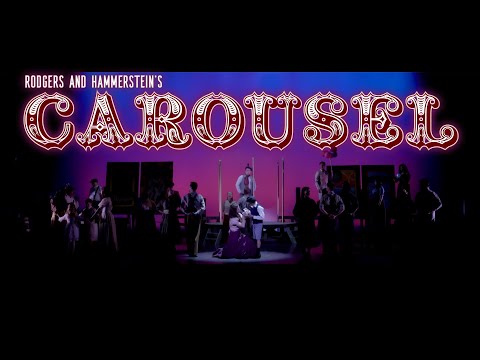
Review: when love sounds like a dare
How can a Golden Age score feel like a lullaby and a warning in the same bar? That tension is the point of "Carousel". Oscar Hammerstein II writes Julie’s devotion in plain words that refuse to flinch. Richard Rodgers answers with melodies that keep offering release, even when the story keeps tightening its grip.
The lyrics work like character evidence. Billy talks around his own need, then pretends it is independence. Julie speaks in choices that sound like fate. When the show turns toward violence and consequence, the language does not romanticize the bruise. It documents the logic people use to stay. The songs are not decorative. They move the plot by exposing what characters cannot admit in dialogue.
Musically, the piece sits closer to operatic scene-building than many of its Broadway peers. The bench scene expands like an argument that becomes an aria. The extended Act I finale is not a button. It is a psychological close-up with a full orchestra behind it. Even the communal numbers are written with sharp social placement: these people sing together because the town is always watching.
How it was made
"Carousel" opened on Broadway on April 19, 1945, refashioning Ferenc Molnár’s "Liliom" into coastal Maine. That transplant is not just geography. It is an ethics choice. The team wanted an ending that could hold tragedy and still offer a way forward, which led Hammerstein to build a graduation scene that helped unlock the show’s final emotional argument.
There is craft pain behind the polish. Rodgers and Hammerstein wrestled with how to shape Molnár’s afterlife mechanics into something playable. On the lyric side, Hammerstein researched details he did not already know, down to the food culture of a clambake, because a single wrong noun can break the spell of a community number. On the music side, Rodgers insisted on a strong opening focus, pushing the show toward that famous wordless start: a waltz that tells you what kind of evening you are in before anyone sings.
One of the most repeated rehearsal-room legends has a tender kicker: Molnár attended rehearsals and, rather than objecting, praised what the team had done, especially the ending. Whether you treat that as blessing or pressure, it clarifies why the adaptation feels so intentional. It is not an attempt to sanitize the material. It is an attempt to let an audience stay with it.
Key tracks & scenes
"The Carousel Waltz" (Orchestra)
- The Scene:
- Twilight at the fair. The lights warm from amber to carnival glare as bodies cross and recross, a town turning in patterns. The carousel becomes a heartbeat you can see.
- Lyrical Meaning:
- There are no lyrics, and that is the statement. The show begins by insisting the community comes first. Everyone is already in motion when the story starts, and Billy is a cog who thinks he is the whole machine.
"If I Loved You" (Billy & Julie)
- The Scene:
- A quieter path near the shore. The fair noise falls away. The lighting cools, as if the night itself is listening. Two people speak as though they are negotiating terms, but their bodies keep leaning toward confession.
- Lyrical Meaning:
- The lyric is conditional on purpose. Hammerstein gives them a grammar that keeps desire safe: hypotheticals, not promises. It is flirtation disguised as self-protection, and it builds the tragedy by showing how both of them recognize the risk and walk into it anyway.
"June Is Bustin’ Out All Over" (Nettie & Company)
- The Scene:
- Prep for the clambake. Bright morning light, busy hands, gossip moving faster than baskets. The town sings like it is stretching after winter.
- Lyrical Meaning:
- On the surface, it is seasonal appetite. Underneath, it is the show’s thesis about impulse. The lyric turns nature into an alibi, which rhymes uncomfortably with how Billy later explains his own choices.
"Blow High, Blow Low" (Jigger, Billy & Sailors)
- The Scene:
- At the dock, hard light off water and rope. Men move in rhythm because the work requires it. The number lands like a dare shouted over wind.
- Lyrical Meaning:
- This is masculine chorus-writing with a point. The words glorify motion and risk, and Billy borrows that energy when he is most vulnerable. It is a communal song that quietly isolates him: he wants belonging, but he keeps choosing the version that burns fast.
"Soliloquy" (Billy)
- The Scene:
- Act I narrows to one man. A single pool of light. The fair world vanishes. His thoughts arrive as images: a child, a future, a test he does not know how to pass.
- Lyrical Meaning:
- Hammerstein writes a mind changing in real time. The lyric starts in swagger, then pivots into tenderness when Billy realizes the baby might be a girl. The song is a plot engine: it pushes him toward the disastrous idea that money is the only proof of love.
"What’s the Use of Wond’rin’?" (Julie)
- The Scene:
- After Billy leaves with Jigger, the stage feels emptier even when people remain. The light goes flatter, more domestic, like a room after an argument when no one speaks.
- Lyrical Meaning:
- This is not naivete. It is Julie building a philosophy that makes staying possible. The lyric’s calmness is the danger and the beauty: it refuses melodrama, which makes the devotion sound like an everyday decision.
"A Real Nice Clambake" (Company)
- The Scene:
- Post-feast haze. Bodies sprawl, laughter loosens. The lighting turns honeyed, almost sleepy, as if the town is anesthetizing itself with comfort.
- Lyrical Meaning:
- The lyric celebrates abundance, but it also marks the last stretch of innocence. Placing satisfaction this loudly sets up the fall. The town sings that everything is fine. The plot is already disagreeing.
"You’ll Never Walk Alone" (Nettie, then Company)
- The Scene:
- After Billy’s death, grief changes the temperature of the stage. Light becomes simple and vertical, like a chapel without calling itself one. Nettie sings to Julie as the community gathers, not to fix the loss, but to keep her standing.
- Lyrical Meaning:
- The lyric does not promise that pain ends. It promises presence. That difference is why the song travels so easily outside the show, from concerts to stadiums. Inside the story, it is a hand on the shoulder. Outside it, it becomes a public vow.
Live updates 2025/2026
As of January 21, 2026, "Carousel" is not a current Broadway run. The most recent Broadway engagement remains the 2018 revival, and the title’s momentum now reads most clearly through licensing and regional calendars rather than a single flagship production.
In the UK, a February 2026 booking at Norwich Theatre lists tickets starting at £10, showing how the piece keeps circulating through community and amateur companies alongside professional revivals. A March 2026 run at Yeadon Town Hall is also on sale. In the US, Wagon Wheel Center’s June 2026 dates underline how often summer theaters reach for "Carousel" when they want a classic with big ensemble lift and a score audiences already carry in their bodies.
For producers, the show’s modern life is shaped by practicalities. Concord Theatricals notes that multiple versions exist, and choosing the right one is part of the planning. That matters because "Carousel" is not a single fixed artifact onstage. It is a repertoire title that keeps being reinterpreted, often with sharp attention to how the book frames domestic violence and redemption for contemporary audiences.
Notes & trivia
- The original Broadway production opened April 19, 1945 at the Majestic Theatre and ran 890 performances.
- IBDB credits the 1945 production’s musical director as Joseph Littau, with orchestration by Don Walker and dance arrangements by Trude Rittman.
- Hammerstein researched what a clambake actually involved while writing the clambake number, adjusting details as he learned them.
- Hammerstein conceived the graduation ending as a structural solution, and that late-shape ending helped give birth to "You’ll Never Walk Alone."
- The 1945 original cast album was issued by Decca as a set of five 12-inch 78 rpm records and included a lyrics booklet and synopsis.
- "You’ll Never Walk Alone" later became associated with Liverpool F.C. after a 1963 pop hit version, traveling far beyond the show’s narrative needs.
- TIME’s 1999 “Best of the Century” package named "Carousel" the best musical of the 20th century.
Reception then vs. now
In 1945, many critics treated "Carousel" as proof that musical theatre could carry real moral weight without losing popular appeal. Later revivals changed the conversation. Modern reviewers often praise the score while arguing about the story’s depiction of violence, and directors increasingly stage the romance with less gloss and more consequence.
“The new staging of the musical is an intimate extravaganza, packed with so many ideas about the body, gender roles, premarital coupling, and fear of closeness…”
“Best Musical: Carousel by Rodgers and Hammerstein (1945)… this show features their most beautiful score.”
“Richard Rodgers stated that Carousel was among his favourite creations and the closest he came to writing an opera.”
If you want to hear how the reception has shifted on record, compare the 1945 Decca set, which presents the material with period directness, to the 2018 Broadway cast recording, which arrives after decades of debate and tends to foreground emotional bruise as much as romantic sweep.
Quick facts
- Title: Carousel
- Year: 1945
- Type: Broadway musical
- Music: Richard Rodgers
- Book & Lyrics: Oscar Hammerstein II
- Based on: "Liliom" by Ferenc Molnár (adaptation credits also list Benjamin F. Glazer)
- Original Broadway opening: April 19, 1945 (Majestic Theatre, New York)
- Key musical architecture: "bench scene" duet; extended Act I soliloquy; opening waltz that functions as narrative prologue
- Selected notable placements: "You’ll Never Walk Alone" adopted widely in football culture; strongly associated with Liverpool F.C.
- Original cast album: 1945 Decca release (78 rpm album set with booklet); later LP issue
- Major modern recording: 2018 Broadway Cast Recording (Concord Theatricals Recordings / Concord)
- Licensing: Multiple versions available through Concord Theatricals
Frequently asked questions
- Is there a movie version of "Carousel"?
- Yes. There is a 1956 film adaptation, and it generated an associated soundtrack release tied to the movie’s premiere era.
- Who wrote the lyrics?
- Oscar Hammerstein II wrote the book and lyrics, with music by Richard Rodgers.
- Where does "You’ll Never Walk Alone" happen in the story?
- In Act II, Nettie sings it to comfort Julie after Billy’s death, and it returns near the end as the community gathers for the graduation sequence.
- Why is the bench scene considered such a big deal?
- It treats romantic conversation like a through-composed dramatic sequence, expanding emotional argument into musical structure rather than stopping the plot for a “number.”
- What album should I start with if I care about lyrics?
- Start with the 1945 original Broadway recording for period diction and pacing, then jump to the 2018 Broadway cast recording for contemporary vocal color and orchestral heft.
- Is "Carousel" touring in 2025/2026?
- Instead of a single marquee tour, the title is thriving through licensed productions. Listings in early 2026 include UK dates in Norwich and Yeadon, and US summer-stock dates in Indiana.
Key contributors
| Name | Role | Contribution |
|---|---|---|
| Richard Rodgers | Composer | Wrote the score, including the wordless opening waltz and extended dramatic forms. |
| Oscar Hammerstein II | Book & Lyricist | Adapted "Liliom" into a Maine-set musical; wrote lyrics that drive character psychology. |
| Ferenc Molnár | Source playwright | Authored "Liliom," the narrative foundation for "Carousel." |
| Rouben Mamoulian | Director (Original Broadway) | Directed the 1945 Broadway staging that established the show’s theatrical language. |
| Agnes de Mille | Choreographer | Created dances and the ballet language that expanded Broadway’s dramatic movement vocabulary. |
| Don Walker | Orchestrator (Original Broadway) | Orchestrated the 1945 production’s music for the Broadway pit. |
| Trude Rittman | Dance arrangements (Original Broadway) | Handled dance arrangements credited in the original Broadway production record. |
| Joseph Littau | Musical director (Original Broadway) | Served as musical director for the 1945 Broadway production. |
Sources: Rodgers & Hammerstein Official Site, IBDB, Concord Theatricals, Concord Theatricals Recordings, TIME, The New Yorker, The Guardian, Norwich Theatre, TicketSource, Wagon Wheel Center.