Carnival Lyrics – All Songs from the Musical
Carnival Lyrics: Song List
- Act 1
- Opening/Direct From Vienna
- A Very Nice Man
- I've Got To Find A Reason
- Mira
- A Sword And A Rose And A Cape
- Humming
- Yes, My Heart
- Everybody Likes You
- Love Makes The World Go 'Round
- Act 2
- Yum Ticky
- The Rich
- Beautiful Candy
- Her Face
- Grand Impe'rial Cirque De Paris
- I Hate Him
- Her Face (Reprise)
- Always, Always You
- Always, Always You (Reprise)
- She's My Love
- Finale
About the "Carnival" Stage Show
Washington D.C. hosted the premiere of this musical in 1961, where it held previews in the National Theatre before Broadway. Then the musical moved to Philadelphia at the end of March of the same year, and in April, it went to Broadway to make the premiere at 12th of April. Actors in the original show were as follows: J. Orbach, A. M. Alberghetti, H. Lascoe, J. Mitchell, P. Olaf & K. Ballard. Gower Champion was a director and additionally was responsible for the choreography. Musical started without overture, and stage decorations were visible to spectators, who were gathering for the show in the hall, because the curtain was raised. A very good start of the musical was praised to the skies by critics of that time, so much, as already the gods on Olympus would envy it. However, the show had only 719 musical performances, which by today's standards is considered to be only an above the average figure.Anna Maria Alberghetti was chosen for the lead role because of the phenomenal 18 years of experience in singing in her 24 years old! She also appeared in some films, on TV and she had a great resume along. She also had an operatic voice, which was very much praised by critics. She previously had some experience playing on stage at 59 and 1960th respectively. For these reasons, she outpaced another favorite for this role – Carol Lawrence. Over time, the producer went hostile with Alberghetti in working relationship, very strongly. Because of his reproaches and taunts, she fell ill in hospital, and then never again played in the theater in musicals, in spite of winning the Tony for her performance here. Her understudy with now advertising family name Gillette, previously not famous, was replacing her so convincingly that she started to accept offerings for main roles on Broadway.
National tours ran in 1961 (New York), 1962 (San Francisco), 1962 (Chicago), 1962 (Connecticut). The first international tour was launched in 1963, in United Kingdom, where the musical lasted for only 34 performances. In addition, it reached Australia in 1962.
Release date: 1961
"Carnival!" – The Musical Guide & Song Meanings
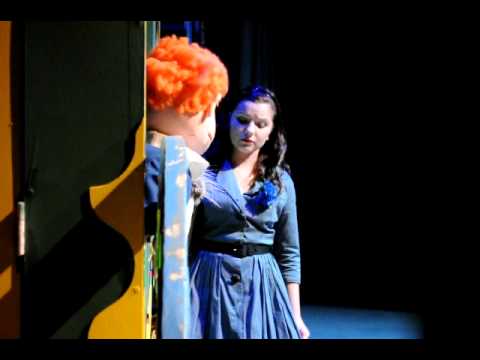
Review: why these lyrics feel like a secret
“Carnival!” is built on a gentle con. The music offers you a fairy tale. The lyrics keep whispering that it is also a war story, a labor story, a loneliness story. Bob Merrill writes lines that sit lightly in the mouth, then land heavy in the ribs. They do not announce their intelligence. They hide it inside rhyme and repetition, like a puppet hiding a hand.
The show’s central lyric trick is split identity. Paul speaks one way as Paul, another way through Carrot Top and company. Lili falls in love with the kinder voice first, because that is what most people do. Merrill’s words make that feel romantic, then make it feel scary. “Her Face” is the hinge: a man who thinks he cannot love admits it in language so plain it sounds like he is surprised by each sentence.
Musically, this is early 1960s Broadway with a European perfume. The score flirts with street-waltz sweetness, circus bustle, and pop craft. Gower Champion’s production concept matters, because “Carnival!” is about watching, being watched, and choosing what you believe. The lyrics keep returning to illusion, not as a trick, but as a coping skill.
How it was made: Merrill’s hunt for a “hit,” Champion’s stage picture
“Carnival!” opened on Broadway at the Imperial Theatre in April 1961, produced by David Merrick, directed and choreographed by Gower Champion, with a book by Michael Stewart and music and lyrics by Bob Merrill. It is based on the film “Lili,” with material credited to Helen Deutsch, and the deeper source trail runs back to Paul Gallico. The setting is a traveling fair on the outskirts of a Southern European town, which gives the show its soft-focus realism: not Paris, not a palace, just the edge of somewhere.
The mythology around the score is unusually specific. A Goodspeed teacher guide recounts that Merrill, stuck, improvised “Love Makes the World Go ’Round” in frustration. The “Love Makes…” song page also frames Merrill as reaching toward French folk color, trying to avoid Tin Pan Alley reflexes. You can hear the compromise. The melodies are direct. The lyric language stays clean. Then, in the dark corners, the show turns its knife.
Champion’s staging was part of the pitch. Contemporary accounts of the original production describe a stage that was already “open” before the action began, with the carnival tent assembled in view, and no overture separating audience from world. A Library of Congress essay on Champion’s legacy adds that his working scripts carried detailed notes about flow and movement, down to individual routines. “Carnival!” needs that level of control. Its story is tender, but its mechanics are precise.
Key tracks & scenes: 8 lyrical pressure points
"Direct from Vienna" (Rosalie, Greta, Carnival People)
- The Scene:
- The fair arrives as if it has always been there. Banners, trunks, poles, and canvas. Bright bulbs come alive one by one, turning an empty space into a promise. The number is both parade and sales pitch.
- Lyrical Meaning:
- Merrill starts with marketing because the carnival survives on it. The lyric introduces performance as work, and glamour as an invented surface you build together.
"A Very Nice Man" (Lili)
- The Scene:
- Lili enters wide-eyed, looking for a job and a life. The light is still kind. The crowd is still noisy. She sings while trying to persuade herself that the world will treat her gently.
- Lyrical Meaning:
- The lyric is naïveté with a bruise underneath. It shows Lili’s habit of narrating danger as romance, which makes the later “growing up” feel earned, not cute.
"Mira" (Lili)
- The Scene:
- A pause inside the bustle. The carnival noise drops back. Lili sings the name of her hometown like a spell, holding still while the fair moves around her. It often plays best in a single pool of light, small against the tent.
- Lyrical Meaning:
- “Mira” is longing without ornament. Merrill writes homesickness as identity. She is not just missing a place. She is missing the girl she was there.
"A Sword and a Rose and a Cape" (Marco, Lili)
- The Scene:
- Marco’s trailer. The lighting shifts toward seductive shadow and metallic sparkle. He performs charm the way he performs tricks: with practiced timing and a grin that never slips.
- Lyrical Meaning:
- The lyric is fantasy inventory. It sells heroism as costume. Lili buys it because she wants a story that protects her, and Marco is offering a story, not safety.
"Humming" (Rosalie, Schlegel)
- The Scene:
- Backstage comedy with a bite. Rosalie, aging out of Marco’s attention, fills space with sound. The staging often keeps her busy, moving, refusing to be still long enough to be hurt.
- Lyrical Meaning:
- “Humming” is funny because it is defensive. Merrill writes avoidance as rhythm. Rosalie can joke, flirt, complain, and keep the truth at arm’s length, all in the same breath.
"Yes, My Heart" (Lili, Roustabouts)
- The Scene:
- Lili accepts her place in the show. Men swarm in and out with props and ladders. The lights feel like rehearsal lights: bright, practical, making the stage look like a job site.
- Lyrical Meaning:
- The lyric is consent as self-creation. She is choosing the carnival, choosing desire, choosing a future. The score keeps it buoyant, but the plot is already preparing to punish her for choosing poorly.
"Her Face" (Paul)
- The Scene:
- Morning at the fair. The air is colder. Paul is alone with the thing he hates most: need. Many productions let this land without movement, because the writing is all motion already.
- Lyrical Meaning:
- This is Merrill at his most direct. The lyric circles obsession until obsession becomes tenderness. It is not a declaration. It is a man realizing he has been alive the whole time.
"Love Makes the World Go 'Round" (Lili, Puppets)
- The Scene:
- Late Act I, at the puppet booth. Lili sings to Horrible Henry to stop him from “crying,” while the puppets answer her. The bulbs glow warmer. The violence of the outside world stays out, for a minute.
- Lyrical Meaning:
- The lyric is lullaby and philosophy. It is also misdirection. The audience knows there is a man behind the voices, and the song makes that concealment feel like kindness. That emotional confusion is the point of the show.
Live updates 2025/2026: where the show is appearing now
“Carnival!” is not a constant on the commercial calendar, but it keeps resurfacing in targeted productions that understand its scale. In late 2025, Playbill reported that Off-Broadway’s J2 Spotlight Musical Theater Company scheduled “Carnival!” for April 30 to May 10, 2026, with direction by Robert W. Schneider, music direction by Liz Hastings, and choreography by Kaitlyn Frank, with casting to be announced. The same item makes the case for why companies reach for it now: a compact cast, a recognizable standard in “Love Makes the World Go ’Round,” and a story that reads cleanly for contemporary audiences when the puppetry is treated seriously.
BroadwayWorld also flagged the J2 Spotlight switch as a piece of season news, another small sign that the title remains “programmable” in 2026: a mid-century musical that can sell itself as romance, then surprise you with grit.
Notes & trivia
- The title originally carried an exclamation point, “Carnival!”; it was later dropped during the run after Gower Champion argued the mark misrepresented the show’s gentle tone.
- IBDB lists the Broadway run across two theatres: Imperial (1961–1962) and Winter Garden (late 1962 into early 1963), with a Southern Europe setting and Tom Tichenor credited for puppets.
- Concord Theatricals’ history notes a total Broadway run of 719 performances and highlights two Tony wins: Leading Actress (Anna Maria Alberghetti) and Scenic Design (Will Steven Armstrong).
- A Library of Congress post on Champion describes detailed, annotated scripts and a Labanotation score used to preserve choreography, underscoring how carefully the original staging was “fixed” on paper.
- Script and program PDFs circulating in archives show scene-change music and explicit scene labeling (for example, “The Carnival Area”), which helps explain why the show can play cinematically even in modest spaces.
- The Encores! 2002 production used Jim Henson Company puppets, reframing the puppet booth as a technical star, not a novelty.
Reception: charm, craft, and the “second-rank” label
Criticism around “Carnival!” often splits into two categories. There’s the affection for its lyric and melodic craft. Then there’s the faint damning-with-praise that it is “formula,” executed well. A 2002 TheaterMania review of the Encores! staging captures the tone: skilled makers, persuasive songs, and a show that diverts even skeptics, while still carrying the faint label of a period piece.
The later revival conversation leans toward tenderness. Reviews of the Goodspeed revival described the work as bittersweet and emotionally shadowed, which is closer to how the lyrics actually behave when performed without winking at them.
“Brian Stokes Mitchell makes the longing Bob Merrill’s songs almost palpable.”
“Bob Merrill has written a bevy of memorable songs and paired them with lyrics that are as clever and well-crafted as any you will have heard.”
“A bittersweet tuner that touches on sadness, desperation and remoteness.”
Quick facts: score, album, versions
- Title: Carnival! (often printed as Carnival)
- Year: 1961 (Broadway premiere)
- Type: Full-length musical
- Book: Michael Stewart
- Music & Lyrics: Bob Merrill
- Based on: The film “Lili” (material credited to Helen Deutsch), and the Paul Gallico source story trail
- Original Broadway producer: David Merrick
- Original Broadway director/choreographer: Gower Champion
- Notable stagecraft credit: Puppets created and supervised by Tom Tichenor
- Signature song: “Love Makes the World Go ’Round”
- Cast recording: Original Broadway Cast recording; expanded reissue editions exist, including a 2CD “Deluxe Edition” that adds pop covers and bonus material
- Licensing: Concord Theatricals
Frequently asked questions
- Is “Carnival!” based on a movie?
- Yes. It is based on the 1953 MGM film “Lili,” with the story lineage also tied to Paul Gallico’s work.
- Who wrote the lyrics?
- Bob Merrill wrote both music and lyrics, with Michael Stewart writing the book.
- Where does “Love Makes the World Go ’Round” appear in the show?
- It is introduced as “opening” music and becomes a key Act I puppet-booth moment when Lili sings to the puppets.
- Why are the puppets so central to the lyric storytelling?
- Because Paul’s tenderness arrives through them first. The lyrics give Lili a kinder world to fall in love with, before she understands the person behind it.
- Why does the title sometimes lose the exclamation point?
- The exclamation was dropped during the original run because the director felt it falsely suggested a louder, bigger show than the one onstage.
- Is “Carnival!” being produced in 2026?
- Yes. A 2026 Off-Broadway run has been scheduled by J2 Spotlight Musical Theater Company for late April to early May.
Key contributors
| Name | Role | Contribution |
|---|---|---|
| Bob Merrill | Composer-lyricist | Wrote the score and lyrics, including “Love Makes the World Go ’Round” and “Her Face.” |
| Michael Stewart | Book writer | Adapted the story into a stage book that balances fairytale innocence with backstage realism. |
| Gower Champion | Director-choreographer | Shaped the original production’s flow and visual language as a director-choreographer. |
| David Merrick | Producer | Produced the Broadway staging and positioned the show as a major 1961 property. |
| Tom Tichenor | Puppets | Created and supervised the puppets that carry the show’s emotional architecture. |
| Will Steven Armstrong | Scenic and lighting design | Designed the original environment; the scenic work won a Tony Award. |
| Saul Schechtman | Musical director; vocal arrangements | Music direction and vocal shaping for the original Broadway production. |
| Philip J. Lang | Orchestrations | Orchestrated the score for Broadway’s pit and Champion’s staging rhythms. |
Sources: Concord Theatricals, IBDB, Library of Congress (In The Muse), Playbill, TheaterMania, Wikipedia, Stage Door Records, Goodspeed Musicals, BroadwayWorld, archived script/program PDFs.