
Candide Lyrics: Song List
- Act 1
- Overture
- Westphalia Chorale
- Life Is Happiness Indeed
- The Best Of All Possible Worlds
- Universal Good
- Oh, Happy We
- It Must Be So
- Westphalia/Battle Music
- Candide's Lament
- Dear Boy
- Auto Da Fe (What A Day)
- Candide Begins His Travels - It Must Be Me
- Paris Waltz
- Glitter And Be Gay
- You Were Dead, You Know
- I'm Easily Assimilated
- Finale Act 1 (Quartet)
- Act 2
- Universal Good (Reprise)
- My Love
- We Are Women
- The piligrim's procession/Alleluia
- Quiet
- Introduction to Eldorado
- The Ballad of Eldorado
- Words, Words, Words
- Bon Voyage
- The Kings' Barcarolle
- Money, Money, Money
- What's The Use?
- Venice Gavotte
- Nothing More Than This
- Universal Good (Life is Neither)
- Finale: Make Our Garden Grow
About the "Candide" Stage Show
1956 is the year of the premiere of this musical on Broadway. Tyrone Guthrie was a director and S. Krachmalnick was responsible for the choreography. Irene Sharaff was costume designer; Oliver Smith was a set director. Actors were: I. Petina, B. Cook, R. Rounseville, M. Adrian. Musical went through a complete failure; it was played for only 2 months and has been shown 73 times. Book was terribly criticized, mainly because it was too serious, opposed to the musical of the genre of social parody.
London took the play in 1959, where it acted in three different locations: Manchester Opera House, Saville Theatre & New Theatre Oxford. Selection of actors was as follows: E. Coates, M. Costa, D. Quilley & L. Naismith. It also was not successful staging and lasted for only 60 hits.
Harold Prince several times renewed musical on Broadway in New York, did the new libretto, because the original book in the new revival was not allowed to use by its author. This alteration has been greatly condensed version of the first, where the sitcom was too tight and now represented a little over 100 minutes. This version has experienced a great success, and it played on Broadway over 2 years and has undergone 740 shows.
Following this success, the new version has been expanded to two acts, and its production began in 1982. With Wheeler’s book, it has become more like an opera, not a musical. However, the new format stayed in the New York City Opera for 32 plays, becoming a staple in the repertoire since operettas are acted much rarer than musicals.
The following production were in 1988 in the Scottish Opera, then in 1999 in the Royal National Theatre (Britain), 1997 (Broadway), 2004 (New York Philharmonic), 2006 (Théâtre du Châtelet in Paris, France), 2007 (Théâtre du Châtelet), 2008 (Sweden), 2009 (Massachusetts), 2010 (Berlin), 2010 (Seattle), 2010 (Washington DC), 2015 (Florence).
Release date of the musical: 1956
"Candide" – The Musical Guide & Song Meanings
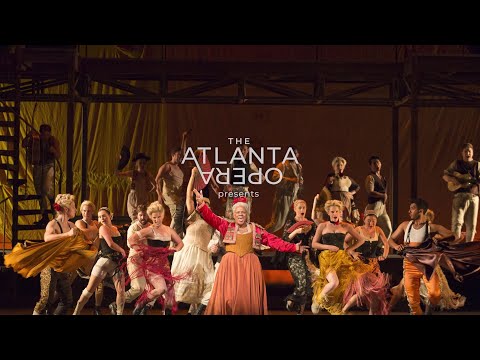
Review: why these lyrics sting
“Candide” opens by promising comfort. Then it spends two and a half hours proving comfort is a sales pitch. The lyric writing is built like a trap: Pangloss states his theory with academic cheer, the chorus repeats it as social glue, and the plot keeps staging counterexamples that arrive like blunt instruments. What makes this land is that the text never argues in a straight line. It grins. It rhymes fast. It slips from philosophy into dirty jokes, then back into prayer.
That slipperiness is the show’s identity. Bernstein writes in pastiche on purpose, letting the music impersonate Europe while the lyricists puncture European certainty. Waltzes can turn into panic. A hymn can become a gag. A coloratura aria can behave like satire with diamonds in its teeth. You can hear the score touring styles the way the plot tours continents, which is why the piece plays so well in opera houses and concert halls that like big swings and sharp turns.
Underneath the jokes, the lyrics keep circling one question: if the world is violent, what language helps you survive it? The ending does not reward optimism. It shrinks the scale. It chooses work over theory. It chooses a garden, because a garden is something you can touch.
How it was made: the long fight over the words
The Broadway “Candide” premiered December 1, 1956 at the Martin Beck Theatre and closed February 2, 1957, after 73 performances. The book was by Lillian Hellman. The lyrics were primarily by Richard Wilbur, with additional contributions from Dorothy Parker and John La Touche, and Bernstein himself also writing lyrics in places. Tyrone Guthrie directed. Samuel Krachmalnick conducted. Oliver Smith designed sets; Irene Sharaff designed costumes.
The deeper story is that “Candide” has never stopped being rewritten. Even the official Bernstein site frames the 1956 production as a mixed-review run whose cast album helped the music thrive, and it traces the decades of revisions that followed. The key rupture is Hellman. After later teams created new versions, she withdrew her original adaptation, and the Bernstein site notes that the 1956 version is no longer available for performance. That single fact explains the show’s modern life: “Candide” is famous, but it’s famous as a moving target.
For lyric nerds, that moving-target quality is the point. Different versions reshuffle numbers and alter text, but the core assignment stays the same: translate Voltaire’s cruelty into singable jokes without letting the cruelty evaporate. Wilbur’s best lines feel like polished blades. Parker brings acidic glamour. La Touche adds Broadway bite. Bernstein, meanwhile, composes as if the argument itself is music, which is why the show can feel like an operetta that keeps trying to become a musical, then laughing at the attempt.
Key tracks & scenes: 8 lyrical pressure points
"The Best of All Possible Worlds" (Dr. Pangloss)
- The Scene:
- Westphalia. A bright, tidy opening picture. The lighting often reads like morning, even when the joke is that morning is ignorance. Pangloss teaches optimism like it’s math, and the chorus backs him up as if agreement can prevent catastrophe.
- Lyrical Meaning:
- This number is the thesis statement, but it’s also a satire of how slogans spread. The lyric’s confidence is the bait; the plot is the hook.
"Oh, Happy We" (Candide, Cunegonde)
- The Scene:
- Still in Westphalia, still pretending the world is safe. The staging often keeps the lovers framed like a pastoral painting that knows it will be slashed.
- Lyrical Meaning:
- The lyric is intentionally simple, which makes it devastating later. It defines innocence as a limited vocabulary: fewer words, fewer doubts.
"It Must Be So" (Candide)
- The Scene:
- After the first disaster. Candide is suddenly alone in a harsher light, walking into the world with Pangloss’s theory as his only luggage.
- Lyrical Meaning:
- This is optimism turning into self-defense. The lyric clings to logic because grief is too big to name directly.
"Auto-da-Fé" (The Inquisition and ensemble)
- The Scene:
- Lisbon. A public square that becomes a stage for punishment. Directors often sharpen the contrast: festive crowd behavior under brutal authority, bright color under moral terror.
- Lyrical Meaning:
- The lyric weaponizes ceremony. It shows how violence gets dressed up as civic virtue, and how quickly a chorus can become a mob.
"Glitter and Be Gay" (Cunegonde)
- The Scene:
- Paris. Cunegonde survives, surrounded by luxury that feels like a trap. The light is often jewel-toned. She handles necklaces like evidence, not prizes, laughing too loudly because silence would mean collapse.
- Lyrical Meaning:
- It’s a showpiece aria with a double message: spectacle and complaint in the same breath. Scholarship has unpacked how the song can read as camp critique, turning virtuosity into resistance instead of decoration.
"You Were Dead, You Know" (Candide, Cunegonde)
- The Scene:
- The reunion in Paris, where romance is forced to share space with shock. Staging often makes the lovers keep distance at first, like they’re afraid the truth will stain them.
- Lyrical Meaning:
- The lyric treats trauma like awkward etiquette. That’s the sting: comedy becomes a coping mechanism, and it sounds “light” only because it has to.
"I Am Easily Assimilated" (The Old Lady)
- The Scene:
- A survival number. The Old Lady moves through new cultures with a dancer’s pragmatism. Many productions stage it as a quick costume-and-identity montage, because the joke is speed.
- Lyrical Meaning:
- It’s comedy about adaptability that never forgets the cost. The lyric laughs at identity as performance, then quietly admits performance can be the only protection.
"Make Our Garden Grow" (Company)
- The Scene:
- After the world tour, the show finally stops running. The stage often clears. The light warms, but it’s not victory lighting. It’s late-afternoon realism: the day is still hard, and you do the work anyway.
- Lyrical Meaning:
- The lyric rejects theory and chooses labor, care, and community. Modern program notes and commentary often frame this as the piece’s moral landing: fewer ideas, more responsibility.
Live updates 2025/2026: what’s happening now
In 2025, “Candide” stayed active on big stages that like its genre-mixing. Opera Australia mounted it at the Sydney Opera House from February 20 to March 14, 2025, with Eddie Perfect as Voltaire and Pangloss, Lyndon Watts as Candide, and Annie Aitken as Cunegonde, in a production directed by Dean Bryant and conducted by Brett Weymark. Reviews highlighted the stylistic whirl of Bernstein’s score and the production’s willingness to treat satire as pop theater rather than museum operetta.
In the UK, Welsh National Opera positioned “Candide” as a touring event, advertising a production with hand-drawn animations projected onto chains, a punk-inflected costume world, and a “Broadway sparkle” dance presence, with stops including Cardiff, Southampton, Llandudno, and Bristol.
For 2026, concert programming continues to absorb the piece. The Athens Concert Hall lists a “Leonard Bernstein: Candide” event on January 31, 2026, another sign of how the score thrives in symphonic settings even when the text varies by version.
If you’re licensing the show, the practical headline matters: the 1956 Hellman version is not the one most groups can stage. The version most commonly licensed today is rooted in the later revisions, including the Royal National Theatre version associated with John Caird and Hugh Wheeler, with lyrics credited across Wilbur, Sondheim, La Touche, Parker, Hellman, and Bernstein.
Notes & trivia
- The original Broadway run lasted 73 performances, from December 1, 1956 to February 2, 1957, at the Martin Beck Theatre.
- The original production credits include director Tyrone Guthrie, conductor Samuel Krachmalnick, set designer Oliver Smith, and costume designer Irene Sharaff.
- The official Bernstein site notes that the original cast album helped the score outlive the initial production and build a cult reputation.
- The 1956 cast recording session is documented as December 9, 1956 in discographic listings, and it is widely reissued in multiple formats.
- Barbara Cook, the original Cunegonde, recalled that the overture drew such applause on opening night that it “stopped the show.”
- Boosey & Hawkes credits the Royal National Theatre version (1999) to a book by Hugh Wheeler, with a new version by John Caird, and a multi-author lyric credit list that reflects the show’s stitched evolution.
Reception: the flop, the rescue, the cult
“Candide” has one of Broadway’s most famous career arcs: early rejection, then decades of revisions that slowly clarified how to play it. The first run was short. The score was never the problem. The problem was tone: Voltaire’s brutality is hard to sing without turning the audience into accomplices, and early Broadway did not know what to do with an operetta that wanted to mock the idea of moral progress.
What changed is that later productions stopped apologizing for the weirdness. A 2025 review of the Opera Australia staging in the Guardian treated the piece as “joyous” and “bonkers,” praising how the production managed the long evening and the shifting styles. And even the most damning early-language around the show has become part of its mythology: Walter Kerr is widely quoted as calling the original a “really spectacular disaster,” a phrase that now reads like a badge of risk rather than failure.
“Candide review – a joyous, dazzling, bonkers satire.”
“The overture stopped the show opening night, stopped it cold.”
“A really spectacular disaster.”
Quick facts: score, album, versions
- Title: Candide
- Broadway premiere: 1956
- Original Broadway run: Dec 1, 1956 to Feb 2, 1957 (73 performances)
- Original Broadway theatre: Martin Beck Theatre (New York)
- Source material: Voltaire’s 1759 satire “Candide”
- Music: Leonard Bernstein
- Lyrics: Primarily Richard Wilbur; additional lyrics credited to Dorothy Parker, John La Touche, Lillian Hellman, Stephen Sondheim, and Bernstein (varies by version)
- Original book: Lillian Hellman (1956); later versions commonly use Hugh Wheeler, including the Royal National Theatre version associated with John Caird
- Original production staff highlights: Tyrone Guthrie (director), Samuel Krachmalnick (conductor), Oliver Smith (sets), Irene Sharaff (costumes)
- Cast album: “Candide - Original Broadway Cast Recording (1956)” is continuously available via reissues and official catalog listings
- Documented recording date: Dec 9, 1956 (discography listing)
Frequently asked questions
- Can I stage the original 1956 Broadway version?
- Usually, no. The official Bernstein site notes that the 1956 Hellman version is no longer available for performance, which is why most productions license later versions.
- Which version do most companies perform now?
- Many productions use the Royal National Theatre version (often dated to 1999), associated with a book by Hugh Wheeler in a new version by John Caird, with lyrics credited across multiple writers.
- Who actually wrote the lyrics?
- Richard Wilbur is the primary lyricist, but “Candide” is a special case: additional lyrics are credited to Dorothy Parker, John La Touche, Lillian Hellman, Stephen Sondheim, and Leonard Bernstein, depending on the version.
- Why is “Glitter and Be Gay” such a big deal?
- It’s a virtuoso aria that is also a character essay. Cunegonde has to sparkle in public while admitting the private cost of survival. Academic analysis has treated the song as more than parody, reading its style as a form of critique.
- Is there a definitive cast recording?
- The 1956 Original Broadway Cast album is foundational and widely reissued, but later recordings reflect different versions of the text and song order. Your preferred recording often depends on whether you want the Broadway artifact or Bernstein’s later revisions.
- Is “Candide” an opera or a musical?
- It’s commonly called a comic operetta, and it behaves like a hybrid: operatic technique, Broadway timing, and a score that borrows styles as part of the joke.
Key contributors
| Name | Role | Contribution |
|---|---|---|
| Leonard Bernstein | Composer; lyric contributor | Wrote the score and contributed lyrics in places; continued revising the work across decades. |
| Richard Wilbur | Primary lyricist | Provided the core lyric voice: polished wit with pointed moral bite. |
| Lillian Hellman | Original book writer | Wrote the 1956 libretto; later withdrew her adaptation after disputes over revisions. |
| Dorothy Parker | Lyric contributor | Contributed additional lyrics associated with the show’s sharp, urbane tone. |
| John La Touche | Lyric contributor | Added Broadway-driven lyric work in numbers and revisions. |
| Stephen Sondheim | Lyric contributor (later versions) | Contributed lyrics in later incarnations, part of the long effort to refine the text. |
| Hugh Wheeler | Book writer (later versions) | Wrote the book used in major revivals, including versions that became standard for licensing. |
| John Caird | Version writer (RNT version) | Credited with a new version associated with the Royal National Theatre adaptation. |
| Tyrone Guthrie | Director (1956) | Directed the original Broadway staging. |
| Samuel Krachmalnick | Conductor (1956) | Conducted the original Broadway production. |
| Oliver Smith | Set designer (1956) | Designed the original sets. |
| Irene Sharaff | Costume designer (1956) | Designed the original costumes. |
| Goddard Lieberson | Cast album producer | Credited as producer of the original Broadway cast recording in discographic notes. |
Sources: IBDB, LeonardBernstein.com, Playbill, Masterworks Broadway, Music Theatre International, Boosey & Hawkes, Welsh National Opera, Sydney Opera House, Operabase, OperaWire, The Guardian, PBS American Masters, Cambridge University Press (JSAM), Ovrtur, Sondheim Guide.