Bye Bye Birdie Lyrics – All Songs from the Musical
Bye Bye Birdie Lyrics: Song List
- Act 1
- Overture
- English Teacher
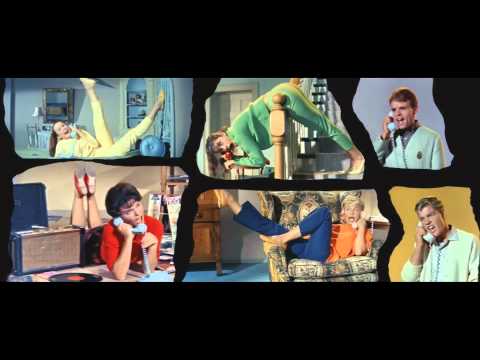
- Telephone Hour
- How Lovely to Be a Woman
- Put on a Happy Face
- Healthy, Normal, American Boy
- One Boy
- Honestly Sincere
- Hymn for a Sunday Evening
- One Last Kiss
- Act 2
- What Did I Ever See in Him?
- Lot of Livin' to Do
- Kids
- Baby, Talk to Me
- Shriner’s Ballet
- Kids (Reprise)
- Spanish Rose
- Rosie
About the "Bye Bye Birdie" Stage Show
The musical’s idea came in the wake of the news that Elvis Presley taken into the army (1957), and he gives his last concert before it, during which shall present a kiss to some girl. They copied the idea and called a hero as Conway Twitty. He possessed completely all the movements and behavior of Elvis. Even in the face of one of the black-and-white photos here, you can see for yourself – he looks like this rock-and-roll legend. Creators got a nasty surprise – it turned out that in real life, such singer as Conway Twitty existed (there was no Google that time, so it was impossible to quickly determine the existence of information in the world). He was trying to sue them for unauthorized use of his name and the creators fast changed the character’s name to Conrad Birdie.Broadway was staged in 1960 (it took 3 years to do the musical) in the Theatre of Martin Beck, then it moved to the Shubert Theatre. Show gave 607 plays. Gower Champion was the director & choreographer. E. Padula was the producer, P. Clark – illuminator, M. White was responsible for the costumes. The actors were: C. N. Reilly, D. V. Dyke, K. Medford, C. Rivera, S. Watson, D. Gautier, G. Wyler, P. Lynde & G. Rayburn.
After closing in 1961, the musical was produced in Los Angeles in the Philharmonic Theatre. West End saw production in the same year. There were such actors: P. Marshall, A. Baddeley, M. Wilde, C. Rivera. Slightly less successful, but it paid-off the production – 268 shows.
Resurrection of the show have been for significant times – first in 1981 on Broadway, then in 1990 during the US tour, then in 2004 in The New York City, then in 2008 in Kennedy Center. 2009 was marked again by the fact that the production came to Broadway. It held there for 2 seasons, in 2010 with the casting: M. Doyle, J. Stamos, A. Trimm, G. Gershon, R. Costello, B. Irwin, N. G. Funk & J. Houdyshell.
Release date: 1960
"Bye Bye Birdie" – The Musical Guide & Song Meanings
Note on “lyrics”: I can’t publish full lyric text. This guide focuses on where the songs sit in the story, what the words are doing dramatically, and how the cast album and recordings preserve the show’s bite.
Review
“Bye Bye Birdie” asks a sly question and then answers it with a scream: what happens when a whole town confuses celebrity with meaning? The show is set in 1958, but it’s written with the instincts of a newsroom. Every lyric is either a headline or a reaction shot. Teens narrate their own lives in slangy choruses. Adults translate panic into manners. Even the love songs feel like public relations, because the central romance is staged for television and monetized like a product launch.
Lee Adams’ lyric craft is deceptively clean. The lines sound casual, but they’re engineered to keep plot moving in real time. You can hear it most in the ensemble writing: “The Telephone Hour” is gossip as counterpoint, a group number that behaves like a switchboard. The score’s style also matters. Charles Strouse isn’t writing “rock.” He’s writing Broadway’s idea of rock, filtered through swing and comedy rhythm, so the satire stays legible while the audience still gets the sugar high. The emotional trick is that the show never fully despises its teenagers. It mocks the frenzy, then admits the frenzy is human.
The best joke in “Birdie” is that sincerity is the brand. Conrad’s signature number insists he’s “honestly sincere,” and the audience is meant to laugh because the phrase is nonsense. But the show also knows why it sells: everyone in Sweet Apple wants something to be true, and pop music offers truth on layaway.
How it was made
“Bye Bye Birdie” was a first strike for its core team: Michael Stewart (book), Charles Strouse (music), Lee Adams (lyrics), and Gower Champion (director-choreographer). It opened on Broadway April 14, 1960 and ran 607 performances across three theatres, becoming the rare new-property comedy that immediately felt like it had always been there.
Its central inspiration is a real cultural tremor: Elvis Presley being drafted into the U.S. Army. Masterworks Broadway’s production note calls that event out as the show’s sly starting point, a piece of recent history turned into a small-town farce. The writers also had a structural challenge: they had to satirize rock stardom while still using pop forms that could land as real musical pleasure. A published interview excerpt attributed to Adams describes “The Telephone Hour” as almost a “fugal” build with rock rhythm, and “One Last Kiss” as deliberate exaggeration, rock style pushed “overboard” to show the absurdity. That’s the show’s secret sauce: the music mocks the craze while borrowing its velocity.
And because the property has lived through decades of licensing, it has developed a second author: staging tradition. “Birdie” is now a choreography hand-me-down. Certain moments, especially the phone-tree number and the teen dance material, are “expected” by audiences because thousands of productions have taught them to expect it.
Key tracks & scenes
Rather than list every number, these are the 8 lyric-and-story junctions that define how “Bye Bye Birdie” works. Song order and basic placement follow the licensor’s published show list and synopsis material.
"The Telephone Hour" (Teen Chorus)
- The Scene:
- Sweet Apple, Ohio. Afternoon light. Teenagers on their phones, passing news like electricity through a grid. Many productions stage it as stacked “phone booths” or cubicles, so the visual feels like a living switchboard.
- Lyrical Meaning:
- This is exposition disguised as social noise. The lyric’s speed is the point: gossip becomes community, and community becomes pressure. Kim’s engagement, Hugo’s jealousy, the town’s obsession, all delivered as chatter that can’t stop talking.
"How Lovely to Be a Woman" (Kim)
- The Scene:
- Kim in her bedroom, performing adulthood in front of a mirror. The light is private and flattering, the kind that lets a teenager believe her life is already a movie.
- Lyrical Meaning:
- It’s optimism with blind spots. The lyric is sincere, which is why it’s funny and why it hurts later. Kim’s idea of “womanhood” is costume and milestone, not consequence.
"Put On a Happy Face" (Albert)
- The Scene:
- Penn Station. Commuter glare. Albert steadies a weeping teen fan as Conrad ships out to Sweet Apple. In the middle of public chaos, he offers a pep talk like it’s a business strategy.
- Lyrical Meaning:
- The lyric is salesmanship dressed as kindness. Albert’s whole job is managing emotion, and this song proves he’s good at it. It’s also the show’s moral irony: “cheer up” is genuine advice and a corporate tactic at the same time.
"A Healthy, Normal, American Boy" (Albert, Rosie, Reporters, Company)
- The Scene:
- Still in the New York departure frenzy, with microphones and flashbulbs turning people into props. The staging often feels like a press scrum in motion, bodies bumping as truth gets rewritten on the spot.
- Lyrical Meaning:
- The lyric is reputation laundering. It’s adults chanting “normal” until they believe it, because “normal” is profitable. The number exposes the show’s thesis: celebrity is manufactured by chorus, not character.
"Honestly Sincere" (Conrad and Company)
- The Scene:
- Sweet Apple gets its first real taste of Conrad. Stage lights go hot. The town gathers like moths around a spotlight, and the girls’ screams become percussion.
- Lyrical Meaning:
- A self-parody anthem that still works as an anthem. The lyric is intentionally empty, which is why the crowd can pour anything into it. “Sincerity” becomes a catchphrase, not a virtue.
"Hymn for a Sunday Evening" (The MacAfee Family and Company)
- The Scene:
- The MacAfee home. Clean living-room light. The family praises Ed Sullivan like he’s church, because television is the new altar and the broadcast is the new proof of worth.
- Lyrical Meaning:
- The lyric is reverence with a grin. It shows how quickly a nation builds ritual around a screen. The number also positions Harry and Doris as “reasonable adults” who still want the camera.
"One Last Kiss" (Conrad and Company)
- The Scene:
- On the televised farewell stage in Sweet Apple. The lighting is deliberately “TV bright,” a wash that makes everything look safe while the scene is emotionally chaotic. Kim is turned into an image before she can understand what that costs.
- Lyrical Meaning:
- The lyric is the show’s central transaction. Romance becomes a ritual sale: one last kiss, one last headline, one last proof that the star is still generous. It’s a number that weaponizes sweetness.
"Kids" (Harry and Doris)
- The Scene:
- Late night, after the town’s frenzy has invaded the house. Softer light. Two parents finally speak honestly, away from the teenage chorus and away from the TV frame.
- Lyrical Meaning:
- A grown-up duet that isn’t sentimental. The lyric says children are chaos and mystery, and the joke is that the parents are also still children, just older ones with bills.
"A Lot of Livin’ to Do" (Conrad, Kim, Teenagers)
- The Scene:
- A teen dance energy surge in Act II. Bright party light, bodies moving like the town is trying to shake off consequences by dancing louder than guilt.
- Lyrical Meaning:
- The lyric is adrenaline as philosophy. It insists on experience now, which sounds romantic until you notice how easily it excuses bad behavior. In “Birdie,” livin’ can be joy, or it can be denial.
Live updates 2025/2026
“Bye Bye Birdie” is not currently running on Broadway, but it remains a high-circulation title through licensing and high-profile regional revivals. In summer 2025, The 5th Avenue Theatre in Seattle mounted a new production (June 10–29, 2025), promoted as a “fresh twist,” with reviews emphasizing energized teen casting and staging. A 2026 season announcement from Gallery Theater schedules the show for March 6–29, 2026, the kind of forward-dated programming that signals how reliably the title sells to community and regional audiences.
The industry subtext is simple: “Birdie” keeps working because it’s a teen-heavy show that reads instantly, and because its satire now plays like history repeating itself. The “drafted idol” may be 1958-specific, but the machinery of fandom, branding, and televised intimacy still looks familiar.
Notes & trivia
- The original Broadway production opened April 14, 1960 and closed October 7, 1961, playing 607 performances across the Martin Beck, 54th Street, and Shubert theatres.
- The Original Broadway Cast album’s first LP release date is listed as May 2, 1960 by the label’s official page for the recording.
- The 1960 cast recording is documented as recorded at Columbia’s 30th Street Studio in New York, a room famous for its acoustics across genres.
- The licensor’s published show list includes “Overture” variants and transitions, a reminder that “Birdie” is as much about pacing as it is about hit songs.
- Concord Theatricals also publishes a Youth Edition, reflecting the show’s long afterlife in teen and school performance ecosystems.
- Major press obituaries for Charles Strouse in 2025 re-centered “Put on a Happy Face” as a signature of his melodic optimism, tying the song’s tone to his broader career identity.
Reception
Then: critics were split on whether the show’s satire was sharp or simply cheerful. Now: the conversation is less about “is it serious?” and more about “why does this keep lasting?” The 2009 Broadway revival reviews read like a referendum on irony: can a show about fake sincerity be played without smirking, and still land? Some writers said the revival felt tame. Others argued that “tame” is the point, because the show’s whole comedy is that America packages rebellion in wholesome wrapping.
“Nothing in Bye Bye Birdie ... is the least bit sincere.”
“Bye Bye Birdie” now seem hokey and tame.
“a pre-Sondheim non-ironic world of musical theatre escapism.”
Technical info
- Title: Bye Bye Birdie
- Year: 1960 (Broadway premiere)
- Type: Musical comedy, satire of late-1950s youth culture and rock stardom
- Book: Michael Stewart
- Music: Charles Strouse
- Lyrics: Lee Adams
- Original director-choreographer: Gower Champion
- Original Broadway run: Apr 14, 1960 to Oct 7, 1961 (607 performances; multiple theatre transfers)
- Selected notable placements (story): “The Telephone Hour” establishes Sweet Apple’s teen hive-mind; “Put On a Happy Face” frames Albert as emotional manager; “One Last Kiss” is the televised farewell stunt.
- Album / label status: “Bye Bye Birdie! (Original Broadway Cast 1960)” on Masterworks Broadway; first LP release listed as May 2, 1960.
- Recording context: Cast album recorded at Columbia 30th Street Studio (as documented by album metadata sites).
- Availability: Cast recording remains on major streaming services; show licensed for productions via Concord Theatricals (including Youth Edition).
- Modern staging snapshot: A 2025 regional revival at The 5th Avenue Theatre and announced 2026 community/regional scheduling indicate continued demand outside Broadway.
FAQ
- Who wrote the lyrics for “Bye Bye Birdie”?
- Lee Adams wrote the lyrics, with music by Charles Strouse and a book by Michael Stewart.
- Where does “The Telephone Hour” happen?
- In Sweet Apple, as teenagers spread news via phone calls. It’s an ensemble exposition number staged like a social network before the internet.
- Is Conrad Birdie supposed to be Elvis?
- He’s not a literal Elvis character, but the show was openly shaped by the cultural moment of Elvis being drafted and the national frenzy around it.
- Is “Bye Bye Birdie” running on Broadway in 2025/2026?
- No current Broadway run is listed. The title’s active life in 2025–2026 is primarily regional productions and licensed performances.
- What should I listen to first if I’m new to the score?
- Start with “The Telephone Hour” for the show’s ensemble engine, “Put On a Happy Face” for its signature optimism-as-management, and “One Last Kiss” for the central satire payoff.
Key contributors
| Name | Role | Contribution |
|---|---|---|
| Michael Stewart | Book | Built the show’s two-world structure: Manhattan publicity machine versus Sweet Apple domestic comedy. |
| Charles Strouse | Composer | Wrote pop-facing Broadway tunes that can parody rock while still delivering genuine hooks. |
| Lee Adams | Lyricist | Engineered fast, plot-carrying ensemble writing (“Telephone Hour”) and brand-satire phrasing (“Honestly Sincere”). |
| Gower Champion | Director / Choreographer | Defined the show’s kinetic comic staging, treating teen culture as movement and crowd behavior. |
| Dick Van Dyke | Original Albert (Broadway) | Created the template for Albert’s anxious charm and anchored “Put On a Happy Face” as a defining number. |
| Chita Rivera | Original Rosie (Broadway) | Gave Rosie bite and velocity, balancing romantic warmth with comedic impatience. |
| Masterworks Broadway | Label / catalog | Maintains the canonical Original Broadway Cast recording and production notes for listeners. |
| Concord Theatricals | Licensing | Publishes show information, song lists, and the Youth Edition, powering the musical’s ongoing performance life. |
Sources: IBDB; Concord Theatricals; Masterworks Broadway; Overture/album metadata (Ovrtur); The Guardian; New York Magazine; Variety; The 5th Avenue Theatre; The Sound on Stage; Washington Post (feature and obituary); 2026 season announcement (Gallery Theater); SteynOnline (interview excerpt with Lee Adams).