Bronx Tale Lyrics – All Songs from the Musical
Bronx Tale Lyrics: Song List
- Act 1
- Belmont Avenue
- Look to Your Hear
- Roll 'Em
- I Like It
- Giving Back the Money
- I Like It (Reprise)
- Ain't It The Truth
- Out of Your Head
- Nicky Machiavelli
- These Streets
- Act 2
- Webster Avenue
- Out of Your Head (Reprise)
- One of the Great Ones
- Ain't It The Truth (Reprise)
- Look to Your Heart (Reprise)
- One of the Great Ones (Reprise)
- Hurt Someone
- In a World Like This
- The Choices We Make
About the "Bronx Tale" Stage Show
A Bronx Tale tells the story of Calogero Anello, a young boy from a working class family who gets involved in the world of organized crime. Calogero's father is a bus driver who tries to instill working-class family values in his son. As Calogero gets older, the aura and mystique of the Mafia, and the charms of Sonny, the local mob boss who befriends Calogero (and ends up becoming a father figure to him), become difficult to resist. As Calogero comes of age, he must struggle with the choice of following his beloved father's values or submitting to the temptations of the life of organized crime.Release date: 2016
“A Bronx Tale” – The Musical Guide & Song Meanings
Note on lyrics: I can’t publish full lyric text here. What I can do is map the songs to the storytelling, explain what the writing is doing, and show why the cast album plays like a tight, street-level audio movie.
Review
Why does this story keep getting retold. Because it sits in a familiar American bruise: a boy learns ethics from a decent father and survival from a dangerous mentor, and both men are right in ways that hurt. The musical version adds an extra twist. It makes the neighborhood sing, then makes you notice what the neighborhood is singing to cover up.
Alan Menken’s score leans into doo-wop as a storytelling engine, not just a period flavor. The corner harmonies work like a Greek chorus that has seen too much. When the music shifts toward funk and harder pop, it usually means the story has crossed from “memory” into “threat.” Glenn Slater’s lyric approach is direct. Sometimes that bluntness reads as clarity. Sometimes it reads as explanation. The show’s best writing tends to happen when the lyric trusts the audience to connect the dots, and lets the rhythm do the persuading.
The real theme is not “crime is bad.” That is too easy. The theme is that charisma is a form of gravity. Sonny doesn’t just tempt Calogero with money or protection. He tempts him with certainty. Lorenzo’s counter-offer is quieter: work, dignity, and a life that won’t make your mother flinch when the phone rings.
How It Was Made
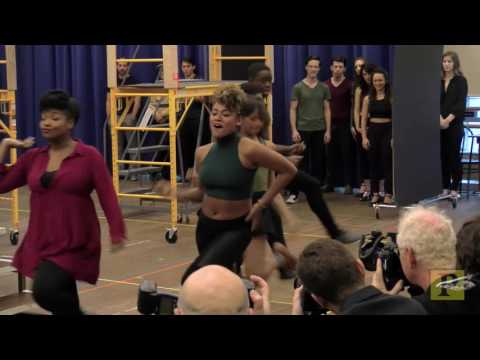
This musical is the third major incarnation of Chazz Palminteri’s autobiographical story: one-man show, film, then stage musical. The 2016 world premiere landed at Paper Mill Playhouse, with Robert De Niro co-directing alongside Jerry Zaks, and Sergio Trujillo supplying choreography that keeps the streets in motion even when the plot turns inward.
In interviews around the Paper Mill premiere, the creative team framed the adaptation as a shift in language: the film’s realism becomes stage shorthand, and the music takes on the job of atmosphere, community, and memory. That choice explains why the score returns so often to street-corner sonics. It is the show’s way of saying, “this place is always listening.”
The cast recording release strategy also tells you what kind of producer-forward musical this was. The album was built to keep the story alive after the curtain, with digital release first, then physical and streaming windows later. It was a Broadway-era approach to reach listeners who may never have made it to the Longacre.
Key Tracks & Scenes
“Belmont Avenue” (Calogero, Doo-Wop Guys, Company)
- The Scene:
- The stoop. Summer light that feels almost friendly. Calogero narrates his block while the corner singers stitch harmony behind him. It’s bright, then edged. The neighborhood introduces itself like a grin that can turn into a warning.
- Lyrical Meaning:
- This is a map song. The lyric is building a code of behavior: who’s respected, who’s feared, who’s watched. It’s also Calogero’s first act of myth-making, because he’s telling you his childhood like it already has a moral.
“Look to Your Heart” (Lorenzo, Young Calogero)
- The Scene:
- Interior warmth. A father trying to raise a son in a place that rewards loudness. Lighting narrows to something intimate, almost domestic, as if the walls are trying to protect them.
- Lyrical Meaning:
- Menken writes this like advice you could hum, and that’s intentional. Lorenzo’s ethic is meant to be remembered. The lyric is simple on purpose: a moral compass for a kid who keeps being offered shortcuts.
“Roll ’Em” (Sonny, Young Calogero, Company)
- The Scene:
- Sonny’s world, louder and riskier. A craps game with heat in the air. The staging tends to go kinetic: bodies pressing in, eyes locked, the sense that one wrong word will cost you.
- Lyrical Meaning:
- This song teaches Calogero the seduction of rules that change depending on who’s enforcing them. The lyric isn’t only about gambling. It’s about power. It tells you who gets to win before the dice land.
“I Like It” (Young Calogero, Company)
- The Scene:
- A boy showing off that Sonny knows his name. The street becomes a stage. The doo-wop sound goes sunny, almost comedic, while the adults clock what this new status could mean.
- Lyrical Meaning:
- This is innocence wearing swagger like a costume. The lyric makes “belonging” sound fun, then the plot spends the rest of the show asking what the price of that belonging is.
“Out of Your Head” (Calogero, Jane)
- The Scene:
- A quieter pocket inside the noise. Calogero and Jane try to talk like teenagers while the city’s racism keeps interrupting them. Lighting softens, then hardens whenever reality pushes back.
- Lyrical Meaning:
- The lyric is about forbidden attraction, but it’s also about self-protection. Both of them are doing math: what do we risk if we keep going, and what do we lose if we stop.
“Webster Avenue” (Jane, Tyrone, Ensemble)
- The Scene:
- Across the line, across the tracks, across the social permission structure. The music shifts toward Motown-style lift, and the stage picture often becomes more communal, more synchronized.
- Lyrical Meaning:
- This is the score refusing a single-neighborhood perspective. The lyric re-centers the show’s racial tension by giving the Black characters their own sonic authority, not just plot function.
“One of the Great Ones” (Sonny)
- The Scene:
- Sonny in full legend mode. The room feels like a lounge and a courtroom at the same time. Spotlighting tends to isolate him, because charisma is his weapon and his shield.
- Lyrical Meaning:
- This is a Sinatra-shaped fantasy of masculinity: cool, untouchable, admired. The lyric matters because it tells you what Sonny believes about himself, and why Calogero finds that belief addictive.
“Hurt Someone” (Tyrone, Calogero, Company)
- The Scene:
- Act II pressure. The temperature spikes. Movement tightens into confrontation. The lighting tends to go harsher, as if the stage is turning into a streetlight interrogation.
- Lyrical Meaning:
- The lyric is an ultimatum disguised as loyalty. It asks the central question of the piece in cruel shorthand: when the group wants blood, what kind of man are you willing to be to keep your place in it.
Live Updates
As of January 14, 2026, A Bronx Tale: The Musical is not on Broadway, and its original Broadway run is documented as ending August 5, 2018. What’s current is its licensing life. Broadway Licensing acquired worldwide amateur and professional rights in 2018, and Concord Theatricals lists both the full version and a High School Edition, which keeps the title in heavy rotation for regional companies and schools.
Recent and upcoming examples show that rotation is real, not theoretical. The Mac-Haydn Theatre staged the musical July 10–20, 2025, with publicly posted ticket prices and runtime details. BroadwayWorld also lists an August 2025 run at Lighthouse Repertory Theatre on Long Island. For 2026, multiple venues are already advertising the title as part of their seasons, including The REV Theatre Co. (Finger Lakes) and the Broadway Theatre of Pitman (New Jersey) with April–May 2026 dates on sale.
Translation: this show’s “present tense” is not a splashy Broadway revival. It’s the steady churn of American stages that like a recognizable story, a big ensemble, and a score that lets the audience leave humming even when the subject matter gets dark.
Notes & Trivia
- The Broadway production opened December 1, 2016 at the Longacre Theatre, with previews beginning November 3, 2016.
- IBDB lists the Broadway run as 700 performances with 28 previews, closing August 5, 2018.
- The musical premiered at Paper Mill Playhouse in February 2016 before transferring to Broadway later that year.
- The North American tour launched in Rochester on October 14, 2018; IBDB lists the tour as running through August 4, 2019.
- The Original Broadway Cast Recording was released digitally March 24, 2017 via Ghostlight Records, with later physical and streaming windows announced for spring/summer 2017.
- Concord Theatricals offers a High School Edition with a detailed, numbered track sequence that reveals how tightly the show is built for scene-to-song momentum.
- Alan Menken’s official work page for the show highlights “Behind the Music” video segments for specific songs, including “One of the Great Ones” and “Roll ’Em,” a rare window into the score’s intent.
Reception
Critical response has always split along a predictable line: people who want the story to hit harder sometimes find the musical version too comfortable, and people who want a clean night out tend to enjoy its craft. The lyric writing is a frequent flashpoint. Some reviewers praise the clarity. Others argue it explains what the staging already shows.
“A crowd-pleasing musical adaptation.”
“Glenn Slater's lyrics… are often too on the nose.”
“It clicks like a new Rolex.”
Over time, the cast album has become part of the show’s argument for itself. Even skeptics often concede that Menken can write a street-corner hook that sticks, and that the score knows exactly when to sweet-talk you and when to tighten the screws.
Technical Info
- Title: A Bronx Tale: The Musical
- Year: 2016 (stage premiere; Broadway opening December 1, 2016)
- Type: Musical drama (1960s neighborhood coming-of-age)
- Book: Chazz Palminteri
- Music: Alan Menken
- Lyrics: Glenn Slater
- Co-Directors (Broadway): Robert De Niro; Jerry Zaks
- Choreography: Sergio Trujillo
- Broadway venue: Longacre Theatre
- Broadway run: Nov 3, 2016 (previews) to Aug 5, 2018; 700 performances; 28 previews
- Tour: North American tour opened Oct 14, 2018; tour closing listed Aug 4, 2019
- Selected notable placements: “Belmont Avenue” as scene-setting opener; “Hurt Someone” as a key Act II escalation; “One of the Great Ones” as Sonny’s self-mythology number
- Cast album: Original Broadway Cast Recording (Ghostlight Records; digital release March 24, 2017; 19 tracks listed on Spotify)
- Licensing: Available for production via Concord Theatricals; rights announced via Broadway Licensing
FAQ
- Is the musical the same as the 1993 film?
- It follows the same core autobiographical story and many of the same moral beats, but the musical emphasizes community voice, using doo-wop-style “corner” sound and ensemble framing to turn the neighborhood into a character.
- Who wrote the lyrics?
- Glenn Slater wrote the lyrics, with Alan Menken composing the music and Chazz Palminteri writing the book.
- What is the main lyrical motif of the score?
- Advice versus temptation. “Look to Your Heart” functions like a repeated moral anchor, while Sonny’s material frames power as identity. The show keeps making Calogero choose which voice he wants to sound like.
- What are the best songs to start with on the cast album?
- Try “Belmont Avenue” for the setting and tone, “Out of Your Head” for the love story under pressure, and “Hurt Someone” for the show at its most volatile.
- Is the show still being produced in 2025/2026?
- Yes, mainly through regional and licensed productions. Multiple theatres listed public runs in 2025 and have announced 2026 season dates, and a High School Edition is available through the licensing publisher.
Key Contributors
| Name | Role | Contribution |
|---|---|---|
| Chazz Palminteri | Book / Source Author | Adapted his autobiographical story into a stage book with narrator-driven momentum. |
| Alan Menken | Composer | Built a 1960s-inflected score that uses doo-wop and pop to carry memory, menace, and romance. |
| Glenn Slater | Lyricist | Wrote direct, story-forward lyrics that prioritize clarity and character point-of-view. |
| Robert De Niro | Co-Director | Helped translate the film’s street realism into stage pacing and tone. |
| Jerry Zaks | Co-Director | Guided the Broadway staging vocabulary and performance shape. |
| Sergio Trujillo | Choreographer | Created movement language that keeps the block alive: social dance, intimidation, and ensemble storytelling. |
Sources: IBDB; Playbill; Broadway.com; Concord Theatricals; AlanMenken.com; The Hollywood Reporter; Observer; New York Theatre Guide; Playbill (licensing); BroadwayWorld (regional listings); Mac-Haydn Theatre (2025 season/news); The REV Theatre Co.; Broadway Theatre of Pitman.