
Bring In 'Da Noise, Bring In 'Da Funk Lyrics: Song List
- Act 1
-
Bring in 'Da Noise, Bring in 'Da Funk 1

- The Door to Isle Goree
-
Slave Ships
- Som'thin' From Nuthin'/Circle Stomp
-
The Pan Handlers
- The Lynching Blues
-
Chicago Bound
- Shifting Sounds
- Industrialization
- The Chicago Riot Rag
- I Got The Beat/Dark Tower
- The Whirligig Stomp
- Act 2
- Now That's Tap
- The Uncle Huck-A-Buck Song
- Kid Go!
- The Lost Beat Swing
- Green, Chaney, Buster, Slyde
- Them Conkheads
- Hot Fun
- Blackout
- Gospel/Hip Hop Rant
-
Taxi
- Tradin' Hits
- Hittin'
-
Bring in 'Da Noise, Bring in 'Da Funk (Reprise)
About the "Bring In 'Da Noise, Bring In 'Da Funk" Stage Show
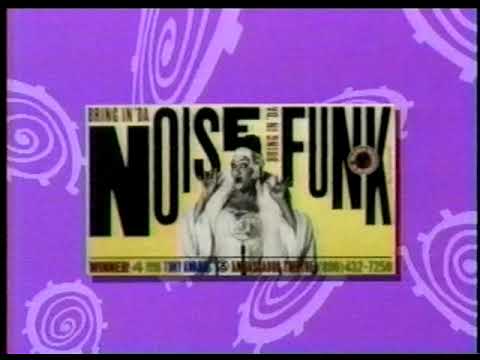
Production was first made in 1995 in the Public Theater in New York in the frames of Shakespeare’s Festival, and a year later, it was staged on Broadway. George Wolfe was the director, and several people worked on the music & the words: A. Duquesnay, Z. Mark & D. Waters. S. Glover was responsible for the staging of choreography.
The opening of the musical received mixed reviews, and the production was closed after 85 shows, at the beginning of 1996. On Broadway, it lasted much longer, 1135 performances and it was also organized the second display for extra 40 shows during 1998 – 1999. Ambassador Theatre was the host of production and the cast included: S. Glover, A. Duquesnay, D. Hill. Dressing was on Karen Perry, lighting was set by P. Eisenhauer & J. Fisher.
The national tour of the musical was held in 2002, but its details were not disclosed. Recording the music on CD is also held in early 2000.
Tony Award was given to this musical for its choreography.
Release date of the musical: 1996
"Bring in ’Da Noise, Bring in ’Da Funk" – The Musical Guide & Song Meanings
Review
What if the sharpest line in a musical is a heel drop. What if the chorus is a crowd refusing to be quiet. That is the wager of Bring in ’Da Noise, Bring in ’Da Funk, the 1995 Public Theater phenomenon that hit Broadway in 1996 and ran until January 10, 1999. The show calls itself a “Tap/Rap Discourse on the Staying Power of the Beat,” and that subtitle is not branding. It is instruction. You do not watch this piece the way you watch a book musical. You watch it the way you watch a city. Fast. Loud. Patterned. Then suddenly personal.
Its “lyrics” live in three places at once: Reg E. Gaines’ spoken-word/rap text, the musical arrangements around it, and Savion Glover’s choreography, which treats tap as an argumentative language. The plot is not a single character’s journey, but a sequence of historical jolts: slavery, forced labor, migration, entertainment industry caricature, riots, street life, and the uneasy present tense. The structure is revue-like and explicit about it, using projected images, supertitles, and direct commentary to frame each section. That framing matters. It refuses the comfort of pretending the past is “back there.” It keeps dragging it under the stage lights with you.
Musically, it is built from funk, rhythm-and-blues, jazz colors, hip-hop cadences, and drumming that often feels like a second percussion section inside the dancers’ shoes. The score’s job is not to soften the edges of Gaines’ language. It is to put pressure on it. The most memorable moments are frequently the ones that do not “sing” in the traditional sense. They snap. They jab. They circle a word until it changes meaning.
If you came here looking for full lyric reprints, you will not find them below. The writing is copyrighted, and a responsible guide should treat the material with care. What you will get is what the text is doing, where it lands in the show’s timeline, and why the cast album remains one of the most instructive documents of 1990s Broadway experimentation.
How It Was Made
Noise/Funk began as a concept, not a tidy script. George C. Wolfe’s early spark was to treat Savion Glover as a “living repository of rhythm,” and build a theatrical history around that idea. That is a revealing origin. It explains why the show often feels authored by the body first and by the page second. Gaines’ poetry and rap supply narrative pressure, but the dance is the argument’s delivery system.
The collaboration was openly discussed as a collaboration, not a hierarchy. Wolfe and Glover talked publicly about their process during the Broadway run, framing the piece as something forged through rehearsal-room decisions as much as through finished pages. That matters for lyric analysis because you can hear the room in the album: call-and-response phrasing, crowd-surge transitions, and text that reads like it was designed to be interrupted by feet.
On Broadway, the show kept key members of its downtown design DNA and scaled the event up: Ricardo Hernandez’s environment, Jules Fisher and Peggy Eisenhauer’s lighting, and a production language that leans on projections and headings to orient the audience as the decades flip. The point is not naturalism. The point is focus. Each vignette arrives with a label, then tries to outgrow it.
Key Tracks & Scenes
Below are eight tracks where the writing, staging concept, and album arrangement lock together. Scene descriptions reflect the show’s documented vignette structure and its reliance on projected headings and commentary, plus the way specific numbers are consistently discussed in criticism and performance history.
"The Door to Isle Gorée" (’da Voice)
- The Scene:
- A cold reset. A projected title does the blunt work a painted backdrop would romanticize. The stage becomes a threshold. The ensemble holds still longer than you expect, as if the room itself is listening for a decision that was never theirs to make.
- Lyrical Meaning:
- This is the show’s first major act of naming. Gorée is not metaphor. It is a place, and the lyric posture is witness, not nostalgia. The text leans on direct address. It asks the audience to stand at the door and admit what doors are for.
"Slave Ships" (’da Singer and ’da Beat)
- The Scene:
- The rhythm tightens into containment. You can feel the choreography limiting space, then weaponizing the little that remains. Lighting compresses the bodies into shapes that read like inventory, not community.
- Lyrical Meaning:
- Here the writing turns repetition into machinery. Short phrases return like oars. Even when you cannot quote the text, you can hear its design: lines built to be stamped into the floor, as if language has to become percussion to survive.
"Som’thin’ From Nuthin’ / The Circle Stomp" (Company)
- The Scene:
- A communal release that is not relief. The circle is a survival diagram. The tempo invites joy and then refuses to pretend joy is the whole story. The ensemble becomes a moving engine, rotating energy through individual solos and back into the group.
- Lyrical Meaning:
- This is one of the show’s clearest statements about creation under pressure. “Making” becomes theme, not just action: making sound, making self, making future. The lyric idea is simple and brutal: when the world gives nothing, you manufacture rhythm anyway.
"The Lynching Blues" (’da Singer, Baakari, Company)
- The Scene:
- The room turns watchful. The lighting chills. Movement that was previously athletic becomes deliberate, almost ceremonial, because the subject is public violence. Critics have noted the audience reaction this number triggers, and you can understand why: it refuses distance.
- Lyrical Meaning:
- “Blues” here is not genre shorthand. It is moral accounting. The lyric stance is accusation without melodrama, and that restraint is what makes it sting. The show insists that spectacle has always been part of the crime, and it makes the theatre complicit.
"Chicago Bound" (’da Beat, ’da Singer, Jared, Company)
- The Scene:
- A migration number that moves like a timetable. The stage language shifts toward urban pace: street-corner geometry, sharper angles, a sense of bodies learning new rules of proximity. You can almost see the skyline in the spacing.
- Lyrical Meaning:
- The writing frames migration as both escape and new bargain. The lyric logic is not “North equals freedom.” It is “North equals different constraints.” The song’s propulsion is the message: movement is necessary, and never clean.
"Now That’s Tap" (Grin & Flash)
- The Scene:
- A thesis statement in performance form. The number is both demonstration and rebuttal: tap is not a museum trick, not a polite specialty act. It is a modern instrument, and the show treats it like a drum kit with memory.
- Lyrical Meaning:
- Even when the lyric content is minimal, the “text” is embedded in form. The piece argues that technique carries history. Every clean phrase is a citation. Every break is a refusal to be boxed into novelty.
"The Uncle Huck-a-Buck Song" (Uncle Huck-a-Buck, Lil’ Dahlin’, Company)
- The Scene:
- Bright surfaces. Tight smiles. A show-within-the-show feeling, like a studio set with invisible cameras. It is funny until it is not, because the joke is built from stereotypes that once paid the rent.
- Lyrical Meaning:
- This is satire with teeth. The lyric strategy is exaggeration that exposes the bargain behind “acceptance.” The number lets you laugh, then catches you laughing. That snap-back is the point.
"Taxi" (Company)
- The Scene:
- One of the show’s best-known set pieces, popularized for many through televised performance clips. The staging is street-level realism filtered through rhythm: a hail, a refusal, a second hail, a second refusal. The pattern becomes percussion.
- Lyrical Meaning:
- “Progress” is measured in small humiliations. The lyric idea is contemporary and painfully legible: access is negotiable, and the negotiation is exhausting. The hook is not a melody. It is the recurring motion of being seen and denied.
Live Updates
As of January 14, 2026, Bring in ’Da Noise, Bring in ’Da Funk is not running on Broadway. The primary industry record lists the original Broadway run (April 25, 1996 through January 10, 1999) and a late-1990s national tour, but no current commercial engagement in those databases. The Public Theater’s 2025-26 season announcement explicitly flags the show’s 30th anniversary (dating the premiere to November 1995), a reminder that the piece is still a pillar in the institution’s story even when it is not on a marquee.
What is current is the show’s afterlife in tap culture. The Library of Congress positions the work as a turning point that grounded jazz tap history inside African American identity, and recent writing in tap-focused media still frames Noise/Funk as a modern reference point for rhythm tap and theatrical scale. Meanwhile, Savion Glover remains highly visible as a major choreographic voice, including high-profile regional projects and media appearances that keep his approach in circulation, even when Noise/Funk itself is not mounted.
For audiences, the practical “now” often means the album. The Original Broadway Cast Recording was released by RCA Victor, and major platforms continue to carry it. If you want the cleanest audio entry point into the piece’s structure, the album remains the most accessible document, even though it cannot replicate the onstage impact of bodies hitting wood in a shared room.
Notes & Trivia
- The show premiered Off-Broadway at The Public Theater in November 1995 before opening at the Ambassador Theatre on April 25, 1996.
- It ran 1,135 performances on Broadway and closed January 10, 1999.
- The show’s credited music team includes Daryl Waters, Zane Mark, and Ann Duquesnay, with lyrics credited to Reg E. Gaines, George C. Wolfe, and Duquesnay.
- IBDB’s song breakdown identifies “Taxi” as a late Act II set piece, reinforcing how the show ends by insisting the “present tense” is part of the history lesson.
- The production won Tony Awards for George C. Wolfe (Direction), Savion Glover (Choreography), Ann Duquesnay (Featured Actress), and Jules Fisher & Peggy Eisenhauer (Lighting).
- AllMusic lists the cast album release date as July 30, 1996, and notes it was recorded at the Ambassador Theatre in New York.
- The Library of Congress explicitly describes the show’s subtitle as “A Tap/Rap Discourse on the Staying Power of the Beat,” a phrase that functions like the piece’s mission statement.
Reception
Noise/Funk’s critical story is unusually consistent: reviewers tend to describe it as both exhilarating and confrontational, and they often emphasize how the form itself carries political meaning. When it hits, it hits as theatre, dance concert, and historical argument at once.
“Exultant, mournful, lyrical and mocking, the piece spans the centuries from slavery to hip-hop.”
“The songs aren’t the main point … it makes cogent stops at cotton fields, factories, sound stages, and prisons.”
“This sense of flaming individuality is finally what the evening is about.”
Over time, the conversation around the show has also shifted from “breakthrough novelty” to “blueprint.” It is now widely referenced as a reset point for what tap could carry on a Broadway scale: not just virtuosity, but history, critique, and character. You can hear that shift in institutional language too, where Noise/Funk is increasingly cited as a landmark work rather than a one-off sensation.
Technical Info
- Title: Bring in ’Da Noise, Bring in ’Da Funk
- Broadway year: 1996 (opened April 25, 1996)
- Type: Dance-driven musical revue / historical vignettes
- Book: Reg E. Gaines
- Lyrics: Reg E. Gaines; George C. Wolfe; Ann Duquesnay
- Music: Daryl Waters; Zane Mark; Ann Duquesnay
- Conceived & Directed: George C. Wolfe
- Choreography: Savion Glover
- Notable staging language: Projected images/supertitles and commentary framing the vignettes
- Selected notable placements (within the show’s timeline): “The Door to Isle Gorée” and “Slave Ships” (early history); “The Lynching Blues” (public terror); “Taxi” (contemporary street-level discrimination)
- Broadway run: 1,135 performances; closed January 10, 1999
- Original Broadway Cast Recording: RCA Victor; catalog number commonly listed as 09026-68565-2
- Album release context: AllMusic lists release date July 30, 1996; recorded at the Ambassador Theatre, New York
- Availability: Widely available via major streaming platforms (Apple Music, Spotify) alongside physical reissues/resales
FAQ
- Is there a movie version of Bring in ’Da Noise, Bring in ’Da Funk?
- No widely released feature film adaptation exists. The show is best encountered via stage production history and performance clips (including awards-show appearances) plus the cast album as an audio document.
- Who wrote the lyrics?
- The show credits lyrics to Reg E. Gaines, George C. Wolfe, and Ann Duquesnay, with Gaines also credited for the book.
- What is the show “about” if it doesn’t have a single main character?
- It is a history of Black life in America staged as vignettes, where rhythm and movement carry the connective tissue. It moves from slavery through urbanization and into modern-day scenes of exclusion and resilience.
- Which songs should I start with if I only listen to three?
- Try “The Door to Isle Gorée” (the show’s ethical threshold), “The Lynching Blues” (its most confrontational historical bruise), and “Taxi” (its modern-day echo).
- Why is “Taxi” such a famous sequence?
- Because it compresses a systemic problem into a simple repeated action, and repetition is what tap and hip-hop understand instinctively. The pattern becomes the point.
Key Contributors
| Name | Role | Contribution |
|---|---|---|
| George C. Wolfe | Conceiver / Director / Lyricist | Built the piece’s theatrical argument, framing history through a contemporary stage language. |
| Savion Glover | Choreographer / Performer (original production) | Defined the show’s rhythmic vocabulary and its refusal to treat tap as ornament. |
| Reg E. Gaines | Book / Lyricist | Supplied the spoken-word backbone: rap, commentary, and narrative glue. |
| Ann Duquesnay | Composer / Lyricist / Performer | Shaped the musical identity and vocal textures; a key onstage presence in the original era. |
| Daryl Waters | Composer | Anchored the score’s groove and Broadway-scale orchestration instincts. |
| Zane Mark | Composer / Musical Director (credited) | Helped fuse hip-hop pulse with theatrical structure and ensemble pacing. |
| Jules Fisher & Peggy Eisenhauer | Lighting Design | Created the show’s time-travel lighting logic: stark, documentary, and emotionally precise. |
Sources: IBDB; Playbill; The Public Theater (2025-26 season announcement PDF); Library of Congress; Masterworks Broadway; AllMusic; Apple Music; Spotify; batwin + robin productions project page; Cast Album Reviews; SFGate (San Francisco Chronicle).