Blood Brothers Lyrics – All Songs from the Musical
Blood Brothers Lyrics: Song List
- Overture
- Marilyn Monroe
- My Child
- Easy Terms
- Shoes Upon the Table
- July 18th
- Kids' Game
- Gypsies in the Wood
- Long Sunday Afternoon/My Friend
- Bright New Day
- Secrets
- Marilyn Monroe 2
- That Guy
- Summer Sequence
- I'm Not Saying a Word
- One Day in October
- Take a Letter Miss Jones
- The Robbery
- Marilyn Monroe 3
- Light Romance/Madman
- The Council Chamber
- Tell Me It's Not True
About the "Blood Brothers" Stage Show
Willy Russell is the writer who presented a play for his school activities in 1982, which was staged in the Merseyside Young People's Theatre that is now called the New Theatre For Young People. After a successful reception by the public, he made a musical adaptation and set it up in 1983. The actors in it were: A. C. Wadsworth, G. Costigan, A. Schofield & B. Dickson.West End took the play in 1983, in April, where it continued until the autumn of the same year, winning the Olivier Award. Tour of the UK began in early 1984. The second round was held in 1987, where producer were Bill Kenwright, and Bob Tomson as the director. Cast: R. Locke, C. O'Neill, W. Evans & K. Dee. The show was held in the Noël Coward Theatre. For this version of the play, it received another Olivier Award and one nomination for it.
In 1988, it was a new discovery, and it lasted until 1991, and then moved to the Phoenix Theatre, where it continued until the closure after many years, in 2012 (the play was going for 21 years without a break). Staging was a huge success, as evidenced by the very fact that it had over 10,000 productions only in the last period of time. This figure allowed this musical to enter the top three on the number of shows in London. National tour in 2012 – 2013 took place with no less resounding success.
Actor Alex Harlan took part in this musical for more than 4000 performances. Although his role was small, he was consistently provided with work for many years.
There were as much as 6 tours in the country – in 1995, 2008, 2010 and 2012. It also flew to Australia in 1988 and in Sydney was its resurrection at the beginning of 2015, where Enda Markey was a producer, Andrew Pole – director, Michael Tyack was responsible for music. The Melbourne production is scheduled for 2016. On Broadway, the show was staged for the first time in 1993 and was closed after 840 performances – successful quantity.
Release date: 1993
"Blood Brothers" – The Musical Guide & Song Meanings
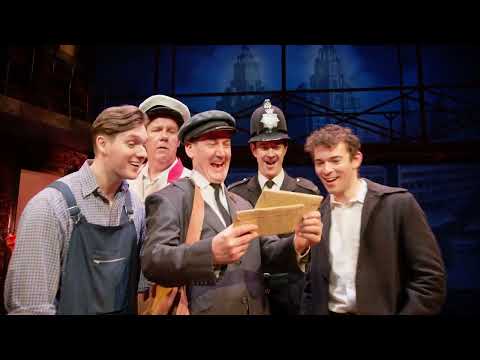
Review
Why does a musical that telegraphs its ending still wreck audiences night after night? Because "Blood Brothers" does not rely on surprise. It relies on repetition. Willy Russell writes like someone who knows how superstition actually works: you hear the warning, you laugh, you ignore it, and then you live inside the consequences. The Narrator’s language is part Greek chorus, part street-corner gossip. He is not there to guide you. He is there to pressure you.
The lyrics are built from everyday phrases, cheap jokes, and sudden knives. Russell keeps switching registers. A Mrs Johnstone number can sound like a pub singalong until it doesn’t. A romantic passage will turn on one pragmatic line that reveals class as a trap, not a theme. The score’s pop simplicity is not “easy.” It is strategic. A tune that feels familiar lets Russell smuggle in the real idea: the twins are not doomed by fate alone. They are shaped by housing, wages, schooling, policing, and what the adults choose to hide.
Stylistically, the music lives in British pop and music-hall colors with dramatic theatre timing. The result is a show that moves fast, almost impatiently. That pace is moral. It mirrors how quickly small decisions pile up until they become irreversible.
How It Was Made
The most useful origin fact about "Blood Brothers" is that it began as a play, not a musical, and the limitations came first. On Willy Russell’s official site, he describes writing the first incarnation for Merseyside Young Peoples Theatre with strict constraints: about seventy minutes, no more than five actors, minimal props, and no lighting beyond whatever a school hall could offer. Those restrictions are audible in the finished musical. The writing stays lean. Scenes cut quickly. Songs often function like compressed scenes, getting in, landing the point, getting out.
That early “school hall” DNA also explains the show’s clarity. Russell writes character motives so plainly that directors can stage it in a bare room and still hit hard. Bill Kenwright’s long stewardship turned that clarity into a touring machine, and the show’s durability has come less from reinvention and more from disciplined delivery.
Key Tracks & Scenes
"Overture / Tell Me It's Not True" (Mrs Johnstone, Narrator)
- The Scene:
- We open on the aftermath. Two bodies. A crowd. Mrs Johnstone is lit like a witness under interrogation, while the Narrator frames the story as something already sealed. The stage picture is spare and unforgiving, as if the show refuses to let you ease in.
- Lyrical Meaning:
- The lyric is denial as a prayer. It teaches you how the show works: the ending is announced, and the audience spends two acts bargaining with it anyway.
"Marilyn Monroe" (Mrs Johnstone)
- The Scene:
- Liverpool, late 1950s. A working-class kitchen that never quite rests. Warm light that still feels cramped. Mrs Johnstone sings her own biography like a joke she’s tired of telling.
- Lyrical Meaning:
- “Marilyn” is not glamour here. It’s a measuring stick men use, then discard. The lyric shows how quickly a woman’s life becomes a series of roles other people assign.
"My Child" (Mrs Lyons, Mrs Johnstone)
- The Scene:
- The Lyons home. Clean lines, colder light, money in the air. Mrs Lyons’ desperation stays controlled, almost polite. That restraint is what makes it dangerous.
- Lyrical Meaning:
- The song is persuasion dressed as empathy. The lyric pushes Mrs Johnstone toward a choice framed as “help,” while the power imbalance is doing all the real work.
"Easy Terms" (Mrs Johnstone)
- The Scene:
- After the birth. The room feels suddenly hollow. Lighting tightens into a smaller pool as Mrs Johnstone realizes what she has agreed to. It plays like the moment a contract becomes permanent.
- Lyrical Meaning:
- Russell writes regret without poetry. “Easy terms” becomes bitter irony: the deal was never “easy,” it was just rushed, and rushing is the show’s recurring sin.
"Shoes Upon the Table" (Mrs Lyons, Narrator)
- The Scene:
- Mrs Lyons leans into superstition like it’s a weapon. Light angles across the stage with a faint horror-film edge. The Narrator’s presence turns the scene into a warning siren.
- Lyrical Meaning:
- This is where “fate” is manufactured. The lyric shows how superstition can be planted, watered, and used to keep people obedient.
"Kids' Game" (Young Mickey, Young Eddie, Children)
- The Scene:
- Outside, on a street that feels like a playground and a battlefield. Bright, open lighting. The boys meet and bond fast, because kids do. The audience already knows the secret that will poison the friendship later.
- Lyrical Meaning:
- The lyric is innocence with a ticking clock underneath. It captures how class is invisible to children until adults teach it.
"Bright New Day" (Mrs Johnstone, Company)
- The Scene:
- A move to a nicer neighborhood. The stage opens up. Light warms. It looks like upward mobility. It feels like relief. But the Narrator’s tone keeps the celebration slightly off-balance.
- Lyrical Meaning:
- This is the show’s most seductive promise: that a change of address can change a life. Russell lets it soar, then quietly reminds you that the past moved with them.
"I'm Not Saying a Word" (Mrs Johnstone)
- The Scene:
- Mrs Johnstone alone, finally, after holding everything together in public. Lighting drops to something private and bruised. Silence becomes part of the orchestration.
- Lyrical Meaning:
- The lyric is suppression as survival. She is not “strong” in a heroic way. She is strong because she has no choice. The song is a portrait of emotional debt.
"Tell Me It's Not True" (Company)
- The Scene:
- The end returns. The same words hit again, now with full context. The stage picture often echoes the opening, but it feels heavier because the audience has lived through every step.
- Lyrical Meaning:
- Repetition becomes grief. The lyric lands as a communal refusal to accept what the system made inevitable.
Live Updates
"Blood Brothers" is actively touring the UK across 2025 and 2026 under Bill Kenwright Limited. Official tour information confirms Spring 2026 casting that includes Vivienne Carlyle as Mrs Johnstone, Sean Jones as Mickey, Joe Sleight as Eddie, Gemma Brodrick as Linda, and Laura Harrison as Mrs Lyons, with Richard Munday and Kristofer Harding sharing the Narrator.
The key 2025 to 2026 story is continuity. This is not a nostalgia title being dusted off. It is an operating touring property with a stable creative identity, refreshed through casting rather than redesign. For audiences, that means the show’s impact is still coming from the same engine: the Narrator’s pressure, the mother’s compromise, and the quiet violence of “different lives” that never stop colliding.
Notes & Trivia
- The first incarnation of "Blood Brothers" was a short play for Merseyside Young Peoples Theatre, written with strict constraints on length, cast size, and technical resources.
- The original Broadway production opened April 25, 1993 at the Music Box Theatre and closed April 30, 1995, running 13 previews and 840 performances.
- On Broadway, Willy Russell was credited with book, music, and lyrics; the production was directed by Bill Kenwright and Bob Tomson.
- IBDB credits include Production Musical Direction by Rod Edwards, Musical Director Rick Fox, and music arranged by Del Newman.
- A widely circulated commercial recording is the London Revival Cast Recording, released in 1993 and available on streaming services.
- Multiple sources note that the 1993 Broadway production did not release its own cast album, which is unusual for a long-running Broadway show.
- The official tour site publishes a full song list, including "Marilyn Monroe," "Bright New Day," and "Tell Me It's Not True," reinforcing how central reprises are to the score’s storytelling.
Reception
Critics have argued about "Blood Brothers" for decades, and the disagreement is revealing. Some reviewers hear emotional manipulation, with the score underlining every beat so loudly it feels like instruction. Others hear craft: a working-class voice in musical theatre that refuses to apologize for melodrama because melodrama is the point. Over time, the show’s reputation has become less about whether the plot is “big” and more about whether Russell’s lyric directness is an artistic virtue or a blunt instrument.
In the early Broadway era, one major trade review complained that the production pushes every point with ominous force, a critique aimed as much at the staging and arrangement style as at the writing.
In later reassessments, British critics have praised the show’s authentic voice and political spine, describing it as melodic and socially rooted rather than merely sentimental.
“Every emotional and political point is underscored by threatening music, shrieks of horror and, above it all, the Narrator.”
“An authentic working-class voice, socialist principles and sweetly melodic songs.”
“An emotionally true performance that grips from the start.”
Technical Info
- Title: Blood Brothers
- Broadway year: 1993 (Music Box Theatre)
- Type: Full-length musical (drama)
- Book, music, lyrics: Willy Russell
- Original Broadway producers: Bill Kenwright (Associate Producer: Jon Miller)
- Original Broadway directors: Bill Kenwright and Bob Tomson
- Music supervision (Broadway credits): Production Musical Direction: Rod Edwards; Musical Director: Rick Fox; Music arranged by Del Newman
- Selected notable placements: “My Child” (the bargain), “Shoes Upon the Table” (superstition as control), “Kids’ Game” (the boys bond), “Bright New Day” (relocation hope), “I’m Not Saying a Word” (maternal collapse), “Tell Me It’s Not True” (fatal recap)
- Album / soundtrack status: No original Broadway cast recording is widely listed; a key commercial album is the 1993 London Revival Cast Recording (streaming availability varies by region).
- 2025–2026 live footprint: Active UK tour under Bill Kenwright Limited, with Spring 2026 cast publicly announced.
FAQ
- Who wrote the lyrics for "Blood Brothers"?
- Willy Russell wrote the book, music, and lyrics.
- Where does "Tell Me It's Not True" happen in the story?
- It frames the tragedy and returns at the end, functioning as both prologue and emotional verdict.
- Why is the Narrator so important?
- He is the show’s pressure system. He repeats warnings, needles superstition, and keeps the audience aware that class and secrecy are actively shaping the ending.
- Is there a Broadway cast album from 1993?
- The long-running Broadway production is often cited as not having produced a commercial cast recording; listeners usually turn to London and international cast releases.
- Is "Blood Brothers" still playing in 2025 or 2026?
- Yes. The show is touring the UK across 2025 and 2026, with Spring 2026 casting announced by the producer.
Key Contributors
| Name | Role | Contribution |
|---|---|---|
| Willy Russell | Book, Music, Lyrics | Single authorial voice that ties pop choruses to class conflict and superstition-driven suspense. |
| Bill Kenwright | Producer; Co-director (Broadway) | Oversaw long-running commercial life across London, Broadway, and sustained touring. |
| Bob Tomson | Co-director (Broadway) | Helped shape the show’s touring-ready storytelling pace and stage grammar. |
| Rod Edwards | Production Musical Direction (Broadway) | Supervised musical execution for the Broadway staging and touring consistency. |
| Rick Fox | Musical Director (Broadway) | Led performance delivery and maintained rhythmic clarity for lyric-forward numbers. |
| Del Newman | Music Arranger (Broadway credit) | Shaped arrangement choices that support rapid scene flow and recurring motifs. |
| Andy Walmsley | Scenic & Costume Design (Broadway) | Defined the visual split between the Johnstone and Lyons worlds without slowing the action. |
| Bill Kenwright Limited | Tour producer (current) | Maintains the 2025–2026 UK tour and publicly posts casting and dates. |
Sources: IBDB; Playbill; WillyRussell.com (official); Bill Kenwright Limited (official tour); BloodBrothersMusical.com (official tour song list); The Guardian; Variety; The Telegraph; Concord Theatricals; Spotify; Discogs; Ovrtur.