
Ben Franklin in Paris Lyrics: Song List
- Act 1
- Overture
- We Sail The Seas
- I Invented Myself
- Too Charming
- Whatever Became Of Old Temple?
- Half The Battle
- A Balloon Is Ascending
- To Be Alone With You
- You're In Paris
- How Laughable It Is
- Hic Haec Hoc
- God Bless The Human Elbow
- Act 2
- When I Dance WIth The Person I Love
- Diane Is
- Look For Small Pleasures
- I Love The Ladies
- Finale (To Be Alone with You)
About the "Ben Franklin in Paris" Stage Show
Sidney Michaels wrote the libretto and lyrics, and the music was done by Mark Sandrich, Jr. together with Jerry Herman. Michael Kidd had directed the Broadway production, which dates back to October 1964, which was able to hold 215 plays in Lunt-Fontanne Theatre. You can evaluate the success of a play as slightly below average.
Team: O. Smith (designer and decorator), Motley (costume designer), J. Brown (illuminator), D. Pippin (sound engineer, arranger), P. J. Lang (Conductor), R. Adams (dance executive).
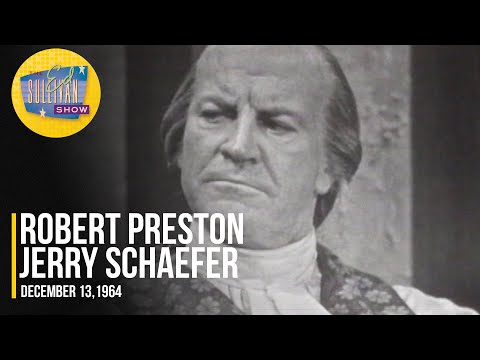
Cast: R. Preston, R. Gardner, U. Sallert, L. Zeldis, A. Matthews, S. Watson, R. Russel, S. Greene, E. Roll, F. Kiser, G. Ramos, J. Schaefer, S. Roveta, A. Falco, E. Graf, O. Clark, J. Elliot, A. Bartow, M. Charles, C. Fearl, D. Ball, R. LePage, J. Keatts, B. Webster, C. Parks, R. Schwinn, A. Maye, B. Kaliban, H. Harris, M. Crawford, J. Taliaferro, B. Bossert, S. Getz, L. Jones, J. Fletcher, S. France, H. Mazzini & K. Andrews.
Author of libretto was nominated for a Tony Award, but unfortunately, he did not get one. The album was recorded by Capitol Records.
The resurrection of the musical took place only one time for a couple of months – at the end of 2008 and it was not raised any time since then.
Release date of the musical: 1964
"Ben Franklin in Paris" – The Musical Guide & Song Meanings
Review
Can a musical make the American Revolution feel like a cocktail party and still ask you to care who wins? “Ben Franklin in Paris” tries, and that tension is the show’s sound. Sidney Michaels writes Franklin as an older performer, a man who knows that charm is leverage. The lyrics are full of social tactics: compliment as bait, modesty as posture, humor as cover for a hard request. The plot is diplomacy, but the lyric engine is personality.
Mark Sandrich, Jr.’s score leans toward mid-century musical-comedy ease. It’s bright, fast, and built for a star who can talk-sing, wink, and turn a punchline into persuasion. Then two Jerry Herman contributions cut through with a different sort of confidence. His songs arrive with cleaner hooks and a more direct romantic voltage, as if the show briefly remembers it wants to be a love story, not just a history lesson with a grin. :contentReference[oaicite:1]{index=1}
When it works, the lyric theme is reinvention. Franklin is constantly “inventing” himself for France. Temple is constantly trying to become the man he thinks the revolution requires. Diane is constantly deciding whether she’s helping a cause or helping a man. Even the comic numbers are about control. Nobody sings just to sing. They sing to steer the room.
How it was made
The Broadway production opened October 27, 1964 at the Lunt-Fontanne Theatre after 13 previews, and closed May 1, 1965 after 215 performances. Michael Kidd directed and choreographed. Robert Preston played Franklin, with Ulla Sallert as Diane. :contentReference[oaicite:2]{index=2}
The writing credits are part of the show’s identity crisis. Michaels handled book and lyrics. Sandrich wrote the music. But Jerry Herman contributed two songs, and those two titles are often singled out by listeners because they sound like a different musical’s confidence arriving for a visit. :contentReference[oaicite:3]{index=3}
Even the cast album has a production story: Capitol Records released the original Broadway cast recording, and sources note the label invested heavily in the stage production. That matters because you can hear the show aiming for scale. It wants to sound bigger than a “period piece.” It wants to be a popular hit about politics without getting stuck in lecture mode. :contentReference[oaicite:4]{index=4}
Key tracks & scenes
"We Sail the Seas" (Company)
- The Scene:
- The docks. Ropes, crates, sea air. The light is practical and gray-blue, the kind that makes everyone look slightly underfed. A ship’s arrival becomes a chorus line of sailors and citizens, Paris in motion before Franklin even speaks.
- Lyrical Meaning:
- The lyric frames travel as destiny and risk. It’s also a mission statement: the revolution requires crossing oceans, not just writing pamphlets.
"I Invented Myself" (Ben, Company)
- The Scene:
- Franklin’s first big self-portrait, staged like a public introduction. The ensemble behaves like a salon crowd, reacting, laughing, leaning in. Franklin is both subject and salesman. :contentReference[oaicite:6]{index=6}
- Lyrical Meaning:
- This is the show’s central metaphor: identity as a chosen invention. It’s funny, but it also admits something sharp. In politics, being “real” is optional. Being effective is the job.
"Too Charming" (Ben, Diane)
- The Scene:
- Versailles energy. Gold, symmetry, and social rules you can’t see until you break them. Diane meets Franklin like she’s appraising a weapon that happens to smile. :contentReference[oaicite:7]{index=7}
- Lyrical Meaning:
- Charm is treated as an accusation. The lyric is flirty, yes, but it’s also about power. If you can charm, you can manipulate. Diane knows it because she lives inside court politics.
"Whatever Became of Old Temple?" (Temple)
- The Scene:
- Ben’s house. A private corner, finally. Temple sings as if the walls can hear. The lighting narrows, taking the show away from spectacle and into family pressure. :contentReference[oaicite:8]{index=8}
- Lyrical Meaning:
- Temple’s lyric is identity panic. He’s a young man living in the shadow of a myth. The song asks what happens when the revolution needs heroes and you’re stuck being human.
"Half the Battle" (Ben, Benny, Temple, Beaumarchais)
- The Scene:
- A negotiation staged as a chess match with jokes. Beaumarchais circles, testing. Ben counters with warmth and strategy. The room keeps shifting between friendship and transaction. :contentReference[oaicite:9]{index=9}
- Lyrical Meaning:
- The lyric is persuasion disguised as optimism. “Half the battle” is the show’s preferred way of saying: we are not winning yet, but we are not dead.
"A Balloon Is Ascending" (Company)
- The Scene:
- Sky over Paris. The stage opens upward. The lighting becomes airy and celebratory, an engineered sense of wonder. Crowds point, chatter, and briefly forget the war.
- Lyrical Meaning:
- A public thrill number that doubles as a thesis on invention. The show treats science as entertainment and as proof that progress is possible, which is also what Franklin is trying to sell politically.
"To Be Alone with You" (Ben, Diane)
- The Scene:
- Vineyards or an intimate corner away from court. Softer light. Fewer bodies. The song feels like a private letter read out loud, with the orchestra stepping back to let the words breathe. :contentReference[oaicite:11]{index=11}
- Lyrical Meaning:
- It’s romance, but it’s also Franklin trying to choose one truth in a life built on public versions of himself. The lyric wants solitude not as escape, but as clarity.
"You're in Paris" (Janine, Temple, Company)
- The Scene:
- Paristown. Street life. Market chatter. The lighting brightens into postcard color, then gets busy again, because the city is louder than the tourists. :contentReference[oaicite:12]{index=12}
- Lyrical Meaning:
- The lyric sells Paris as fantasy, which is exactly the seduction Franklin is up against. He needs France to fall in love with an idea called America.
"Look for Small Pleasures" (Ben, Diane)
- The Scene:
- Act II, after setbacks. A quieter room, possibly Diane’s house. The staging suggests late evening, candles, and the kind of exhaustion that makes moral decisions feel personal. :contentReference[oaicite:13]{index=13}
- Lyrical Meaning:
- It’s a survival philosophy. The lyric argues that revolutions are sustained by tiny comforts, not just speeches. It’s also the show admitting it prefers the human scale to the heroic one.
"I Love the Ladies" (Ben, Captain Wickes, Beaumarchais, Sailors)
- The Scene:
- A sailor-heavy burst of bravado. Rougher staging. War-adjacent humor. The lighting goes warmer and rowdier, like a tavern near the docks where politics becomes gossip.
- Lyrical Meaning:
- On paper, it’s a comic release. In context, it’s also reputation management. Franklin’s public persona includes flirtation, and the lyric shows how easily charisma becomes rumor.
Scene geography and the musical-number roster above are supported by published opening-night materials that list the show’s scene sequence and songs by act.
Notes & trivia
- The original Broadway production ran 215 performances (Oct 27, 1964 to May 1, 1965) at the Lunt-Fontanne Theatre after 13 previews. :contentReference[oaicite:16]{index=16}
- Michael Kidd directed and choreographed the Broadway staging. :contentReference[oaicite:17]{index=17}
- Jerry Herman contributed two songs: “Too Charming” and “To Be Alone with You.” :contentReference[oaicite:18]{index=18}
- A cast change happened quickly: sources note Susan Watson was replaced by Rita Gardner soon after opening night. :contentReference[oaicite:19]{index=19}
- Sidney Michaels was nominated for the 1965 Tony Award for Best Author of a Musical. :contentReference[oaicite:20]{index=20}
- The show received a San Francisco revival in 2008 by 42nd Street Moon at the Eureka Theatre (Nov 28 to Dec 14). :contentReference[oaicite:21]{index=21}
- TIME’s 1964 Broadway roundup summarized the show’s comic premise as Franklin outfoxing diplomats, then getting “bowled over” by French women, capturing the piece’s built-in tone split. :contentReference[oaicite:22]{index=22}
Reception
In 1964, the show arrived in a season where audiences expected major new musicals to feel inevitable. “Ben Franklin in Paris” did not. Contemporary commentary often frames it as pleasant, clever, and underpowered for its ambitions, a star vehicle searching for a defining song. A later fan-critical view of the cast album calls it “the right musical at the wrong time,” which is another way of saying the writing leaned charming when Broadway was rewarding impact. :contentReference[oaicite:23]{index=23}
What has aged best is the central premise: diplomacy as performance. That idea now reads sharper than the show’s light touch sometimes allows. In a culture that lives on image management, Franklin as a self-invented celebrity feels less quaint than it did in 1964.
“As Ben Franklin in Paris, Robert Preston outfoxes French diplomats only to be bowled over by their women…”
“Not even Mr. Preston’s superb salesmanship can con one into thinking that there is magic in this musical’s pitch.”
“Score: best tune: ‘To Be Alone With…’”
Live updates
For 2025 and 2026, the clearest “active” footprint is licensing. Concord Theatricals lists the title with a current synopsis and availability, which usually means the materials are maintained for organizations looking for a lesser-known period musical with a star-centered lead role. :contentReference[oaicite:24]{index=24}
On the listening side, the original Broadway cast recording remains easy to find on major platforms, including Spotify and Apple Music, which keeps the work circulating even when productions are rare. :contentReference[oaicite:25]{index=25}
The last widely documented modern staging in major theatre media remains 42nd Street Moon’s 2008 San Francisco run, which signals the show’s most likely future: boutique revivals that enjoy the rarity and play the period style as comedy, not homework. :contentReference[oaicite:26]{index=26}
FAQ
- Who wrote the lyrics to “Ben Franklin in Paris”?
- Sidney Michaels wrote the book and lyrics, with two songs contributed by Jerry Herman (“Too Charming” and “To Be Alone with You”). :contentReference[oaicite:27]{index=27}
- Is the story historically accurate?
- It is fictionalized. The premise follows Franklin’s mission to secure French support during the American Revolution, but the tone is romantic-comic and uses invention, flirtation, and salon life as dramatic tools. :contentReference[oaicite:28]{index=28}
- Where do the biggest songs land in the plot?
- The opening numbers play across the docks and the first wave of Paris society, while later highlights shift into Versailles politics and Diane’s more private spaces. Published opening-night materials list the scene sequence and song roster by act.
- Is there a cast album?
- Yes. The original Broadway cast recording (1964) is widely available on streaming services. :contentReference[oaicite:30]{index=30}
- Can theatres license it today?
- Concord Theatricals currently lists the title and synopsis, indicating it is available through their catalogue. :contentReference[oaicite:31]{index=31}
Key contributors
| Name | Role | Contribution |
|---|---|---|
| Sidney Michaels | Book & lyrics | Writes Franklin as a showman-diplomat; builds the lyric world out of persuasion and self-invention. |
| Mark Sandrich, Jr. | Composer | Provides a brisk 1960s musical-comedy score built to carry a charismatic leading man. :contentReference[oaicite:32]{index=32} |
| Jerry Herman | Song contributions | Contributed “Too Charming” and “To Be Alone with You,” often cited as standout material within the score. :contentReference[oaicite:33]{index=33} |
| Michael Kidd | Director / choreographer | Staged the Broadway production with movement-driven comedy and courtly spectacle. :contentReference[oaicite:34]{index=34} |
| Robert Preston | Original Broadway Ben Franklin | Anchored the show as a charismatic Franklin whose charm functions as plot strategy. :contentReference[oaicite:35]{index=35} |
| Ulla Sallert | Original Broadway Diane | Gives Diane her mix of romance and political intelligence, balancing the show’s tone. :contentReference[oaicite:36]{index=36} |
| Capitol Records | Original cast album label | Released the 1964 original Broadway cast recording, keeping the show’s score in circulation. :contentReference[oaicite:37]{index=37} |
Technical info
- Title: Ben Franklin in Paris
- Year: 1964 (Broadway premiere)
- Type: Historical musical comedy (star vehicle)
- Book & lyrics: Sidney Michaels :contentReference[oaicite:38]{index=38}
- Music: Mark Sandrich, Jr. (with two songs by Jerry Herman) :contentReference[oaicite:39]{index=39}
- Broadway run: Lunt-Fontanne Theatre; previews Oct 7, 1964; opening Oct 27, 1964; closing May 1, 1965; 215 performances :contentReference[oaicite:40]{index=40}
- Director / choreographer: Michael Kidd :contentReference[oaicite:41]{index=41}
- Selected notable placements: Docks (“We Sail the Seas”); Versailles (“Too Charming”); Sky over Paris (“A Balloon Is Ascending”); Diane’s House (Act II romantic material); sailors’ ensemble for “I Love the Ladies”
- Original cast album: 1964 Original Broadway Cast Recording; streaming availability on Spotify and Apple Music :contentReference[oaicite:43]{index=43}
- Recent documented revival: 42nd Street Moon (San Francisco), Eureka Theatre, Nov–Dec 2008 :contentReference[oaicite:44]{index=44}
- Current availability: Listed for licensing by Concord Theatricals :contentReference[oaicite:45]{index=45}
Sources: IBDB, Playbill, Concord Theatricals, Wikipedia, TIME (archive), The Saturday Evening Post, Billboard (World Radio History scan), Spotify, Apple Music, Ovrtur, TheaterMania, BroadwayWorld, Cast Album Reviews.