Bat Boy Lyrics – All Songs from the Musical
Bat Boy Lyrics: Song List
- Act 1
- Hold Me, Bat Boy
- Christian Charity
- Ugly Boy
- Whatcha Wanna Do?
- A Home For You
- Another Dead Cow
- Dance With Me, Darling
- Mrs. Taylor's Lullaby
- Show You A Thing Or Two
- Christian Charity (Reprise)
- A Home For You (Reprise)
- Comfort And Joy
- Act 2
- A Joyful Noise
- Let Me Walk Among You
- Three Bedroom House
- Children, Children
- More Blood
- Inside Your Heart
- Apology To A Cow
- Finale: I Imagine You're Upset
- Hold Me, Bat Boy (Reprise)
About the "Bat Boy" Stage Show
Actors Gang Theatre hosted the first staging in year of 97. For choreography was responsible Derick LaSalla and Keythe Farley was the director. After the show of the play during off-Broadway existence, choreography was made by Christopher Gattelli, and director was Scott Schwartz.The actors that played in the pre-Broadway show in the Union Square Theatre were: J. P. Potter K. Brier, D. Hardeman, K. Butler, T. A. Kendall, S. Kurtzuba, J. Price, K. Hopkins, R. Pruitt, D. Storm, D. May, S. McCourt & J. T. Egan. Music Director was Alex Lacamoire and J. Debord helped him. Musicians were: G. Skaff (guitar), J. Lang (French horn), E. Fast (drums), J. LeBlanc (cello), J. E. Pugh (trombone), M. Rubano (bass), C. Anderson (flute + oboe) & R. Millikan (trumpet).
Playhouse of the West Yorkshire was a place where the show ran before the West End and latter has held this staging in 2004, 7 years after the initial launch, in the Theatre of Shaftesbury. After 5 months, in 2005, it was closed, which can be counted as a moderate success. During this performance, the following actors starred in it: E. Williams, J. Barr, R. Vere & D. May, among others.
In 2002, the play went to Indianapolis & Montana’s play took place in 2003 & 06. Currently, the rights to his are possesses by Dramatists Play Service.
Release date: 2001
"Bat Boy: The Musical" – The Musical Guide & Song Meanings
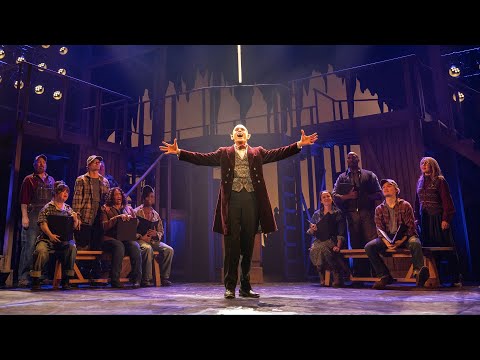
Review
Bat Boy starts with a creature in a cave and ends with a town looking for someone to blame. It pretends to be midnight-movie fun, then keeps tightening the screws until the punchlines taste metallic. The lyrics do the heavy lifting. They sell the joke. They also expose the joke’s cruelty.
Laurence O’Keefe writes like a genre DJ with a sharp pen. Pop-rock hooks, revival-meeting thunder, patter-rap aggression, and a slice of monster-movie scoring. It is not random. The style changes track the town’s mood swings. Love becomes a power ballad when it needs to sound “human.” Hatred becomes a chant when it wants to sound “righteous.” The show’s central refrain, “Hold Me, Bat Boy,” is the smartest kind of catchy. It feels like comfort. It behaves like a curse.
The book by Keythe Farley and Brian Flemming is engineered for escalation: discovery, domestication, spectacle, panic, ritual. Underneath, the lyric themes are almost classical. What do we call a monster so we do not have to call it “family”? What is “charity” when the town expects a reward? And what happens when language is the cage that teaches a creature to sing?
How It Was Made
The origin story is pure checkout-line mythology. A 1992 Weekly World News cover about a “Bat Child” found in a cave becomes a stage musical. The miracle is not that it exists. It is that it works. A Los Angeles Times feature from the Off-Broadway moment describes how the tabloid leaned into the character because it moved copies, and how Farley and Flemming saw potential in turning a running joke into a narrative engine.
The show’s production path explains its tone. It was developed and premiered in Los Angeles at Tim Robbins’ Actors’ Gang, then opened Off-Broadway at Union Square Theatre in March 2001, directed by Scott Schwartz with choreography by Christopher Gattelli. It had the DNA of a troupe piece: small cast, fast doubling, a band that can pivot on a dime, and a book that knows a hard left turn can be funny and frightening at the same time.
One more crucial “how”: the score is built around musical motifs, not just songs. Scott Miller’s analysis points to a short repeating phrase introduced in “Hold Me, Bat Boy” that returns as a danger signal across the show, even surfacing in the accompaniment of the rap number “Watcha Wanna Do?” That is the technical reason the piece feels tighter than its premise. It is composed like a thriller.
Key Tracks & Scenes
"Hold Me, Bat Boy" (Company)
- The Scene:
- Hope Falls, West Virginia. Teen spelunkers find a feral creature in a cave. Headlamps and panic. The town’s attention snaps into place like a trap.
- Lyrical Meaning:
- The lyric is a hymn to instant obsession. “Hold me” sounds tender. In context, it is possession. The refrain becomes a town’s emotional shortcut: they want the monster close, then want him gone, and both impulses share the same melody.
"Christian Charity" (Meredith, Sheriff, Shelley)
- The Scene:
- The Sheriff delivers the creature to Dr. Parker’s home like a problem to be solved privately. Meredith steps forward. Shelley recoils. The living room becomes a moral stage.
- Lyrical Meaning:
- This is the show’s key word, used as a costume. The lyric asks whether “charity” is love or performance. Meredith’s lines read like belief under pressure, and the town’s approval sits behind every syllable.
"A Home for You" (Meredith, Bat Boy)
- The Scene:
- Meredith tries to soothe Edgar in a domestic space that was not built for him. Low light. A lullaby posture with a dangerous animal in the corner.
- Lyrical Meaning:
- The lyric is maternal projection and genuine compassion at once. It is also assimilation as seduction: if he can learn the rules, he can stay. The song plants the show’s central ache, the need to be wanted without being rewritten.
"Show You a Thing or Two" (Company)
- The Scene:
- Elocution lessons and a makeover montage, staged like a parody of “civilizing the beast.” Quick shifts, bright energy, a sense of the town applauding itself.
- Lyrical Meaning:
- The lyrics turn language into grooming. Every corrected sound is a step away from the cave. The joke lands, then you notice the cruelty: the town is teaching him to speak so they can better control what he says.
"Comfort and Joy" (Company)
- The Scene:
- A holiday frame in a town that believes it is wholesome. Decorations and forced cheer. The creature’s presence makes the “normal” look unstable.
- Lyrical Meaning:
- The lyric uses seasonal language to hide hunger. “Joy” becomes a demand, not a feeling. The show’s satire is sharp here: people want comfort more than truth, and they will sing over the evidence.
"Three Bedroom House" (Meredith, Shelley)
- The Scene:
- Mother and daughter share a private argument that feels like it has been happening for years. The house itself is the third character. Everything they do echoes.
- Lyrical Meaning:
- This is domestic realism inside a monster musical, and that contrast is why it hits. The lyric is about containment: how much family pain can you store behind closed doors before it leaks into the street?
"Children, Children" (Pan, Animals, Company)
- The Scene:
- A forest ritual. A pagan figure calls the animals in. The staging often flips from church language to sensual chaos in a single breath.
- Lyrical Meaning:
- The lyric is temptation and liberation, but also a trap. It offers belonging without conditions, then reveals the cost. The show uses this number to expose how easily “community” can be manufactured, whether in a revival tent or a mythic grove.
"Revelations" (Company)
- The Scene:
- The town’s secrets spill into public view. Testimony becomes entertainment. The lights feel harsher now, as if the stage has stopped pretending.
- Lyrical Meaning:
- This is where the lyric design pays off. All the earlier moral slogans get rerouted into confession. “Revelations” is not a clean purge. It is a proof of motive: everyone wanted a monster because everyone needed a hiding place.
Live Updates
In late 2025, Bat Boy returned to New York in a high-profile revival at New York City Center. The limited run was scheduled for October 29 through November 9, 2025. It was directed by Alex Timbers and featured Taylor Trensch as Edgar, with Kerry Butler returning to the title’s legacy in a new role as Meredith, plus Alex Newell as the God Pan and Christopher Sieber as Dr. Parker.
This City Center version also signaled an evolving text. Coverage around rehearsals and composer commentary described updated orchestrations and the addition of new songs that had entered the score through later revisions, including titles like “Mine, All Mine,” “Deer in the Headlights,” and “He Is Here.” The update story matters for lyric readers: Bat Boy is one of those cult pieces that keeps rewriting its own “small town” to match the era’s anxieties.
For licensing life, the show continues to be a frequent pick for regional and educational companies, partly because it is a small-cast, big-impact title that can look like a rock concert one minute and a mob scene the next.
Notes & Trivia
- The Off-Broadway production opened at Union Square Theatre on March 21, 2001 and closed December 2, 2001.
- The source material is a 1992 Weekly World News cover story about a “Bat Child” found in a cave.
- The Original Cast Recording was released June 5, 2001 as a 22-track album on digital platforms.
- Masterworks Broadway’s album credits list Alex Lacamoire as conductor/keyboards, with a band expanded by additional instruments beyond the core rock setup.
- Discogs credits the cast album sessions as recorded at Avatar Studios and Sear Sound in April 2001.
- Scott Miller’s musical analysis notes a short recurring motif introduced in “Hold Me, Bat Boy” that functions as a danger signal across the score.
- Playbill’s 2001 closing notice linked the show’s early closure to ticket-sales pressure in the period following Sept. 11, including a pause in performances.
Reception
In 2001, critics largely responded to the craft surprise: a tabloid premise executed with real musical intelligence. In later years, reviews often frame the show as a cult object that has outgrown its own joke, because the central metaphor is durable. The town wants to “civilize” what it fears. Then it wants to destroy what it can’t control. That story does not age out.
“For now, they’ll have to make do with a giggling cult hit.”
“Laurence O’Keefe’s stomping score has a sleazy Rocky Horror vibe.”
“The discovery in a West Virginia cave of a half-human, half-bat creature.”
Technical Info
- Title: Bat Boy: The Musical
- Year (Off-Broadway run): 2001
- Type: Horror-comedy rock musical
- Story & Book: Keythe Farley, Brian Flemming
- Music & Lyrics: Laurence O’Keefe
- Basis: 1992 Weekly World News “Bat Child Found in Cave” tabloid mythology
- Off-Broadway venue: Union Square Theatre (New York)
- Off-Broadway director/choreography: Scott Schwartz (director), Christopher Gattelli (choreography)
- Selected notable placements: “Hold Me, Bat Boy” (cave discovery); “Christian Charity” (Parker home decision); “Show You a Thing or Two” (elocution/makeover); “A Joyful Noise” (revival meeting); “Children, Children” (forest ritual); “Revelations” (town secret spill)
- Soundtrack album: Bat Boy: The Musical (Original Cast Recording), released June 5, 2001; 22 tracks; credited ? 2001 BMG Entertainment on Apple Music
- Recording context: Cast album sessions recorded in April 2001 at Avatar Studios and Sear Sound (as listed on Discogs)
- Availability: Widely available on major streaming platforms; Masterworks Broadway hosts an official album page with credits and track list
FAQ
- What is Bat Boy actually satirizing?
- It skewers the town’s hunger for moral certainty. The “monster” becomes a mirror for mob logic, religious performance, and the urge to turn fear into entertainment.
- Is “Hold Me, Bat Boy” just a gag song?
- No. It is the show’s central refrain and a structural tool. It sells desire and danger with the same hook, then returns later as the town’s emotional fingerprint.
- Who wrote the lyrics?
- Laurence O’Keefe wrote the music and lyrics. Keythe Farley and Brian Flemming wrote the story and book.
- Is there a “definitive” version of the score?
- The 2001 Off-Broadway version is the best-known recorded text. Later revisions, including London-era changes and the 2025 City Center revival materials, add or adjust songs and orchestrations.
- What album should I start with?
- Start with the 2001 Original Cast Recording. It captures the show’s tonal mix, the core leitmotifs, and many of the lyric turns that made the piece a cult favorite.
Key Contributors
| Name | Role | Contribution |
|---|---|---|
| Laurence O’Keefe | Composer / Lyricist | Wrote the pop-rock score and lyric book that weaponizes slogans, hymns, and hooks. |
| Keythe Farley | Story / Book | Co-shaped the narrative escalation from cave discovery to town-wide hysteria. |
| Brian Flemming | Story / Book | Co-wrote the book that turns tabloid myth into family horror and civic satire. |
| Scott Schwartz | Director (2001 Off-Broadway) | Staged the Union Square Theatre production that defined the show’s early cult identity. |
| Christopher Gattelli | Choreography (2001 Off-Broadway) | Built kinetic storytelling for a small cast playing a whole town. |
| Deven May | Original Edgar (Bat Boy) | Originated the title role in LA and Off-Broadway, setting the physical and vocal template. |
| Kaitlin Hopkins | Original Meredith Parker | Created the show’s moral center in the 2001 Off-Broadway cast. |
| Kerry Butler | Original Shelley Parker; later Meredith (2025 City Center) | Bridged the show’s history across versions and generations of fans. |
| Alex Lacamoire | Conductor / Keyboards (cast album) | Led the recording band as credited on the official album page. |
| Alex Timbers | Director (2025 City Center) | Directed the 2025 New York City Center revival with updated musical materials. |
| Andrew Resnick | Orchestrations / Musical work (2025 City Center) | Credited in 2025 coverage for orchestration work shaping the revival’s sound. |
Sources: New York City Center, Playbill, Masterworks Broadway, Apple Music, Discogs, The New Yorker, The Guardian, Los Angeles Times (archive), KPBS, Scott Miller (New Line Theatre), Broadway.com, BroadwayWorld, Wikipedia, Overture.