Band's Visit Lyrics – All Songs from the Musical
Band's Visit Lyrics: Song List
About the "Band's Visit" Stage Show
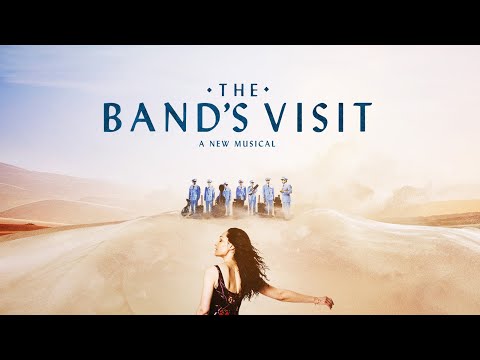
Spend an evening in the company of unforgettable strangers at The Band’s Visit—now one of the most celebrated musicals ever. It rejoices in the way music brings us to life, brings us to laughter, brings us to tears, and ultimately, brings us together.In an Israeli desert town where every day feels the same, something different is suddenly in the air. Dina, the local café owner, had long resigned her desires for romance to daydreaming about exotic films and music from her youth. When a band of Egyptian musicians shows up lost at her café, she and her fellow locals take them in for the night. Under the spell of the night sky, their lives intertwine in unexpected ways, and this once sleepy town begins to wake up.
Release date: 2017
"The Band’s Visit" – The Musical Guide & Song Meanings
Review
How do you write a musical where the biggest plot twist is that two adults admit they’re lonely? The Band’s Visit builds a whole evening out of that risk. David Yazbek’s lyrics refuse the usual Broadway volume. They prefer overheard confession. A shrug that turns into a prayer. A punchline that ends up being a diagnosis.
The show’s trick is that it turns “nothing happens” into a structure. Everyone in Bet Hatikva is stuck in a loop, and the text names the loop without ornament. When the Alexandria Ceremonial Police Orchestra accidentally lands there, the lyrics do not pivot into politics. They pivot into detail: who speaks first, who can’t, who uses sarcasm as armor, who uses music as a substitute for touch.
Yazbek’s musical language borrows timbres and contours associated with Middle Eastern popular and classical traditions, then filters them through American musical-theatre clarity. The result is intimate but not precious. The score is full of rests. Those pauses are character. When Dina finally sings without deflection, it feels like the show’s first deep breath. When the ensemble joins at the end, it doesn’t feel like a “big finish.” It feels like the town confessing it has an inner life.
How It Was Made
The Band’s Visit began as a stage adaptation of Eran Kolirin’s 2007 film, with Itamar Moses writing the book and David Yazbek writing music and lyrics. One of the most useful behind-the-scenes facts is also the simplest: Moses has said his first draft was essentially written as a play, then he and Yazbek went through it together, page by page, circling where songs could live. That method matters because the show’s songs rarely “stop time.” They are time, compressed.
The most famous origin story is “Omar Sharif,” because its success looks effortless onstage and wasn’t effortless at all. In a Vulture deep dive, the creative team describes how the cafeteria scene was identified early as a song moment, and how Moses generated a stream-of-consciousness text as if it were a monologue, giving Yazbek specific imagery to grab. Yazbek also talks about orchestrating with Arabic instruments from the start, letting the instrument choices change what harmony and motion feel natural.
Another process detail hides in plain sight: the staging. In Yazbek’s own track-by-track notes for Playbill, he credits director David Cromer with connecting the lyric idea of moving in circles to the show’s turntable scenic design, and he describes how a planned dance break in “Welcome to Nowhere” became a deadpan piece of table-spinning instead. The Band’s Visit is full of choices like that. Whenever the show could “perform,” it chooses to observe. That restraint is the aesthetic.
Key Tracks & Scenes
"Waiting" (Company)
- The Scene:
- Bet Hatikva appears as a lived-in blur. Warm but tired lighting. Dina behind the counter. Papi working. Couples stalled in routines. The mood is static, like heat that won’t break.
- Lyrical Meaning:
- The lyric names the town’s main action: expectancy without object. It’s not “hopeful.” It’s habitual. That framing makes the later connections feel like accidents that still change you.
"Welcome to Nowhere" (Dina, Papi, Company)
- The Scene:
- The band arrives asking for the Arab Cultural Center, and the town realizes the mistake. The humor is dry. Bright fluorescent café light. Dina points out “attractions” that barely exist, selling boredom like a local specialty.
- Lyrical Meaning:
- This is Dina’s shield song. Sarcasm becomes hospitality. The lyric makes it clear she has survived disappointment by getting there first with the joke.
"It Is What It Is" (Dina)
- The Scene:
- In Dina’s apartment, the world narrows. Softer light. A quieter tempo. She explains how a life ends up small without ever announcing that it’s shrinking.
- Lyrical Meaning:
- The lyric is resignation that still contains pride. It tells you why Dina is sharp with people: she’s trying not to mourn in public.
"Omar Sharif" (Dina)
- The Scene:
- A fluorescent-lit cafeteria. Dina and Tewfiq sit across a table like strangers trying to be brave. The band’s world recedes. The air changes when Dina finds a shared reference point, and she begins to sing as if she’s remembering with her whole body.
- Lyrical Meaning:
- The lyric is not about celebrity. It’s about how art sneaks into childhood and becomes a private homeland. Dina’s imagery turns “Egypt” from geopolitics into taste, sound, and memory, which is why Tewfiq finally listens.
"Haled’s Song About Love" (Haled)
- The Scene:
- A roller rink. Pop lighting. Teen energy. Haled inserts himself into Papi’s double-date like a charming disaster, then coaches him through flirting in real time.
- Lyrical Meaning:
- Haled sells romance as technique, but the lyric also reveals his insecurity: he needs the rules because he’s afraid of silence. His confidence is a costume, like the uniform.
"Itzik’s Lullaby" (Itzik, Camal)
- The Scene:
- Late night. A small apartment. A baby that won’t settle. Dim light, domestic fatigue. Itzik tries tenderness; elsewhere, Camal’s voice joins, as if the band is still breathing through the walls.
- Lyrical Meaning:
- The lyric treats care as a skill you can lose. Itzik wants to be a good man and doesn’t know how to get back to the beginning of that promise.
"Answer Me" (Telephone Guy, Company)
- The Scene:
- A phone booth. One figure waiting all night under a streetlight. When the phone finally rings and then fails him in a different way, the scene expands outward and the town’s private longing becomes audible.
- Lyrical Meaning:
- This is the show’s thesis in choral form: desire is common, even when language isn’t. The lyric turns unanswered contact into a collective condition.
"The Concert" (The Band)
- The Scene:
- Morning farewell. The turntable world of Bet Hatikva fades. Lights drop to black. Then: lights up on the orchestra, finally doing what they came to do. Clean stage picture. Sound as the main architecture.
- Lyrical Meaning:
- It’s wordless closure. The show ends by asserting that the real dialogue happened offstage, in glances, timing, and borrowed hospitality.
Live Updates
The Broadway production played its final performance on April 7, 2019. Since then, The Band’s Visit has lived the way its story suggests it should: in limited engagements, international re-interpretations, and licensing life rather than long residency.
London’s Donmar Warehouse mounted the European premiere in 2022, running into early December, a scale that fits the piece: close audience, close listening. MTI continues to list the title for licensing, which has helped drive a steady flow of regional productions rather than one headline revival.
The most concrete 2025 to 2026 headline is the announcement of a limited Tel Aviv run beginning January 8, 2026 at Shlomo Group Arena, with Sasson Gabai set to reprise Tewfiq and Miri Mesika set to play Dina. Reporting also notes the production will be performed in English with Hebrew subtitles. For a show built on miscommunication and translation, that detail feels oddly perfect.
Notes & Trivia
- The full licensed synopsis frames the story as a single night in Bet Hatikva, beginning at the Tel Aviv airport and ending with the orchestra’s concert the next morning.
- A Vulture feature notes the show runs about 90 minutes with no intermission, and it places “Omar Sharif” roughly halfway through the piece, as the emotional hinge.
- In Playbill’s track-by-track breakdown, Yazbek says the lyric idea of moving in circles helped inspire the turntable scenic concept, reinforcing the town’s stuck feeling as a physical fact.
- That same Playbill account describes how a planned dance break in “Welcome to Nowhere” was replaced with deadpan stage business: a café table’s lazy Susan becomes the “dance.”
- IBDB credits list Andrea Grody and Dean Sharenow as musical supervisors for Broadway, with Jamshied Sharifi credited for orchestrations in multiple production listings and announcements.
- Playbill confirmed the Broadway close date (April 7, 2019) and notes the production’s performance count as it left the Barrymore.
- A 2025 report in The Times of Israel details the planned January 2026 Tel Aviv engagement and its language and subtitle approach.
Reception
Critics tended to agree on the essential point: The Band’s Visit wins by refusing to compete on typical Broadway terms. It uses stillness as craft, not absence. Reviews that don’t even mention “spectacle” are telling you what mattered: the lyric specificity, the timing, the restraint, the way the music keeps listening after the characters stop talking.
“Plot-wise, ‘The Band’s Visit’ is a show about nothing, but it fills the stage with feeling.”
“Welcome to Nowhere” … “And it could not be more misleading.”
“Unlike any musical I’ve seen, understated, with a dry wit and a yearning soul.”
Technical Info
- Title: The Band’s Visit
- Year: 2017 (Broadway); developed and premiered Off-Broadway in 2016
- Type: Contemporary book musical
- Book: Itamar Moses
- Music & lyrics: David Yazbek
- Based on: The Band’s Visit (2007 film) by Eran Kolirin
- Setting: Bet Hatikva, a remote Israeli desert town; the story unfolds over one night
- Director (original productions): David Cromer
- Orchestrations: Jamshied Sharifi
- Music supervision (Broadway credits): Andrea Grody and Dean Sharenow
- Selected notable placements: Tel Aviv airport and Bet Hatikva’s café (“Waiting,” “Welcome to Nowhere”); Dina’s apartment (“It Is What It Is”); cafeteria dinner memory-song (“Omar Sharif”); roller rink coaching (“Haled’s Song About Love”); late-night lullaby and concerto breakthrough (“Itzik’s Lullaby”); phone booth longing into ensemble (“Answer Me”); end-concert coda (“The Concert”).
- Original Broadway cast album: Released digitally December 15, 2017; released physically in early 2018
- Label / album production: Ghostlight Records / Sh-K-Boom Records; produced by Dean Sharenow and David Yazbek (as reported in album announcements)
- Major production landmarks: Broadway closed April 7, 2019; Donmar Warehouse London run in 2022; announced limited Tel Aviv run beginning January 8, 2026
FAQ
- Who wrote the lyrics for The Band’s Visit?
- David Yazbek wrote the music and lyrics, with a book by Itamar Moses.
- Where does “Omar Sharif” happen in the story?
- During Dina and Tewfiq’s dinner stop, in a fluorescent-lit cafeteria setting, where Dina connects to Egyptian music and film through childhood memory.
- Is The Band’s Visit a one-act musical?
- In its licensed form, it plays as a single continuous act and is widely described as running roughly 90 minutes without an intermission.
- Did the Broadway production close?
- Yes. The Broadway run ended April 7, 2019 at the Ethel Barrymore Theatre.
- Is there anything happening with the show in 2026?
- A limited engagement in Tel Aviv has been announced to begin January 8, 2026, with reporting noting performances in English with Hebrew subtitles.
Key Contributors
| Name | Role | Contribution |
|---|---|---|
| David Yazbek | Composer & lyricist | Writes lyrics that favor restraint, sarcasm, and confession; blends American musical-theatre craft with Middle Eastern instrumental color. |
| Itamar Moses | Book writer | Structures the story as a chain of intimate encounters, keeping politics offstage and longing front and center. |
| David Cromer | Director | Builds tension through stillness and deadpan staging; supports the show’s refusal to “push” emotion. |
| Jamshied Sharifi | Orchestrator | Shapes the score’s instrumental identity, supporting Arabic timbres alongside Broadway clarity. |
| Andrea Grody | Co-music supervisor; musical director (Broadway credits) | Guides the show’s precise pacing and its chamber-sized blend of voices and instruments. |
| Dean Sharenow | Co-music supervisor; album producer | Helps define the musical presentation on Broadway and shepherds the cast album’s recorded identity. |
| Ghostlight Records / Sh-K-Boom Records | Label | Released the original Broadway cast recording, extending the show’s reach beyond the theatre. |
| Sasson Gabai | Performer (Tewfiq in major engagements) | Associated with the role across media and is reported to reprise Tewfiq for the announced 2026 Tel Aviv engagement. |
| Miri Mesika | Performer (Dina in major engagements) | Reported to play Dina in the announced 2026 Tel Aviv engagement, bringing a new vocal identity to the role. |
Sources: MTI (Music Theatre International), Playbill, Vulture, The New Yorker, The Washington Post, Vogue, IBDB, Donmar Warehouse, The Times of Israel.