Back to the Future Lyrics – All Songs from the Musical
Back to the Future Lyrics: Song List
- Act I
- Overture
- It’s Only a Matter of Time
- Audition (The Power of Love) /Got No Future
- Wherever We’re Going
- Hello, Is Anybody Home
- It Works
- Don’t Drive 88!
- Cake
- Gotta Start Somewhere
- My Myopia
- Pretty Baby
- Future Boy
- Something About That Boy
- Act II
- 21st Century
- Put Your Mind to It
- For the Dreamers
- Teach Him a Lesson
- The Letter/Only a Matter of Time (Reprise)
- Deep Divin’
- Earth Angel (Will You Be Mine)
- Johnny B. Goode
- The Clocktower/For the Dreamers (Reprise)
- The Power of Love
- Doc Returns/Finale
- Back in Time
- Exit Music (Back in Time)
About the "Back to the Future" Stage Show
Act OneIn Hill Valley, California, 1985, Marty McFly visits scientist Dr. Emmett "Doc" Brown's house and finds a pre-recorded message, playing on a large amplifier, telling Marty to meet him in the parking lot of Twin Pines Mall later past midnight. After destroying the amplifier while playing his electric guitar, Marty walks through town and dreams about being a successful rock artist, while a man named Goldie Wilson runs for mayor ("It's Only a Matter of Time").
When Marty's band audition is rejected ("Got No Future"), Marty's girlfriend, Jennifer Parker, comforts him ("Wherever We're Going") but they are interrupted by fundraisers for the restoration of the town's clock tower, which was damaged by lightning in 1955. Marty, with a flyer on the clocktower in hand, heads home to find his father George being bullied by his boss, Biff Tannen. George discourages Marty from chasing big dreams, his brother Dave explains his job at a burger restaurant and his mother, Lorraine McFly, discourages his sister, Linda, from dating and talks about how she first met George and kissed him at a school dance as Marty laments his family's state ("Hello, Is Anybody Home?").
At the Twin Pines Mall parking lot, Marty meets Doc who unveils a time machine made from a DeLorean and explains how he built it ("It Works"). However, due to inadequate protection while loading plutonium into the car's reactor, Doc is afflicted by acute radiation poisoning and starts dying. Marty jumps in the car to seek medical help but accidentally hits 88 miles per hour (142 km/h), sending him back in time to the day Doc conceptualised time travel in 1955. Ditching the car in a barn, Marty wanders to the town square where the citizens of Hill Valley celebrate the town ("Cake"). Marty witnesses his teenage father get bullied by Biff and his gang and tells him to stand up for himself. When he accidentally reveals then-diner employee Goldie will become Mayor of Hill Valley, Goldie is inspired and encourages George to also increase his self-esteem ("Gotta Start Somewhere"). Marty later finds George spying on teenage Lorraine from a tree ("My Myopia"), but is knocked unconscious when George falls. Hours later, Marty wakes up in Lorraine's bedroom. Lorraine falls for Marty who tries to fend off her advances ("Pretty Baby").
Marty finds his way to Doc's house and convinces a younger Doc that he came from 1985 by revealing his knowledge about Doc's Flux Capacitor. Finding the car, Doc worries that Marty will be stuck in 1955 forever. As Marty despairs ("Future Boy"), Doc states that a bolt of lightning could power the time machine and both he and Marty make use of the information on Marty's flyer to use the lightning bolt. Marty reveals he encountered both of his parents when Doc warns him against meeting anyone in history, causing Doc to instruct him to get George to meet Lorraine. At Hill Valley High School the next day, Lorraine tells her friends about the boy she tended to, while Biff and his gang hear rumors about Marty and plot to get rid of him and Marty himself tries to evade both people ("Something About That Boy").
Act Two
Doc Brown dreams of the social, technological, economic, and political advances of the future ("21st Century"), waking up as Lorraine invites Marty to the school dance to which Marty reluctantly accepts. Marty visits George to boost his self confidence and dance abilities in preparation for the dance ("Put Your Mind to It"), running through the plan for George to win over Lorraine as well.
While planning to use a wire running from the clocktower to send the lightning to the DeLorean, Doc looks to the scientists throughout history, longing to be famous while noting of those who fail to fulfil their goals despite their best efforts ("For the Dreamers"). Meanwhile, Biff and his gang learn of Marty's attendance at the upcoming dance and plot to defeat him ("Teach Him a Lesson"). On the night of the dance, Doc thanks Marty for giving him hope for his future but Marty secretly writes a letter to warn him of his death in 1985, despite being warned of the harm from disclosing future events. Marty also reflects on his only chance to make it back, but dreams of Jennifer back in 1985 for comfort ("Only a Matter of Time (Reprise)").
During the school dance ("Deep Divin'"), Lorraine advances on Marty before Biff locks him in a nearby dumpster and harasses Lorraine. Biff overpowers an arriving George, but George knocks him unconscious in one punch. As George escorts a grateful Lorraine to the dance, singer Marvin Berry and his band, on a smoke break, free Marty from the dumpster but Marvin's fingers are accidentally clamped by the closing lid. Knowing music will be needed for George and Lorraine to kiss, Marty volunteers to play guitar instead. The band plays "Earth Angel" as George and Lorraine kiss, saving Marty's existence. On Marvin's request for another song, Marty performs "Johnny B. Goode", but his guitar solo grows out of hand.
Marty leaves the dance to meet Doc who explains that high winds disconnected the upper cables and that he would have to reconnect them despite his fear of heights. Marty gives his letter to Doc who destroys it, worried about the consequences. Doc braves his fear and the storm to connect the wires ("For the Dreamers (reprise)") while Marty drives the DeLorean, inserts the electric hook and accelerates to 88 miles per hour as the lightning strikes and sends him back to 1985. However, upon arrival, the car fails before Marty can keep driving to the hospital to save Doc. Marty grieves at his friend’s side, but Doc sits up, revealing that he pieced the letter back together and wore a better protective suit.
The following morning, Marty discovers his father is now a renowned science fiction author with an annual celebration named after him, his family is more professionally and socially successful and a servile Biff is under George's employ. At the celebration, the McFlys present the town with a check to restore the clock tower. As Marty and his band perform "The Power of Love" and the whole town joins in, Doc suddenly returns in the upgraded DeLorean, insisting Marty comes with him to see the future. Reluctantly, Marty hops in and Doc sets the car's destination date to the exact time and date of the show's current performance. The DeLorean takes off and flies over the audience, and into the future, as the curtain closes ("Finale").
Release date: 2022
"Back to the Future: The Musical" – The Musical Guide & Song Meanings
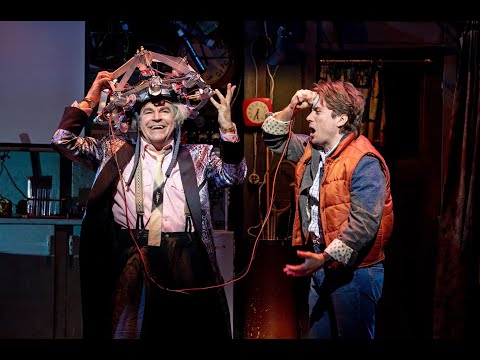
Review
How do you turn a movie that runs on velocity into a score that can stop time? That’s the paradox at the heart of Back to the Future: The Musical. The show wants momentum. It also wants emotion. Its new songs often work best when they behave like engines, not diaries.
Start with the core idea the lyrics keep circling: destiny is not a prophecy, it’s a practice. Marty’s big-number vocabulary leans toward self-invention, forward motion, and the constant need to be seen as more than a kid in a small town. The text is blunt on purpose. That bluntness matches a story built on clean cause-and-effect. Change one choice, lose one future. Make one choice, earn another.
Doc’s lyric world is different. Marty sings like a teenager who believes the universe owes him a stage. Doc sings like an adult who fears the universe is a locked room. When the show hits, it is because these two vocabularies collide. The plot is a chase, but the lyric structure is an argument about responsibility: do you keep your head down and “be practical,” or do you accept that practicality is sometimes just a prettier word for fear?
Musically, Silvestri and Ballard build a split-screen language: 80s pop-rock muscle for 1985 confidence, and 50s-flavored pastiche when Hill Valley rewinds. That contrast is not just style. It is character. In 1985, the sound says: go. In 1955, the sound says: behave. Marty is the wrong instrument in the wrong decade, and the songs keep reminding you.
How it was made
Back to the Future’s stage version comes from a protective instinct: keep the canon intact, but find a new medium where the rules shift just enough to justify the trip. Bob Gale has been candid about guarding the franchise’s continuity while using theatre as a different set of tools. The first major creative move was obvious and strategic: bring in Alan Silvestri, who wrote the film’s score, then pair him with Glen Ballard, a pop craftsman with Broadway experience.
That pairing explains the show’s lyric DNA. Ballard writes in hooks. Silvestri writes in motifs. Together, they do a clever thing early: they turn the film’s iconic theme into a sung idea, so “time” is not only a plot device, it’s a recurring musical identity. This is also why the cast album matters for fans of the writing, not just the brand. The recording formalizes the show’s new songbook, placing it beside the film hits, and it locks in how the theatre version wants to be remembered.
The Original London Cast Recording rolled out with label support from Sony Music Masterworks, with a digital release in March 2022 and physical editions following. In other words: the album was positioned as a companion product, but also as proof that this adaptation was not only a special-effects flex. It had to be a score you could live with at home.
Key tracks & scenes
"It’s Only a Matter of Time" (Marty, Goldie, Ensemble)
- The Scene:
- Hill Valley wakes up in bright, friendly daylight. The town square feels staged on purpose, like a postcard that knows it’s being looked at. Marty moves through locals who seem to already know his story, even if he doesn’t.
- Lyrical Meaning:
- This is Marty’s thesis statement: the future is something you can muscle into existence. The lyric stance is pure forward lean. It’s also dramatic irony. He’s singing confidence while the show quietly positions time as the real antagonist.
"Audition / Got No Future" (Marty)
- The Scene:
- A school-stage setup, harsh and unromantic. Bright lights, thin patience. Marty tries to sound like a main character. The room treats him like background noise.
- Lyrical Meaning:
- The title says it all: the fear is not failure, it’s invisibility. This moment builds the emotional logic for why Marty risks everything later. The time-travel accident isn’t just a plot event. It’s escape velocity from being ordinary.
"Wherever We’re Going" (Marty, Jennifer)
- The Scene:
- Two teenagers in a pocket of calm before the story punches the gas. Softer lighting. A sense that the world has not yet intruded.
- Lyrical Meaning:
- This is the show’s romance in miniature: not grand vows, but a shared belief that the future is a place you can choose together. The lyric framing matters because the entire plot will later weaponize separation.
"It Works" (Doc)
- The Scene:
- Night. Twin Pines Mall energy. Doc arrives like a storm with a grin. The DeLorean reveal lands under theatrical lighting that behaves like a camera zoom. The ensemble appears with comic timing, as if the show itself is admitting it’s a show.
- Lyrical Meaning:
- Doc’s lyric voice treats science like faith. The words are celebratory, but the subtext is loneliness: he needs someone to witness the achievement, and Marty becomes that witness. It’s a friendship song disguised as a demonstration.
"Something About That Boy" (Lorraine, Ensemble)
- The Scene:
- 1955, with colors that feel newly painted. Lorraine’s attention locks onto Marty, and the scene plays like a comedic spotlight that slowly turns dangerous.
- Lyrical Meaning:
- The lyric function is plot mechanics, yes. But it’s also a warning about nostalgia: the past is not safe just because it’s familiar. The song turns a teen crush into a time-travel crisis, using bright language to hide a real threat.
"Put Your Mind to It" (George)
- The Scene:
- George stands in a pool of light that looks too small for him at first, then slowly fits. This is a confidence montage with theatrical muscle: physical staging, forward-facing focus, and a sense that the crowd is finally listening.
- Lyrical Meaning:
- George’s lyric shift is the story’s moral hinge. Back to the Future is not only about time travel. It’s about the moment a person stops accepting the role assigned to them. The words are simple, but the effect is seismic: one backbone changes an entire family line.
"For the Dreamers" (Doc)
- The Scene:
- Act two slows down. The stage clears. Doc is suddenly not a machine operator, but a man. The lighting cools. The air feels still, like the show has finally allowed a pause.
- Lyrical Meaning:
- This is the closest the score comes to confession. Doc frames ambition as a form of survival. The lyric is less about inventions than about why someone keeps building when the world keeps laughing. It’s a plea for permission to want things.
"The Power of Love" (Company)
- The Scene:
- A celebratory release near the end, staged like a victory lap with a roofline attitude. The show goes wide. The lights go bright. The audience recognition is part of the arrangement.
- Lyrical Meaning:
- On paper, this is nostalgia. In the show’s structure, it’s also resolution. After two acts of fighting fate, the lyric lands as a communal verdict: what saves you is not the machine, it’s the human bond that makes the machine worth using.
"Johnny B. Goode" (Marty, Ensemble)
- The Scene:
- The school dance. A formal, period-perfect frame that Marty cracks open. The band kicks in, and the scene becomes the story’s wildest blend of comedy and desperation: entertain them, or disappear.
- Lyrical Meaning:
- This isn’t just a cover moment. It’s Marty turning performance into rescue. The song functions like a fuse. The closer the music gets to the edge, the closer Marty gets to existing again.
Live updates (2025/2026)
If you are tracking this show as a living property rather than a single production, the key fact is this: Broadway is no longer the main station. The Broadway run ended on January 5, 2025. The center of gravity shifted to London and touring markets.
London is in its final stretch. The West End production is booking through April 12, 2026, and multiple outlets have framed that date as the end of the London run. That closure is not a retreat so much as a pivot: the UK Tour is already announced, with dates beginning in October 2026.
North America is currently defined by the tour route. Official tour calendars list ongoing 2026 stops, and IBDB continues to track the tour as active. If you are choosing between “see it now” versus “wait,” the practical read is simple: touring is where this musical is building its long tail.
Internationally, the brand keeps moving. Sydney’s run is publicly listed as ending January 25, 2026. The official umbrella site also positions multiple destinations beyond London and the North American route, reflecting how this title is being franchised across markets.
Notes & trivia
- The Broadway production’s final performance was January 5, 2025, after a run at the Winter Garden Theatre.
- The West End production is publicly advertised as booking through April 12, 2026, with that date widely presented as the final London performance.
- The UK Tour has announced dates beginning in October 2026, starting in Bristol and continuing into 2027 cities.
- Songwriting intent mattered: interviews emphasize building new songs that translate the film’s themes into theatre’s emotional grammar, not merely padding the plot.
- “It Works” is structured as a character entrance and a technology reveal at the same time, with the DeLorean’s first major stage moment attached to Doc’s musical identity.
- At least one educational synopsis explicitly frames the opening number around Marty’s ambition to be a musician, making his creative hunger a plot driver, not window dressing.
- Critical commentary in 2025 still returns to the same friction: spectacular stagecraft versus songs that some reviewers find emotionally thin.
Reception
Back to the Future: The Musical has always been reviewed as two shows in one: a feat of stage engineering, and a new score trying to justify its existence beside a beloved film. That split is visible in how critics write about it. The DeLorean is routinely treated as a co-star. The new songs are treated as the risk.
“...you wonder what exactly the show’s aiming to be: a self-aware joke for fans or a thrill ride with sincerity.”
“It’s all zippy, loud and stylish.”
“...a dopamine hit for the lifelong fans...”
The long-term takeaway is not that critics “agree.” It’s that they keep describing the same bargain. The show trades interpretive reinvention for clean delivery. If you want a radical rewrite, it will frustrate you. If you want the movie’s plot as a live event with new connective tissue, it will probably satisfy you.
Technical info
- Title: Back to the Future: The Musical
- Year (album era): 2022 (Original London Cast Recording release window)
- Type: Book musical adapted from the 1985 film
- Book / Co-creator: Bob Gale (with Robert Zemeckis as co-creator of the stage property)
- Music & Lyrics: Alan Silvestri and Glen Ballard
- Director: John Rando
- Choreography: Chris Bailey
- Music supervision & arrangements: Nick Finlow
- Orchestrations: Ethan Popp and Bryan Crook
- Selected notable placements (story moments): “It Works” introduces Doc and the DeLorean; “Johnny B. Goode” anchors the school dance; “The Power of Love” plays as a late-show surge of recognition.
- Release context: The cast recording was released by Sony Music Masterworks / Masterworks Broadway (digital rollout in March 2022, with physical formats following).
- Album status & availability: Streaming and purchase links are distributed via the official show site; the album is also listed on major DSPs.
FAQ
- Is Back to the Future: The Musical a jukebox musical?
- No. It uses several famous songs associated with the film, but most of the score was written for the stage adaptation.
- Who wrote the lyrics?
- The new score’s music and lyrics are credited to Alan Silvestri and Glen Ballard, with Bob Gale writing the book.
- Did the Broadway production close?
- Yes. The Broadway run ended on January 5, 2025. The property continues via London (through 2026) and touring productions.
- Where can I listen to the cast album?
- The Original London Cast Recording is available through Sony’s Masterworks Broadway ecosystem and major streaming services, with the official show site pointing to current listening options.
- What song is the “big Doc ballad” people mention?
- “For the Dreamers.” It’s written to reveal Doc’s inner life, shifting him from comic propulsion into something closer to longing.
Key contributors
| Name | Role | Contribution |
|---|---|---|
| Bob Gale | Book, Co-creator | Stage adaptation architecture; protects story logic while adjusting for theatrical delivery. |
| Robert Zemeckis | Co-creator | Franchise authorship and oversight as the property shifts mediums. |
| Alan Silvestri | Music & Lyrics | Brings the film’s musical identity into the stage score; motif-driven writing. |
| Glen Ballard | Music & Lyrics | Hook-forward lyric and pop structure; translates character wants into chorus-ready statements. |
| John Rando | Director | Maintains speed and clarity; stages set pieces so the plot reads at full tilt. |
| Chris Bailey | Choreographer | Uses ensemble movement as energy management, especially in Doc’s numbers. |
| Nick Finlow | Musical Supervisor / Arrangements | Bridges decades sonically; keeps film references playable in a theatre orchestra context. |
| Tim Hatley | Set & Costume Design | Builds the shifting Hill Valley language; supports cinematic transitions on a stage clock. |
| Tim Lutkin & Hugh Vanstone | Lighting Design | Turns reveals into punctuation; supports the show’s “camera move” feeling. |
| Gareth Owen | Sound Design | Concert-forward sound world that helps sell scale and speed. |
| Finn Ross | Video Design | Projection language that supports time travel acceleration and location shifts. |
| Chris Fisher | Illusions | Stage mechanics and illusion design that make the DeLorean a believable event. |
Sources: Official Back to the Future: The Musical site, Sony Music Masterworks / Masterworks Broadway, Playbill, IBDB, LondonTheatre.co.uk, New York Theatre Guide, LW Theatres, The Guardian, Variety, Broadway Direct (education materials), Sydney Lyric Theatre.